
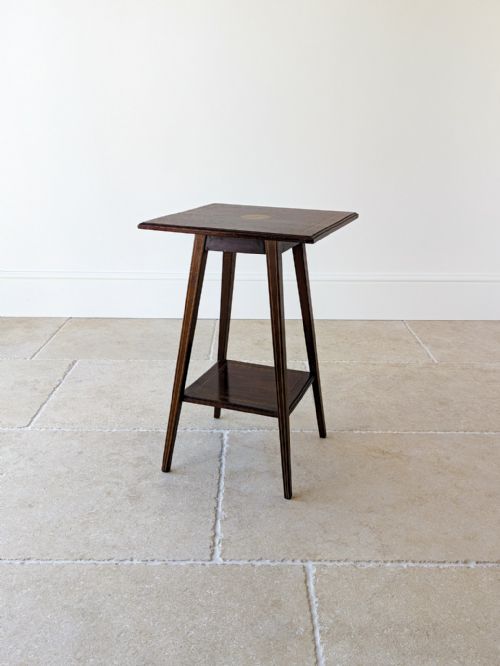
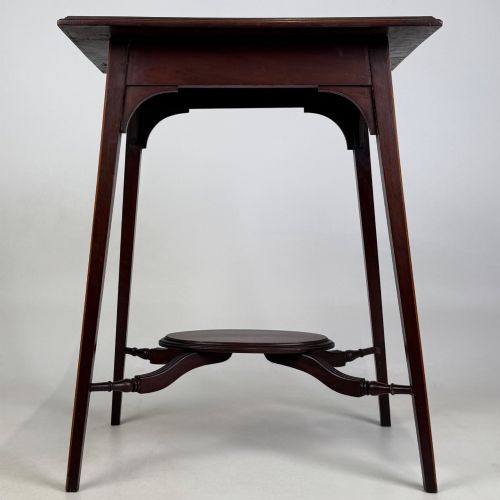
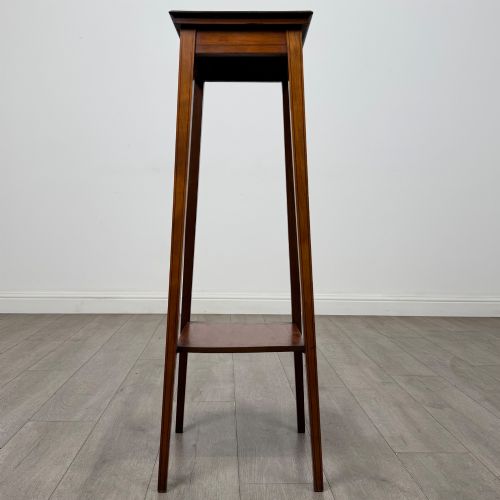
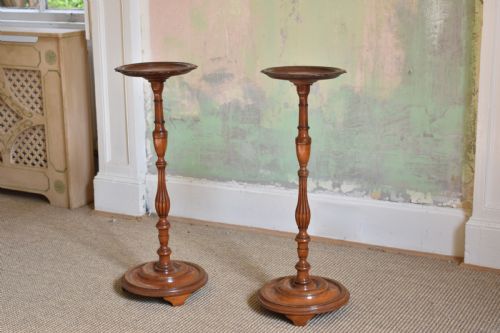


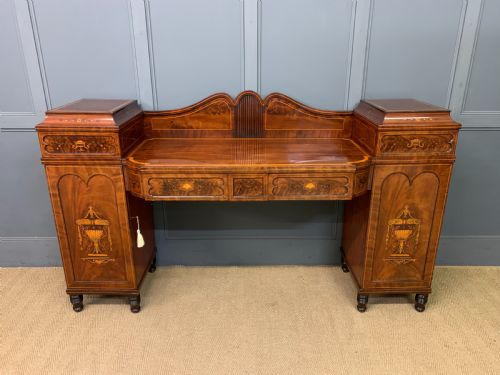


Edwardian Urn Inlaid Table
These edwardian urn inlaid table pieces bring refined classical symmetry and delicate marquetry into modern rooms.
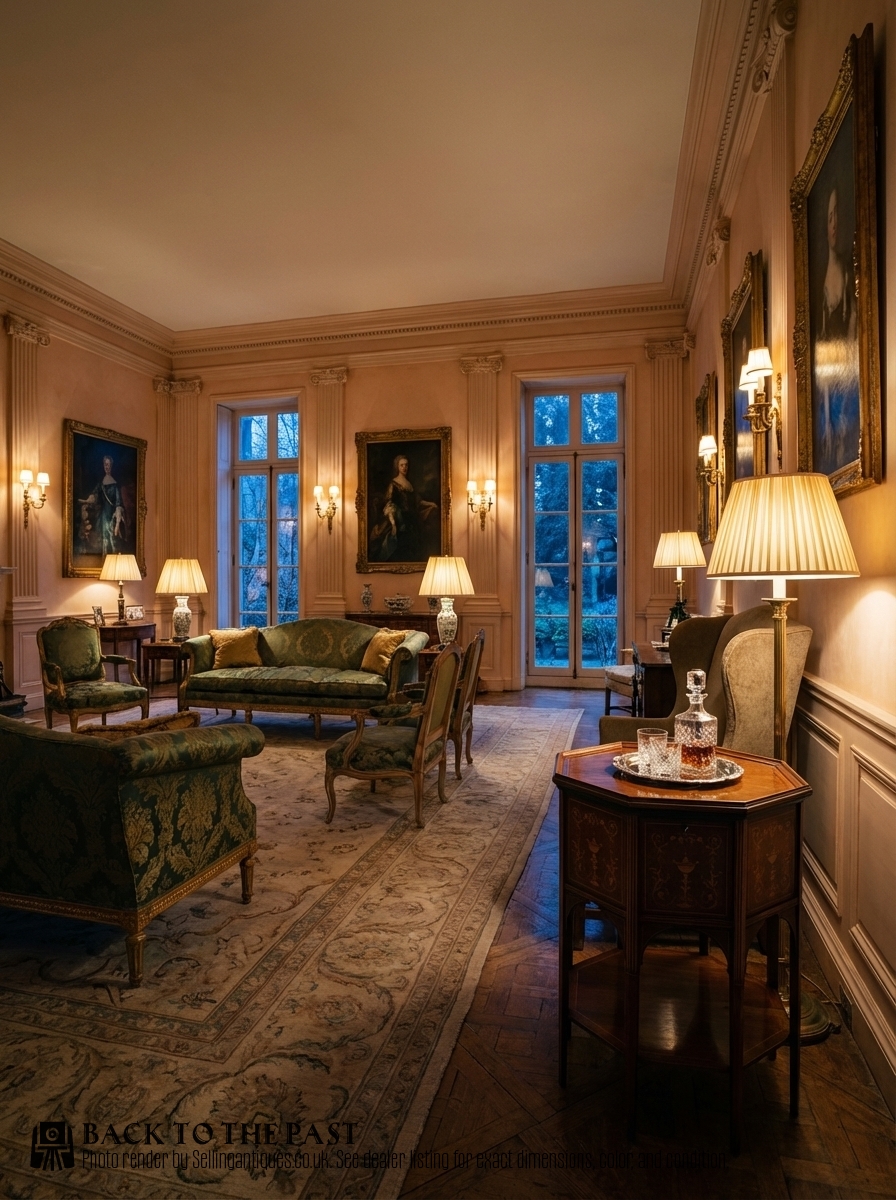
Edwardian Urn Inlaid Table
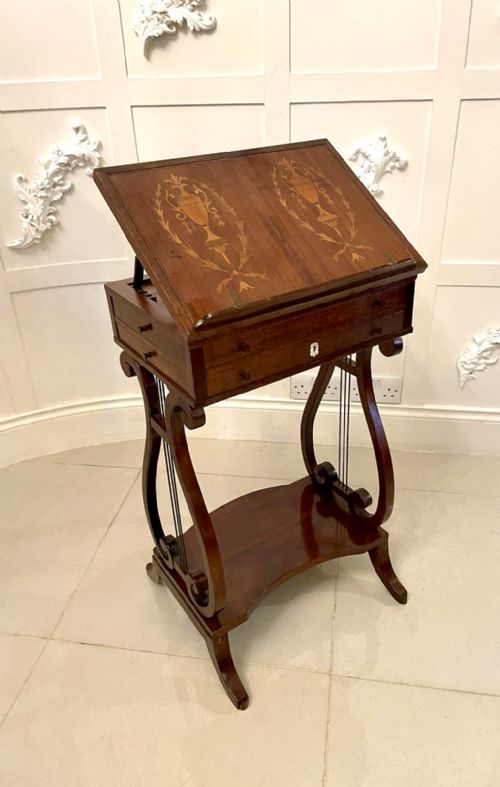
An edwardian urn inlaid table is a compact form designed for display, reading, or holding small decorative objects in period interiors. The selection spans several decades around nineteen hundred, drawing heavily on earlier eighteenth-century designs.
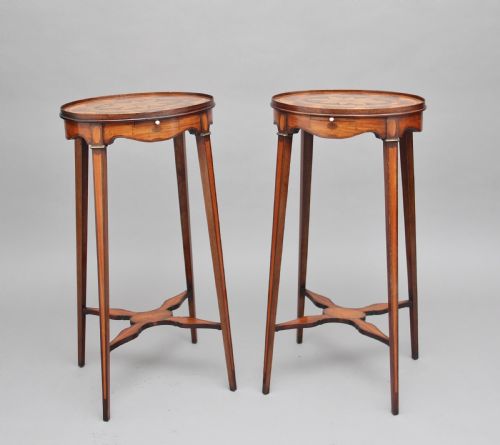
Most examples found here date from the Edwardian era or the late nineteenth century, taking the shape of occasional tables, plant stands, and urn stands. Makers of the period frequently revisited Sheraton Revival styles, incorporating classical motifs into domestic furniture.
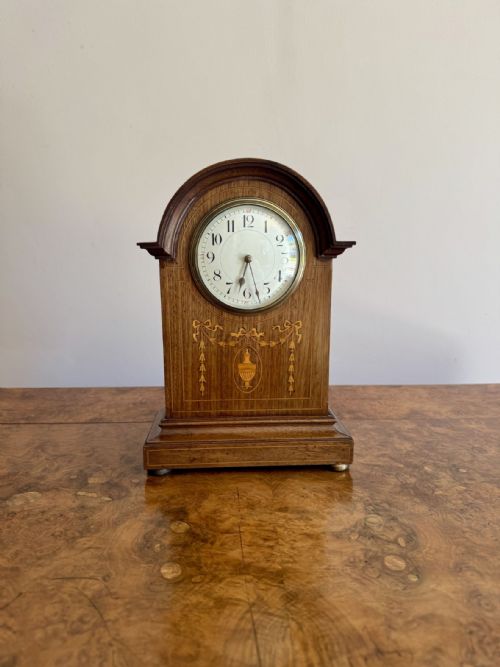
The assortment includes occasional tables, side tables, plant stands, and reading tables alongside occasional mantle clocks. Mahogany and satinwood form the primary structural and decorative timbers across the inventory.
How They Were Made
Cabinetmakers constructed these pieces primarily using solid and veneered mahogany, complemented by lighter contrasting timbers. Satinwood, boxwood, and rosewood provided the tonal variety necessary for complex marquetry and banding.
Inlay work defines the visual character of the group, utilising precise contrasting woods to form classical urns, swags, and geometric borders. Brass details occasionally appear as mounts, handles, or decorative accents on the tables and stands.
Mahogany and satinwood dominate the timber selection, appearing alongside brass and rosewood across Edwardian and late nineteenth-century listings.
What Varies in Quality
The standard of an edwardian urn inlaid table rests on the crispness of its marquetry and the choice of timber figure. Finer examples display tightly grained flamed mahogany and meticulously fitted contrasting veneers without gaps.
Proportion and structural restraint separate workshop output, as better pieces maintain balanced lines and delicate tapering legs. The complexity of the inlay, particularly when rendering classical urn motifs and symmetrical banding, marks the upper tier of production.
The Edwardian Urn Inlaid Table Glossary
- Marquetry
- A decorative technique where small pieces of veneer are assembled to form pictorial or geometric patterns on a wooden surface. This method creates the detailed urn motifs seen on Edwardian tabletops.
- Satinwood
- A durable, lustrous timber from tropical trees that yields a pale golden yellow colour. It was frequently used for contrasting crossbanding and stringing.
- Sheraton Revival
- A late nineteenth and early twentieth century design movement that reinterpreted the neoclassical furniture forms associated with Thomas Sheraton. These pieces often feature painted details, delicate legs, and classical inlay.
- Occasional table
- A small, versatile table intended for light domestic use rather than a singular permanent function. Examples in this category include lamp tables and bedside stands.
Edwardian Urn Inlaid Table: Frequently Asked Questions
Where should I place an urn stand?
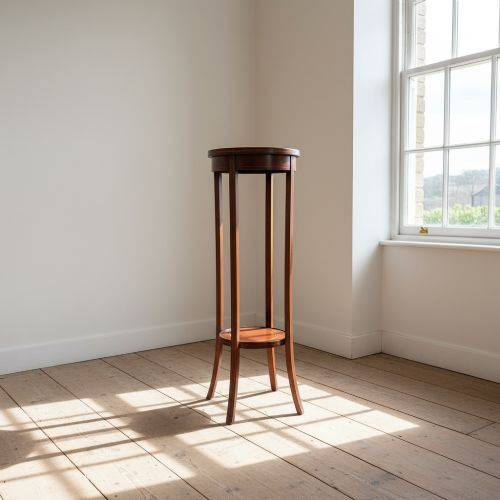
These compact stands suit corners, entrance halls, or alongside armchairs where they can support a small lamp, vase, or decorative object. Their modest footprint allows them to fit comfortably into smaller rooms without crowding the floor space.
Because many feature delicate inlay and polished timber surfaces, placing them away from direct sunlight and strong heat sources helps preserve the finish and prevent the veneer from drying.
How do I clean inlaid mahogany?
Dust the surface regularly with a soft, dry cloth to prevent dirt from settling into the grain and the fine joints of the marquetry. Avoid using harsh chemical sprays or silicone polishes, which can build up and dull the timber over time.
Applying a traditional beeswax polish occasionally will nourish the wood and maintain a gentle sheen. Buff the wax off thoroughly with a clean cloth to protect both the mahogany and the lighter inlay woods.
Are these tables sturdy enough for daily use?
Edwardian occasional tables and plant stands were built for light domestic service rather than heavy physical loads. They provide a stable surface for lamps, books, or decorative items when placed on level flooring.
Avoid dragging them across carpets or uneven floorboards to prevent straining the slender tapering legs and the joints connecting them to the tabletop.
What is Sheraton Revival style?
Sheraton Revival furniture draws inspiration from the neoclassical designs popular during the late eighteenth century. Makers of the Edwardian era revived these lighter forms, incorporating classical urns, satinwood banding, and tapered legs.
This aesthetic favoured elegance and symmetry over heavy proportions, making these tables particularly adaptable to both traditional and contemporary interiors.