


Antique Crystal Table Jar
An antique crystal table jar sits on the dressing table or sideboard to hold small treasures, combining heavy cut glass with precious metal mounts.
Antique Crystal Table Jar
An antique crystal table jar is an object intended for the dressing table, vanity, or dining surface, encompassing forms such as scent bottles, trinket boxes, powder boxes, and biscuit jars. Buyers seeking this phrase encounter items designed to contain perfumes, cosmetics, preserved foods, or small personal effects.
The pieces appearing on this page span several periods, from the Georgian era through the Victorian, Edwardian, and Art Deco years, alongside French nineteenth-century examples. Edwardian and 1930s items form a large portion of the selection, reflecting changing domestic habits around grooming and entertaining.
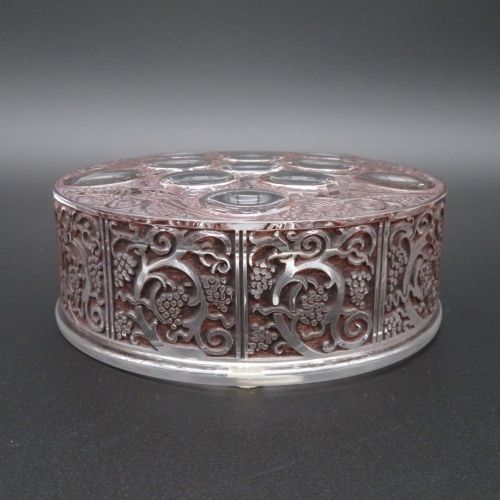
Forms vary from small vanity jars and scent bottles to larger biscuit barrels and preserve pots. Many combine a cut glass or crystal body with a fitted lid made of sterling silver, silver plate, silver gilt, tortoiseshell, or enamel.
Materials and construction
Makers shaped the glass and crystal bodies using deep cutting techniques, creating hobnail and geometric patterns that catch the light. The lower portions often feature heavy facets or pressed designs to provide weight and stability on the table.
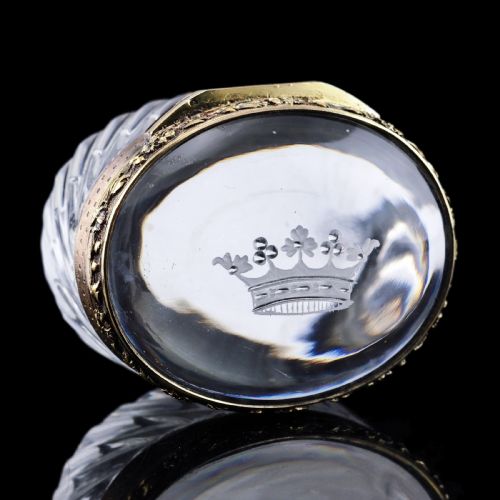
Metals such as sterling silver, silver plate, and silver gilt form the hinged or removable lids, collars, and mounts. Silversmiths frequently applied hallmarks, engraving, or heraldic details directly to the metal tops.
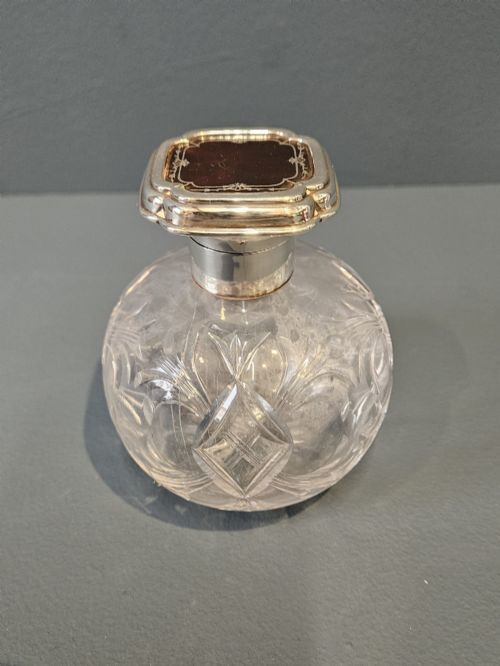
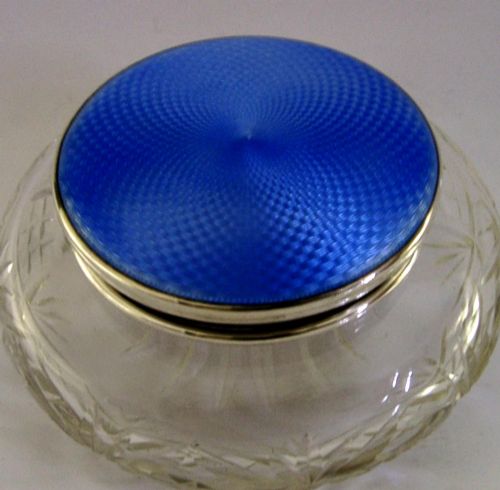
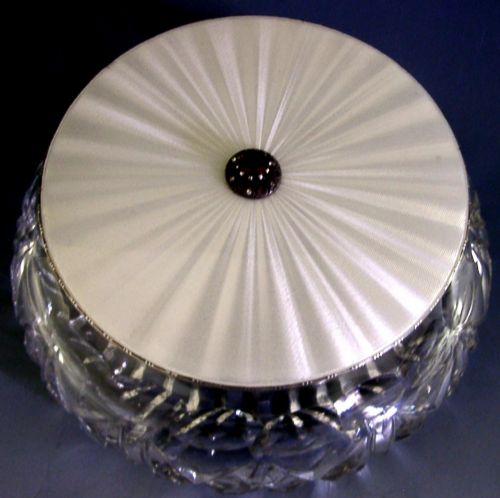
Selected pieces incorporate organic materials like tortoiseshell inlaid into the silver lids, or coloured enamel layers fused to the metal surface for added visual contrast.
Listings span periods from the nineteenth century through the Art Deco era, featuring materials such as cut crystal, sterling silver, tortoiseshell, and enamel.
Evaluating quality and execution
The clarity and weight of the crystal body set the foundation for a piece, alongside the crispness and depth of the cut glass facets. Heavier, more resonant crystal indicates a superior material composition.
The execution of the metal mounts dictates the refinement of the object, particularly where silver, silver gilt, or tortoiseshell meet the glass rim securely. Marked sterling silver items with legible hallmarks and maker stamps demonstrate higher formal accountability than unmarked silver-plated alternatives.
Decorative additions such as hand-applied blue enamel, heraldic finials, or complex tortoiseshell inlays elevate the standard of manufacture. The tightness of hinged lids and the precision of the fit between cover and vessel reveal the care taken by the original workshop.
Lalique·Asprey and Co·Posen of Frankfurt and Berlin·Barnsley and Co·William Comyns·Jonathan Douglas
The Antique Crystal Table Jar Glossary
- Hobnail cut
- A glass-cutting pattern consisting of raised, sharp-pointed facets resembling the head of a hobnail. This technique creates a heavily textured surface that reflects light from multiple angles.
- Sterling silver
- An alloy containing a high proportion of pure silver, standardly marked to guarantee its metal content. It appears frequently in the lids and collars of these vessels.
- Biscuit barrel
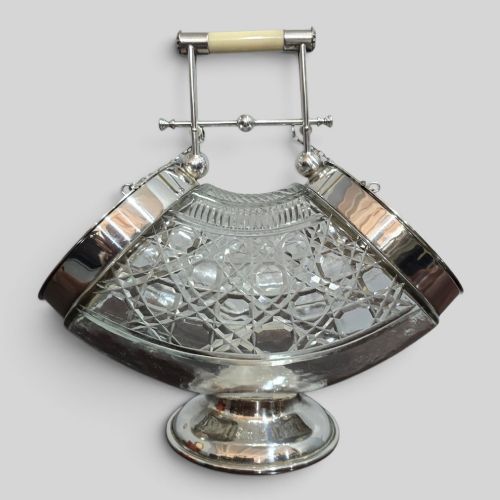
- A covered container used on the dining table for holding biscuits or dry goods. These examples pair a substantial glass body with a metal swing handle and lid.
- Silver gilt
- Silver that has been coated with a thin layer of gold on its surface. This treatment provides a warm golden tone to the metal mounts.
- Tortoiseshell
- The mottled brown and amber material derived from the shell of certain turtle species, used historically to inlay or cover box lids. It is frequently paired with piqué silver work.
Antique Crystal Table Jar: Frequently Asked Questions
What is an antique crystal table jar used for?
These vessels served various domestic functions, holding items like loose powder, perfume, cologne, trinkets, or biscuits. They sat upon dressing tables, sideboards, and dining tables as both functional containers and decorative objects.
The specific form dictated its contents, with small bottles housing scents while larger lidded boxes contained personal jewellery or cosmetics.
How do I identify an Edwardian crystal jar?
Edwardian pieces often display crisp cut glass patterns combined with sterling silver lids bearing hallmarks from the early twentieth century. The styling reflects the period's preference for heavy crystal bodies paired with refined silver collars.
Looking for maker marks and date letters on the silver mount provides the exact year of manufacture.
Are these jars made of glass or crystal?
The listings include both cut glass and cut crystal materials, which share similar transparent qualities. Crystal generally contains lead oxide, giving it greater weight, brilliance, and a resonant sound when struck.
Both materials were utilised interchangeably by period makers to achieve deep optical effects through cutting.
How should I clean the silver mounts?
Silver mounts require gentle cleaning with a specialist silver cloth to preserve the metal surface without touching the surrounding glass or tortoiseshell. Avoiding harsh liquid dips protects organic inlays and enamel work.
Regular, careful maintenance keeps the hallmarks and engraved details clear.