
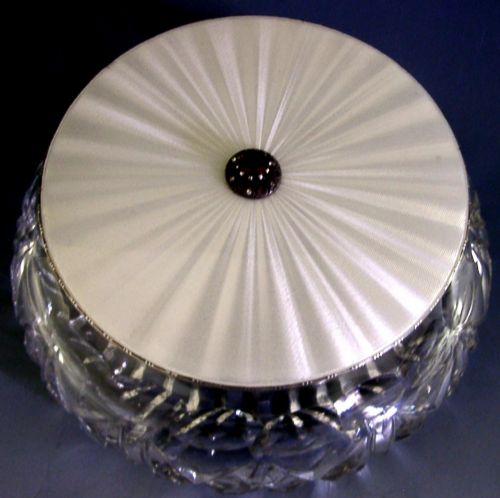


Antique Crystal Jar Lid
An antique crystal jar lid finishes a dressing table or vanity vessel, pairing heavy cut glass with sterling silver, enamel or tortoiseshell.
Antique Crystal Jar Lid
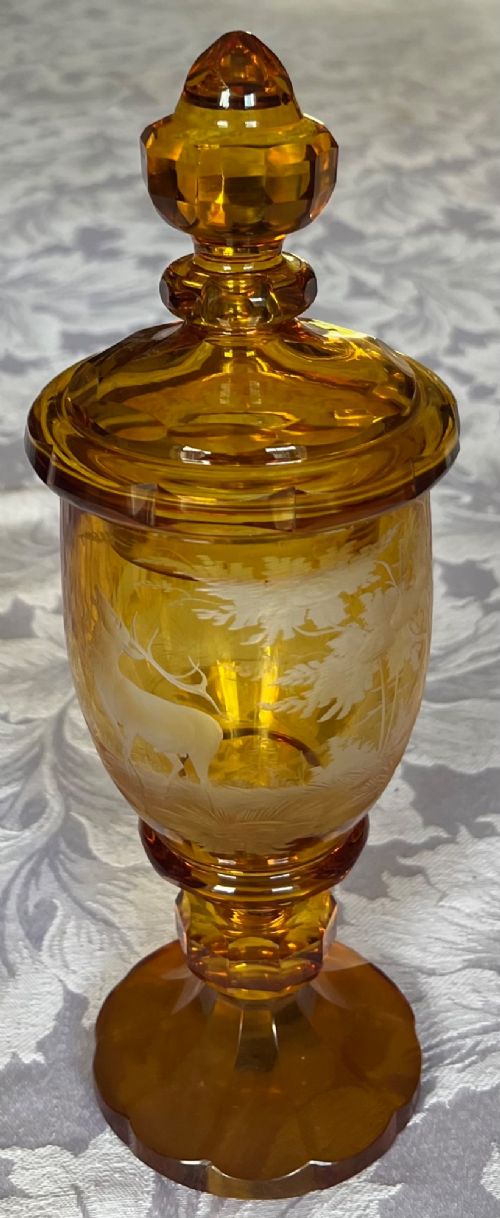
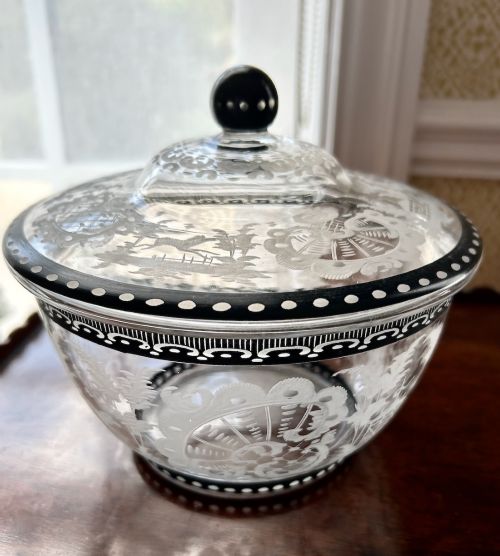
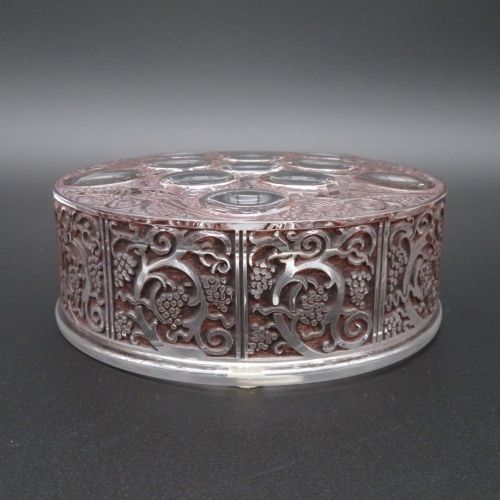
An antique crystal jar lid crowns vessels ranging from small scent bottles and vanity jars to large biscuit barrels and preserve pots. When searching for an antique crystal jar lid, collectors usually encounter matched components from dressing table sets, biscuit boxes or preserve containers spanning the Victorian, Edwardian and Art Deco periods.
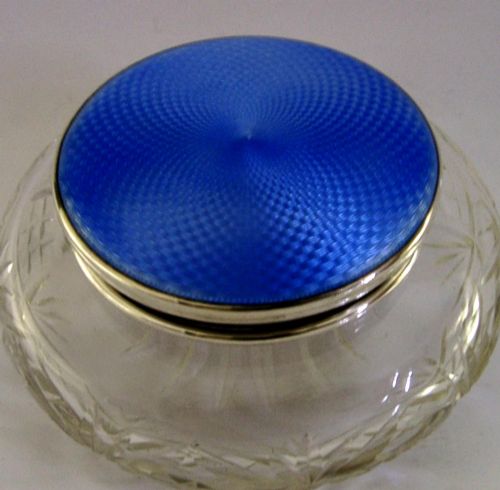
The materials span clear lead crystal and cut glass combined with sterling silver, blue enamel or tortoiseshell mounts. Forms vary from simple circular discs to hinged silver-topped covers and heavy cut glass stoppers designed for nineteenth and early twentieth century domestic use.
How they were made
Glass bodies and lids utilise heavy-press moulding or hand-blowing followed by wheel-cutting to achieve deep facets and geometric patterns. Artisans then fitted these crystal elements with cast or stamped sterling silver mounts, occasionally incorporating tortoiseshell panels or coloured enamel overlays.
Metalwork often bears hallmarks indicating assay offices in cities such as Sheffield alongside maker marks from firms like Asprey. The assembly relies on tight mechanical seating or hinged silver collars securing the glass elements beneath.
Listings feature items spanning the 1860s through the 1930s, incorporating materials such as lead crystal, sterling silver, tortoiseshell and blue enamel.
What varies in quality
The weight and clarity of the crystal foundation dictate the base quality, with heavy lead crystal showing sharp, clean facet edges rather than softened mould seams. Superior examples feature crisp hand-cutting that catches light evenly across the surface.
Mounts show similar distinction where thick gauge sterling silver, intact tortoiseshell pique inlay or unblemished enamel separate finer vanity items from standard commercial wares. The precision with which metal collars fit glass rims marks the standard of production.
Asprey and Co·Lalique
The Antique Crystal Jar Lid Glossary
- Cut Glass
- Glass shaped and patterned by holding it against rotating abrasive wheels. This technique produces sharp facets and deep prismatic incisions typical of Victorian and Edwardian domestic wares.
- Lead Crystal
- Glass containing metallic lead oxide to increase refractive index and weight. The added density allows for deeper cutting and a clearer ring when struck.
- Tortoiseshell
- The mottled brown and amber horn of the hawksbill turtle used historically for decorative luxury items. It frequently appears on vanity jar lids beneath silver pique inlay.
- Sterling Silver
- An alloy of silver containing ninety-two point five percent pure silver and seven point five percent other metals. It serves as the standard material for lids, collars and mounts on nineteenth and twentieth century jars.
- Vanity Jar
- A small container used on a dressing table for cosmetics, pins or cotton. These vessels commonly feature decorative glass bodies and precious metal covers.
Antique Crystal Jar Lid: Frequently Asked Questions
How do I date a crystal lid?
Dating relies on a combination of glass cutting styles and metal hallmarks stamped onto silver mounts. Victorian pieces often display deep, complex hobnail cutting while Art Deco examples favour streamlined geometric motifs.
Assay office stamps and date letters on the silver components provide precise years of manufacture for fitted lids. Unmarked glass elements require stylistic comparison with documented vanity sets from the same era.
What were crystal jar lids used for?
These lids protected the contents of dressing table jars, biscuit barrels, preserve pots and inkwells from dust and evaporation. They formed the functional closure for vessels holding powders, perfumes or sweetmeats.
In domestic settings, matching lids completed luxury sets displayed on mahogany sideboards or vanity tables. The combination of glass and silver denoted utility paired with decorative refinement.
How do I clean an antique crystal lid?
Cleaning requires lukewarm water and mild soap applied with a soft cloth to protect both glass facets and delicate metal mounts. Immersion should be avoided if the piece incorporates tortoiseshell or glued silver collars.
Silver portions benefit from gentle polishing with a dedicated cloth while avoiding abrasive compounds near the glass edges. Thorough drying prevents moisture retention in crevices between the glass and metal.