



Antique Crystal Drop Vase
An antique crystal drop vase, more traditionally known as a lustre, brings brilliant refracted light and remarkable Victorian colour to a room.
Antique Crystal Drop Vase
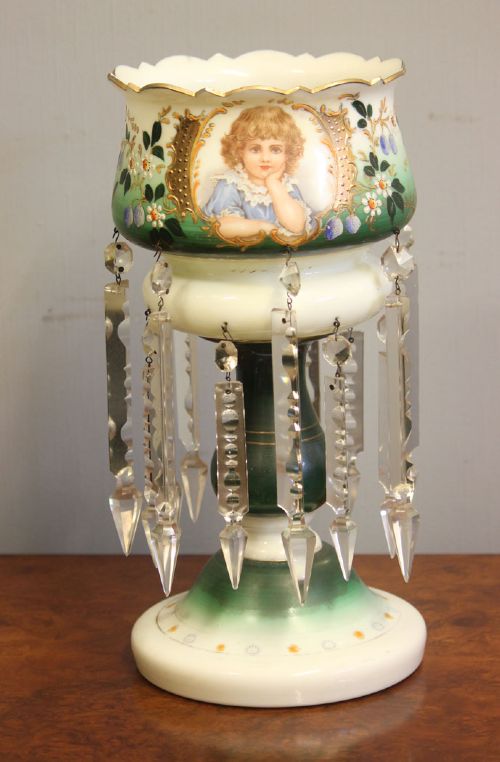
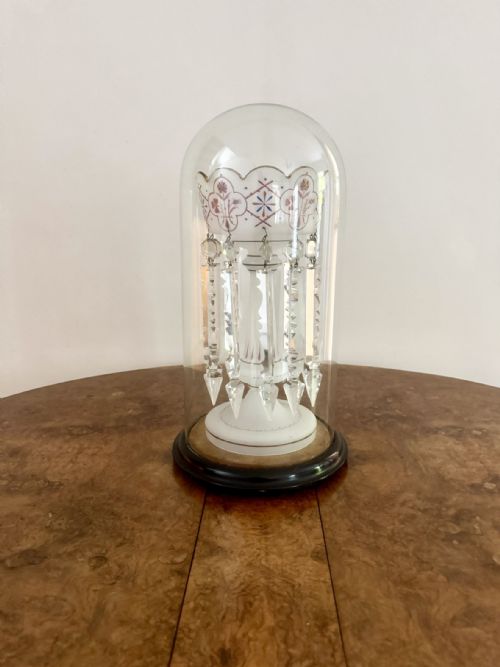
When you search for an antique crystal drop vase, you are looking at nineteenth-century table and mantel lustres designed to catch and refract light. These decorative glass vessels feature hanging crystal prisms that shimmer around the central stem or bowl.
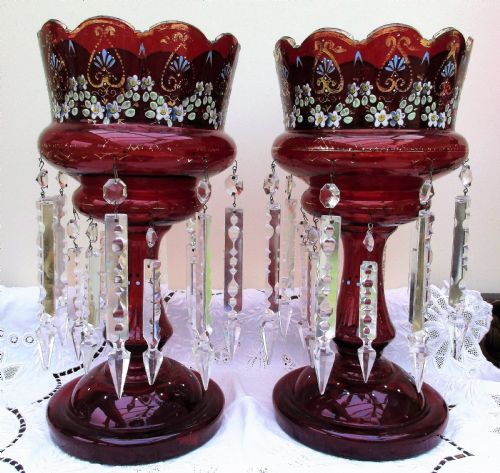
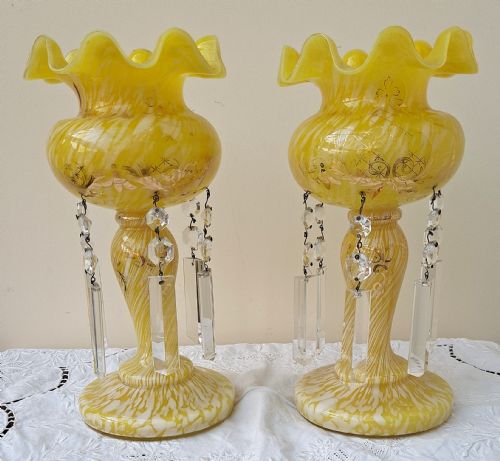
The versions you are most likely to meet on this page date from the Victorian period, spanning the late nineteenth century. They appear singly or, more commonly, as matched pairs intended for a mantelpiece or a formal table centrepiece.
Makers fashioned these pieces in striking colours such as ruby, cranberry, green and yellow glass, often complemented by hand-painted enamel and gilt decoration. Forms range from simple single vessels to large, elaborate mantel lustres with dense rows of cut crystal drops.
How they were made
Workshops created these vessels using blown and flash glass techniques, overlaying clear glass with coloured layers before cutting away sections to reveal the contrast underneath. Cut crystal prisms were separately formed, hand-faceted and suspended from the rim using wire or metal loops.
Decoration often involved the application of gold leaf and enamel detailing directly onto the glass surface, sometimes fired to ensure permanence. Skilled artisans shaped the heavy pedestals and bowls by hand, resulting in the characteristic weight and presence associated with Victorian glass.
The object forms recorded here include both single table lustres and matched pairs intended for mantel display.
What varies in quality
Quality in these vessels depends largely on the depth and saturation of the coloured glass, alongside the precision of the hand-cutting on both the body and the hanging drops. Superior examples display crisp faceting that maximises light refraction without distortion.
The richness of the gilding and the intricacy of any enamel work separate standard production from finer pieces. Surviving sets with a complete, matching complement of original crystal drops command greater appreciation from collectors.
The Antique Crystal Drop Vase Glossary
- Lustre
- A decorative tabletop or mantel vessel featuring hanging glass prisms designed to reflect light. These pieces gained immense popularity during the Victorian era for interior display.
- Flash glass
- A technique where a thin layer of coloured glass is fused over a base of clear or contrasting glass. Artisans cut through the outer coloured layer to expose the base material beneath.
- Cranberry glass
- A rich pinkish-red glass created by adding gold chloride to the molten batch. It became a defining material for nineteenth-century decorative tablewares.
- Mantel lustre
- A large ornamental vase specifically scaled for display on a fireplace mantelpiece. They frequently incorporate numerous cut crystal drops hung from the upper rim.
Antique Crystal Drop Vase: Frequently Asked Questions
What is an antique crystal drop vase?
It is a nineteenth-century decorative glass vessel, commonly known as a lustre, featuring hanging cut crystal prisms. These pieces were designed to sit on mantelpieces and tables, catching the light.
The form typically includes a central stem and bowl decorated with vibrant colours like ruby or cranberry, accented with gilding and enamel.
How were glass lustres used?
Victorians used these pieces primarily as decorative ornaments on mantelpieces, sideboards and parlour tables. Their vibrant colours and hanging prisms added visual brilliance to formal rooms.
While they resemble vases, their primary function was ornamental rather than holding flowers, especially given the hanging drops around the rim.
How do I date these glass pieces?
Dating relies on observing stylistic markers, manufacturing techniques and material colours typical of the nineteenth century. Most examples on this page originate from the Victorian era.
Specific details such as flash glass techniques and heavy pedestal bases point directly towards mid-to-late nineteenth-century production periods.
How do I care for my lustre?
Cleaning requires gentle handling, particularly around the delicate wire connections holding the crystal drops. Lukewarm water and mild soap protect the surface gilding and enamel work.
It is often advisable to remove the crystal drops individually before washing the main body of the vessel to prevent accidental chipping.