
Antique Credenza Mirror
An antique credenza mirror brings together figured timbers and reflective glass to anchor a reception room or hallway with period weight.
Antique Credenza Mirror
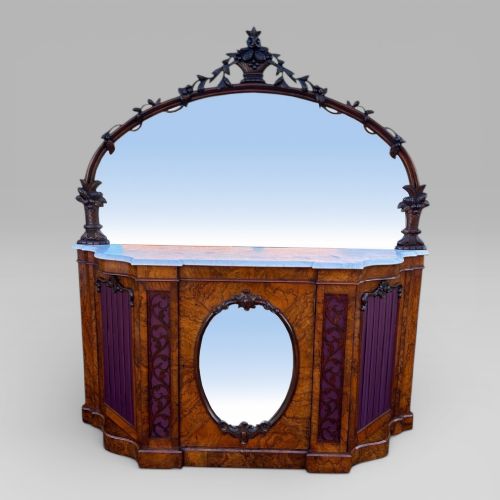
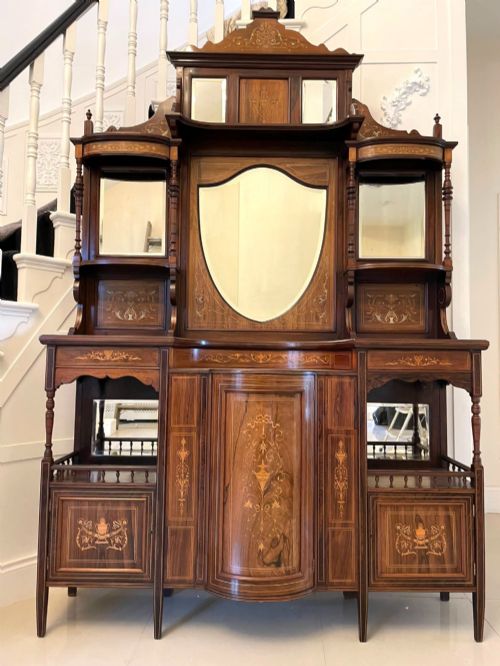
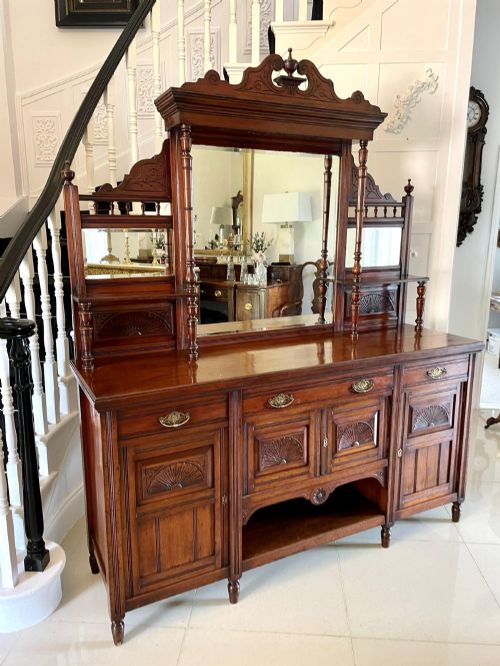
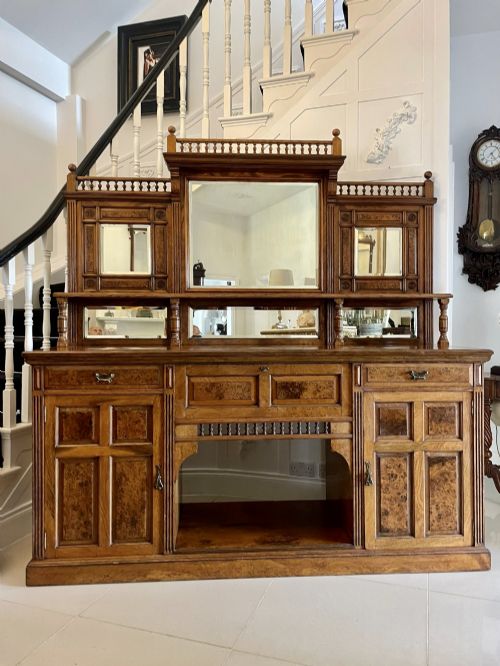
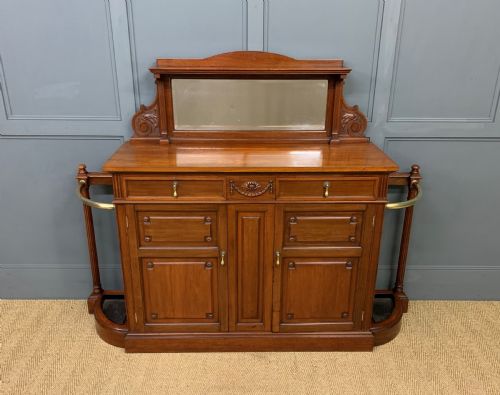
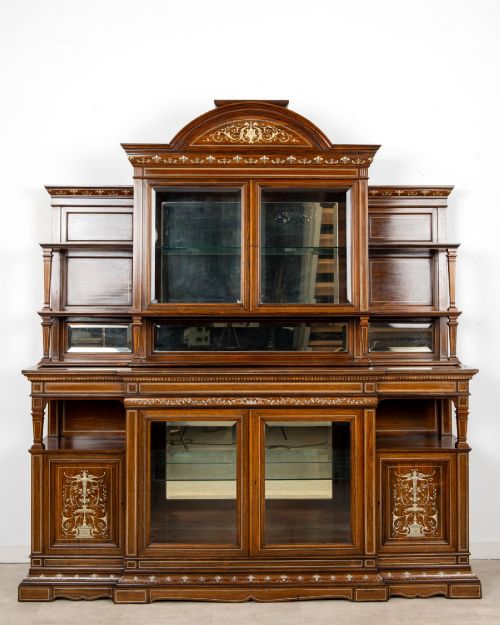
An antique credenza mirror typically manifests as a mirrored back sideboard or low cabinet designed for nineteenth-century formal interiors. These pieces combine substantial timber carcasses with upright glass plates, serving as both storage and decorative furniture.
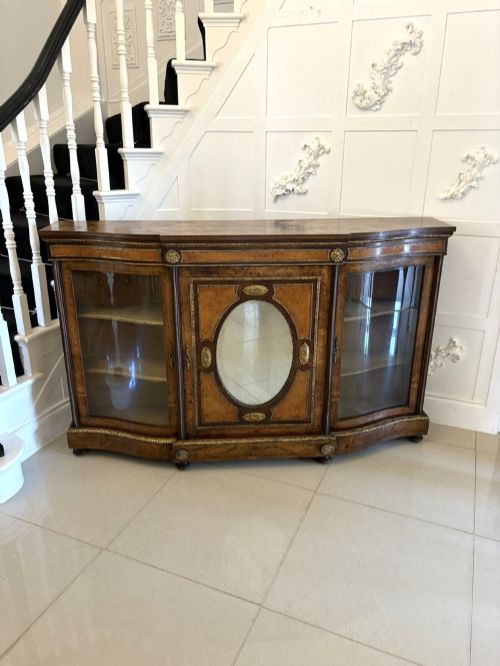
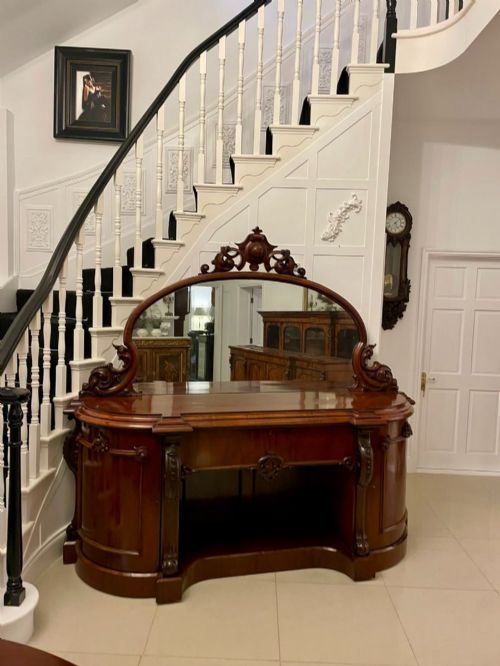
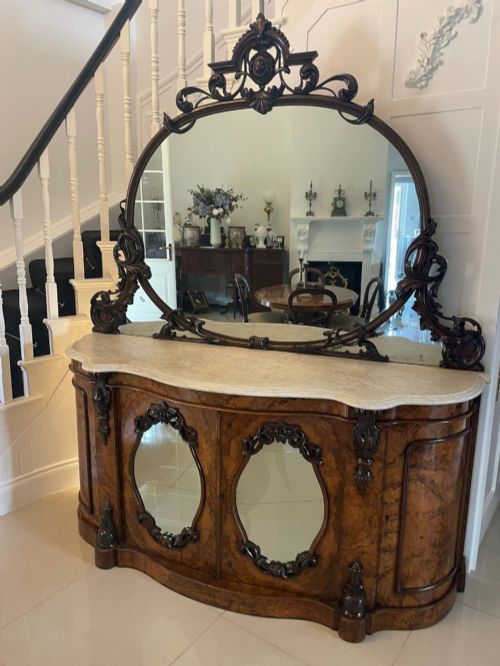
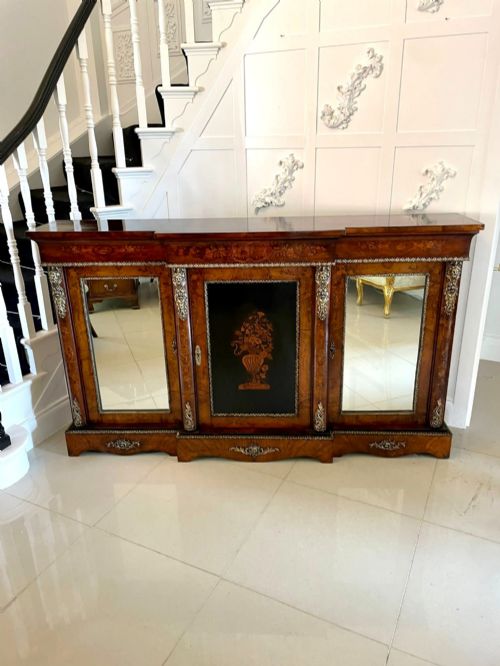
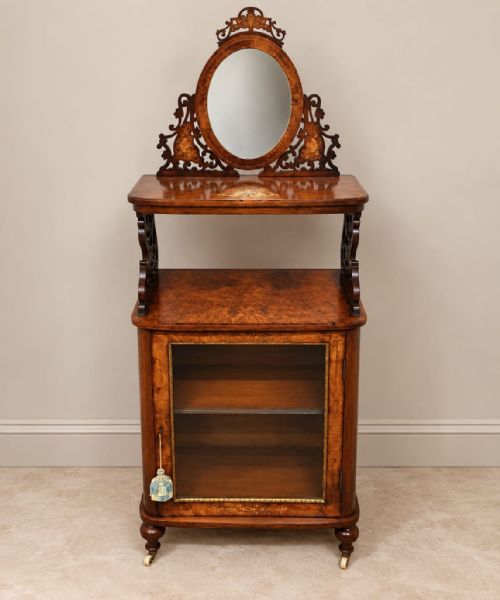
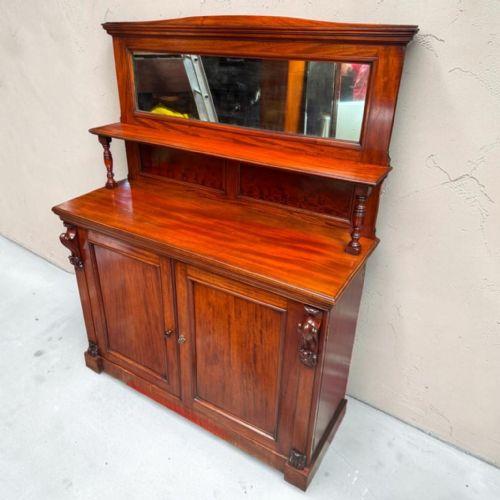
Burr walnut and mahogany dominate the offerings, often fitted with original mirror glass and brass mounts. The most common iteration on this page is the Victorian mirror-back credenza or chiffonier.
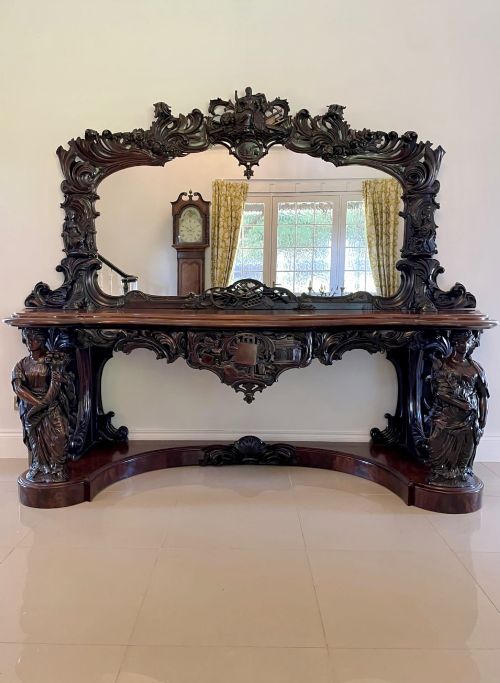
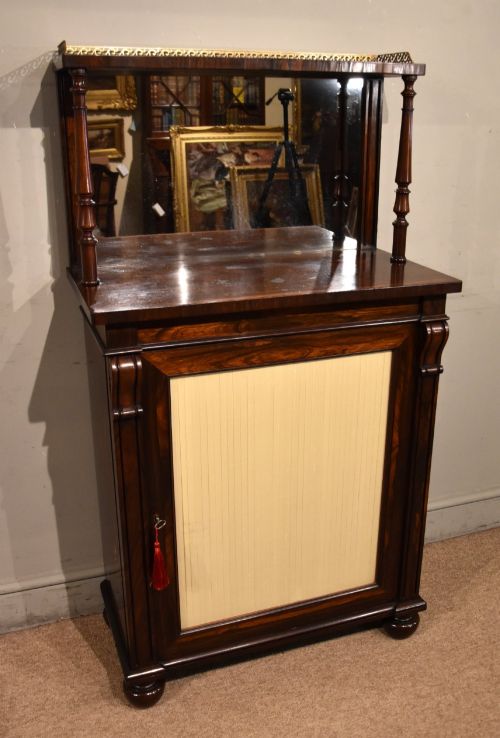
Makers integrated mirrors into sideboard backs to reflect candlelight and brighten dark Victorian rooms. These dual-purpose forms range from modest rosewood side cabinets to exhibition-quality carved mahogany consoles.
Materials and construction
Cabinet makers utilised dense hardwoods including rosewood, burr walnut and mahogany over softwood carcases. Veneers were hand-cut and laid in bookmatched patterns to create striking grain movement across doors and friezes.
Brass ormolu mounts, marquetry inlay and marble tops frequently embellish the finest examples. Mirror glass was bevelled by hand and set into carved wooden frames secured behind upright galleries.
Victorian mirror backs were ingeniously positioned so guests could check their evening cravats without leaving the dining table.
Judging standard and execution
Depth of carving and symmetry of burr walnut veneers separate ordinary production from exhibition pieces. The crispness of foliate details and the weight of cast brass mounts indicate the workshop standard.
Integration of the mirror frame into the main sideboard carcase reveals the joiner's competence. Superior examples maintain original mercury silvering on the glass and retain matching cabinetry hardware.
Shoolbred and Co·Collinson and Lock·Gillows
The Antique Credenza Mirror Glossary
- Credenza
- A low cabinet or sideboard, frequently fitted with glass doors and mirrored backs. Victorian iterations often incorporated central cupboards flanked by curved glass display sections.
- Chiffonier
- A compact sideboard featuring a cupboard base and an upper shelf supported by pillars. These pieces evolved during the Regency and Victorian periods for drawing room storage.
- Ormolu
- Gilt-bronze mounts applied to furniture edges and door panels. This decorative technique added metallic contrast to dark woods like walnut and mahogany.
- Marquetry
- Inlaid wood veneers forming pictorial or geometric designs. Craftsmen used contrasting timbers to create floral and scrollwork motifs across drawer fronts.
- Secessionist
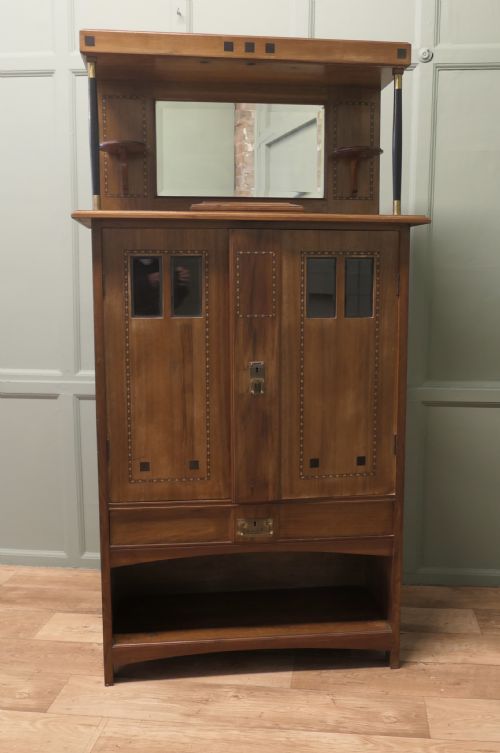
- A late nineteenth and early twentieth-century design movement favouring clean structural lines. Pieces from this tradition often utilise oak with stylised metal hardware.
Antique Credenza Mirror: Frequently Asked Questions
How do I date an antique credenza mirror?
Dating relies on timber selection, decorative motifs and construction methods. Mid-nineteenth-century pieces frequently display burr walnut veneers and heavy ormolu mounts.
Later Victorian and Edwardian examples shift towards oak and simpler Arts and Crafts lines. Examining the mirror silvering and backboards provides further clues regarding manufacture age.
Where should I place a mirrored sideboard?
These pieces suit dining rooms, grand hallways and drawing rooms where they serve as serving surfaces and focal points. The integrated mirror helps bounce natural light around darker interior spaces.
Ensure the floor is level, as heavy marble tops and mirrored superstructures require stable placement. Keep them away from direct sunlight to protect sensitive rosewood and walnut veneers.
How do I care for nineteenth-century wood?
Maintenance requires occasional application of appropriate wax polish to nourish dry timber and veneers. Avoid silicone-based sprays which can degrade historic French polish finishes.
Maintain stable room humidity to prevent veneer lifting or wood splitting. Clean the mirror glass gently using a soft cloth without letting moisture seep behind the silvering.
What styles are available on this page?
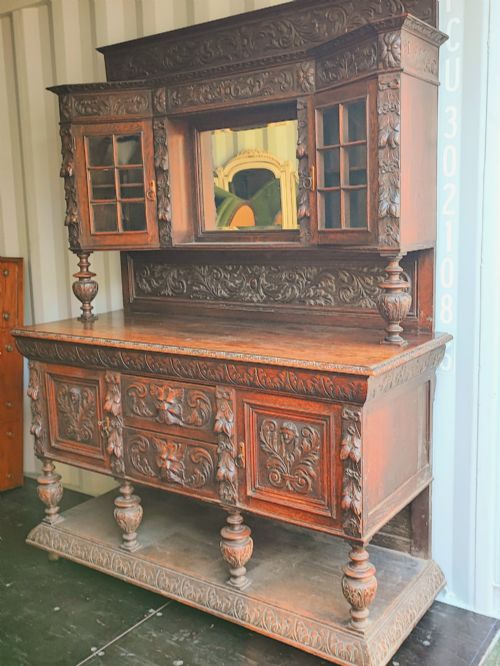
The selection spans Victorian, Regency, Edwardian and Arts and Crafts design movements. Victorian pieces often feature heavy carving and burr walnut veneers.
Edwardian alternatives include straightforward oak sideboards and simpler rectilinear forms. Arts and Crafts items emphasise honest timber construction with minimal ornamentation.