


Antique Credenza Bookcase
An antique credenza bookcase brings together the display of volumes and the low lines of a reception room cabinet.
Antique Credenza Bookcase
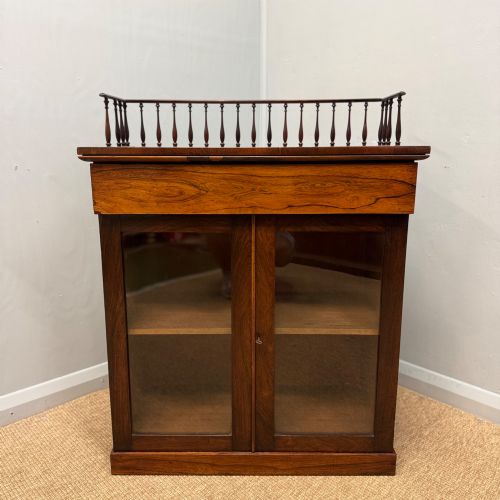
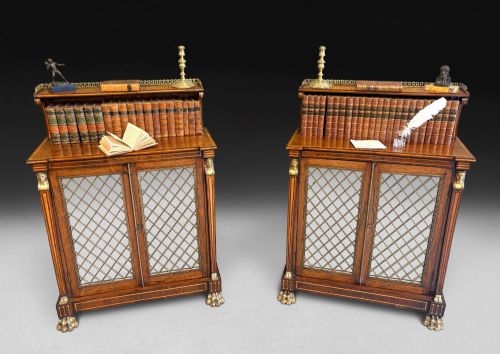
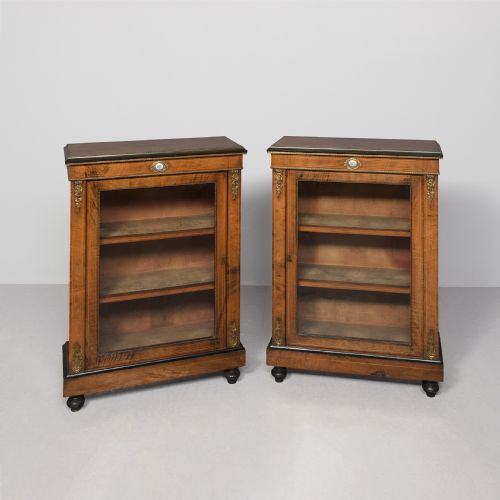
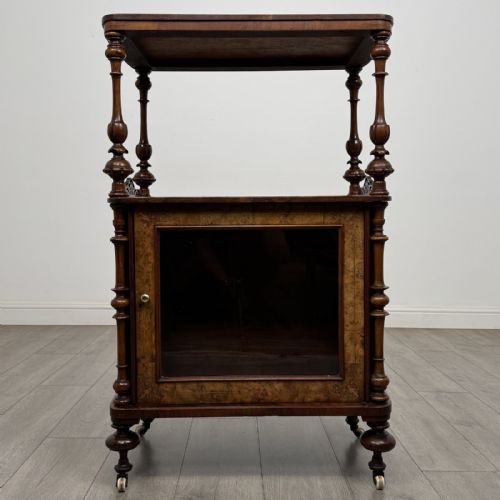
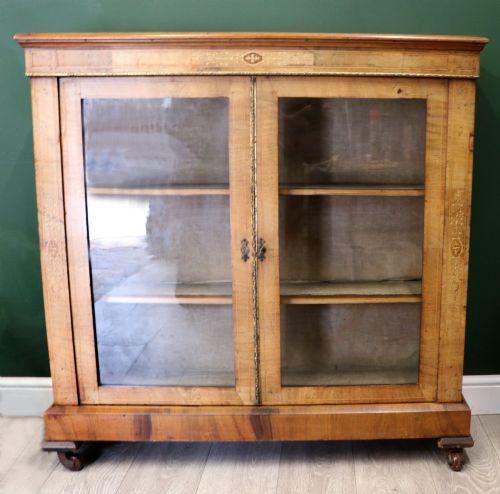
When you search for an antique credenza bookcase, you meet low-profile furniture designed to house books and display decorative objects upon the top surface or behind glass doors. These hybrid forms combine the enclosed storage of a cupboard with the shelving of a bookcase or the glazed panels of a pier cabinet.
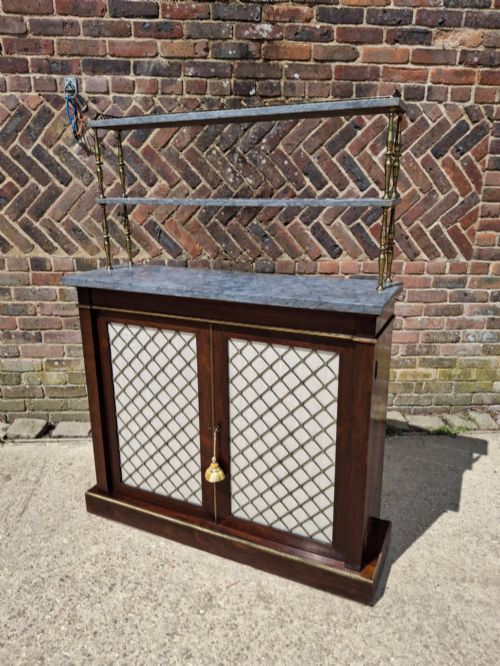
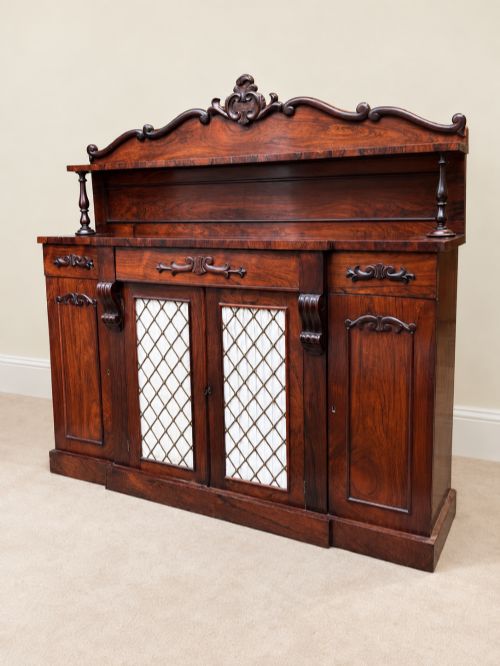
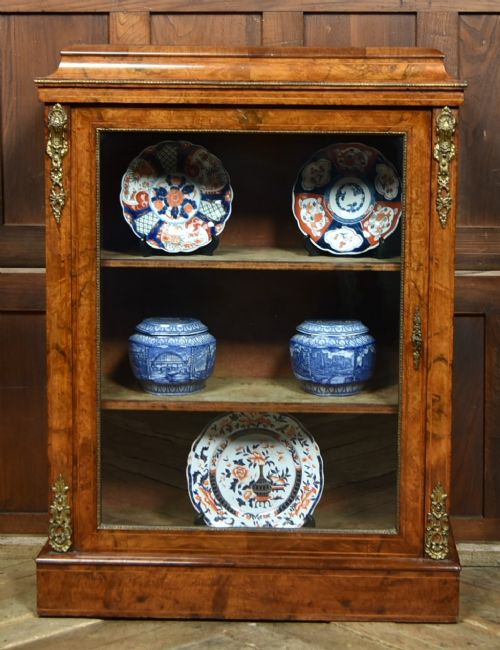
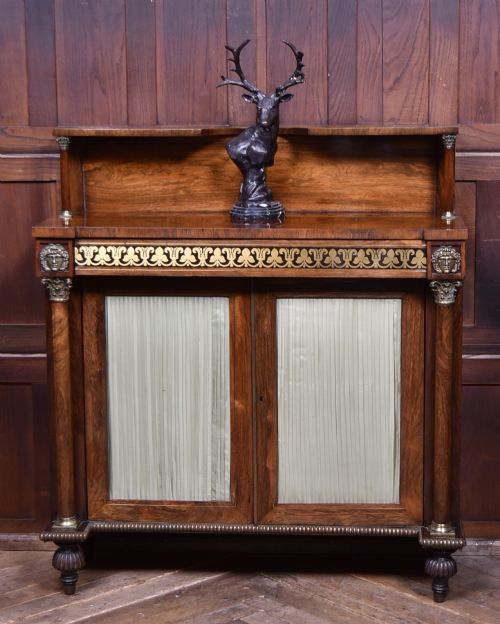
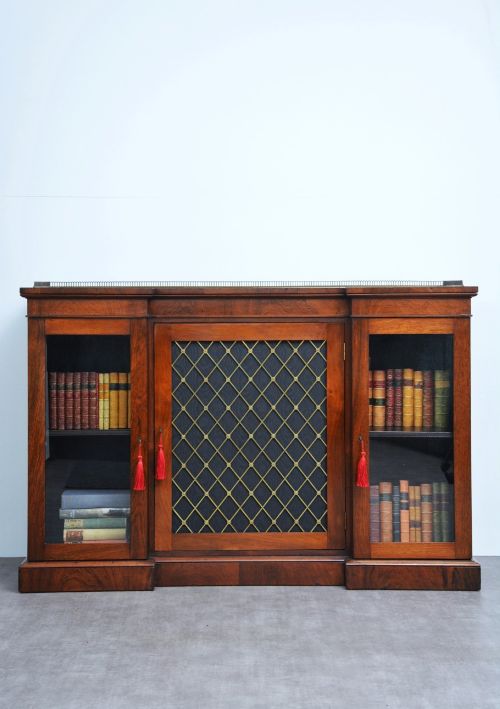
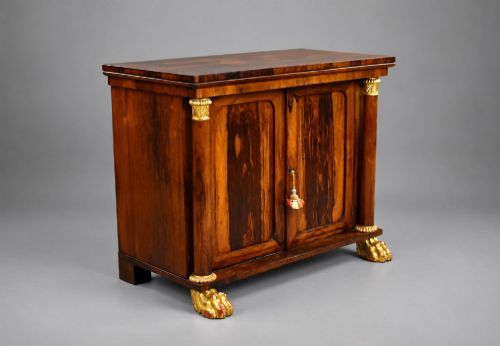
The pieces listed on this page span the Georgian, Regency and Victorian eras, with walnut, mahogany and rosewood forming the structural foundation of most examples. You will frequently encounter Victorian burr walnut models alongside Regency rosewood chiffoniers and mahogany breakfront cabinets.
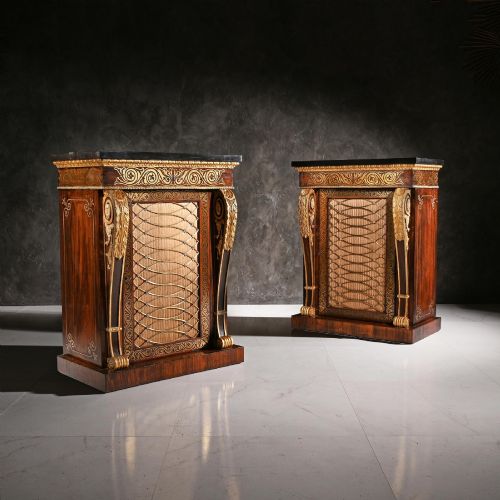
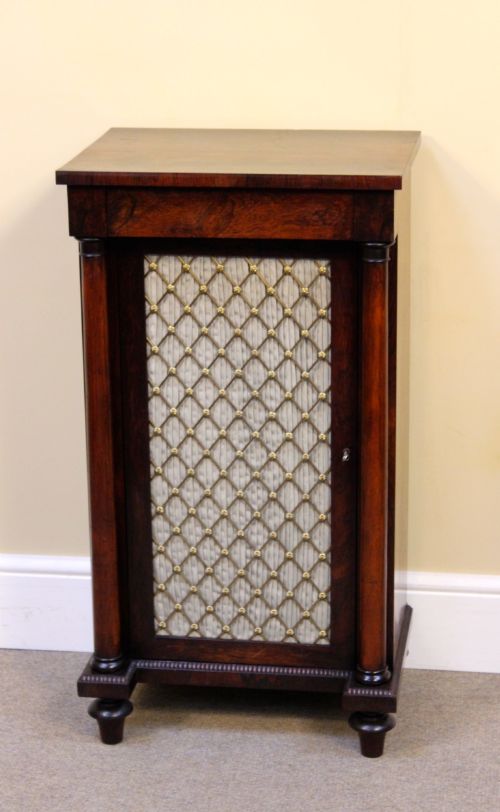
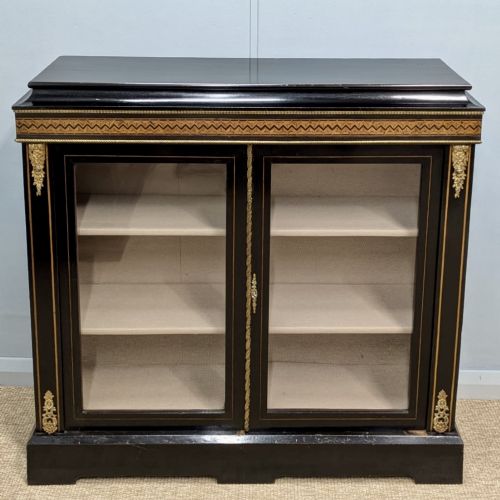
Makers often integrated brass grilles, silk-backed panels or ormolu mounts to lighten the heavy timber façades typical of the nineteenth century. Lower doors conceal adjustable shelving, while upper sections provide glazed or open compartments suited to a parlour or library.
How they were made
Cabinet makers utilised dense hardwoods such as mahogany, rosewood and burr walnut, often applying veneers over secondary pine or oak carcases to create rich surface patterns. Figured timbers were chosen for their grain movement, particularly on breakfront doors and serpentine fronts.
Metalwork played a structural and decorative role, with cast ormolu mounts, brass stringing and gilt bronze details securing corners and framing panels. Glazed doors utilised individual timber glazing bars to hold panes in place before the introduction of large plate glass sheets.
Antique Credenza Bookcase Retail Price Guide 2026
Typical asking prices for credenza bookcase among the pieces listed under this phrase on Sellingantiques today, from the lower quarter to the upper quarter. They describe what is for sale here now, not the wider market.
Some nineteenth-century cabinets hide silk-panelled doors behind glass so the contents remain softly obscured from prying eyes.
What varies in quality
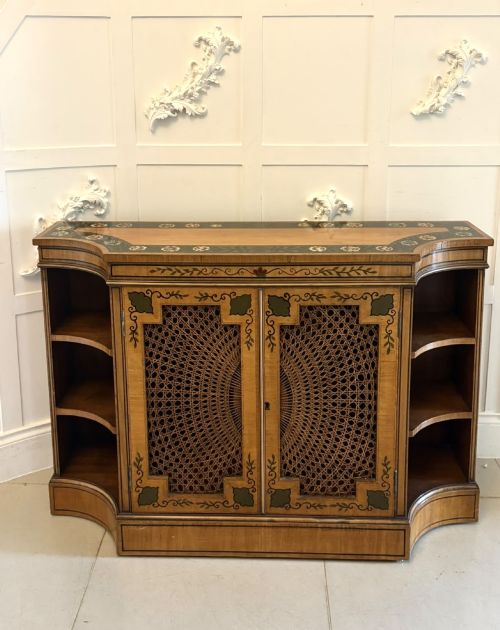
Quality rests upon the selection of timber veneers and the precision of the marquetry or inlay work integrated into the frieze and doors. Subtle differences in carving depth and the crispness of ormolu mounts separate standard production pieces from workshop examples.
Internal construction details, such as solid mahogany drawer linings, hand-cut dovetails and the original mechanisms of adjustable shelving, distinguish finer cabinet making. The weight of the bronze mounts and the integrity of the timber joints determine the endurance of each piece.
Gillows
The Antique Credenza Bookcase Glossary
- Breakfront
- A cabinet design where the central section projects forward from the flanking wings. This configuration breaks the linear monotony of long walls in formal rooms.
- Ormolu
- Gilded bronze mounts applied to furniture corners, friezes and door panels for decorative contrast. The technique involves applying a mercury and gold amalgam to bronze.
- Chiffonier
- A low sideboard or cabinet developed in the Regency period, frequently fitted with shelves or a small bookcase superstructure on top. They typically feature panelled or fabric-backed doors.
- Pier cabinet
- A narrow display cabinet built to fit the wall space between windows. These glazed pieces often display porcelain and small books.
- Marquetry
- The art of applying decorative veneer pieces of various woods to a structural panel to form pictures or geometric patterns. Craftsmen select contrasting timbers to achieve tonal depth.
Antique Credenza Bookcase: Frequently Asked Questions
What is an antique credenza bookcase?
An antique credenza bookcase is a low-profile hybrid storage piece that combines enclosed cupboard space with open or glazed shelving for books and display items. These items emerged during the nineteenth century to serve the drawing room and library.
Most examples feature timber construction in walnut or mahogany, often enhanced with glass doors and brass or ormolu mounts. They sit lower than traditional tall bookcases to maintain sightlines across reception rooms.
How were these cabinets used?
These cabinets served to store household libraries while providing a surface for displaying decorative ceramics, clocks and ornaments. Lower cupboards kept volumes out of direct sunlight and dust.
In Victorian and Regency interiors, they functioned as focal points against drawing room walls or between tall windows. Their dual nature allowed owners to combine practical book storage with formal display.
Where should I place one?
These pieces suit reception rooms, studies and hallways where their low height preserves wall space and allows artwork to hang above them. Ensure the room has stable humidity to protect nineteenth-century veneers and solid timber carcases.
Allow sufficient clearance for doors to open fully, particularly on breakfront or serpentine models that project further into the floor space. Position them away from direct heat sources to prevent timber shrinkage.
How do I tell periods apart?
Georgian and Regency pieces often showcase flame mahogany, brass stringing and understated classical proportions with rosewood or satinwood accents. Victorian examples frequently employ burr walnut, ebonised finishes, ormolu mounts and richer marquetry inlay.
Later nineteenth-century pieces may incorporate Gothic Revival or Arts and Crafts motifs through carved oak panels or heavier hinges. Examine the internal construction and secondary woods to confirm the era of production.