
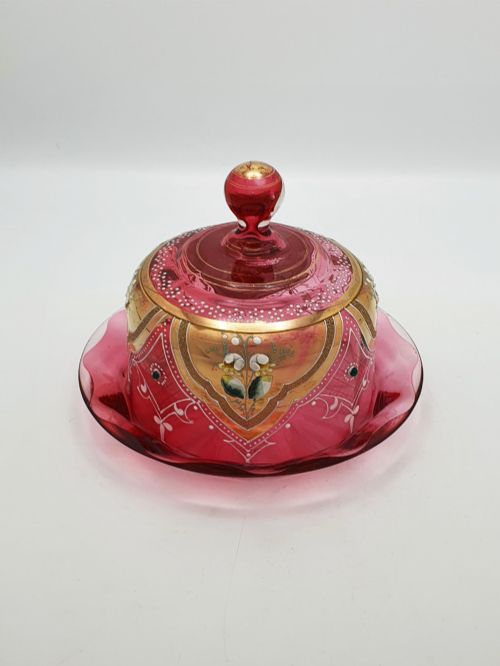
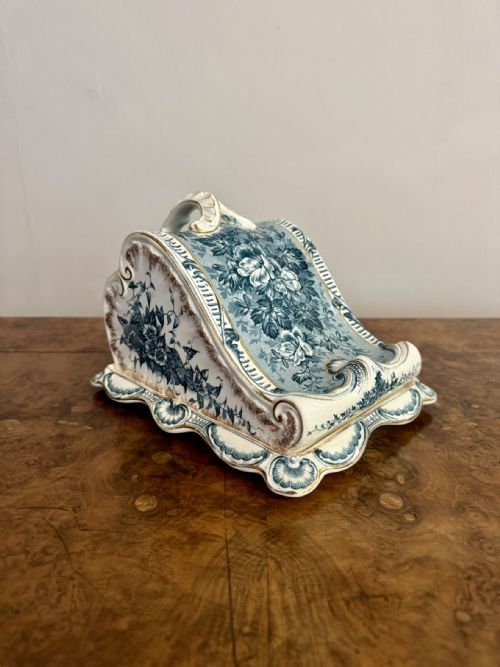
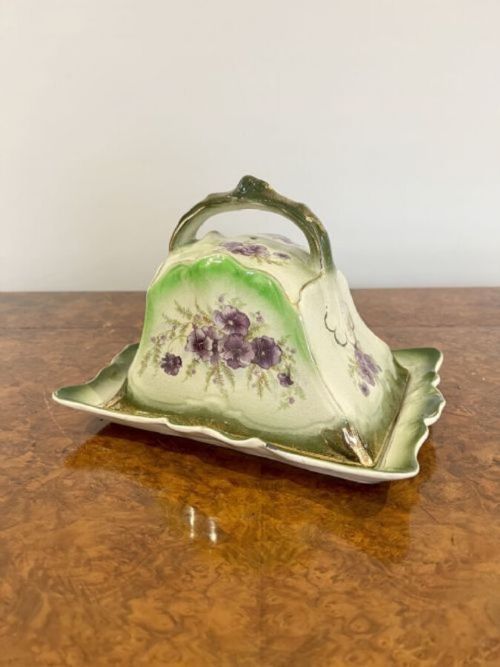
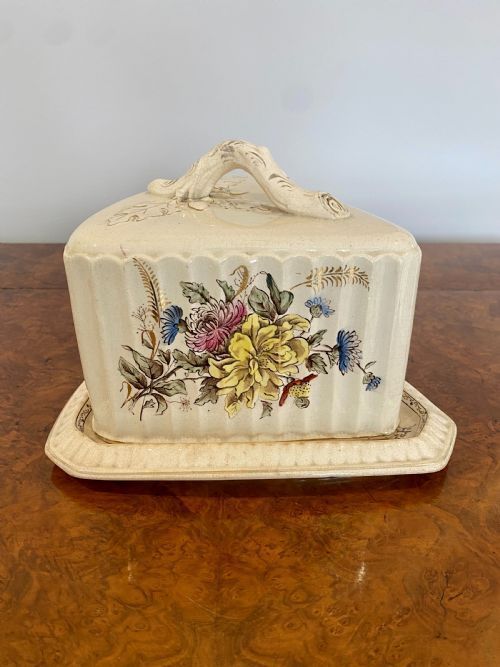
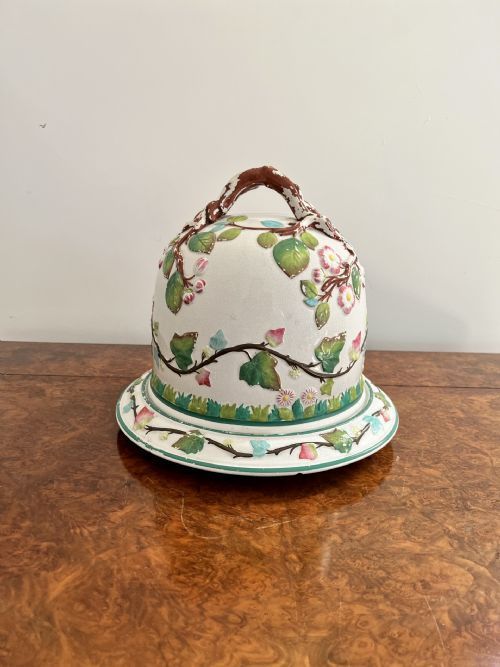


Antique Covered Cheese Dish
These antique covered cheese dish examples bring sculptural ceramic presence to the table, offering a traditional way to serve and preserve cheese.
Antique Covered Cheese Dish
An antique covered cheese dish provides a dedicated vessel for the dining table, typically comprising a fitted dome and a matching stand. These pieces emerge in earthenware, stoneware, ironstone, and glazed ceramic forms from the Georgian period through to the Edwardian era.
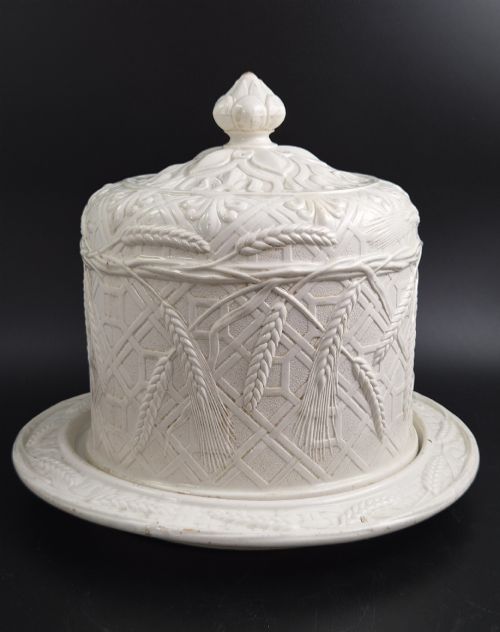
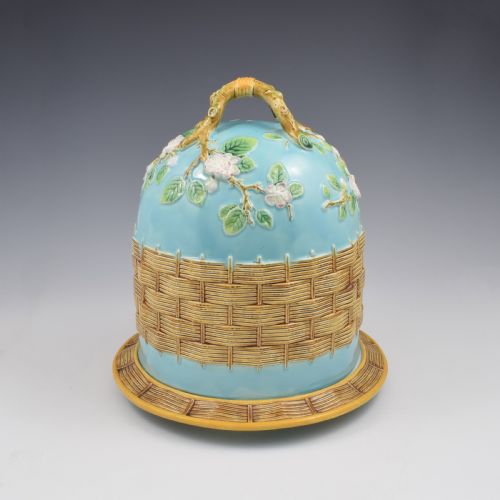
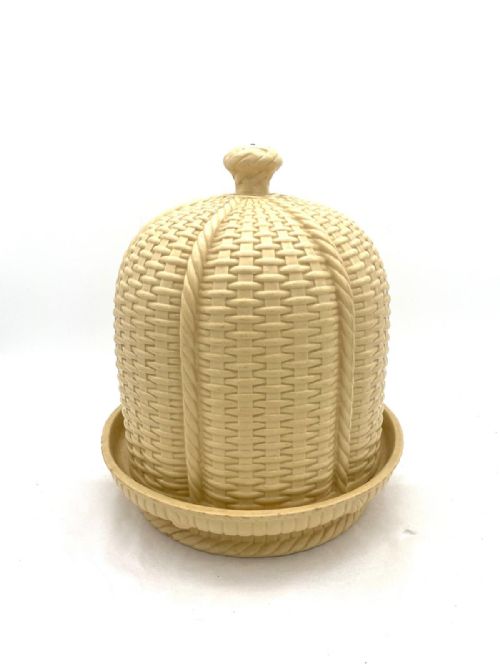
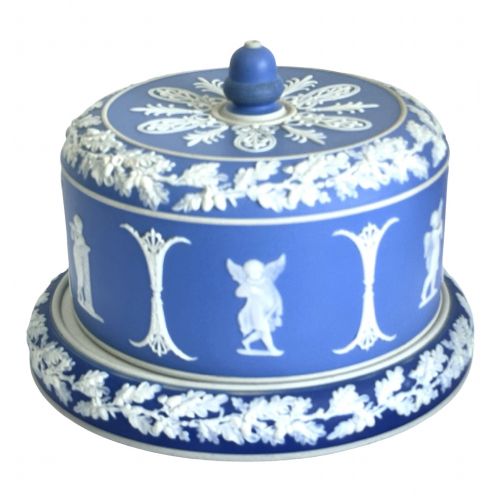
Victorian majolica and jasperware variants dominate the selection, often taking naturalistic forms like basket weave, apple blossom, or wheat and lattice. Buyers encounter large proportions designed for Stilton alongside smaller table pieces intended for everyday dining.
Serveware of this scale reflects nineteenth-century dining habits where cheese formed a distinct course. Makers produce both plain white ironstone utilities and highly decorated coloured ceramic domes.
How they were made
Potteries utilise earthenware and ironstone bodies, shaping large domes either by casting or pressing into moulds. Glazed ceramic surfaces receive hand-painted or moulded decoration, while jasperware relies on applied white stoneware reliefs against contrasting coloured grounds.
Majolica pieces demand expert handling of lead-rich coloured glazes that pool and brighten over moulded botanical and basketry details during firing. Silver plate and glass combinations incorporate metal stands alongside blown or pressed glass covers.
Some nineteenth-century diners required an entire dome dedicated solely to Stilton.
What varies in quality
The clarity and crispness of moulded detail set the standard, particularly on majolica apple blossom and basket weave surfaces where sharp definition separates superior output from softer pressings. Richness and depth in coloured glazes or jasperware contrasts distinguish finer potteries from simpler commercial wares.
Proportion and scale dictate desirability, with large architectural domes and complete matching stands commanding greater presence than smaller or mismatched components. The inclusion of subtle detailing like gold leaf or integrated handles elevates the status of an individual piece.
George Jones·Wedgwood·James Dudson·Copeland
The Antique Covered Cheese Dish Glossary
- Cheese dome
- The large bell-shaped cover designed to fit onto a matching stand and trap moisture for stored cheese. This form prevents the cheese from drying out on the dining table.
- Majolica
- A type of earthenware covered with lead-rich coloured glazes that fuse during firing to create vibrant, glossy surfaces. Victorian potteries used this technique extensively for naturalistic plant and fruit motifs.
- Jasperware
- A fine-grained, unglazed stoneware developed by Wedgwood, characterised by contrasting applied white reliefs on a coloured clay body. It remains instantly recognisable across nineteenth-century tablewares.
- Ironstone
- A heavy, durable type of earthenware patented to resist chipping while mimicking porcelain. White ironstone service pieces often feature subtle moulded borders like wheat and lattice.
- Drabware
- A stoneware body coloured in muted grey-brown or olive tones, popular during the early nineteenth century. It provides a subdued background for classical or basket-weave moulding.
Antique Covered Cheese Dish: Frequently Asked Questions
What is a cheese bell?
A cheese bell is simply an alternative term for the dome cover that sits upon a matching ceramic or metal stand.
The bell shape helps enclose the cheese completely, trapping aromas and protecting the food from household insects during dining.
How were these dishes used?
These covered dishes served as the centrepiece for the cheese course at the conclusion of a formal nineteenth-century dinner.
Hosts kept the cheese resting on the ceramic stand beneath the dome until the meal progressed to the final savoury course.
Are all cheese domes made of ceramic?
While earthenware and ironstone represent the majority of surviving examples, alternative materials appear across different periods.
Craftsmen also paired glass covers with silver plate stands, or utilised Old Sheffield Plate for entirely metallic constructions.