


Antique Country Rocker
An antique country rocker brings vernacular comfort to a fireside, spanning simple ladder-backs and robust Windsor forms built for long domestic use.
Antique Country Rocker
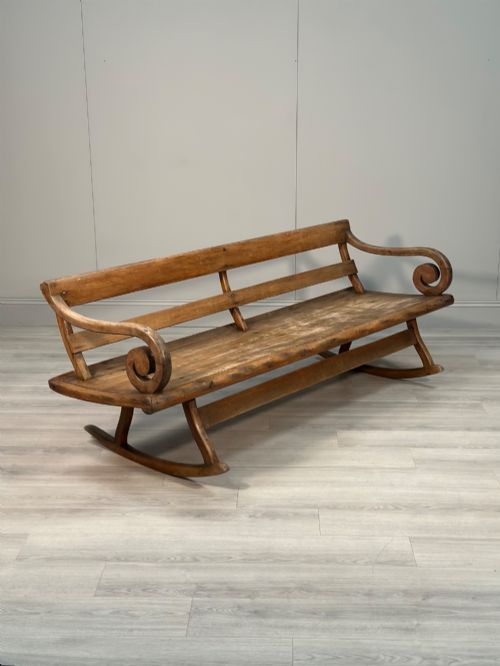
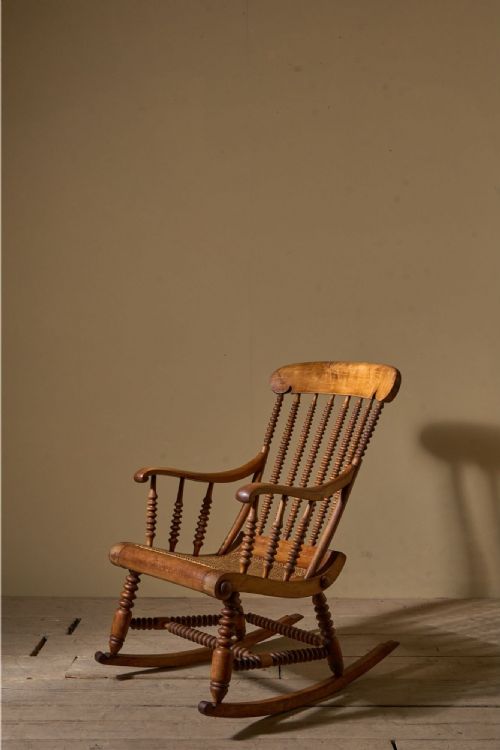
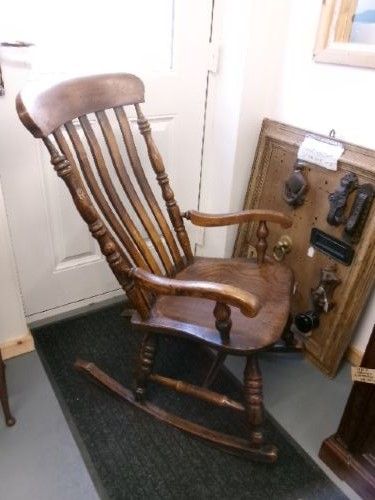
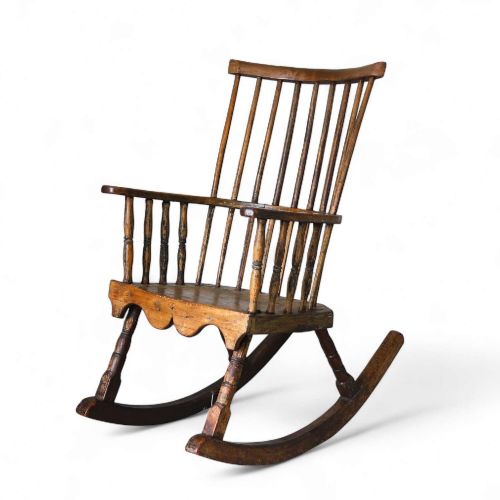
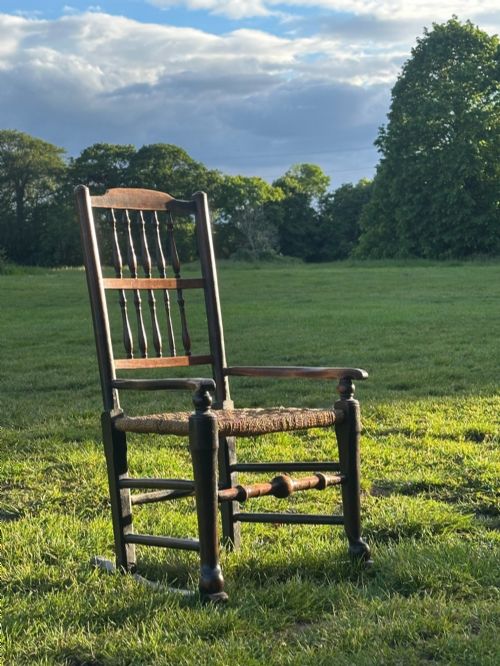
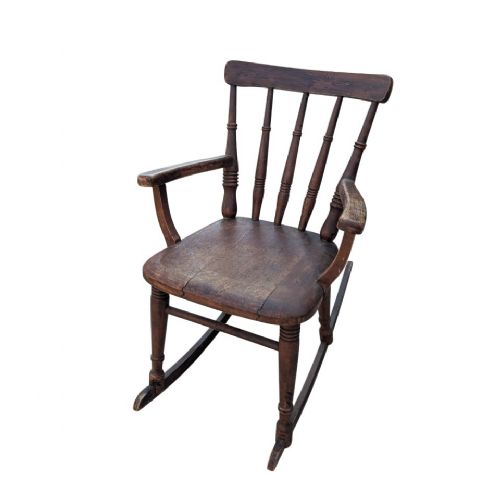
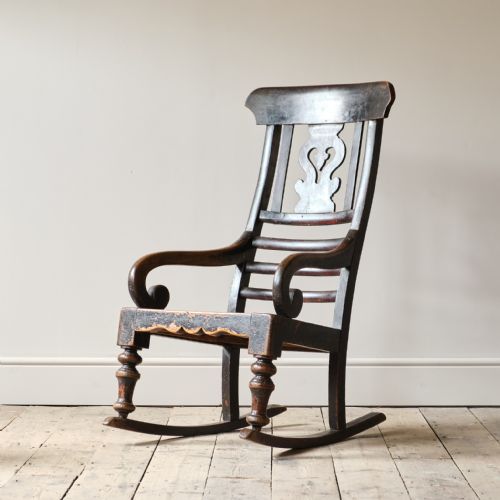
An antique country rocker is a domestic seating piece adapted for motion, originating in regional workshops and rural homesteads across the eighteenth and nineteenth centuries. Buyers encounter numerous forms ranging from sturdy Windsor armchairs and spindle-backs to child-size ladder-backs, cradles, and rocking settles.
The material palette reflects local timber resources, combining dense hardwoods for structural integrity with lighter woods for turned spindles and flexible seats. Pieces span styles from Victorian and Georgian country vernacular to Scandinavian country and primitive American interpretations.
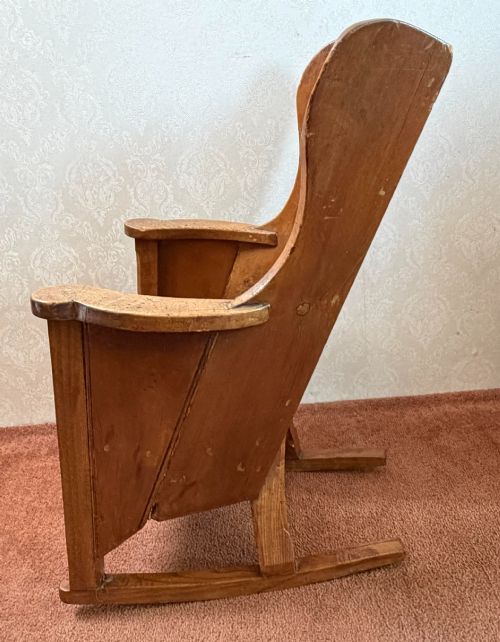
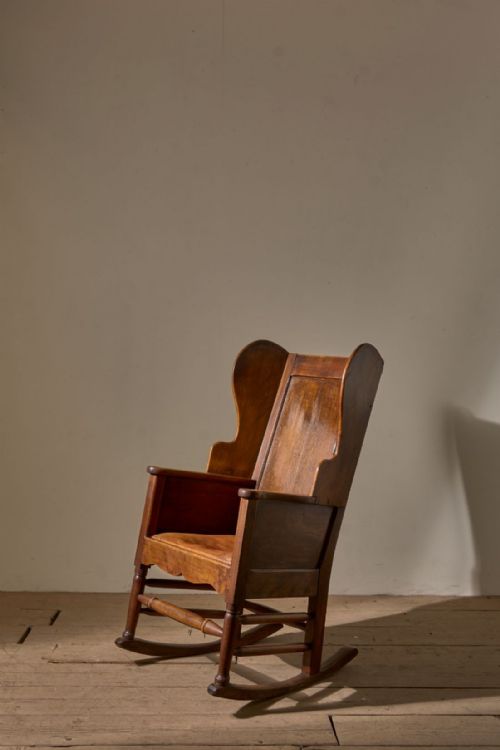
Smaller variants include child's potty rockers, doll chairs, and nursing chairs designed for specific domestic tasks by the hearth. Larger iterations encompass high-back Windsor rockers and oak lambing chairs fitted with curved runners for smooth motion.
Distinctions in quality
Quality rests upon the harmony of proportions and the integrity of the original timber framing, particularly where the seat joins the leg undercarriage. Superior examples maintain balanced rocker curves that deliver a steady motion without excessive tipping or rocking height.
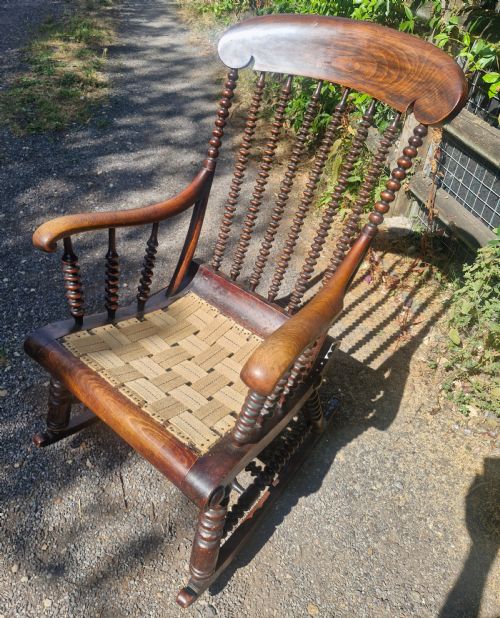
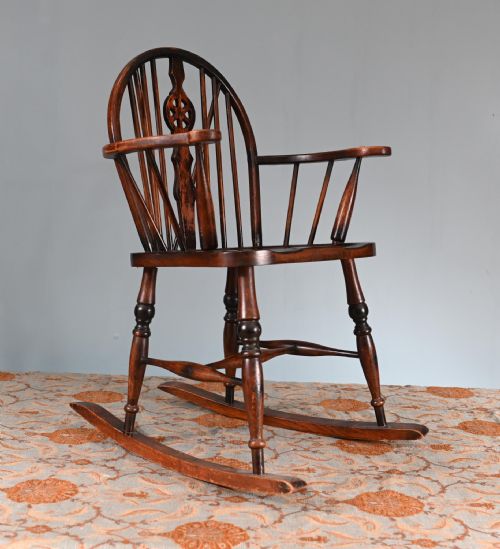
The finesse of turned components, such as bobbin framing or delicate spindle profiles, distinguishes provincial pieces executed by skilled joiners from simpler utilitarian seating. Original surface patination and untouched historic paint finishes elevate a piece above later stripped or heavily restored counterparts.
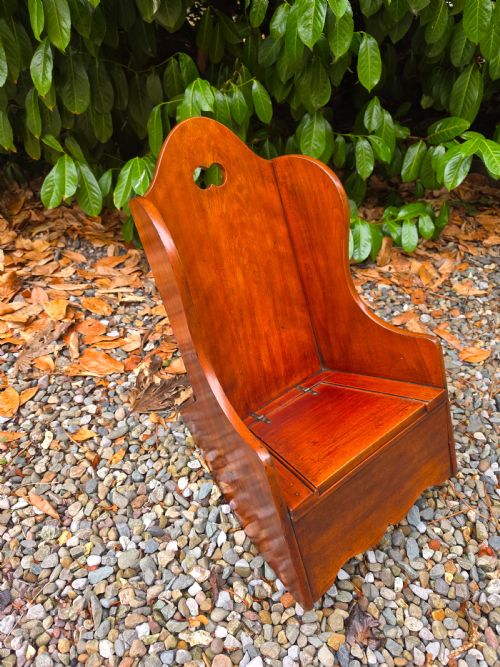
A tiny potty rocker ensures even the smallest household member could join the family circle by the fireside.
The Antique Country Rocker Glossary
- Windsor
- A chair style featuring a solid wooden seat into which the legs and back sticks are directly tenoned. These chairs provide robust vernacular seating with diverse back profiles.
- Ladder-back
- A chair design utilising horizontal slats between two upright posts to form the backrest. This traditional construction often appears on early vernacular rocking chairs.
- Bobbin-turned
- A decorative turning technique producing a series of rounded spheres resembling wooden bobbins along a chair leg or stretcher. It is frequently seen on nineteenth-century vernacular seating.
- Lambing chair
- An enclosed high-backed armchair designed to shield the sitter from draughts near an open hearth. When mounted on curved runners, it forms a cosy fireside rocker.
Antique Country Rocker: Frequently Asked Questions
How do I date an antique country rocker?
Dating relies upon construction methods, timber choice, and tool marks visible beneath the seat or along the turned spindles. Earlier eighteenth-century examples display heavier oak framing and pegged joints, whereas Victorian pieces often utilise mass-turned components and standardised Windsor bows.
Changes in proportion and regional styling further help narrow the decade of production. Examining the wear patterns on the wooden runners provides additional clues regarding the intensity of historic use.
Are these rockers comfortable for daily use?
Most antique country rockers were built for domestic tasks by the hearth rather than lounging, resulting in upright postures and relatively rigid wooden seats. Sloped backs and shaped saddle seats offer surprising support, though many owners add loose squabs or cushions for extended sitting.
The gentle motion of the curved runners makes them soothing for nursing or reading. Their compact proportions also allow them to fit comfortably into modern living spaces.
What is a Windsor rocking chair?
A Windsor rocking chair adapts the traditional stick-built Windsor form by mounting the solid wooden seat onto curved wooden rockers. These chairs typically feature steam-bent back bows and spindles that distribute weight evenly across the frame.
They represent some of the most durable seating produced by rural joiners. Variations include wheelbacks, comb-backs, and low-back nursing models.
How should I care for old wood?
Maintain antique timber by keeping it away from direct heat sources and rapid humidity fluctuations that can cause wood to split or warp. Apply a microcrystalline wax periodically to nourish the surface and protect historic finishes without building up heavy residues.
Avoid harsh chemical cleaners or modern polishes that strip original patination. Gentle dusting with a soft cloth preserves the dry, honest surface built up over generations.