
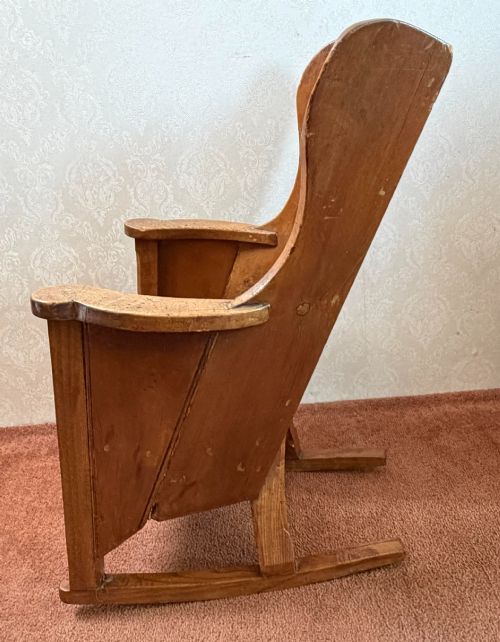
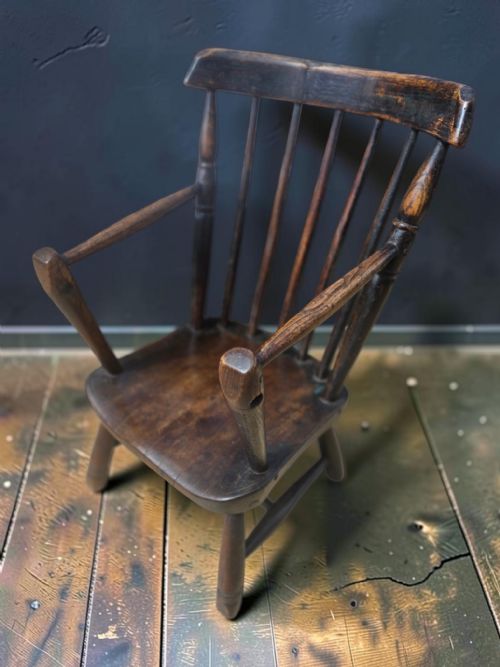
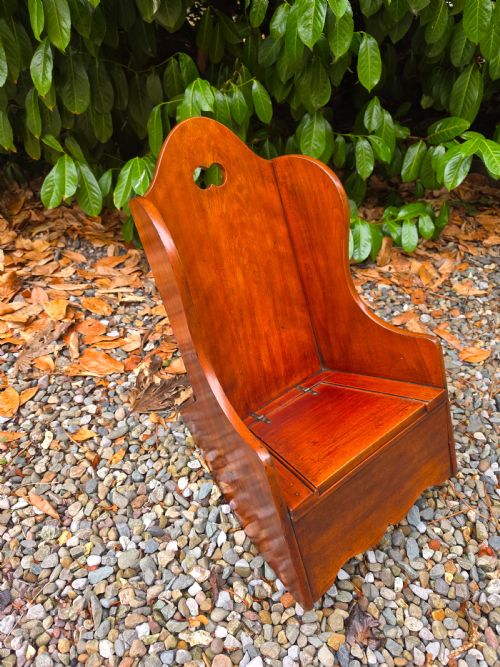
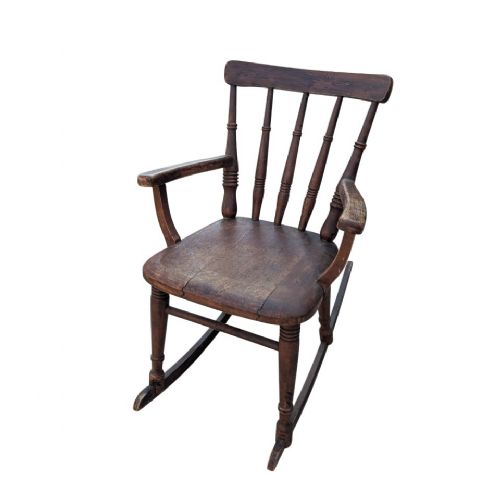

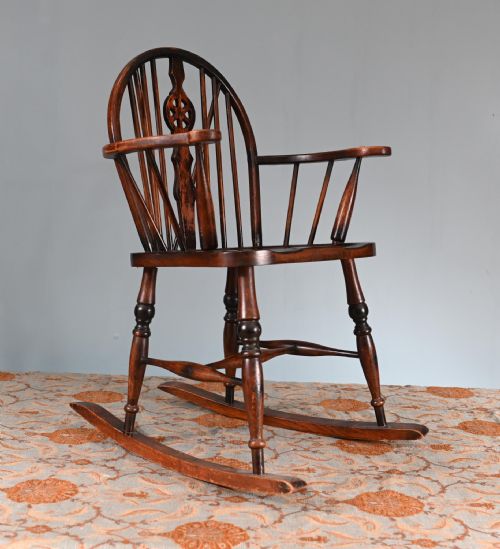


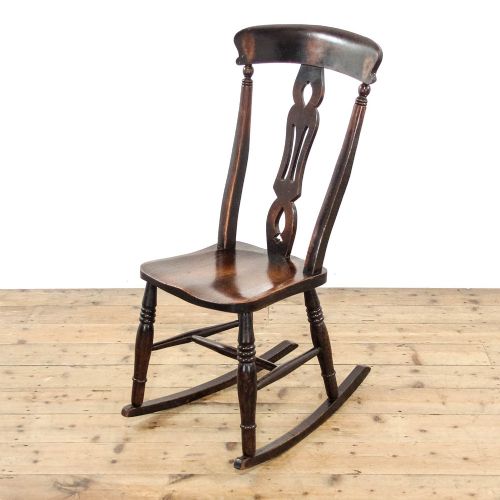
Antique Country Nursery Chair
An antique country nursery chair brings domestic history to life, offering compact seating constructed for children across past centuries.
Antique Country Nursery Chair
An antique country nursery chair encompasses small-scale seating intended for children, created in rural workshops rather than urban cabinet-making houses. The pieces available span periods from the eighteenth century through the Edwardian era and the 1930s, reflecting the changing domestic needs of families over generations.
Buyers will encounter various formats within this category, including low rockers, highchairs, commode chairs fitted with potty spaces, and Windsor armchairs scaled down for youth. Elm, ash, and yew feature prominently in these vernacular forms, often paired with rush seating or constructed entirely from solid wood.
Materials and construction methods
Local timber selection defined rural chair production, with makers utilising native hardwoods like elm for seats, ash for bent frame parts, and yew for rich grain and strength. Rush provided a durable woven surface for seating inserts in specific regional variants.
Joinery relied on traditional Windsor construction techniques, turning solid wooden seats and wedging turned spindles and legs directly into bored holes. Steam-bending allowed makers to shape continuous hoops and arm rails without losing structural integrity.
Some miniature rockers included built-in potty compartments, ensuring that early domestic training came with a gentle motion.
Distinguishing quality in vernacular seating
The choice of timber significantly influences the character of a piece, with figured yew or well-matched ash and elm representing superior rural craftsmanship. The sophistication of the turning on spindles, legs, and stretchers marks the difference between basic utilitarian items and pieces made with deliberate aesthetic care.
Originality of surface finish and the retention of early patina separate well-preserved examples from heavily restored or altered items. Structural balance and the integrity of traditional joints determine how successfully a small chair survived heavy domestic use.
The Antique Country Nursery Chair Glossary
- Windsor chair
- A chair built with a solid wooden seat into which the legs and back spindles are separately inserted. This method created sturdy, lightweight seating suited to domestic and rural environments.
- Crinoline stretcher
- A bent metal or wooden stretcher linking the legs of a chair in a continuous curve. It provides extra rigidity to the undercarriage.
- Vernacular furniture
- Items made by local tradesmen and country joiners following regional traditions rather than high-style metropolitan fashions. These pieces prioritise practical utility and local materials.
- Rush seat
- A seating surface woven from dried marsh rushes twisted into cords. It offers a resilient and pliable base for sitting.
- Spindle back
- A chair back constructed from a series of slender turned wooden rods. This design distributes weight evenly while maintaining an open visual profile.
Antique Country Nursery Chair: Frequently Asked Questions
What is a nursery chair?
A nursery chair is a low seating option traditionally used in children's quarters or domestic spaces for nursing and child care. These smaller forms accommodated children directly or provided comfortable seating for adults tending to infants.
Over time, many of these small-scale chairs transitioned into decorative items or specialised seating for toddlers within domestic interiors.
Were these chairs used daily?
These small chairs experienced heavy use in domestic nurseries, farmhouses, and family living spaces. Their durable construction using native timbers like elm and ash allowed them to withstand generations of childhood activity.
Today, surviving examples show the authentic wear and patina earned through decades of active household service.
How do I care for antique wood furniture?
Maintaining antique wooden seating involves keeping pieces away from direct heat sources and sudden humidity changes that can cause timber to split. Regular dusting with a soft cloth preserves the dry finish and historic surface patina.
Applying microcrystalline wax occasionally helps protect the aged wood without sealing it in modern chemical finishes.