
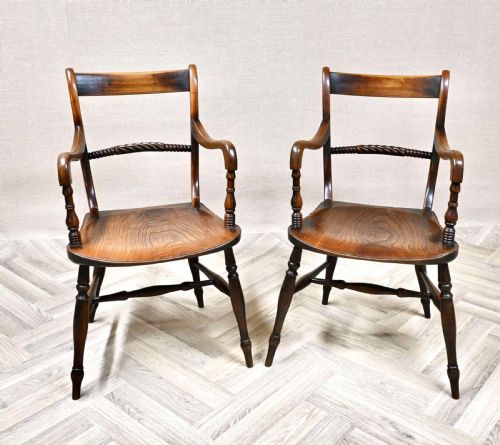
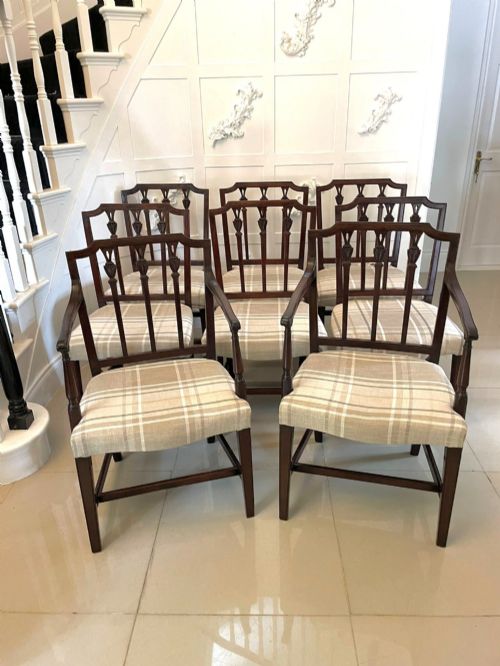


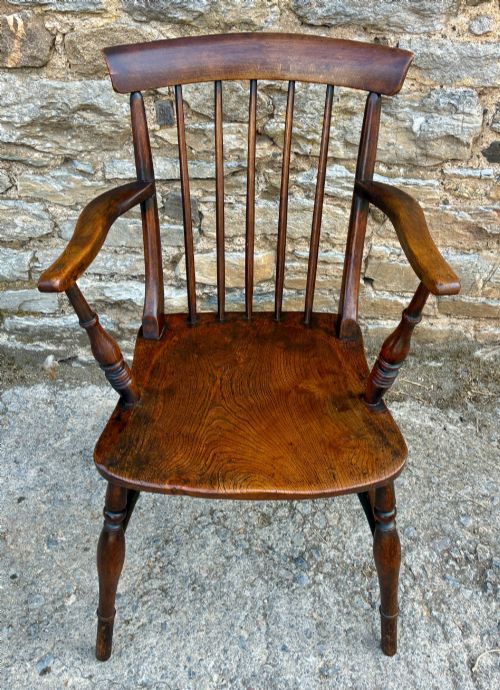
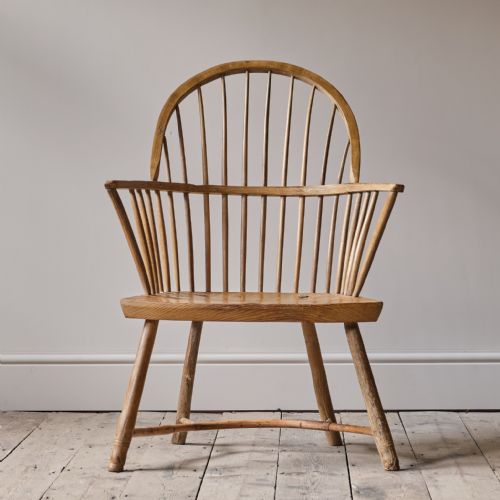
Antique Country Dining Armchair
An antique country dining armchair brings heavy timber character to a table, combining regional joinery with utilitarian comfort.
Antique Country Dining Armchair
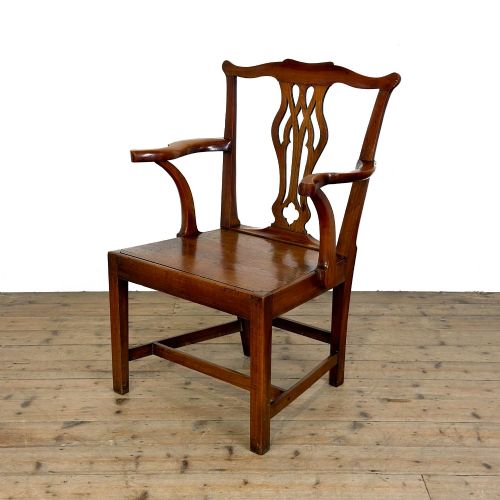
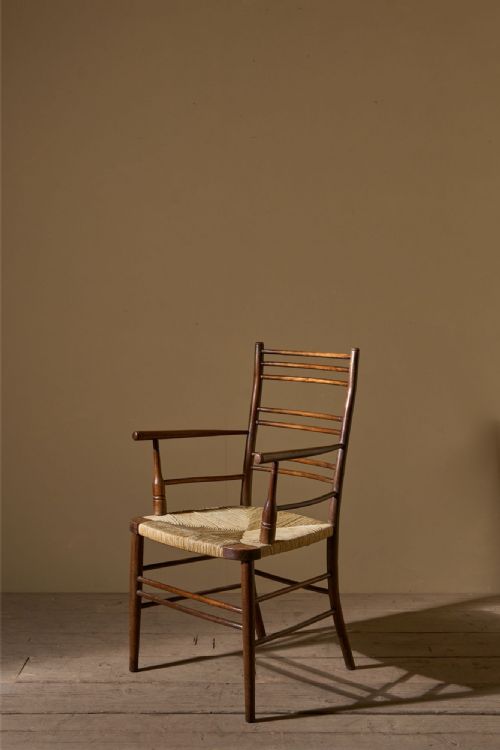
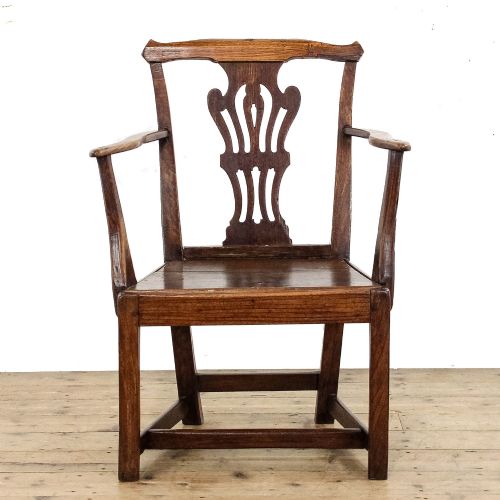
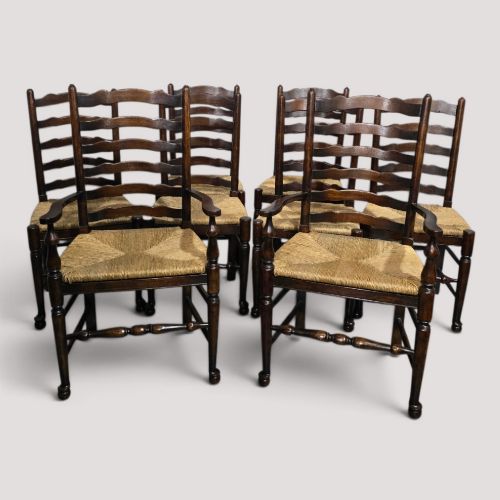
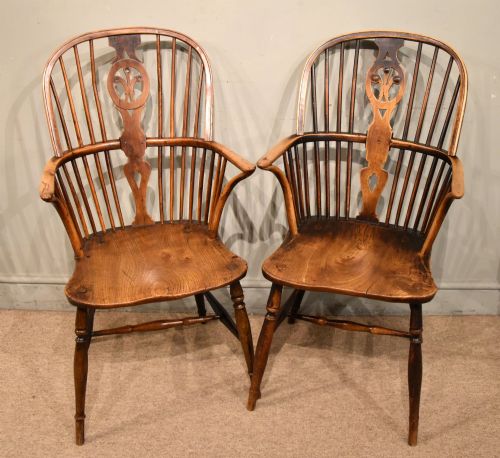
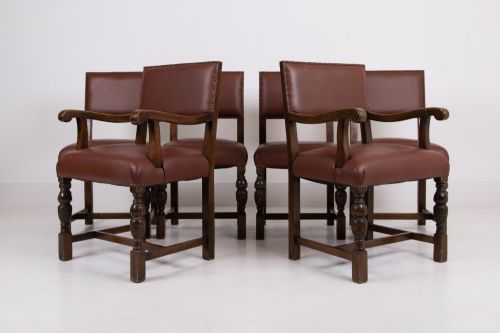
When you search for an antique country dining armchair, you encounter robust seating shaped by regional traditions rather than urban fashion. The selection spans the eighteenth, nineteenth, and early twentieth centuries, capturing vernacular designs from farmhouse kitchens and rural dining rooms. You meet Windsor variants, ladder backs, and rush-seated carvers in formats ranging from single statement pieces to matched sets.
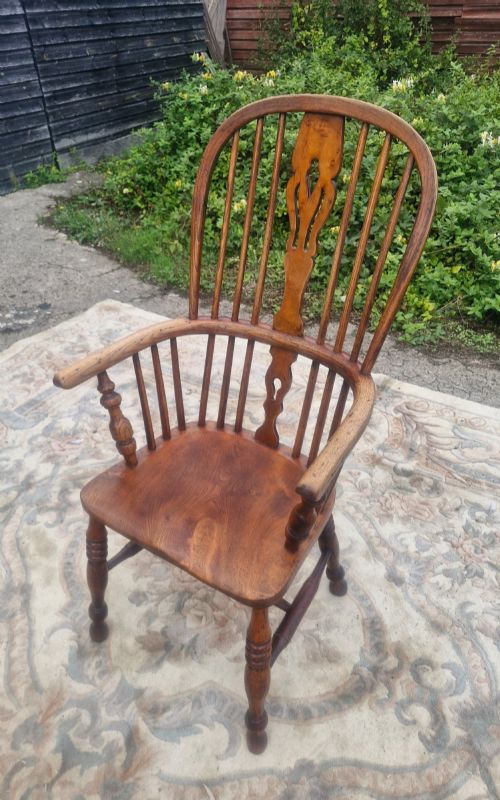
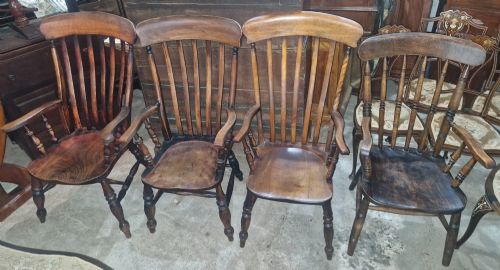
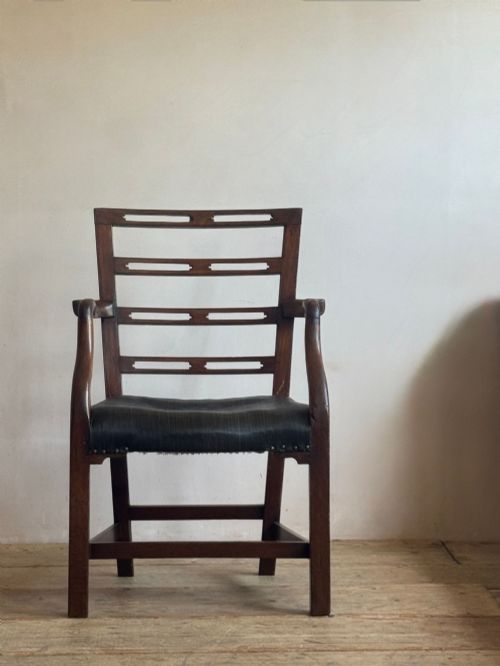
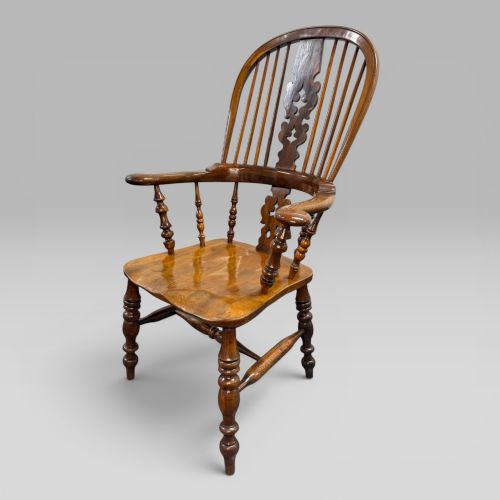
The most common iterations on this page are Windsor armchairs featuring elm seats combined with ash, yew, or beech frames. High-back, hoop-back, and comb-back styles dominate the offerings, alongside spindle-backed ladder backs fitted with rush or wooden seats. These forms reflect centuries of domestic utility across English counties from Yorkshire to the Thames Valley.
How they were made
Maker-joiners utilised native timbers, pairing durable hardwoods for different structural demands within a single chair. Elm provided a resilient, interlocking grain suitable for solid carved seats that resist splitting under daily use. Ash, yew, and beech formed the bent spindles, legs, and steam-bent bow backs, offering necessary flexibility and tensile strength.
Construction relied on traditional vernacular techniques such as bodgerting, where turned components met bored seats through wedged tenon joints. Seats were often deeply saddled using adzes and scorps to improve comfort before finish was applied. Rush seating was woven tightly over wooden frames for ladder-back variations, while other examples employed simple board construction with pegged mortise and tenon joints.
Listings feature eighteenth, nineteenth, and early twentieth-century examples constructed from native elm, ash, oak, yew, beech, and fruitwood.
What varies in quality
Quality rests in the harmony of the timber selection and the retention of original surface patination. Chairs built from matched combinations of figured yew or richly grained elm command greater attention than those hastily assembled from utilitarian utility woods. The crispness of turnings on the arm supports and leg stretchers further separates standard workshop output from finer vernacular craftsmanship.
Proportion and structural integrity define the higher tiers of surviving examples. Chairs retaining their original crinoline stretchers, wedged spindle tops, and unthinned seats demonstrate superior initial construction and careful survival. Altered heights, replaced legs, or excessive sanding that strips away the accumulated texture of use diminish the integrity of the piece.
The Antique Country Dining Armchair Glossary
- Windsor chair
- A chair built with a solid wooden seat into which the legs and back spindles are directly bored. They often feature bentwood bow backs and sculpted arm rests.
- Crinoline stretcher
- A curved reinforcement stretcher linking the legs of a chair below the seat, frequently found on mid-nineteenth-century Windsor designs for added rigidity.
- Comb back
- A Windsor chair variation where the top rail resembles the spine of a comb, holding vertical spindles rising from a low horizontal arm rail.
- Rush seat
- A seating surface woven from dried marsh rushes twisted into cords, common on vernacular ladder-back and country dining chairs.
- Smokers bow
- A low-backed Windsor armchair with a rounded continuous rail serving as both back and arms, traditionally used in inns and farmhouses.
Antique Country Dining Armchair: Frequently Asked Questions
What is a Windsor country armchair?
A Windsor country armchair is a seating form defined by a solid carved wooden seat that receives separate turned legs from below and spindle backs from above. These chairs were produced across rural English workshops using local timbers like elm, ash, and yew.
They served utilitarian roles in farmhouses, cottages, and kitchens, evolving regional characteristics such as hoop backs, stick backs, and crinoline stretchers over the eighteenth and nineteenth centuries.
How do I date an antique country armchair?
Dating relies on observing construction methods, timber choices, and tool marks left by makers. Earlier eighteenth-century examples often feature heavier proportions, broad elm seats, and simpler turned components, while nineteenth-century pieces incorporate steam-bent members and more slender spindles.
Changes in stretcher design and fastener types also provide chronological clues. Examining the wear patterns and the method of securing the legs into the seat helps narrow down the period.
Are country dining armchairs comfortable for daily use?
Country dining armchairs offer surprising ergonomic support due to the deep saddle-shaping traditionally carved into the solid elm seats. The raked backs and curved arm rails accommodate relaxed sitting positions around a dining table.
Because they were engineered for utilitarian domestic life, their robust timber frames easily withstand regular daily seating. Adding loose squab cushions can further enhance comfort for prolonged dining use.
Can I mix different country chairs together?
Mixing different country chairs around a dining table creates a traditional accumulated look typical of historic rural interiors. Gathering mismatched elm Windsors, ladder backs, and stick-back carvers works well when pieces share similar timber tones or regional origins.
Maintaining a consistent seat height across the chairs ensures everyone sits comfortably at the same level. Matching wood species like oak, ash, or fruitwood helps unify a diverse set.