
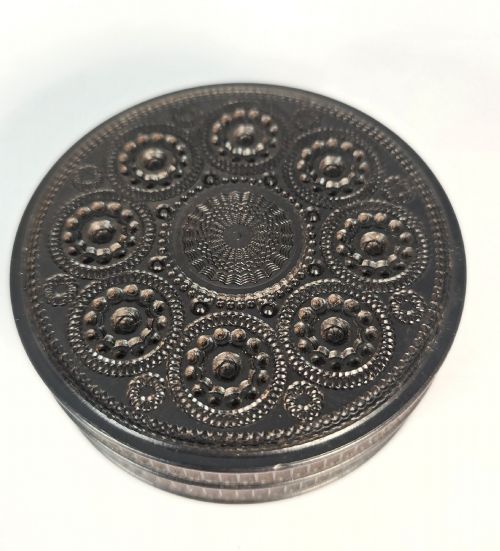


Antique Counter Box
When choosing an antique counter box, you select a utilitarian vessel designed for retail display, gaming storage, or desktop organisation.
Antique Counter Box
An antique counter box encompasses small-scale storage vessels and display cases originally placed upon shop counters, desks, and bars during the Georgian, Victorian, and Edwardian eras. These pieces range from glass-fronted merchandising cabinets for sweets, seeds, and sewing cottons to small receptacles intended for snuff, gaming counters, and apothecary goods.
The versions most commonly encountered on this page include tabletop glazed display cases, wooden haberdashery boxes, and pocket-sized silver or tortoiseshell boxes designed to hold counters or patches. They bridge the gap between commercial utility and domestic display, reflecting the retail and social habits of the nineteenth and early twentieth centuries.
How they were made
Makers constructed these objects using dense hardwoods such as mahogany and oak, alongside utilitarian pine for internal structures or commercial carcases. Glazed display variations incorporate brass framing and hinges, while smaller receptacles utilise precious metals like sterling silver and gold alongside carved bone, ebony, and boxwood.
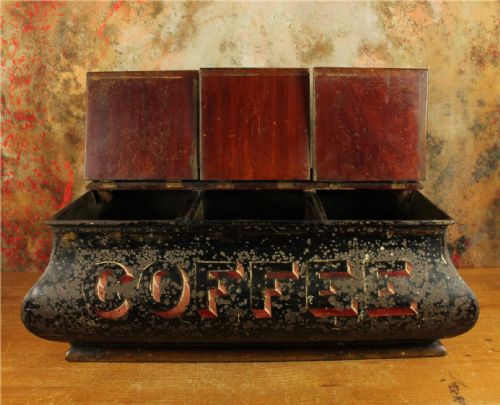
Surface decoration relied on functional execution, seen in engine-turned patterns on snuff lids, sign-written branding applied for chocolate or tobacco manufacturers, and simple dovetail joinery. Interior layouts were tailored specifically to their contents, featuring partitioned compartments for gaming counters, seed packets, or apothecary phials.
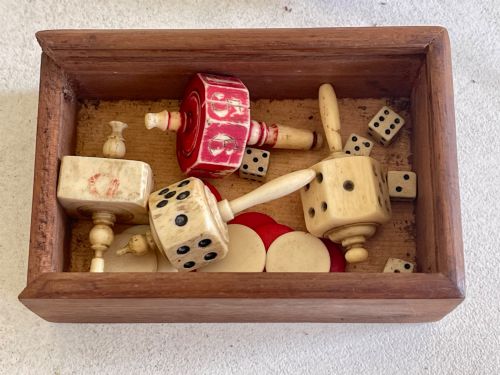
Several boxes were designed specifically to hold Prisoner of War teetotums carved from bone.
What varies in quality
Quality depends upon the integrity of the materials and the precision of the original construction, distinguishing heavy commercial shop fittings from delicate pocket pieces. Thick brass hardware, tight-fitting dovetails, and retained original glass or interior linings elevate a piece above standard utilitarian output.
The presence of maker attribution, whether through silver hallmarks, stamped locks, or original manufacturer sign-writing on shop cabinets, significantly alters the standing of the box. Preservation of original finishes, such as polished mahogany surfaces and untouched patination, dictates the desirability of the item.
Negretti & Zambra·G H Gledhill Halifax·Manoah Rhodes & Sons Ltd·Edward Farrell·Pemberton
The Antique Counter Box Glossary
- Engine turned
- A mechanical method of ornamenting metal or wood surfaces with precise, intricate geometric patterns using a lathe. This technique frequently appears on the lids of pocket snuff boxes.
- Haberdashery
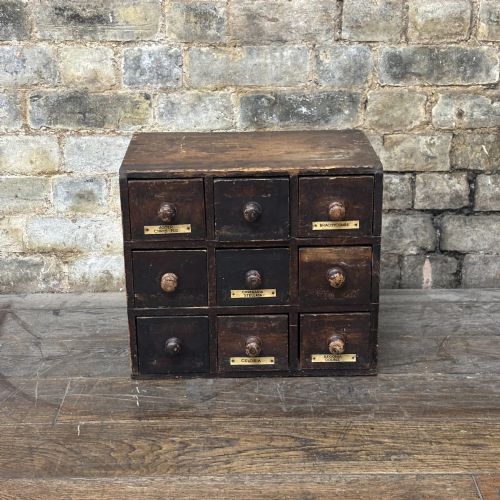
- Goods relating to dressmaking and sewing, such as cottons, buttons, and needles. Cabinets built for this trade feature shallow drawers and glazed fronts for retail display.
- Gaming counter
- A small disc or marker made from bone, mother-of-pearl, ivory, or wood used for keeping score in card and board games. They were housed in dedicated small boxes.
- Cartouche
- An ornamental oval or shield-shaped frame reserved for an inscription or monogram. On silver patch boxes, these areas are often left blank for later engraving.
Antique Counter Box: Frequently Asked Questions
What were counter boxes used for?
Merchants and proprietors utilised these vessels on shop counters to display small goods like seeds, chocolates, and sewing cottons to customers. Domestic users also kept smaller iterations on desks for holding gaming counters, snuff, and stamps.
Their placement ensured items remained clean yet visible for immediate purchase or use during daily transactions and leisure activities.
How do I date an antique box?
Dating relies on examining the construction methods, wood types, hardware, and any applied maker marks or silver hallmarks. Georgian pieces often display hand-cut dovetails and sterling silver stamps with date letters, while Edwardian and later commercial cabinets frequently use machine-sawn timber and factory branding.
Matching the object type to its period retail context helps narrow down the decade of manufacture.
Are shop display cases fragile?
Countertop display cases combine timber frames with glass panels, requiring careful placement to protect vulnerable glazing. The structural integrity of the wood usually remains robust, but the original glass demands gentle handling during relocation.
Most examples withstand normal domestic environments provided they are kept away from sudden temperature fluctuations and moisture.
Can I use these boxes for modern storage?
These boxes accommodate modern items such as jewellery, trinkets, small collections, and desk accessories very well. Their partitioned interiors and shallow drawers suit the organisation of contemporary small objects.
Using them practically allows you to integrate period craftsmanship into daily life while protecting delicate items.