




Antique Cottage Watercolour Painting
An antique cottage watercolour painting captures rural domestic life through delicate washes of pigment on paper, offering a quiet glimpse into bygone pastoral scenes.
Antique Cottage Watercolour Painting
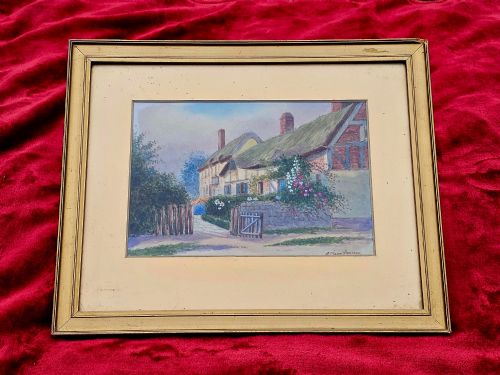
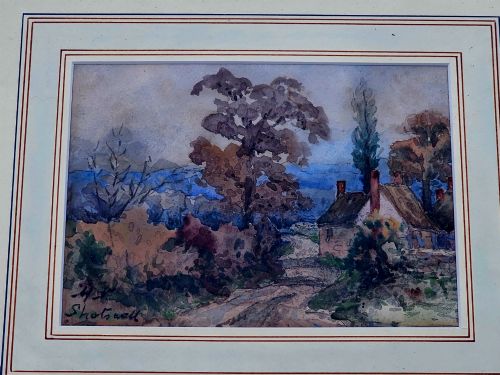
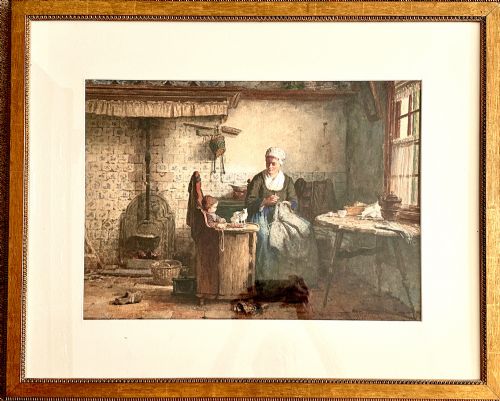
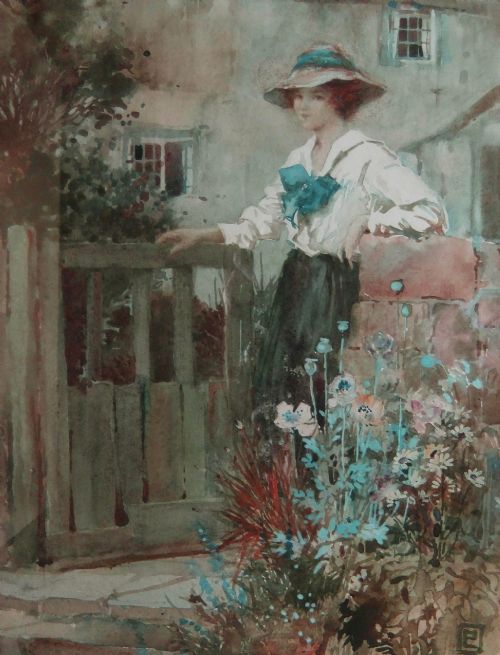
An antique cottage watercolour painting typically depicts rural dwellings, gardens, and village life across the British Isles from the nineteenth and early twentieth centuries. These works emerge from Victorian, Edwardian, and pastoral traditions that celebrate English country landscapes.
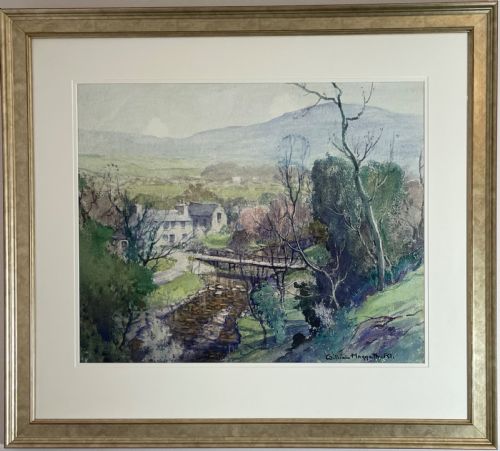
The selections range from detailed portrayals of thatched roofs and cottage doorways to broader river views and coastal settings. Artists of these periods applied translucent pigments to paper to capture changing light and domestic tranquility in rural communities.
Materials and methods
These works rely primarily on watercolour pigment applied to paper support, occasionally accompanied by gouache for opaque highlights. Painters utilised traditional brushwork to build transparent washes that defined foliage, stonework, and sky.
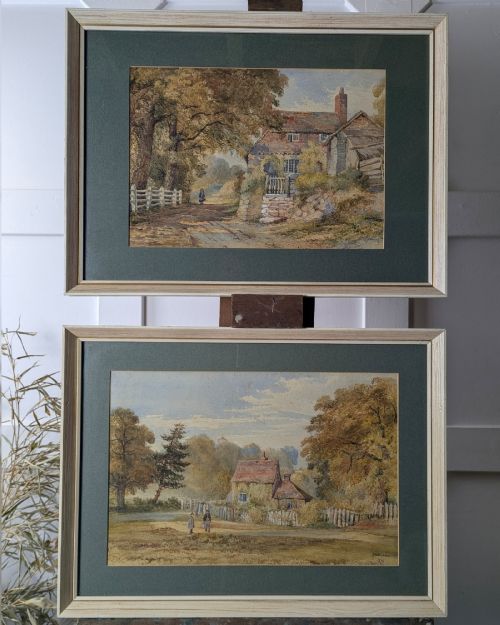
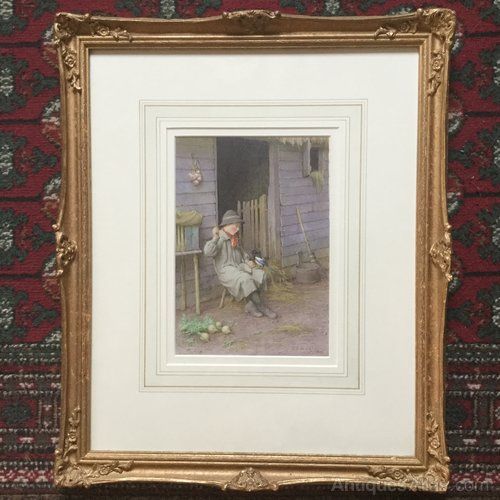
Framing often involves wood and gilt wood surrounds, sometimes paired with glass to protect the delicate paper surface from atmospheric moisture and handling.
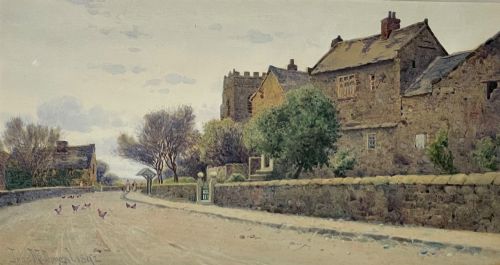
Ducks, hens, and tethered ponies frequently wander into the foreground of these rural retreats, supervising village chores with quiet dignity.
Markers of distinction
Quality rests in the handling of light and the precision of architectural and botanical detail within the composition. Stronger examples demonstrate confident brushwork that brings depth to cottage gardens and figures without heavy-handed reworkings.
Condition of the paper and the preservation of pigment vibrancy also differentiate pieces, alongside the quality of the original frame and the clear attribution to a recorded artist.
A. Marie Parsons·John McDougal·Robert A. Nottingham·Hendrik Valkenberg·Percy Lancaster·Charles Edward Wilson·Fred Lawson·Arthur Tucker·J S Ainley·William Hoggatt·James Hardy Junior·Theresa Stannard·Helena Maguire·Linnie Watt·Owen Bowen·Lilian Stannard·Harry Sylvester Stannard·Henry Charles Fox·Will Anderson·Robert Hollands Walker·Thomas James Lloyd·B. Kaufmann·David Woodlock·Henry Spernon Tozer·Joseph Kirkpatrick
The Antique Cottage Watercolour Painting Glossary
- Watercolour pigment
- Finely ground colour particles mixed with a water-soluble binder, used to create transparent washes on paper.
- Gouache
- An opaque water-based paint often used alongside watercolour to add highlights and solid areas of colour to a composition.
- Gilt wood
- Wood framing treated with gold leaf or metallic paint, commonly found on period watercolours to enhance the display.
- Pastoral style
- Artistic approach focusing on rural life, shepherds, rustic cottages, and idealized agricultural landscapes.
- Support
- The underlying material, typically paper, upon which the watercolour painting is executed.
Antique Cottage Watercolour Painting: Frequently Asked Questions
How should I display an antique watercolour?
Keep watercolours away from direct sunlight to prevent the pigments from fading over time. Hanging them in rooms with stable humidity protects both the paper support and the wooden frame.
Ensure the piece sits behind glass with a mat board separating the paper from the glazing surface. This prevents moisture accumulation and protects the delicate painted surface.
What subjects appear in these paintings?
The works predominantly feature rural scenes, including thatched cottages, cottage gardens filled with flowers, and quiet village lanes. Figures engaged in daily domestic tasks frequently animate the foreground.
Coastal villages and river landscapes also feature strongly, reflecting the nineteenth and early twentieth century fascination with traditional British rural architecture.
How do I date a cottage watercolour?
Examine the costume of any figures depicted, the style of the architecture, and the framing materials. Victorian works often display heavier ornamentation, while Edwardian pieces lean toward lighter pastoral scenes.
Signatures, artist dates, and inscriptions on the reverse or mount frequently provide definitive clues to the exact decade of creation.
Are these works always signed by the artist?
Many pieces carry a signature or monogram from the painter, though a significant portion of period work remains anonymous or attributed to a wider school. Unsigned pieces were often produced by competent regional artists or sketching enthusiasts.
Attributions rely on stylistic similarities, dealer records, and contemporary exhibition labels found on the reverse of the frame.