
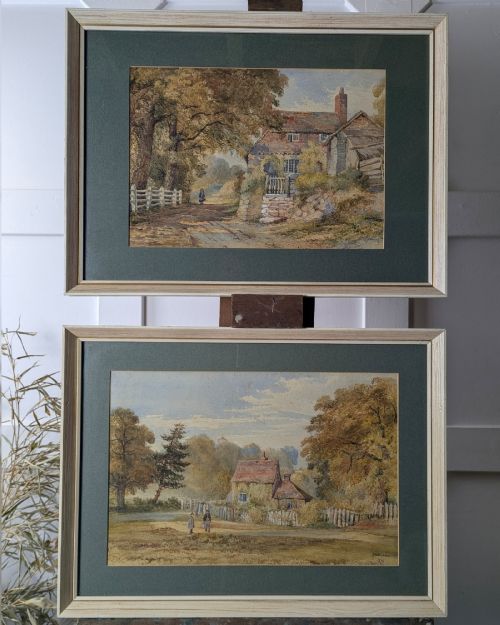
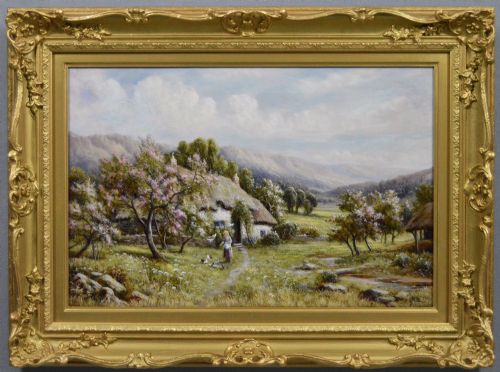
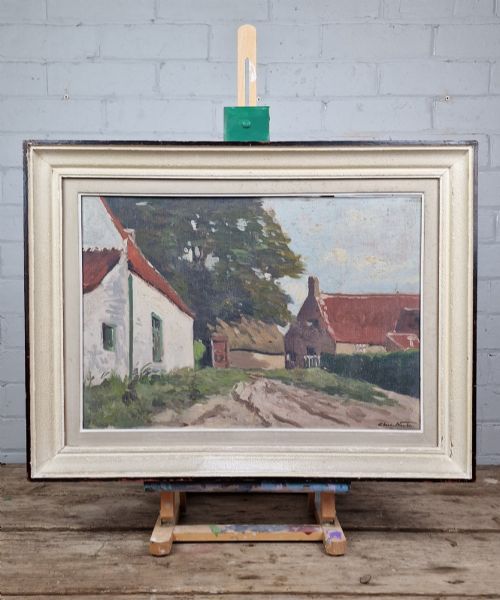
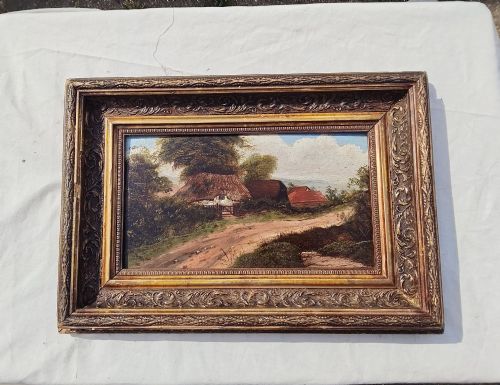

Antique Cottage Landscape Artwork
Antique cottage landscape artwork captures rural homes and rustic scenery through historic paintings on canvas, board and paper.
Antique Cottage Landscape Artwork
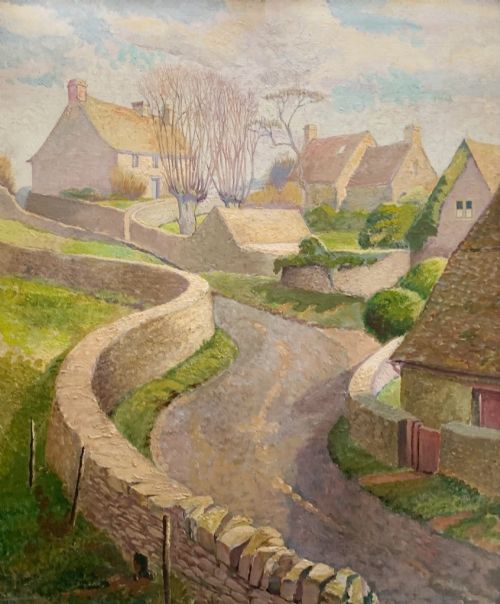
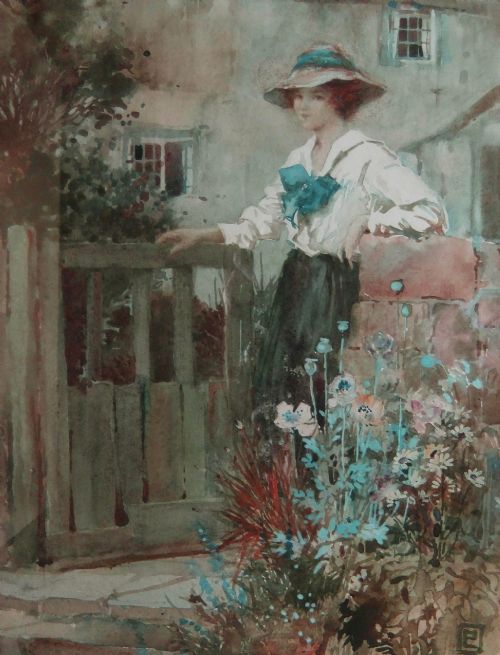
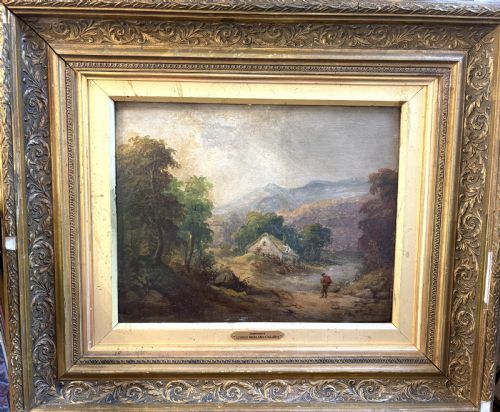
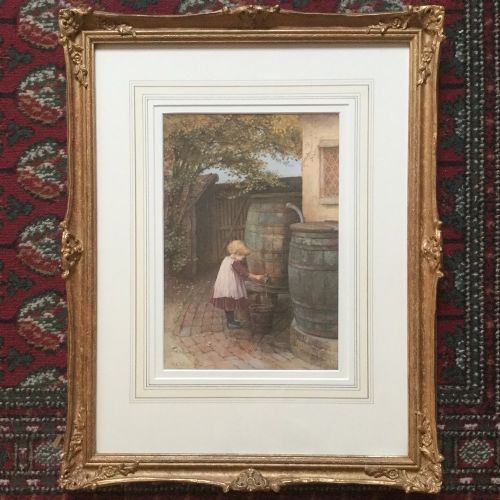
Antique cottage landscape artwork centres on historic depictions of rural dwellings, farmyards, and pastoral scenes created across the nineteenth and early twentieth centuries. These pieces record the changing face of the countryside through the eyes of Victorian, Edwardian, and impressionist painters.
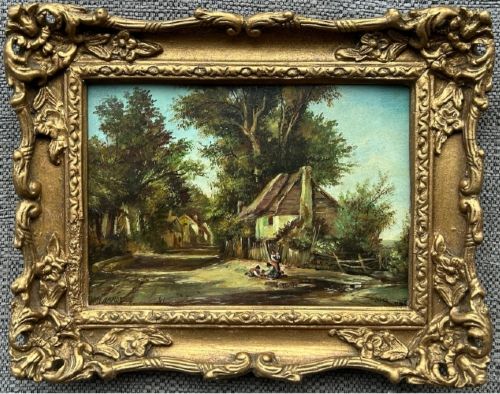
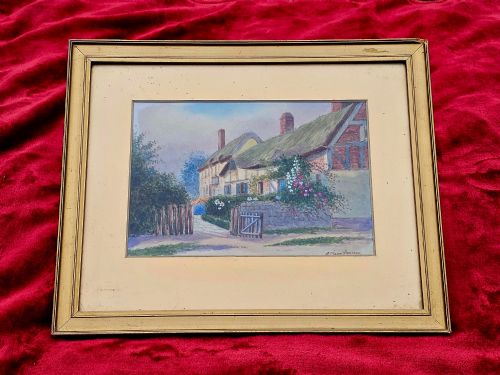
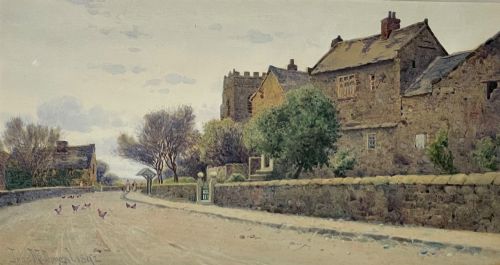
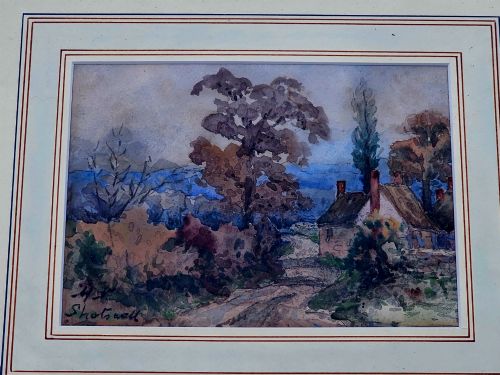
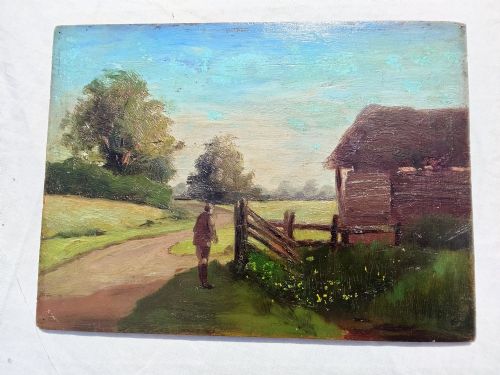
The works most commonly encountered on this page take the form of framed watercolours on paper and oil paintings executed on canvas, board, or card. Subjects frequently include thatched cottages, garden gates, and figures tending livestock beside rivers and rural tracks.
Originating largely from British and European schools, these paintings reflect the period fascination with rustic simplicity and domestic agrarian life. Painters ranged from named regional artists to skilled members of the wider English school working in traditional mediums.
Materials and methods of production
Artists relied primarily on oil paint or watercolour pigment applied to prepared supports such as canvas, wooden panel, card, or heavy paper. Oil works often show textured brushwork built up on board or stretched canvas, whilst watercolours utilise delicate washes on paper.
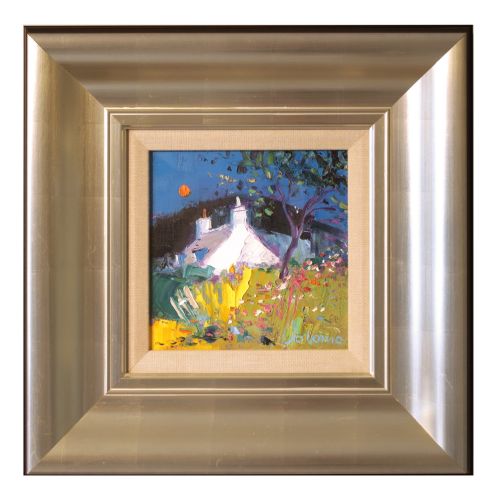
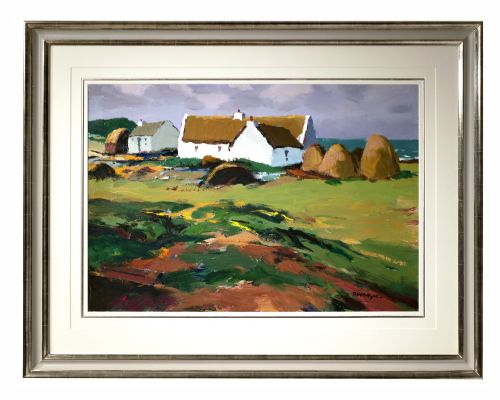
Support materials varied according to scale and convention, with smaller studies frequently executed on wooden boards or heavy card for portability. Finished works were secured within traditional frames of wood and gilt to protect the delicate pigment and paper surfaces.
Listings feature works created across the nineteenth century, Victorian era, and into the 1940s using watercolour, oil paint, canvas, and wood.
Distinctions in quality and execution
Quality rests upon the artist's command of light, proportion, and atmospheric depth within the rustic composition. Stronger pieces display confident brushwork and a balanced palette that brings vitality to the cottage and surrounding landscape.
The handling of finer details, such as foliage, figures, and architectural elements, separates standard decorative works from accomplished artistic output. Preservation of the original pigment and the integrity of the support further define the standing of each piece.
William Howard Hardy·A. Marie Parsons·John McDougal·Robert A. Nottingham·Robert John Hammond·Charles Houben·George Morland·Charles Edward Wilson·John Horace Hooper·Reginald Grange Brundrit·Fred Lawson·Arthur Tucker·J S Ainley·William Hoggatt·James Hardy Junior·Frederick James Knowles·William Greaves·Charles Vickers·Theresa Stannard·Robert Finley McIntyre·Helena Maguire·Linnie Watt·Owen Bowen·Ernest Higgins Rigg·Kershaw Schofield
The Antique Cottage Landscape Artwork Glossary
- Watercolour
- A painting method where fine pigment is suspended in a water-based solution and applied to paper. It creates luminous washes that capture delicate atmospheric effects.
- Oil on Canvas
- Pigment mixed with drying oil applied to a stretched woven fabric surface. This technique allows for rich texture and deep colour saturation.
- Impressionism
- An art style focused on capturing the visual impression of a moment, particularly shifting light and open-air subjects. Brushstrokes remain visible and spontaneous.
- Victorian Pastoral
- Rural subject matter produced during the Victorian era that romanticises agricultural life and country landscapes. Scenes typically feature rustic cottages, farm animals, and tranquil fields.
- Panel
- A flat piece of wood or board used as a rigid support for painting. Artists frequently utilised panels for smaller outdoor landscape studies.
Antique Cottage Landscape Artwork: Frequently Asked Questions
What periods do these paintings date from?
The works span the nineteenth and early twentieth centuries, covering the Georgian, Victorian, and Edwardian eras. Many pieces date specifically from the late 1800s up to the 1940s.
This broad timeline encompasses shifting artistic movements from traditional academic styles through to early British and post-impressionism.
How should I display antique paintings at home?
Hang these artworks away from direct sunlight and damp environments to protect the historic paper, canvas, and pigments. Traditional picture hooks suited to the weight of the frame ensure secure wall placement.
Pairing pieces with sympathetic lighting enhances the depth of the oil or watercolour medium without generating excessive heat.
Are these artworks signed by the artists?
Many examples feature original signatures, monograms, or inscriptions left by the painter on the front or reverse of the canvas and paper. Other pieces remain attributed to specific English or continental schools based on style and technique.
Documentation on the mount or stretcher often records the specific village, region, or sitter depicted in the composition.
What mediums were used for these rural scenes?
Artists utilised oil paint on canvas, wooden panel, and card alongside watercolour pigment on paper. Mixed media applications appear in later twentieth-century works.
Each medium creates a distinct visual texture, from the luminous transparency of watercolour to the rich impasto of oil.