
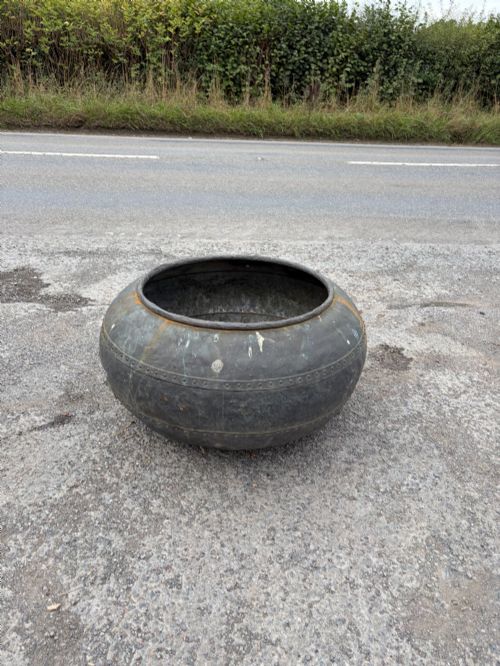
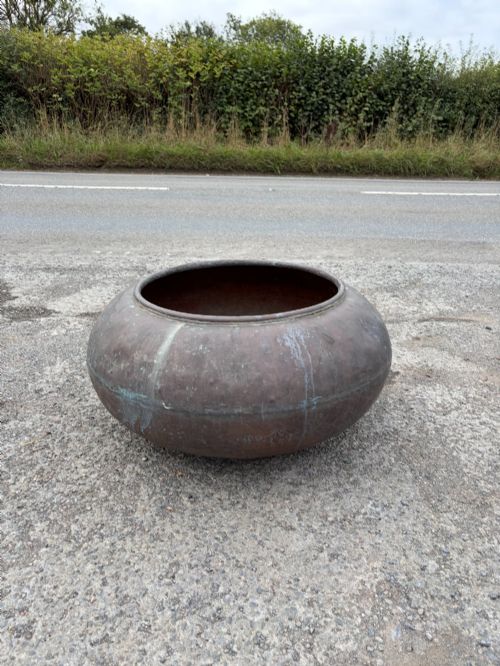
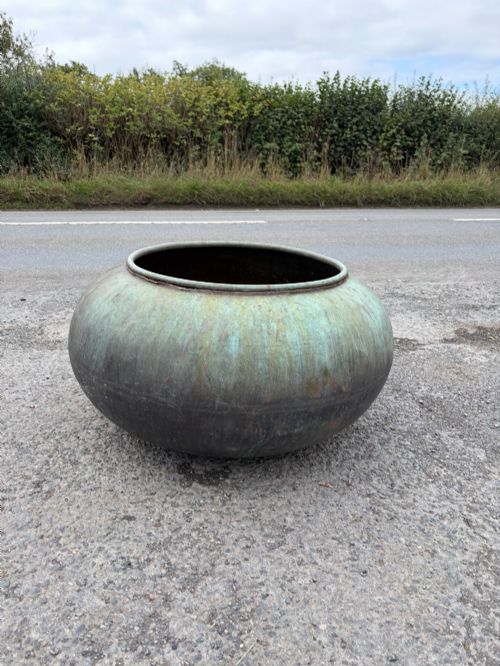
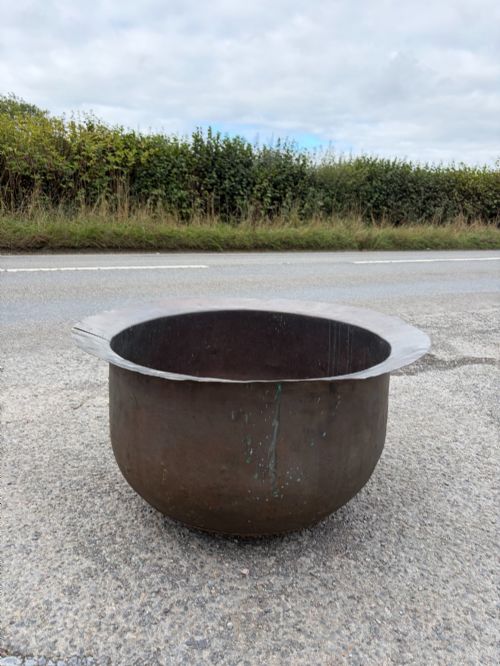
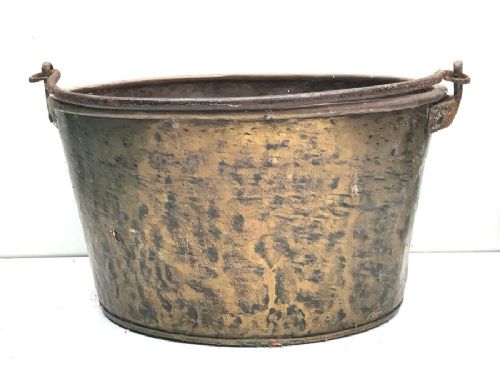
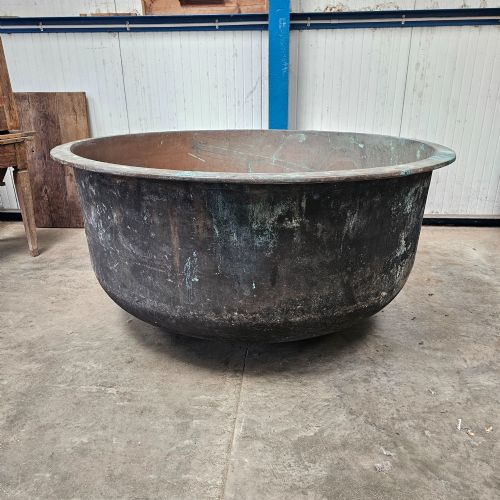
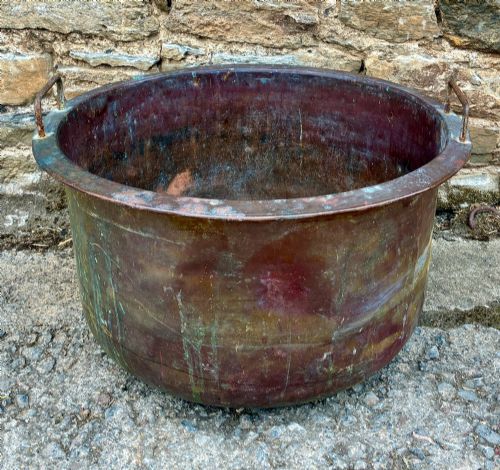
Antique Copper Wash Copper
When you search for antique copper wash copper, you find heavy utilitarian vessels built for domestic laundering and brewing.
Antique Copper Wash Copper
The antique copper wash copper is a large utilitarian vessel historically used for boiling water, laundry, or brewing in domestic settings. These pieces range from substantial pots and cauldrons to specialised wash tubs and boilers.
Most examples encountered on this page originate from the nineteenth century, including Victorian country pieces and large French garden display pots. Buyers also encounter Georgian pans, Edwardian wash tubs, and occasional earthenware or ceramic basins.
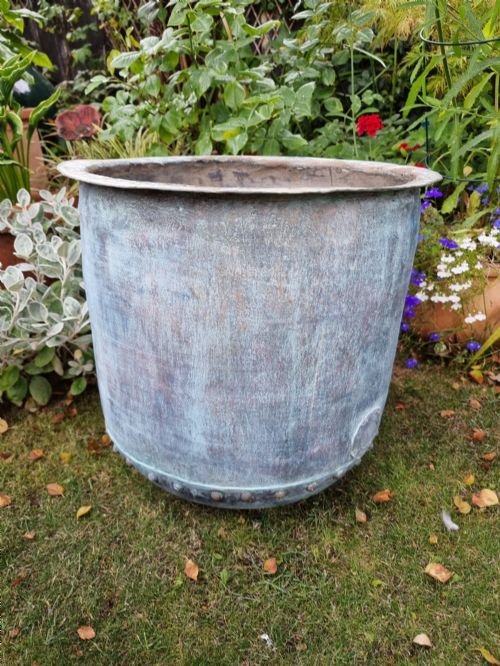
Beyond their original domestic service, these vessels adapt readily to modern interiors and gardens as large planters, log bins, and decorative bowls. The robust scale and tactile metal surfaces suit both rustic farmhouse and industrial aesthetics.
Materials and construction
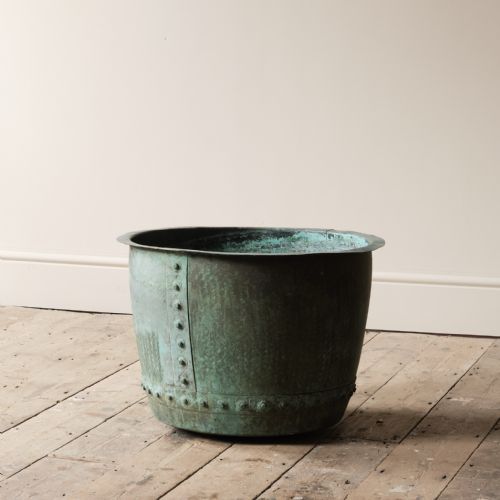
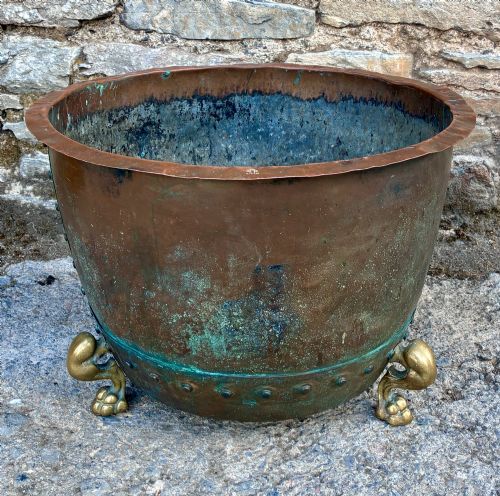
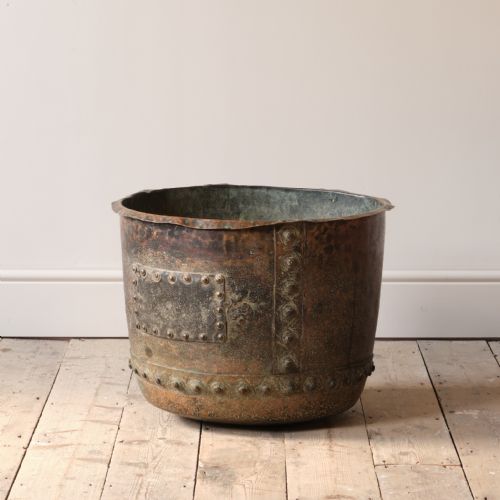
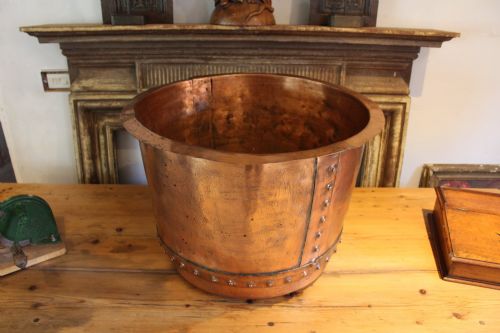
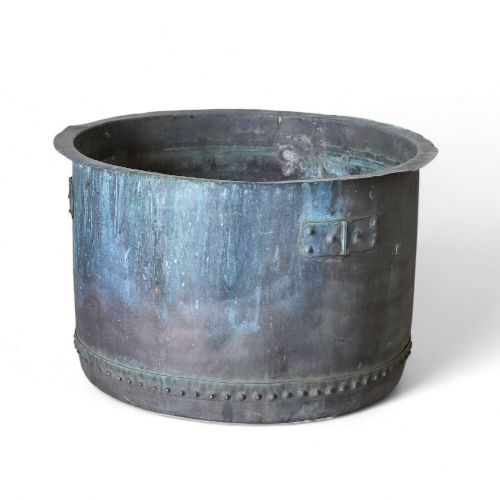
Construction relies heavily on sheet copper shaped into deep vessels, often joined with hand-riveted seams that display the tangible labour of nineteenth-century metalworkers. Wrought iron and brass appear frequently on handles, swing bails, and reinforcing rims.
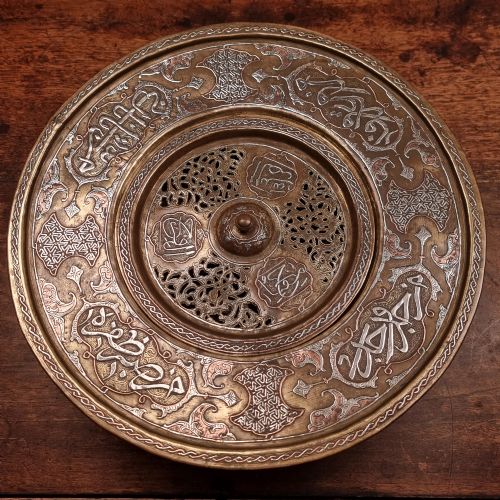
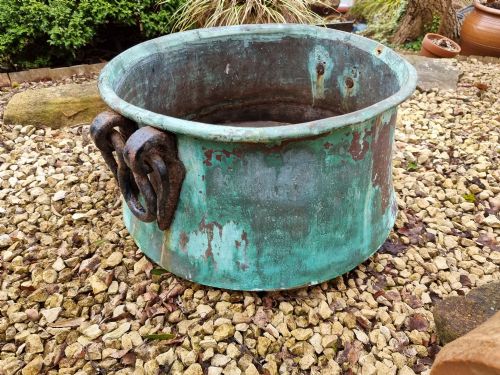
Many items develop a rich natural patina and verdigris surface over decades of exposure to moisture and air. Interiors occasionally retain traces of silver inlay or tin lining, while associated stands and handles incorporate mahogany and iron.
Listings span the eighteenth through early twentieth centuries, featuring materials such as copper, wrought iron, brass, mahogany, and earthenware.
Assessing quality in copper vessels
Quality rests in the integrity of the metalwork, the weight of the copper sheet, and the character of the hand-riveting. Heavier gauge copper provides greater structural substance, which distinguishes superior utilitarian items from lighter decorative copies.
Surface ageing plays a major role in visual appeal, where undisturbed natural patinas and authentic verdigris outrank over-polished metal. The presence of original wrought iron handles and maker markings further elevates an individual piece.
The Antique Copper Wash Copper Glossary
- Copper wash copper
- A large metal vessel designed for boiling laundry or water over a fire. These heavy domestic coppers form the core of this category.
- Riveted
- Joined with metal pins hammered flat to secure overlapping sheets. Hand-riveted seams indicate traditional nineteenth-century manufacturing methods.
- Verdigris
- A green patina formed naturally on copper through atmospheric weathering. Collectors often prize this oxidized surface layer for its visual depth.
- Log bin
- A deep container repurposed for holding firewood by the hearth. Many antique wash tubs and coppers transition into this role today.
- Patina
- The surface sheen and colour acquired by metal through age and use. A good patina reflects decades of unforced environmental exposure.
Antique Copper Wash Copper: Frequently Asked Questions
What were copper wash coppers used for?
These large vessels served primarily for heating water, boiling laundry, and bulk cooking in large households.
Over time, many of these utilitarian coppers transitioned from domestic workhorses into decorative garden planters and fireside log bins.
How do I clean an antique copper wash tub?
Gentle washing with warm soapy water preserves the historic surface while removing accumulated dirt and debris.
Harsh chemical polishes remove the desirable natural patina and verdigris that collectors and decorators prefer to keep intact.
Are these copper vessels watertight?
Many surviving coppers retain their structural integrity, but older riveted seams can develop minor weeping over time.
Testing the vessel with water before indoor placement helps prevent unexpected leaks on wooden floors or carpets.
How do I date a nineteenth-century copper pot?
Hand-riveted construction, weight, and handle attachments offer strong clues to the manufacturing decade.
Georgian pieces often feature heavier cast iron rims, while later Victorian examples frequently utilise simpler rolled edges and standardised sheet metal.