



Verdigris Copper Log Basket
These verdigris copper log basket pieces bring tactile warmth and heavy metal texture beside an open hearth.
Verdigris Copper Log Basket
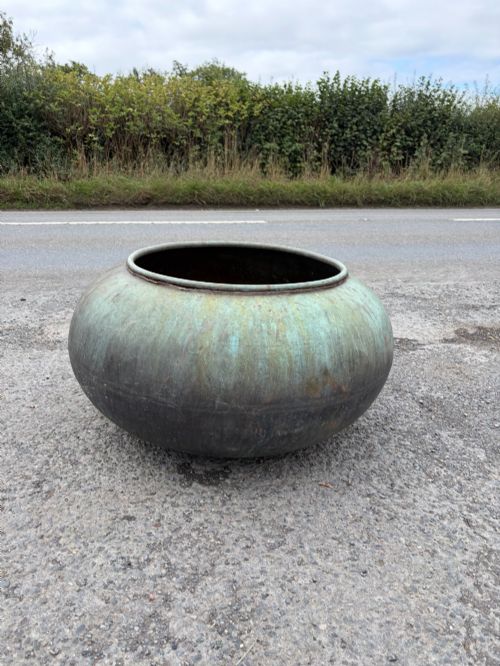
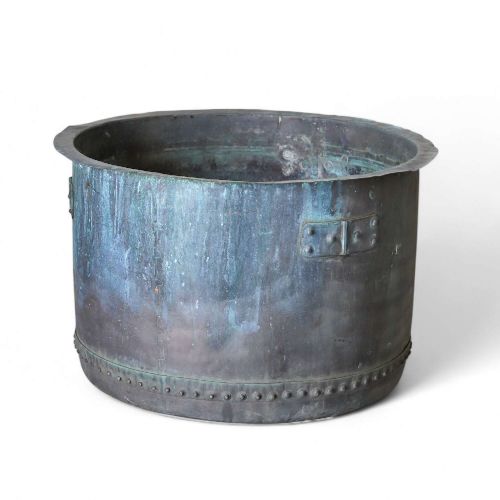
When you search for a verdigris copper log basket, you are looking at substantial nineteenth-century utilitarian vessels, primarily large copper pots, riveted buckets, and cheese vats repurposed for fireside fuel. The examples met on this page span the Victorian era and French provincial workshops, crossing fluidly between garden planters and interior log bins.
These heavy metal vessels derive their character from nineteenth-century country and industrial utility. Makers formed them for demanding tasks like boiling, cheese-making, or gardening before time weathered their surfaces into decorative household items.
Materials and construction methods
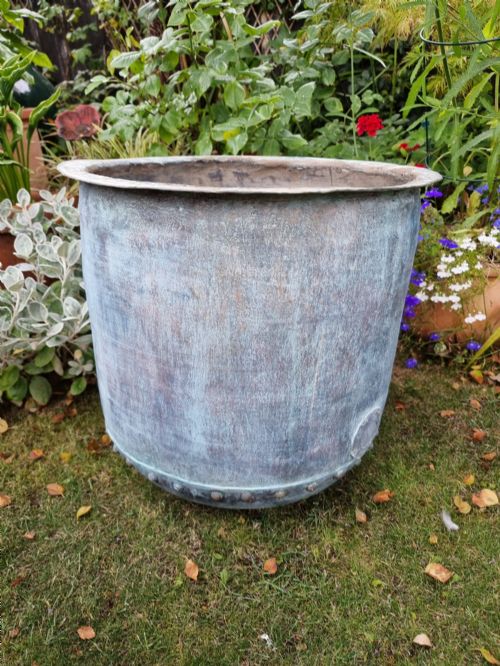
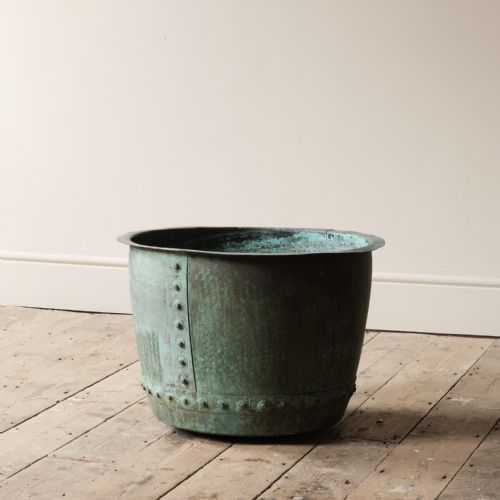
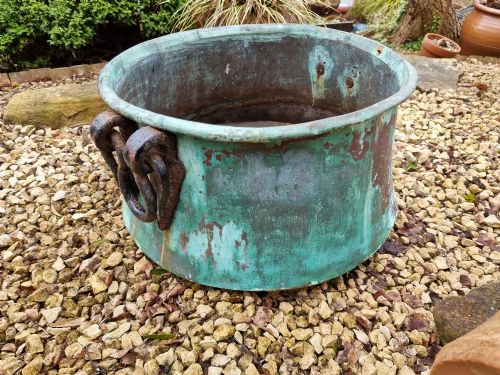
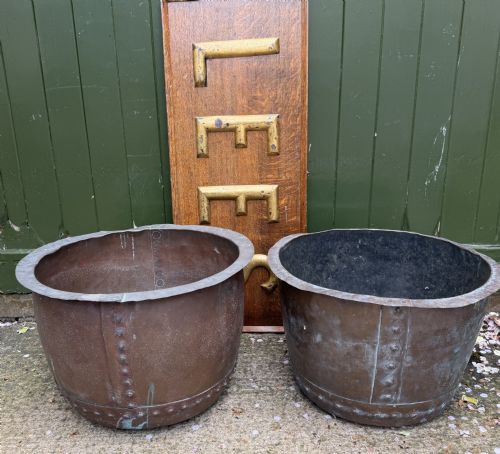
Sheet copper forms the primary body of these vessels, shaped by hand and joined with visible hand-riveted seams that demonstrate robust nineteenth-century fabrication. Iron and wrought iron frequently appear in handles or structural reinforcements, adding contrasting dark metal strength to the bright warmth of the copper.
Extended exposure to moisture and air creates the characteristic verdigris finish and weathered surface patination seen across these items. This natural oxidation layer coats the exterior metal in soft blue-green tones while preserving the underlying copper structure.
Verdigris Copper Log Basket Retail Price Guide 2026
Typical asking prices for verdigris copper log basket among the pieces listed under this phrase on Sellingantiques today, from the lower quarter to the upper quarter. They describe what is for sale here now, not the wider market.
French country and Victorian industrial styles dominate the available vessel forms and planters.
Assessing quality in antique copper vessels
Quality rests in the heaviness of the metal gauge and the integrity of the hand-riveted construction. Thicker copper sheets retain their structural form better under the heavy weight of logs and resist denting along the base and rim.
The visual depth of the surface patination dictates the aesthetic appeal of each piece. Natural verdigris and uniform weathering separate superior examples from plain or chemically altered surfaces.
The Verdigris Copper Log Basket Glossary
- Verdigris
- A green or blue-green patina formed on copper through natural atmospheric oxidation and weathering over extended periods. This layer protects the underlying metal and provides the distinct surface colour prized by collectors.
- Patina
- The surface appearance altered by age, use, and exposure, including rich tonal variations in the copper. Good patination shows decades of authentic handling and environmental interaction.
- Riveted
- Joined together using metal bolts or pins hammered flat to secure overlapping sheets of copper. Hand-riveted seams indicate traditional nineteenth-century manufacturing methods.
- Cheese Vat
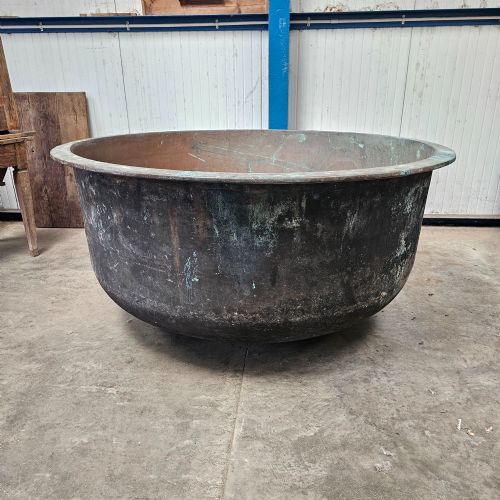
- A large industrial copper vessel originally utilised in rural dairies for warming milk and curd production. Their generous proportions make them well-suited for holding logs beside a fireplace.
Verdigris Copper Log Basket: Frequently Asked Questions
Are these pots waterproof?
Most of these nineteenth-century copper vessels retain their sealed riveted construction, though original intended uses varied from cheese vats to boiling coppers. Buyers frequently utilise them as indoor plant containers as well as log holders.
Checking individual vessel bases helps confirm whether the seams remain completely watertight for living plants.
How do I clean verdigris copper?
Preserving the natural verdigris and weathered surface patina requires minimal intervention, usually limited to gentle dusting or wiping with a dry cloth. Harsh metal polishes will strip away the historic oxidation that defines the character of these pieces.
Leaving the surface untouched maintains the authentic nineteenth-century appearance recorded across the listings.
What periods do these pieces span?
The listings on this page concentrate entirely in the nineteenth century, including specific dates around eighteen-fifty and the broader Victorian era. French provincial and English country workshops produced the majority of these heavy metal items.
Construction details and fastening methods align closely with the utilitarian demands of that industrial period.
Can I use them outdoors?
Their origins as garden display pots, agricultural vats, and planters mean these copper vessels tolerate outdoor environments easily. Copper and iron components naturally weather further when exposed to seasonal moisture and air.
Many examples transition fluidly between garden settings and interior hearths.