
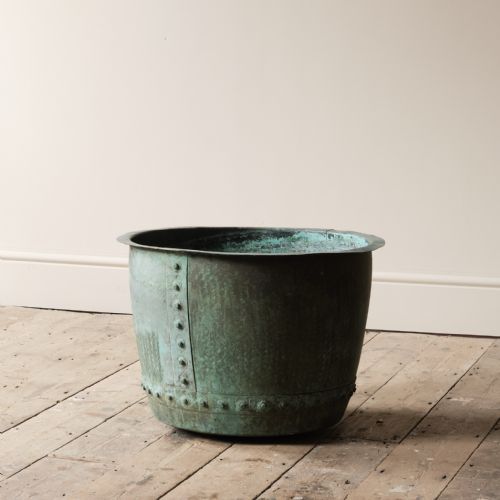
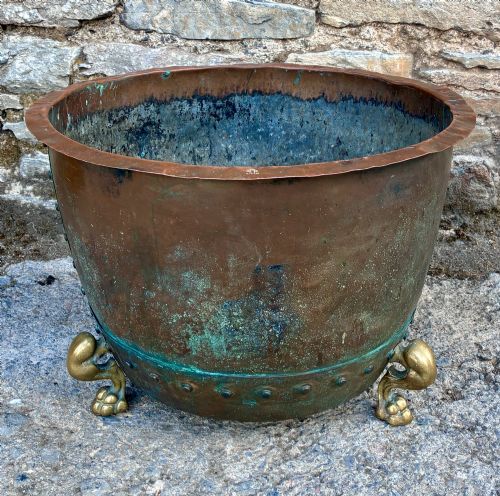
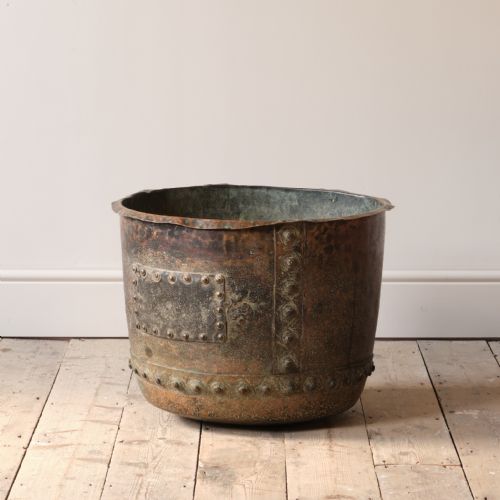
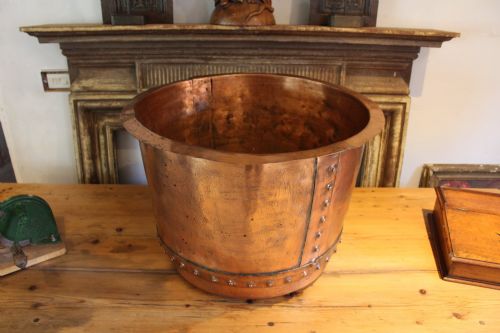



Victorian Riveted Copper Vessel
These robust victorian riveted copper vessel items bring utilitarian history into modern interiors through heavy metalwork and practical domestic forms.
Victorian Riveted Copper Vessel
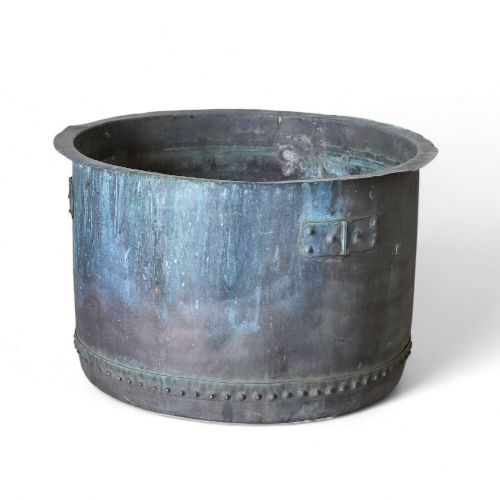
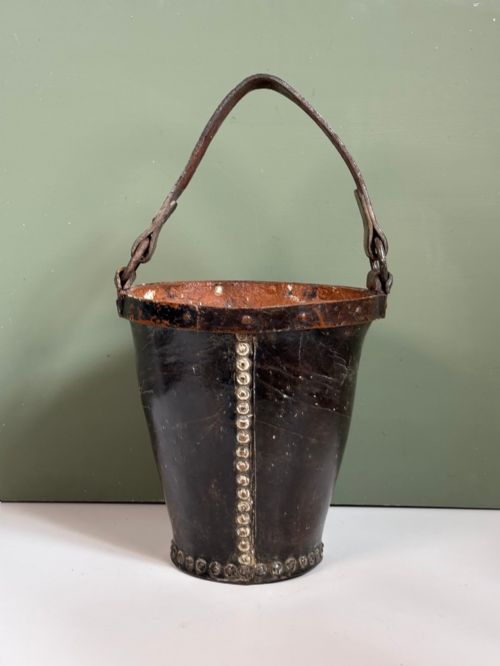
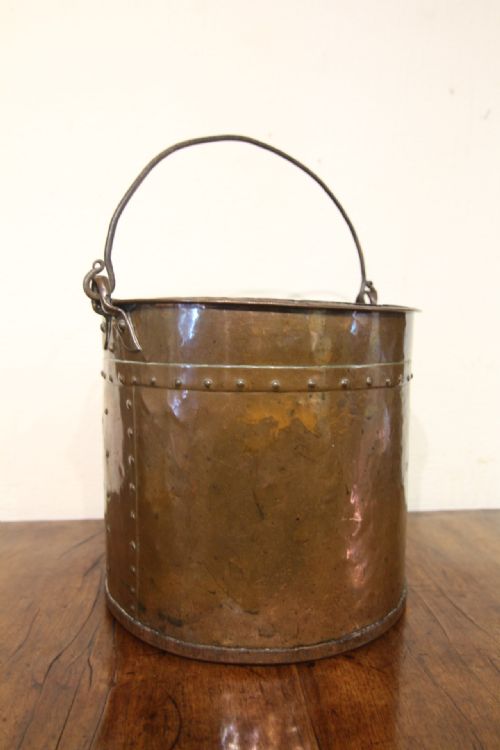
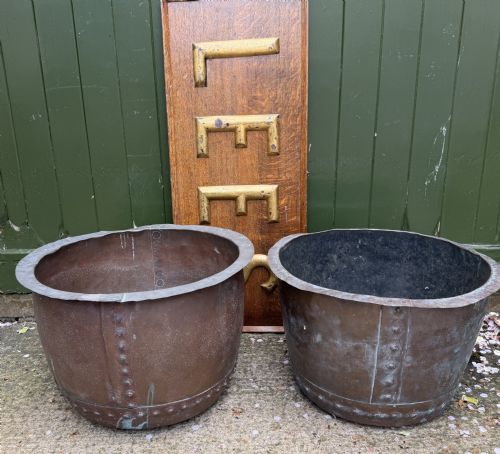
A victorian riveted copper vessel is a practical domestic or industrial container shaped for utility during the nineteenth century. These pieces encompass log bins, planters, coal buckets, boilers, stick stands, and cooking pots originating from 18th to early 20th century contexts.
The version most commonly encountered on this page is the large nineteenth-century copper planter, log bin, or bucket. Such items frequently feature heavy construction and structural metal handles suited to heavy lifting.
Makers produced these utilitarian objects across styles ranging from rustic farmhouse and Victorian industrial to Arts and Crafts. Their origins lie in daily domestic labour, warmth production, and agricultural storage rather than purely decorative display.
Assessing Quality
Quality rests in the substantial gauge of the metal and the integrity of the riveted joints. Heavier copper sheets and solid wrought iron hardware indicate superior utilitarian construction designed for hard service.
The character of the surface finish dictates visual distinction. Natural oxidation, unpolished patinas, and authentic wear mark the difference between industrial sincerity and decorative replication.
Materials across the inventory include copper, iron, brass, boiled leather, wrought iron, metal, and tin.
The Victorian Riveted Copper Vessel Glossary
- Riveted
- Joined with metal pins whose ends are beaten flat to secure overlapping sheets. This method provided structural strength before modern welding techniques.
- Patina
- The surface coloration and sheen developed through age and oxidation. It indicates authentic exposure to the elements and handling over decades.
- Verdigris
- The green crust or patina formed on copper by atmospheric oxidation. This surface layer signals genuine historical ageing.
- Jardiniere
- An ornamental pot or stand for holding plants or flowers. These vessels often feature decorative metalwork typical of the Arts and Crafts period.
- Ferrat
- A metal vessel or container associated with historic domestic tasks. Such items reflect utilitarian manufacture from the nineteenth century.
Victorian Riveted Copper Vessel: Frequently Asked Questions
What were victorian riveted copper vessels used for?
These items served demanding domestic and industrial tasks such as hauling coal, boiling water, holding logs, and storing grain.
Households and workshops relied on their durability for daily chores before central heating and modern plumbing altered domestic routines.
How do I clean a copper vessel?
Most collectors prefer to leave the natural patina and verdigris untouched, as cleaning removes the historical surface character.
If washing is necessary, use warm water and mild soap, avoiding harsh abrasives that strip away the authentic finish.
Are these vessels waterproof?
Many of these containers were built to hold water, liquids, or damp materials like coal and logs during regular household use.
Older vessels should be tested carefully before use as indoor planters to ensure seams remain completely sealed.
How can I date a copper vessel?
Dating relies on examining the construction methods, such as hand-beaten seams, heavy iron handles, and fastener types.
Nineteenth-century pieces typically display distinct utilitarian marks and hand-driven rivets rather than uniform modern machine manufacturing.