
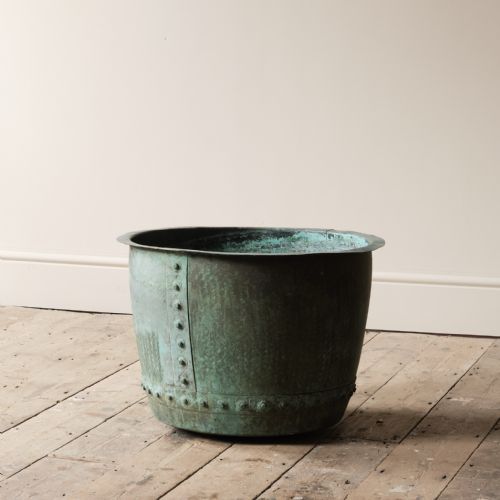
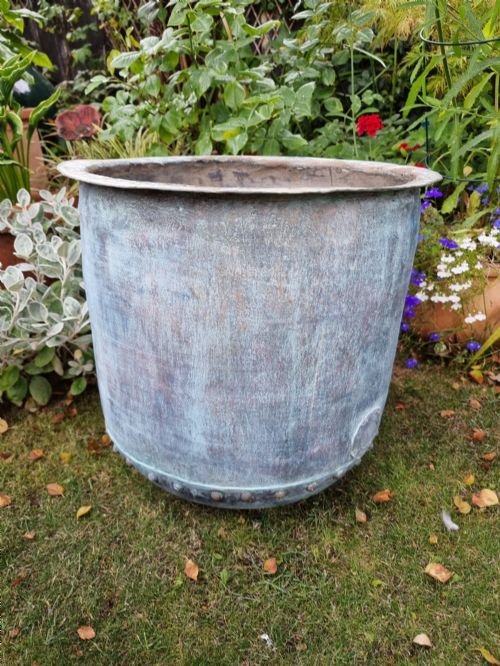
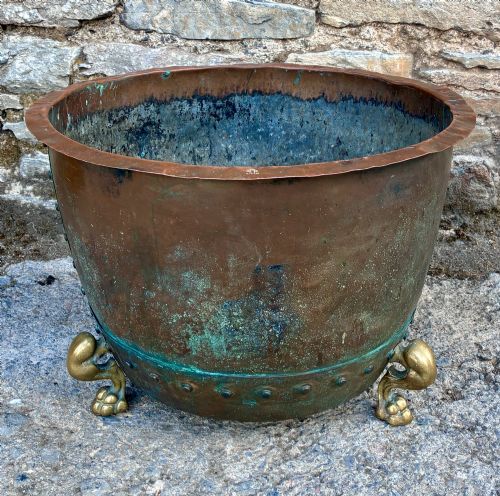
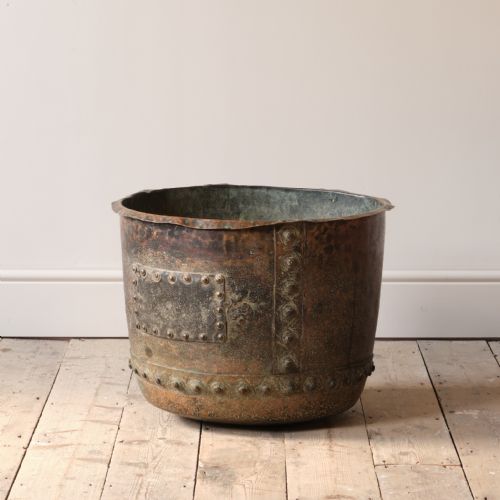


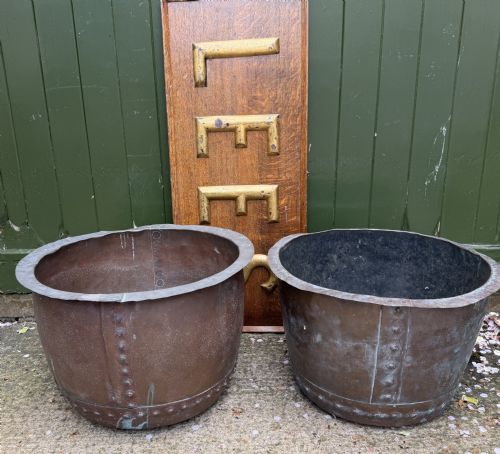


Vintage Riveted Planter
A vintage riveted planter brings industrial character to domestic and garden spaces through heavy metal construction and visible mechanical joints.
Vintage Riveted Planter
When you search for a vintage riveted planter, you encounter robust vessels originally built for utility and now repurposed for horticulture or domestic storage. These pieces bridge utilitarian function and decorative display, originating mainly from the nineteenth century and extending into the twentieth.
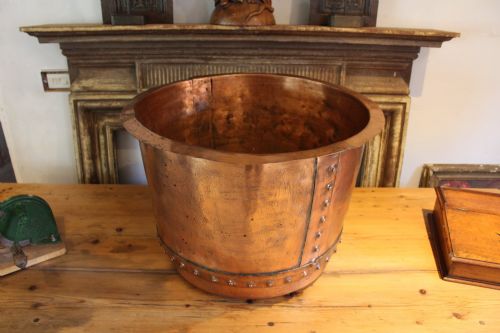
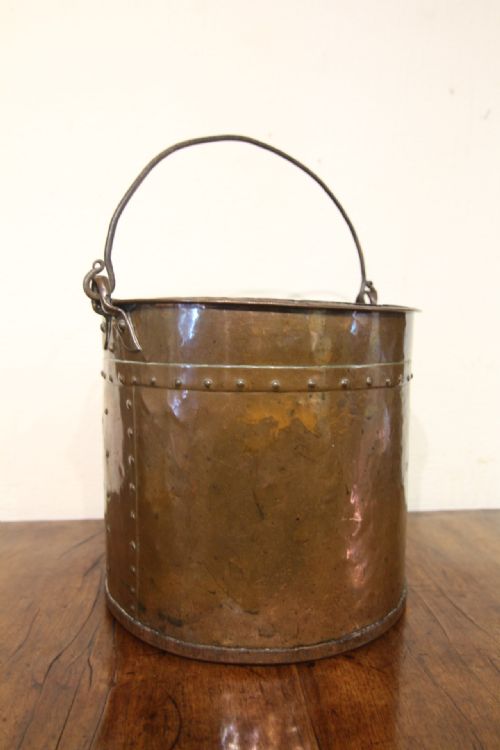
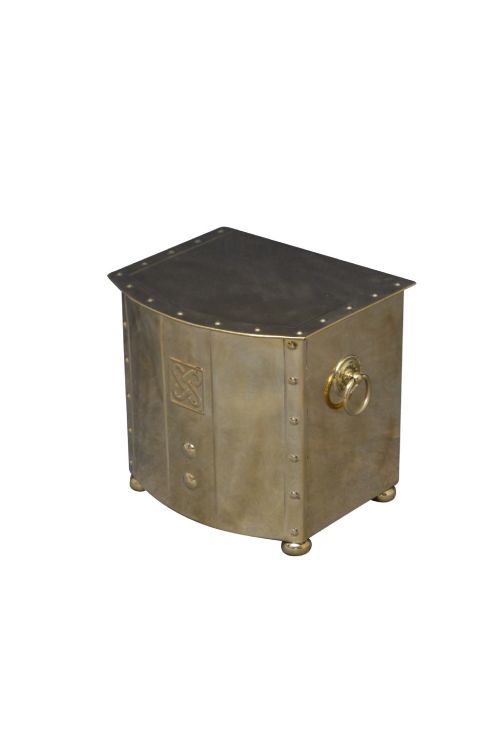
The form appears predominantly as deep copper or brass buckets, boilers, coal bins, and jardiniere pots. English and French examples dominate the selection, often carrying wrought iron handles or brass attachments.
Nineteenth century and Victorian utilitarian styles form the core of what is available. Makers constructed these items for heavy daily labour rather than ornamentation, yielding sturdy silhouettes that suit contemporary planting schemes.
What varies in quality
The distinction between ordinary and superior pieces rests on the weight of the metal sheet and the regularity of the hand-beaten construction. Heavier gauges of copper or brass resist distortion and hold their structural integrity better over generations of use.
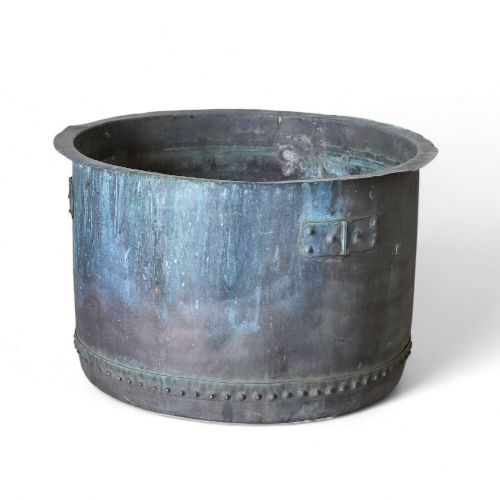
Detailing on the handles, the snugness of the riveted seams, and the presence of makers' marks or specific regional forms elevate certain vessels. A rich, undisturbed surface patina with natural verdigris indicates age and honest exposure to the elements rather than harsh chemical cleaning.
Materials recorded in current stock comprise copper, brass, iron, tin, wrought iron, and galvanised steel.
The Vintage Riveted Planter Glossary
- Riveted
- Joined together using metal pins hammered flat at the ends. This technique provides immense structural strength to vessels intended to hold heavy loads of coal, water, or soil.
- Jardiniere
- An ornamental pot or stand designed to hold growing plants or flowers. These vessels often feature decorative embossing or Arts and Crafts styling.
- Patina
- The surface sheen and colour acquired by metal through age, oxidation, and handling. Good patination shows varied tones of brown, green verdigris, and dull copper.
- Ferrat
- A traditional French term for a metal vessel or bucket. These utilitarian containers frequently appear in copper with iron swing handles.
- Log bin
- A deep container used originally for storing firewood near a hearth. Their generous proportions make them ideal receptacles for large indoor or outdoor plants.
Vintage Riveted Planter: Frequently Asked Questions
How do I use a vintage riveted planter?
These vessels suit large floor plants, indoor trees, or outdoor garden displays.
Line the interior with a suitable plastic pot and drainage layer to protect the historic metal from constant moisture and damp soil.
Are these planters waterproof?
Many of these metal vessels held liquids or damp materials during their working lives, but seams can loosen with age. Check the base and joints before filling directly with water or wet earth.
Using an internal liner is recommended to preserve both the vessel and your floors.
How do I date a copper planter?
Dating relies on construction methods, handle attachments, and stylistic cues from periods like the Victorian era or the Arts and Crafts movement. Machine-rolled edges and hand-hammered surfaces help distinguish nineteenth-century examples from later reproductions.
Look at the form of the rivets and the style of the wrought iron handles for further chronological clues.
How should I clean the metal?
Gentle dusting and occasional wiping with a soft cloth preserve the historic surface and natural verdigris.
Avoid abrasive metal polishes that strip away the aged patina and reduce the character of the piece.