

Antique Console Centre Table
An antique console centre table stands free in a room, drawing the eye with rich timbers and polished marble.
Antique Console Centre Table
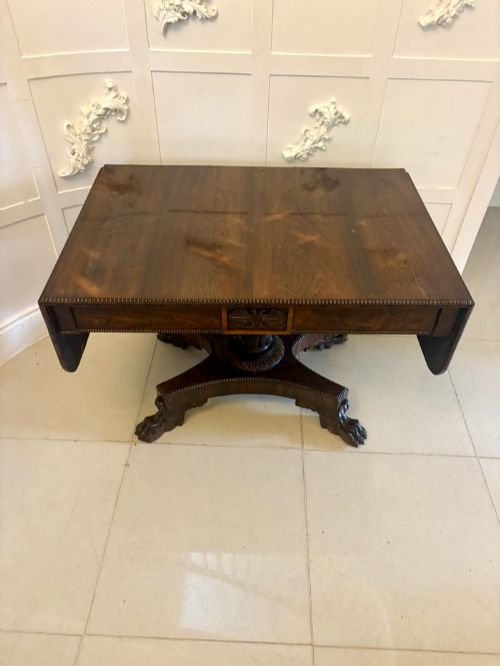
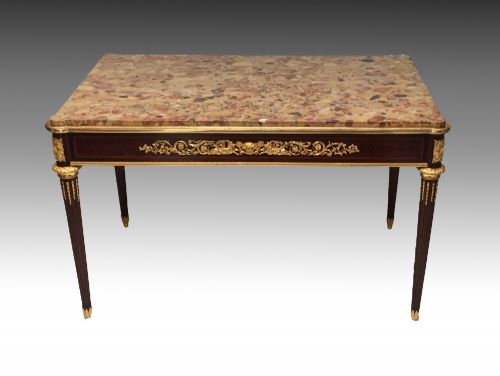
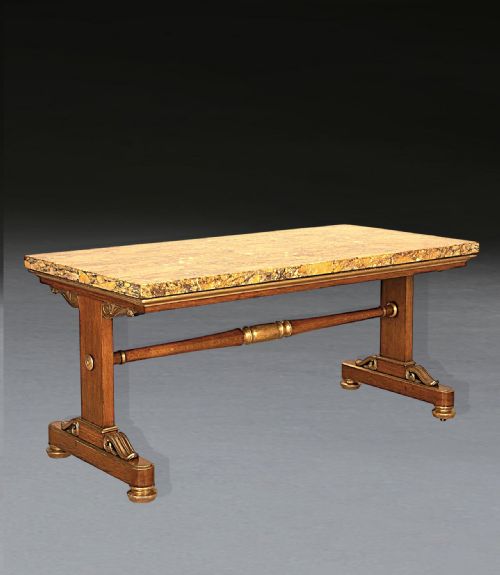
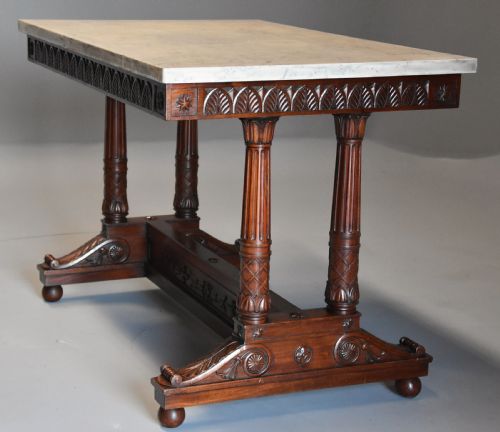
An antique console centre table serves as a freestanding focal point designed to be viewed from all sides within a principal room. Buyers seeking this form encounter diverse iterations spanning the seventeenth century through the early twentieth century, incorporating styles from Regency elegance to Victorian revivalism.
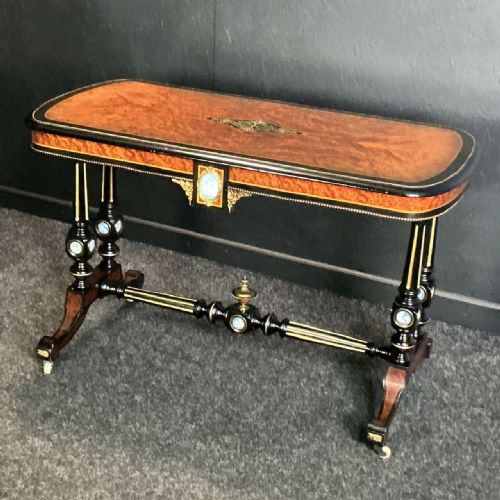
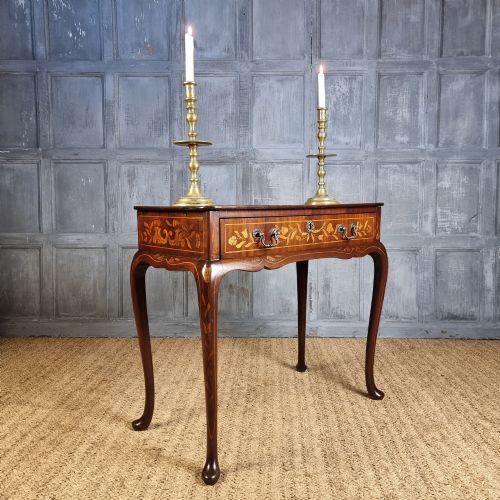
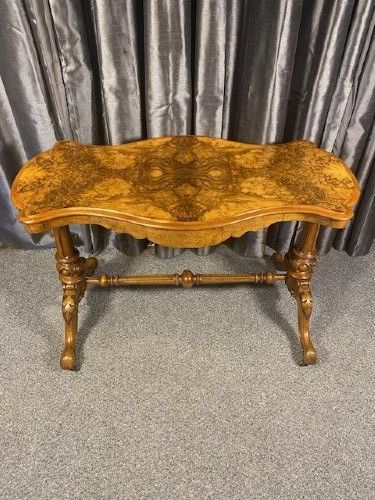
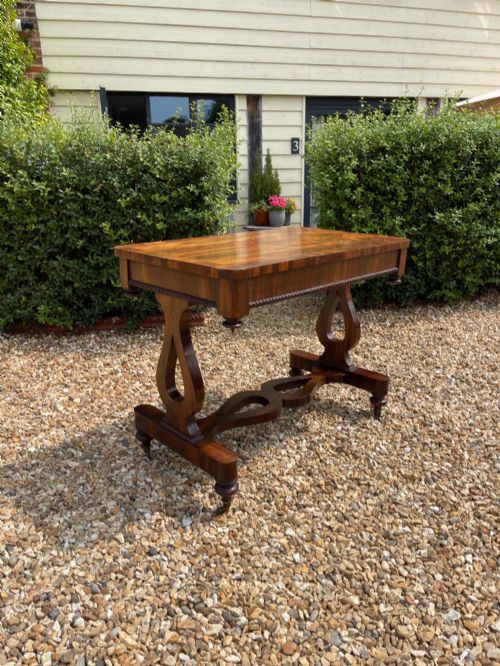
The selections on this page encompass related forms such as sofa tables, library tables, and occasional tables alongside dedicated centre and console formats. Timbers like mahogany, rosewood, and walnut dominate the offerings, frequently paired with marble tops or intricate marquetry.
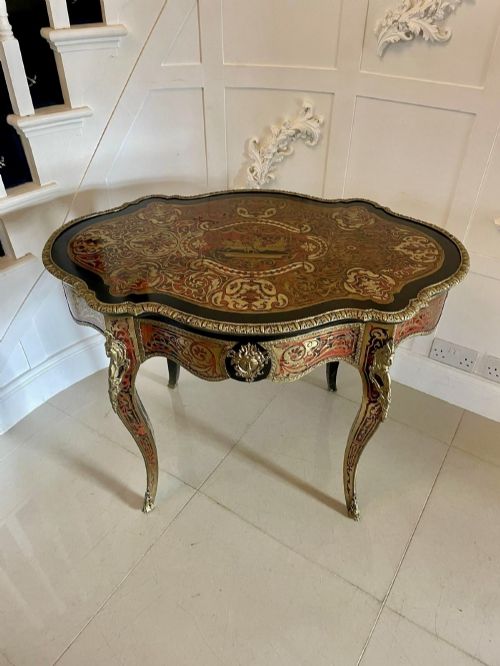
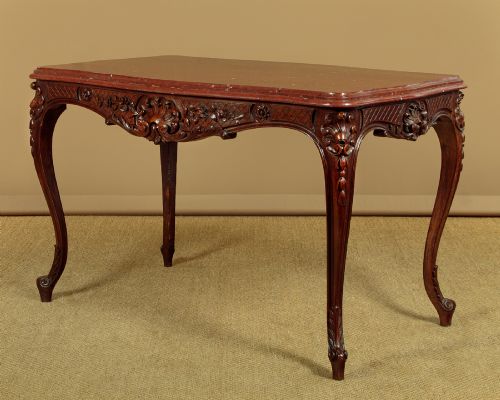
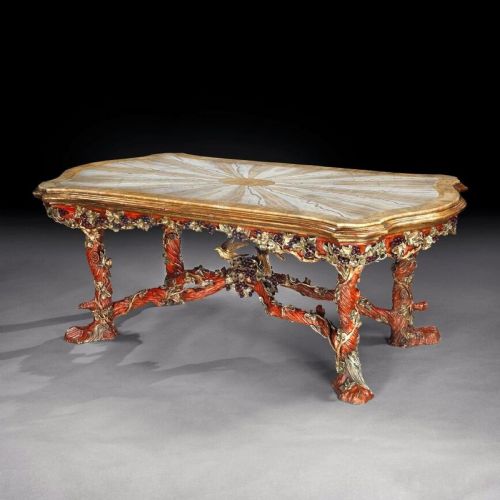
Origins stretch across English, French, Dutch, Scandinavian, and Chinese workshops, demonstrating how different makers interpreted the freestanding table format. Pieces range from formal Regency rosewood designs to carved oak Victorian halls tables and inlaid French marquetry examples.
How they were made
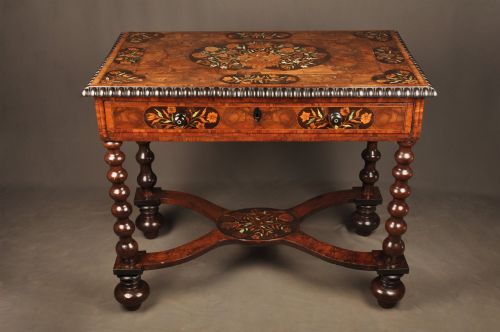
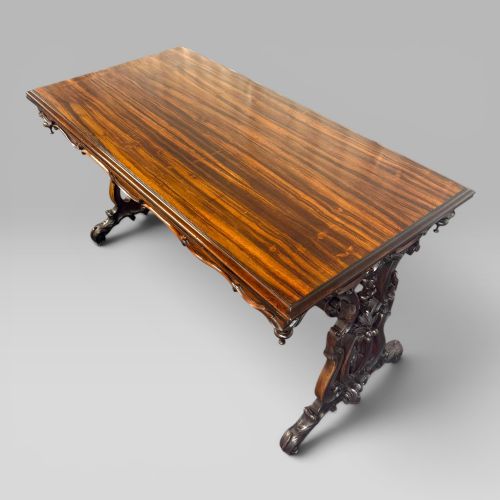
Cabinetmakers utilised dense native and exotic hardwoods including mahogany, walnut, rosewood, and zebrawood, often applied as veneers over secondary timbers to display figured grains. Marquetry, parquetry, and bone inlay added decorative geometric or floral patterns across flat surfaces.
Marble tops, notably white, rouge, and Siena varieties, rested upon wooden carcases, while cast bronze or ormolu mounts and brass gallery rails accented French and Empire style pieces. Giltwood frames and carved solid walnut or oak provided structural support and sculptural detail.
Listings feature woods like mahogany, rosewood, walnut, and zebrawood, alongside marble tops, ormolu mounts, and bone inlay.
What varies in quality
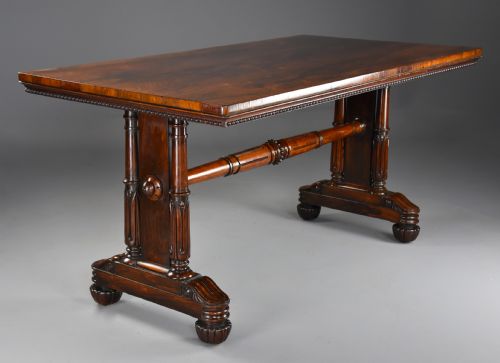
The refinement of the carving and the choice of timber figure dictate the distinction between standard production and exceptional examples. Finer pieces display crisp hand-carved details in solid rosewood or mahogany, alongside balanced proportions and thoughtful integration of marquetry or ormolu mounts.
Construction methods also separate grades, visible in the depth of patination on original wood surfaces and the precision of veneer work. Superior tables maintain a fully finished underside and freestanding symmetry, whereas lesser examples rely on simpler secondary woods and restrained ornamentation.
Gillows·JACOB·Francoise Linke
The Antique Console Centre Table Glossary
- Freestanding
- Finished on all four sides so the table can stand in the middle of a room rather than against a wall. This quality defines true centre tables.
- Ormolu
- Gilded bronze mounts applied to furniture, commonly found on French Empire and revival pieces. It adds metallic contrast to dark woods and marble.
- Marquetry
- Inlaid patterns of wood veneers, shell, or bone forming pictorial or floral designs on table tops. It requires immense skill from the cabinetmaker.
- Siena marble
- A yellow Italian marble with dark grey and purple veins, prized for its distinctive coloration on Regency and classical tables.
- Sofa table
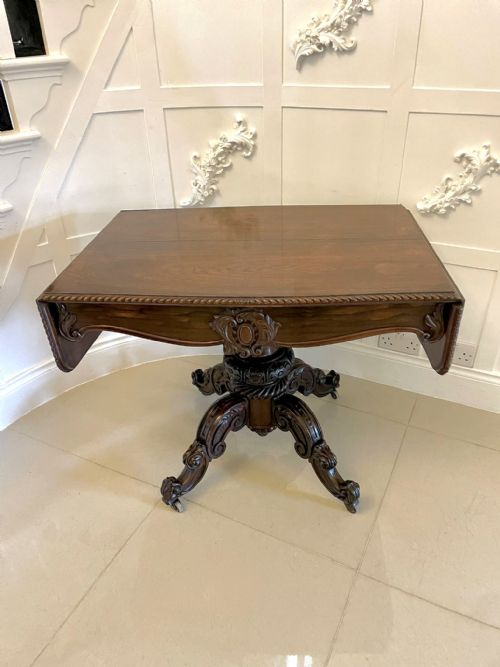
- A rectangular occasional table traditionally placed in front of a sofa, usually featuring drop leaves and paired pedestal supports.
Antique Console Centre Table: Frequently Asked Questions
Where should I place a centre table?
A centre table stands in the middle of a room, serving as a focal point where people can walk entirely around it. Because these pieces are finished on all sides, they command space away from walls.
They function effectively in large hallways, libraries, and principal drawing rooms where their decorative tops and fine timber framing remain visible from every angle.
How do I care for a marble top?
Marble tops require gentle cleaning with a soft cloth and warm water, avoiding acidic or abrasive household cleaners that etch the polished surface. Placing felt pads under objects prevents scratches.
Applying a neutral wax occasionally helps protect the stone from stains while maintaining its natural sheen.
What is the difference between a console and a centre table?
A traditional console table fastens against a wall, often supported by front legs with the rear fixed to the architecture. A centre table stands independently without wall support.
Many antique examples bridge these categories or adapt across periods, functioning as both console and freestanding centre furniture.
How do I identify a Regency table?
Regency tables typically display classical restraint, featuring dark mahogany or rosewood, brass inlay, and saber legs or pillar pedestals. Ormolu mounts and polished marble inserts frequently accent the design.
Construction from the early nineteenth century often reveals precise cabinetwork and balanced geometric proportions characteristic of the era.