



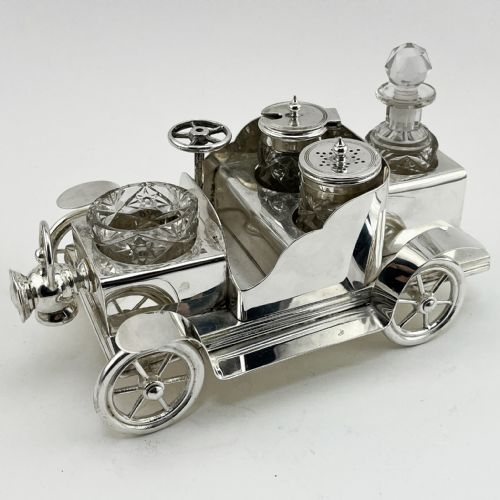


Antique Condiment Decanter
These antique condiment decanter pieces bring functional elegance to the dining table, offering refined glass and silver vessels designed for oils, vinegars, and sauces.
Antique Condiment Decanter
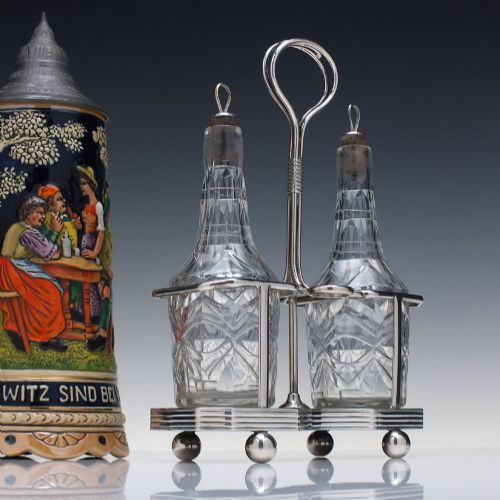
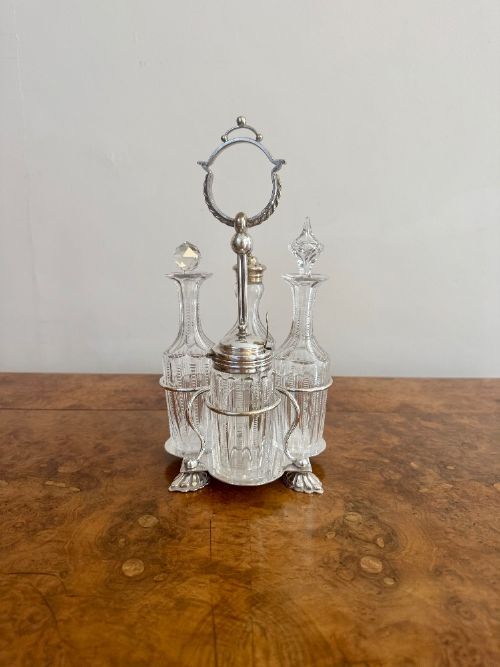
When you search for an antique condiment decanter, you encounter a specialised assortment of tabletop vessels and cruet stands designed for oil, vinegar, and sauces. The selection ranges from singular miniature bottles to multi-bottle cruet sets housed in fitted stands.
The pieces on this page span several eras, with Georgian examples featuring heavy cut glass alongside Victorian and Edwardian silver-plated sets. You will also find Art Deco iterations from the nineteen-twenties that employ cleaner geometric silver mounts.
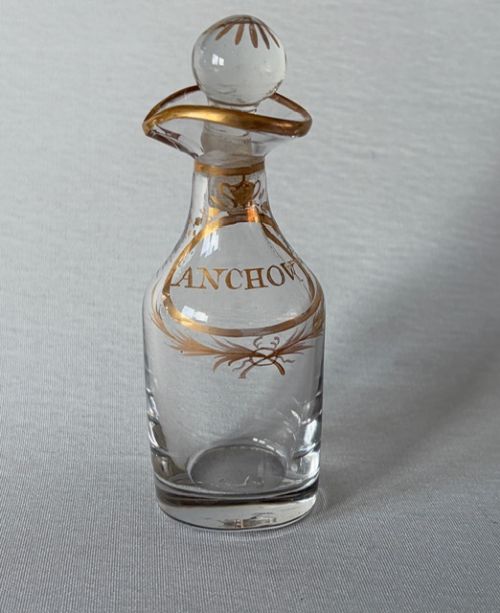
Forms vary from simple pairs of oil and vinegar bottles to large oval frames carrying up to eight individual glass containers. Some unusual examples include vintage car cruet sets and miniature anchovy bottles intended for specific dining uses.
Materials and construction
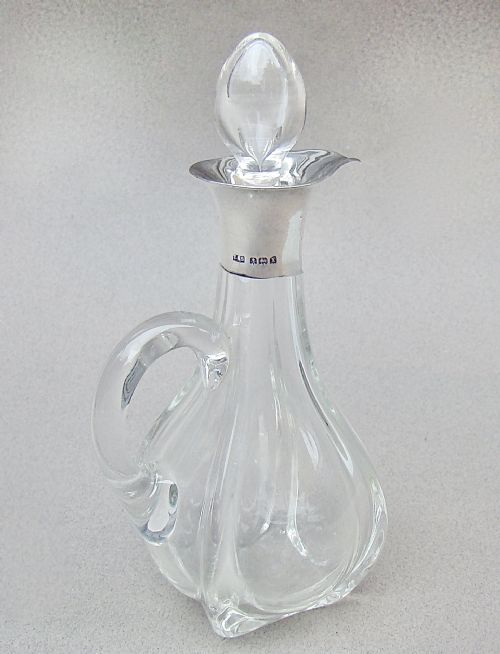
Makers utilised heavy cut glass and lead crystal for the bodies of the decanters and bottles, achieving brilliant facets and structural clarity. These glass elements were frequently paired with sterling silver mounts, silver plate, or Old Sheffield plate.
Stands and frames incorporate traditional cabinet woods such as mahogany, sometimes complemented by treen and cork stoppers. Metal components rely on period silversmithing techniques, including hallmarked casting and applied silver mounts.
Antique Condiment Decanter Retail Price Guide 2026
Typical asking prices for condiment decanter among the pieces listed under this phrase on Sellingantiques today, from the lower quarter to the upper quarter. They describe what is for sale here now, not the wider market.
Listings incorporate items from the Georgian period through to the Art Deco era, utilising cut glass, sterling silver, and mahogany.
Evaluating craftsmanship and condition
Quality rests upon the crispness of the glass cutting and the weight of the metal framework. Superior examples display deeply cut facets on the glass and substantial gauge silver or heavy silver plating on the stands.
The distinction between ordinary and exceptional pieces lies in the completeness of matching sets and the presence of clear hallmarks. Original stoppers and intact silver mounts by notable makers elevate the standing of an individual decanter or cruet frame.
Levi and Salaman·Charles Thomas Fox·Hester Bateman·Wade Wingfield Wilkins
The Antique Condiment Decanter Glossary
- Cruet set
- A matched collection of glass bottles or decanters held within a metal or wooden stand for table condiments.
- Old Sheffield plate
- A composite material formed by fusing a thin sheet of silver to a thicker copper base, common in eighteenth and nineteenth-century wares.
- Treen
- Small handmade wooden objects and household utensils turned on a lathe or carved.
- Sterling silver
- An alloy consisting of ninety-two point five percent silver and seven point five percent other metals, typically copper.
- Hallmark
- An official stamp applied to precious metals indicating purity, origin, and the year of assay.
Antique Condiment Decanter: Frequently Asked Questions
What is an antique condiment decanter used for?
These vessels were created to hold and dispense table condiments such as oil, vinegar, and sauces during formal meals.
They sat upon the dining table or sideboard so guests could season their food to taste throughout the course.
How do I identify a Georgian cruet set?
Georgian sets typically feature heavy, hand-cut glass bottles housed in silver frames, Sheffield plate, or mahogany stands.
Look for crisp facet cutting on the glass and early hallmarking styles that indicate production in the eighteenth or early nineteenth century.
Are silver plated cruet sets durable?
Silver plated frames from the Victorian and Edwardian eras are robustly constructed to support heavy glass bottles.
With careful handling and gentle cleaning, the underlying metal and plating endure regular display and domestic use.
How do Art Deco decanters differ from older styles?
Art Deco condiment decanters from the nineteen-twenties favor geometric silver mounts and streamlined profiles.
They replace the elaborate ornamentation of Victorian and Georgian designs with cleaner lines characteristic of twentieth-century modernism.