


Antique Commode with Slide
An antique commode with slide is a compact case piece with a pull-out shelf, prized for its clever dual purpose as storage and writing surface.
Antique Commode with Slide
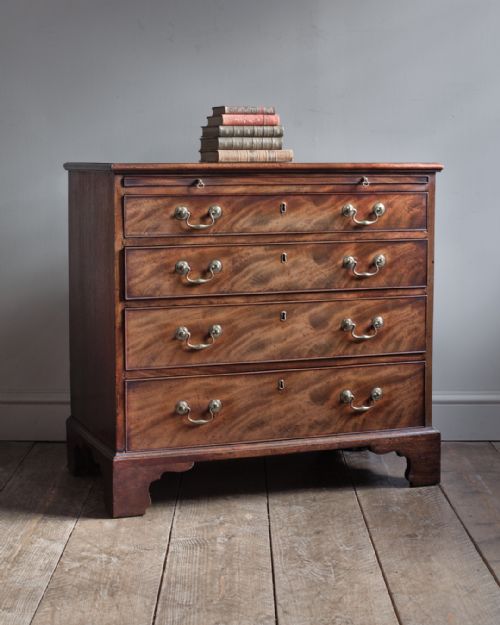
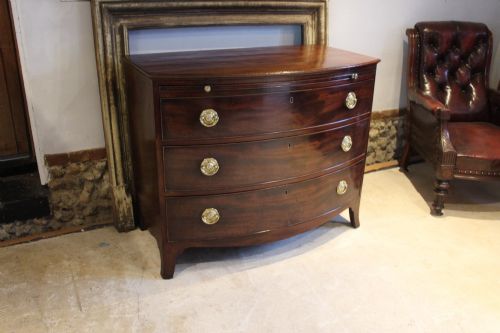
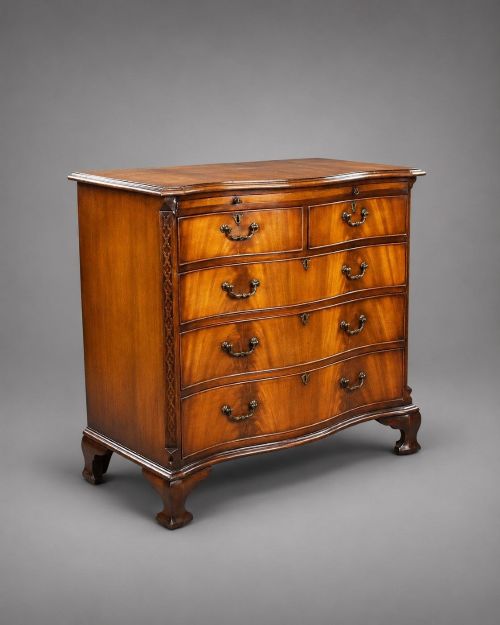
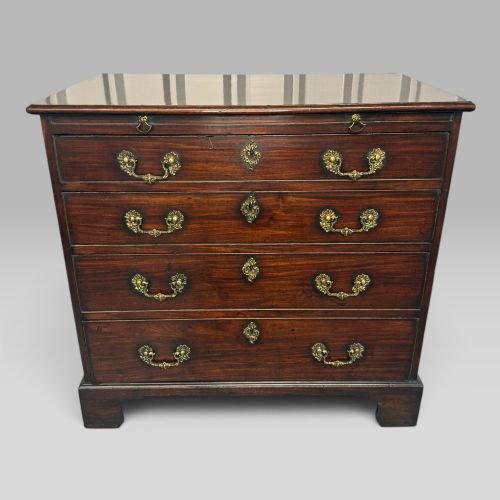
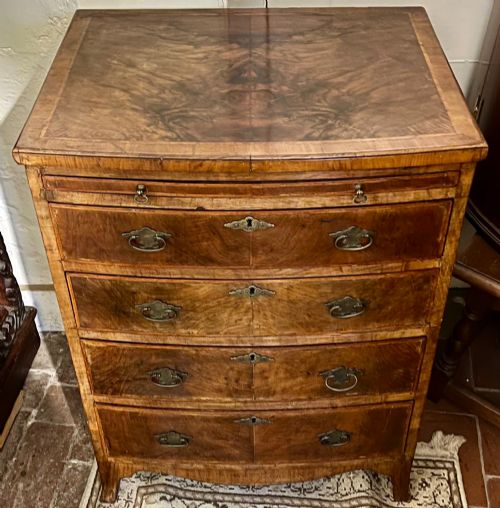
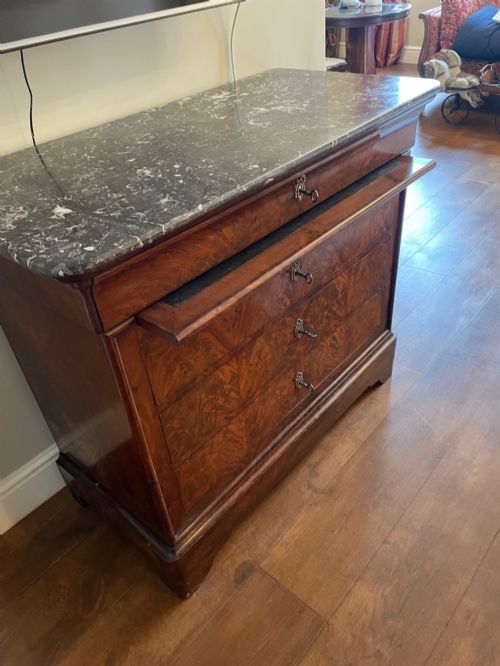
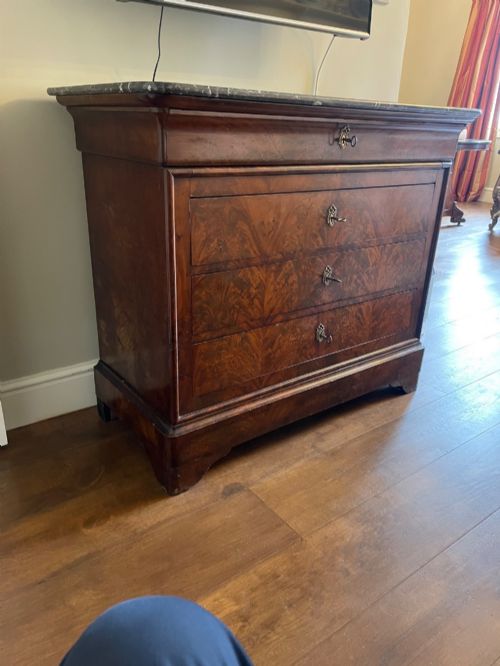
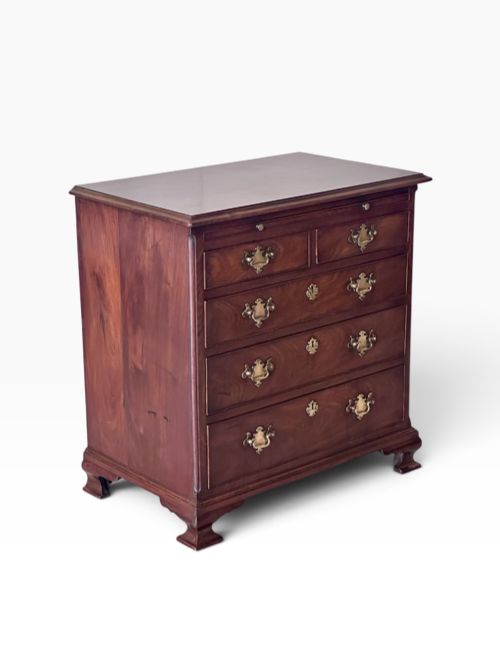
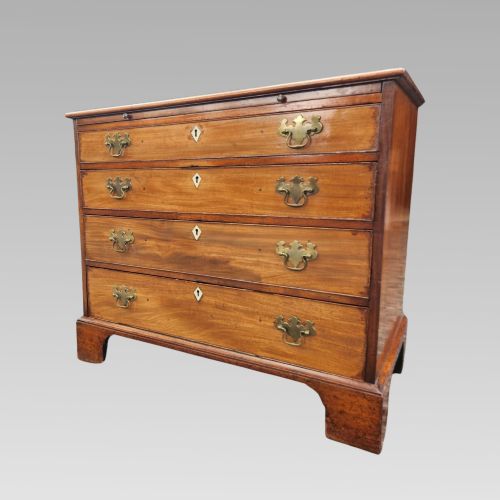
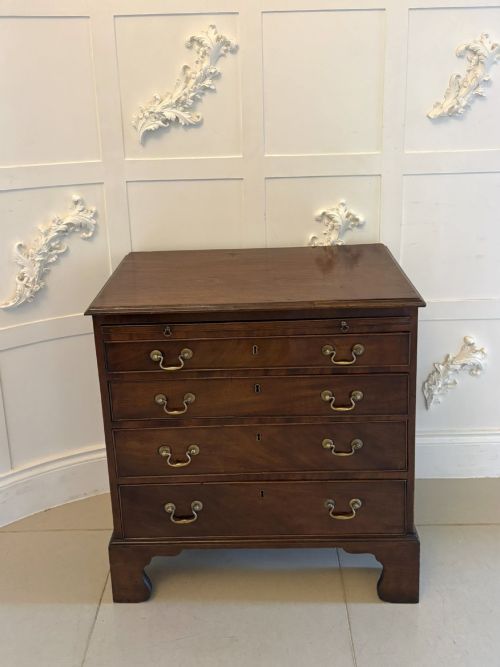
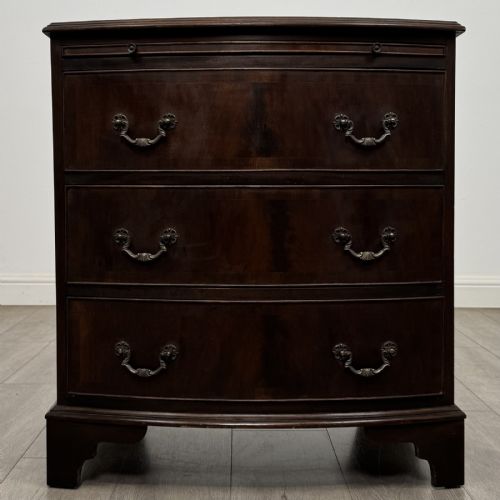
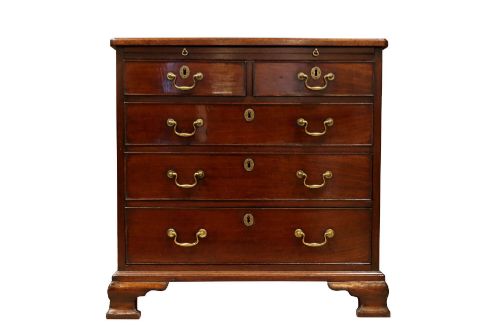
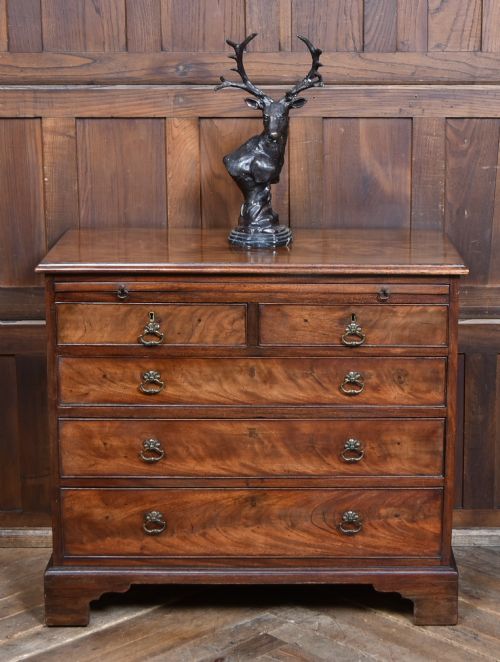
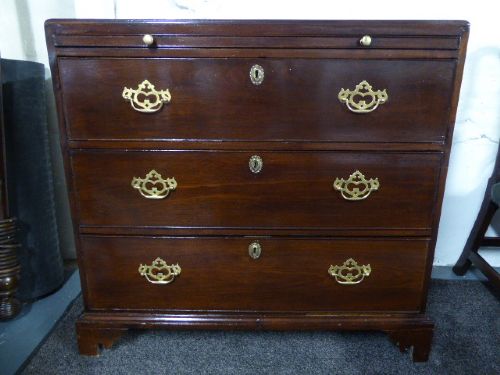
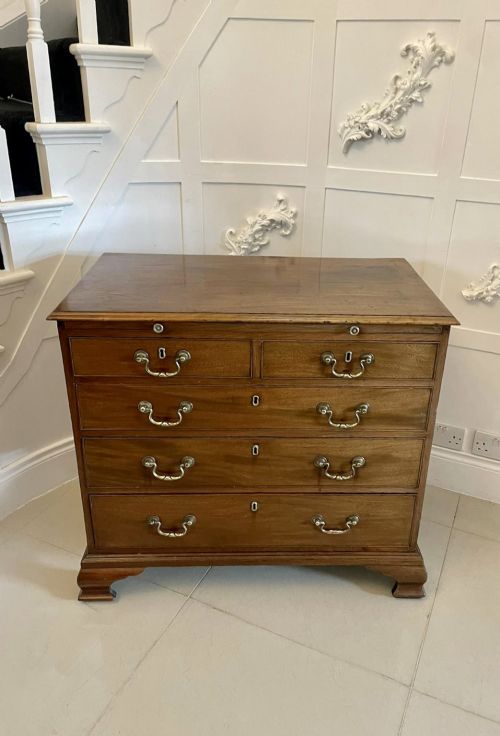
An antique commode with slide functions primarily as a chest of drawers equipped with a concealed pull-out shelf, often termed a brushing slide or sliding top panel. Buyers seeking this form encounter chests spanning the eighteenth and nineteenth centuries, executed in periods from Early Georgian and George II through George III and Regency.
The dominant material on this page is mahogany, frequently figured as flame mahogany, alongside walnut and oak pieces. These items appear chiefly as chests of drawers, occasionally taking serpentine or bowfront profiles, or functioning specifically as bachelor's chests.
Materials and construction methods
Cabinetmakers utilised solid timbers and veneers of mahogany and walnut over secondary woods like pine, incorporating brass hardware for drawer pulls and escutcheons. The sliding mechanism relies on precision timber runners integrated directly beneath the top surface or upper drawer.
Internal components frequently feature baize lining on the pull-out slide to protect surfaces during writing or grooming. Construction techniques emphasise dovetailed drawer boxes and frame-and-panel assemblies suited to handling daily use.
Antique Commode with Slide Retail Price Guide 2026
Typical asking prices for commode with slide among the pieces listed under this phrase on Sellingantiques today, from the lower quarter to the upper quarter. They describe what is for sale here now, not the wider market.
Some slides still retain traces of old ink stains from hurried nineteenth-century letters penned before breakfast.
Distinctions in craftsmanship
Quality reveals itself in the selection of timber figures, such as highly figured flame mahogany or richly grained walnut, and the crispness of proportion in smaller scale chests. Superior examples maintain smooth operation of the sliding shelf and tight joints in the drawer construction.
The finesse of secondary details, including original brasses and well-executed mouldings, separates standard production from finer cabinet work of the eighteenth and nineteenth centuries.
The Antique Commode with Slide Glossary
- Brushing slide
- A pull-out wooden shelf integrated into the upper section of a chest, historically used for powdering wigs, writing letters, or placing items temporarily. This feature retracts flush when not in use.
- Bachelor's chest
- A small chest of drawers equipped with a folding top or a sliding shelf, designed for compact living spaces. These pieces combine wardrobe storage with a writing surface.
- Serpentine front
- A furniture front characterised by a wavy contour that curves outward in the centre and inward at the sides. This shape requires advanced woodworking skill to execute.
- Flame mahogany
- A veneer cut from the branch junctions of mahogany trees, producing a distinctive, fiery grain pattern. Cabinetmakers reserved this material for prominent surfaces.
- Baize
- A coarse woollen material resembling felt, historically used to line the upper sliding shelves of chests to provide a soft writing surface.
Antique Commode with Slide: Frequently Asked Questions
How do I date an 18th-century chest?
Dating relies on observing timber choices, construction methods, and stylistic cues such as bracket feet or proportion. Earlier pieces often display walnut or early mahogany with hand-cut dovetails.
Later Regency examples introduce bowfront shapes and distinct brass hardware patterns associated with the nineteenth century.
Where were bachelor's chests used?
Bachelor's chests served primarily in bedrooms and private chambers as multi-functional furniture. Their compact dimensions suited smaller domestic spaces.
The inclusion of a slide allowed the owner to write or dress without occupying the room with a full-sized desk.
Are all slides lined with baize?
Not all slides feature baize linings, as many present a plain polished wood surface instead. The presence of baize depends on the specific commission and period.
Wooden surfaces predominated in functional areas intended for general use, while baize offered a protected platform for writing.