

Antique Commode Table
These antique commode table pieces bring storage and surface utility to domestic rooms through centuries of cabinet-making form.
Antique Commode Table
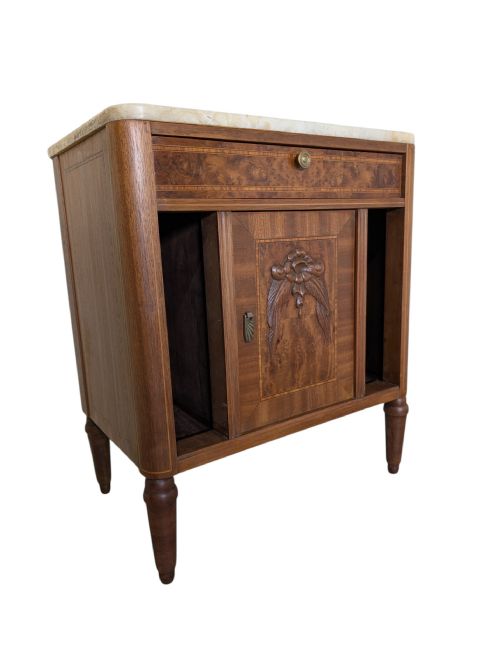
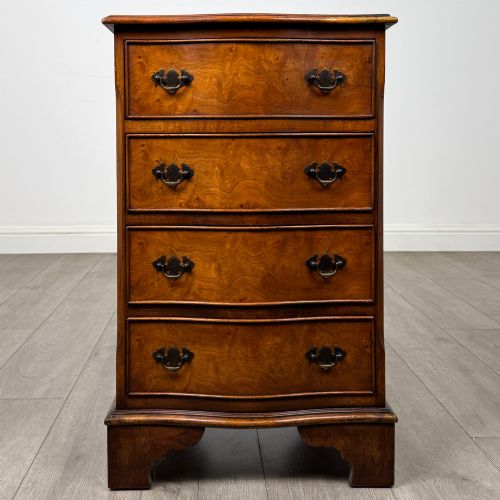
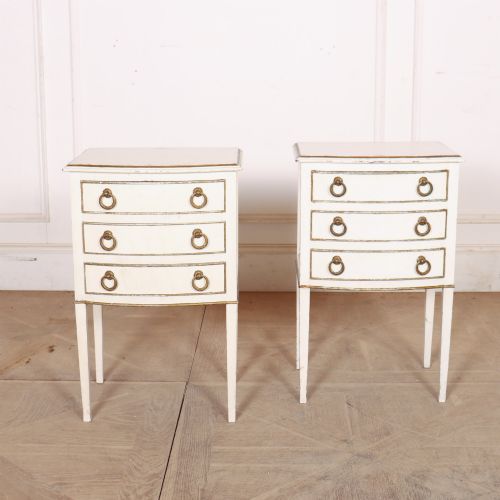
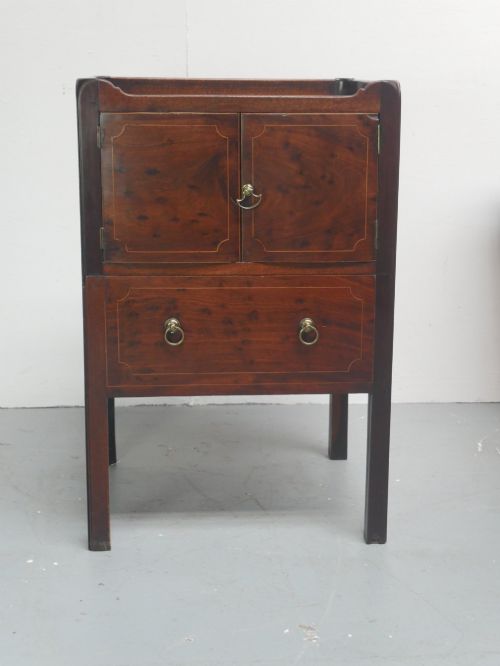
An antique commode table encompasses varied forms of low storage furniture, ranging from bedside night tables to small chests of drawers and French commodes. These pieces serve practical functions in bedrooms and living spaces while displaying the design characteristics of their period of origin.
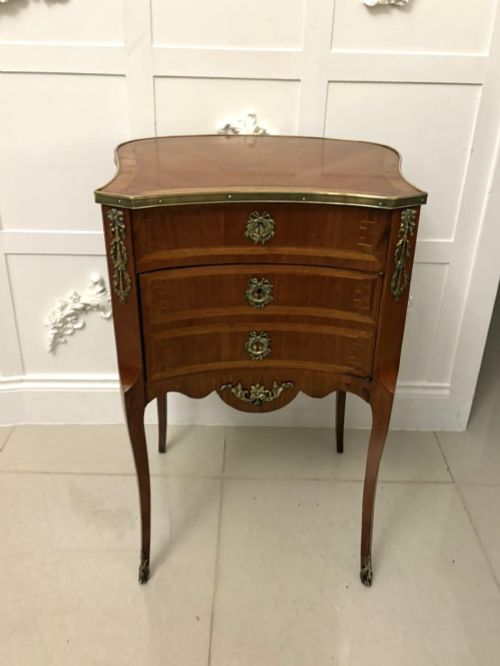
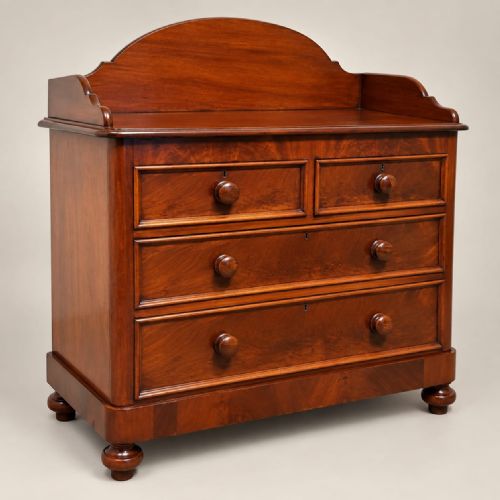
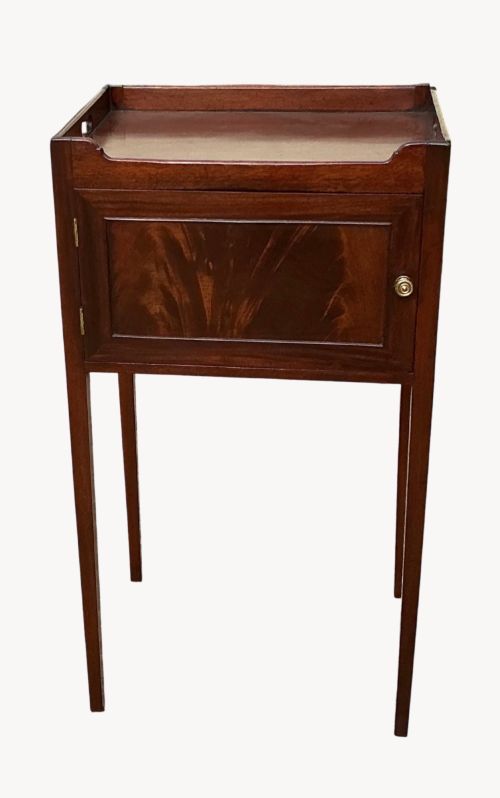
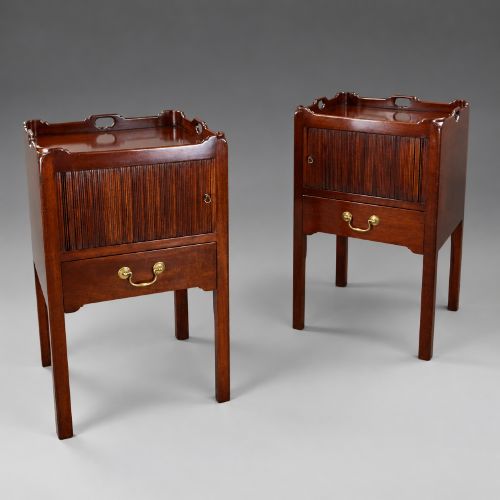
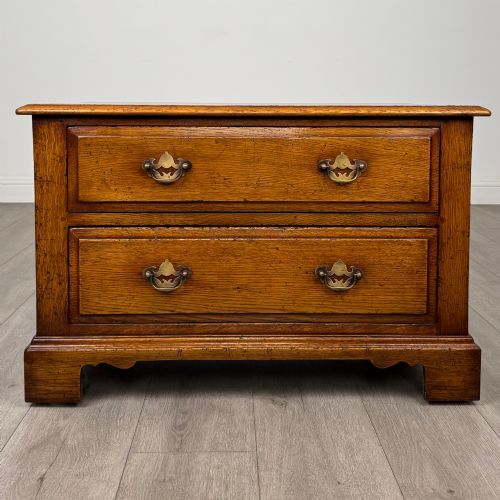
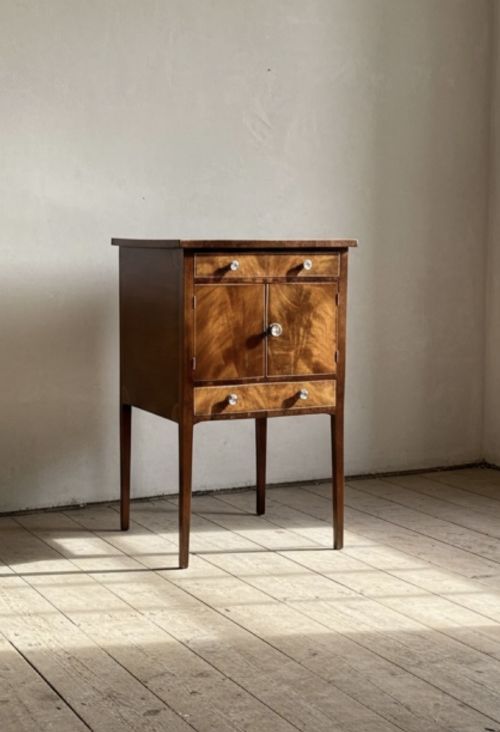
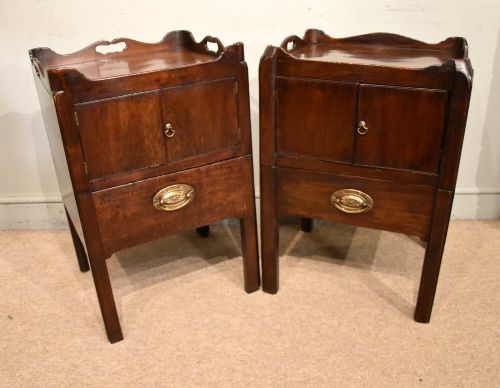
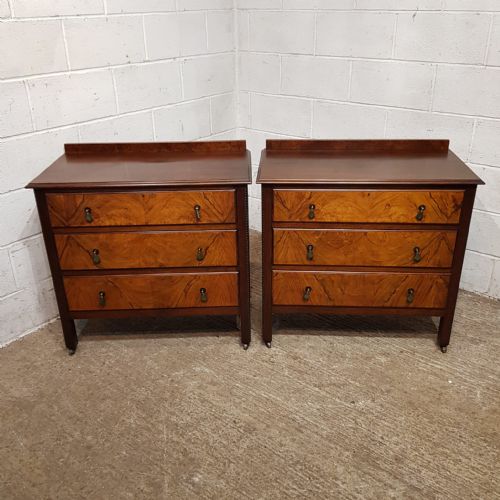
The selections available include Georgian mahogany bedside cabinets alongside French Louis XV style marquetry cabinets, Victorian mahogany pot cupboards, and Edwardian small chests of drawers in oak or walnut. Pieces span the 18th century through the early 20th century, capturing shifts in domestic utility.
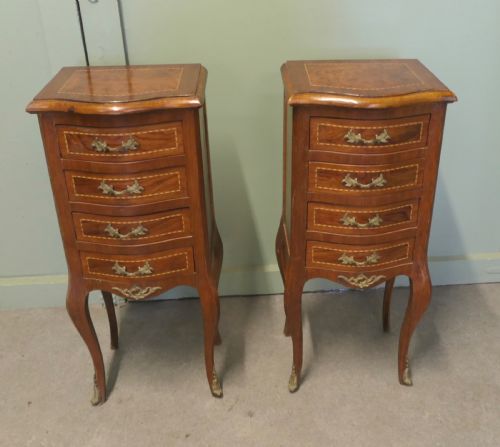
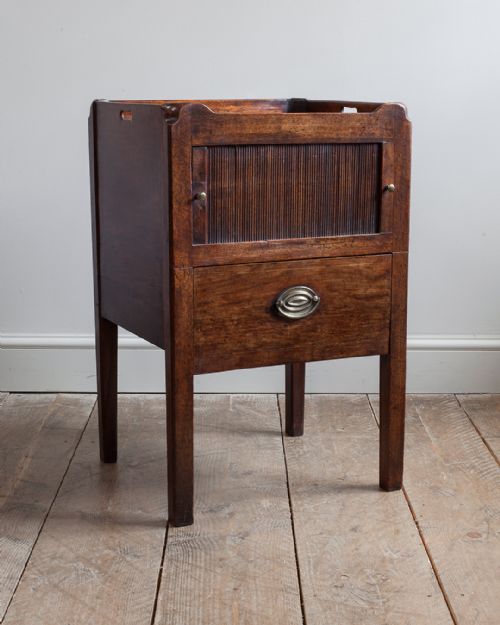
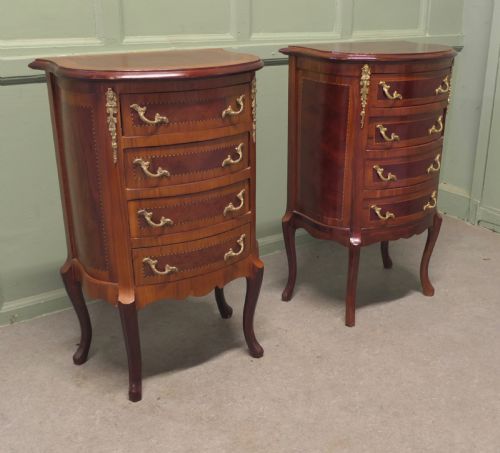
Buyers frequently encounter bedside cabinets and nightstands featuring tray tops, cupboards, or small banks of drawers, alongside French bombe cabinets mounted with ormolu. These utilitarian forms reflect how period households managed bedside storage and washing accessories.
Materials and construction methods
Makers utilised primary cabinet timbers such as mahogany, oak, walnut, and kingwood, often pairing them with burr walnut veneers or intricate marquetry patterns to decorate surfaces. Structural integrity relied on traditional joinery suited to smaller case goods.
Many French pieces incorporate marble tops and gilt bronze or ormolu mounts, combining stone and metal with timber frames. Lacquer work and chinoiserie finishes appear on select items, showing diverse decorative treatments applied to carcases.
Tray top edges, serpentine fronts, and bombe contours demanded precise shaping of solid timber and applied veneers. Close stools and pot cupboards required functional internal spaces designed to conceal ceramic vessels securely.
Several 18th century oak and elm close stools disguise sanitation as small bedside chests.
Distinctions in construction and finish
The standard of timber selection and veneer matching defines the visual impact of each piece, distinguishing finely figured mahogany or burr walnut from simpler domestic woods. Grain alignment across drawer fronts and sides shows the maker's care.
The refinement of decorative elements, including hand-chased ormolu mounts, marquetry inlay, and marble top thickness, separates standard utility items from high-style workshop productions. Crisp carving and tight joinery indicate superior cabinet-making.
Original hardware, working locks, and intact internal fittings preserve the integrity of the piece. The survival of surface finishes, whether French polish or lacquer, influences how authentically the cabinet represents its period.
E Kahn·Sormani
The Antique Commode Table Glossary
- Commode
- A low piece of furniture with drawers or doors, functioning as a small chest or bedside cabinet.
- Ormolu
- Gilt bronze mounts used for decorative enrichment on French and English case furniture.
- Bombe
- A bulging, outward-curving swell on the front and sides of a cabinet or chest.
- Marquetry
- Inlaid patterns of wood veneers applied to the carcase to form decorative pictures or geometric designs.
- Pot cupboard
- A small bedside cabinet designed originally to house a chamber pot.
- Close stool
- A piece of furniture resembling a small chest enclosing a commode seat for sanitary use.
Antique Commode Table: Frequently Asked Questions
What is an antique commode table?
An antique commode table is a low storage unit, typically functioning as a bedside cabinet, nightstand, or small chest of drawers.
These pieces originate from periods spanning the 18th century to the early 20th century in English and French styles.
How were antique commode tables used?
They served primarily in bedrooms for bedside storage, holding washing equipment, night candles, or chamber pots.
Over time, their decorative qualities led to their use as lamp tables and small side cabinets in living rooms.
How do I identify French styles?
French pieces often feature bombe contours, marble tops, and gilt bronze or ormolu mounts.
Styles such as Louis XV bring marquetry and curved lines that contrast with the more restrained proportions of Georgian mahogany designs.
What woods were used?
Cabinet makers utilised dense hardwoods like mahogany, oak, and walnut for primary structures.
Exotic veneers such as kingwood and burr walnut, alongside applied marquetry, provided decorative surfaces for high-end pieces.