

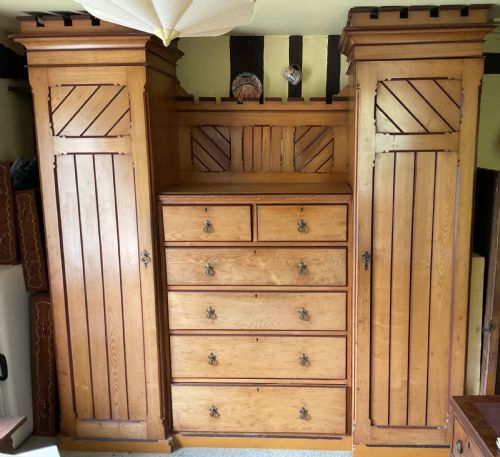
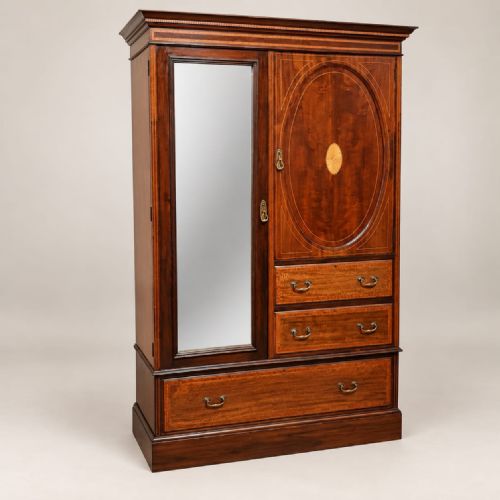
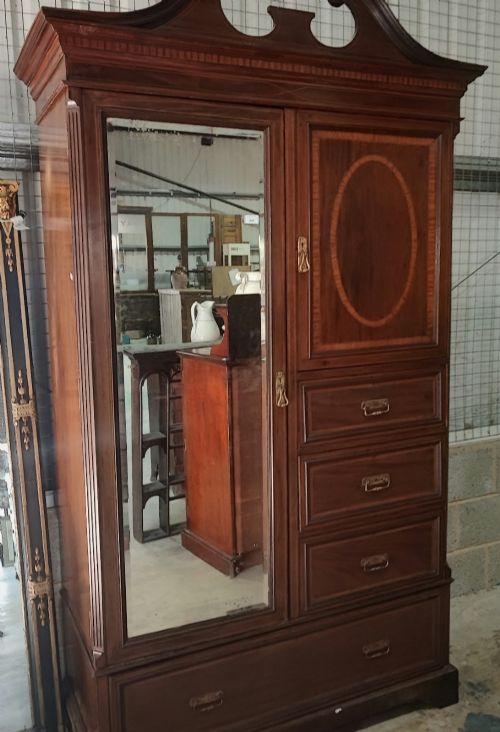
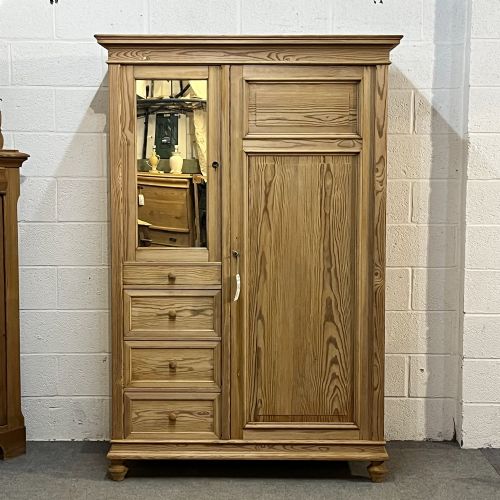
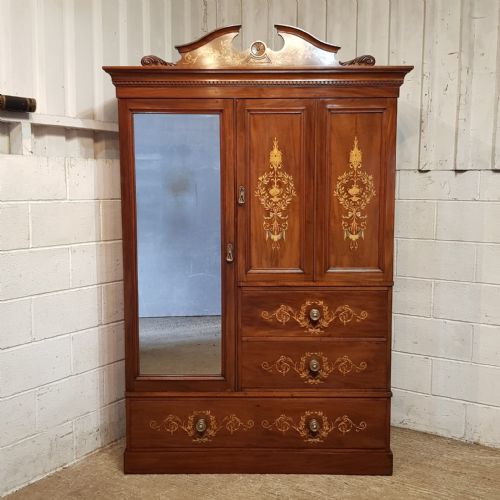
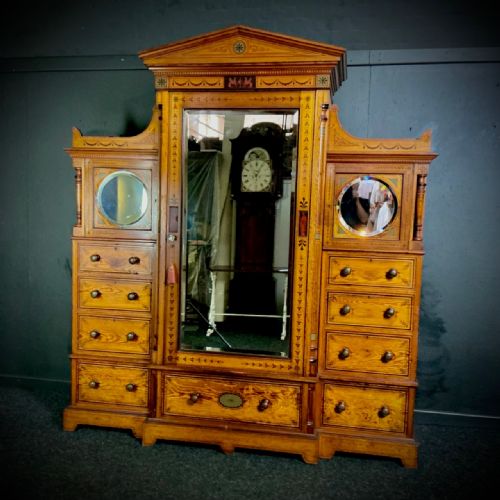
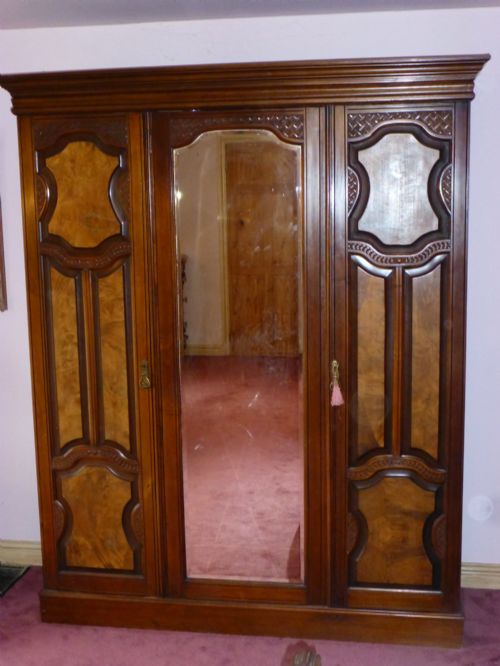
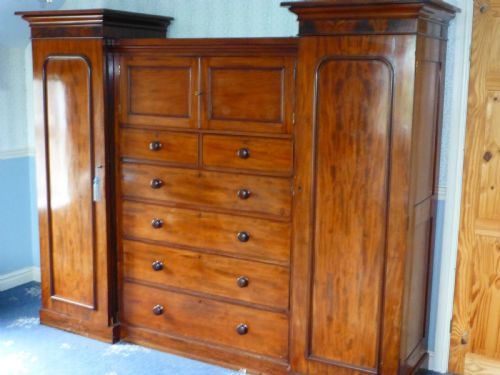
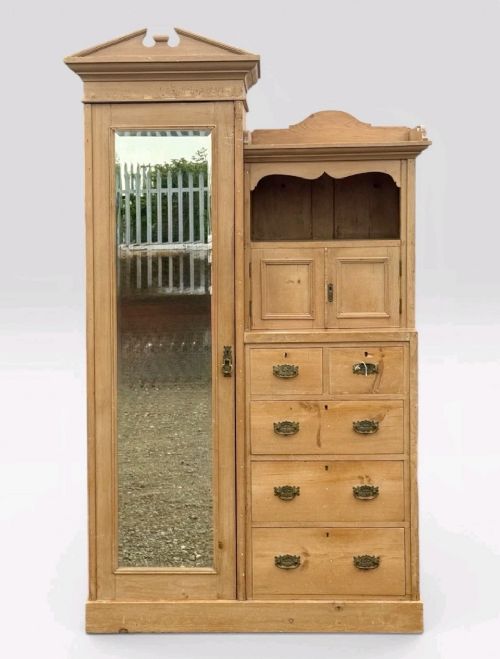
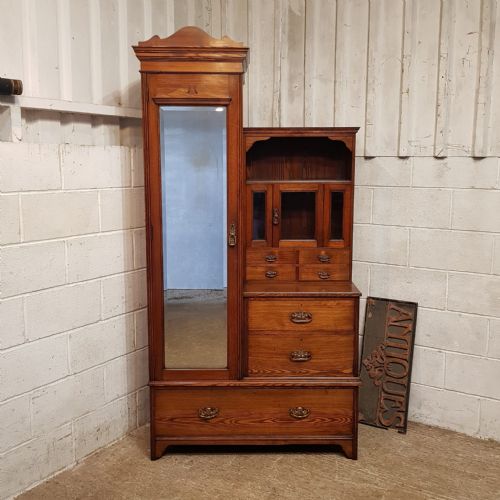


Antique Combination Wardrobe
An antique combination wardrobe brings together hanging space, drawers and shelving into one large fitted bedroom piece.
Antique Combination Wardrobe
An antique combination wardrobe offers multi-functional bedroom storage by uniting hanging compartments with drawers, cupboards and occasionally mirrored doors in a single carcass. Buyers frequently encounter Victorian and Edwardian examples fashioned from mahogany, walnut or pine, alongside earlier Georgian and later pieces from the nineteen-thirties.
The layout typically arranges hanging space flanked or surmounted by modular drawer stacks, sometimes referred to as compactums or sentry boxes. These larger units often break down into manageable sections to facilitate transport and installation in domestic rooms.
Materials and construction methods
Cabinetmakers constructed these wardrobes using solid timbers such as mahogany, walnut, ash and pine, frequently applying decorative veneers like burr walnut, satinwood or curl mahogany to principal surfaces. Brass hardware, leaded glass panels and inlaid banding provide structural and visual contrast.
Joinery methods included frame and panel construction for large doors and carcases, allowing the massive timber sections to accommodate natural seasonal movement without warping. Many larger triple wardrobes and compactums were designed to dismantle into modular parts using internal bolts and slot-in cornices.
Antique Combination Wardrobe Retail Price Guide 2026
Typical asking prices for combination wardrobe among the pieces listed under this phrase on Sellingantiques today, from the lower quarter to the upper quarter. They describe what is for sale here now, not the wider market.
Listings feature combination wardrobes spanning the Victorian, Edwardian and Georgian periods, constructed from mahogany, walnut, pine and ash.
Distinctions in craftsmanship and design
Quality rests upon the selection of timbers and the precision of the cabinetwork, visible in the matching of veneer grains across drawer fronts and door panels. Workshops known for high-grade output employed superior internal framing, solid secondary woods for drawer linings and intricate marquetry or brass fittings.
Proportion and utility separate standard commercial pieces from exceptional commissions. Refined architectural cornicing, well-integrated sliding garment trays and original bevelled mirror plates indicate higher tier production by established cabinet makers.
Edwards and Roberts·Holland and Sons·Gillows·Maple and Co·Shapland and Petter·Liberty and Co·Marsh, Jones and Cribb
The Antique Combination Wardrobe Glossary
- Compactum
- A multi-functional wardrobe that integrates hanging space with numerous internal drawers, linen slides and compartments.
- Breakfront
- A cabinet design where the central section projects forward from the flanking wings, creating visual depth.
- Sentry box
- A narrow, single-door wardrobe form designed to maximise vertical storage in restricted bedroom footprints.
- Linen press
- A historic storage piece featuring upper cupboard doors enclosing shelves or trays above a chest of drawers base.
Antique Combination Wardrobe: Frequently Asked Questions
How do I dismantle a combination wardrobe?
Many larger antique wardrobes separate into distinct modular components, including a cornice, a plinth, hanging sections and central drawer units. The panels are typically held together by internal bolts, screws or tongue-and-groove joints that loosen to ease relocation.
Marking each corresponding part during disassembly prevents alignment issues upon reassembly. Enlisting assistance ensures heavy mirrored doors and solid timber sections remain safe throughout the process.
What is the difference between a wardrobe and a compactum?
A standard wardrobe focuses primarily on vertical hanging space for garments behind full-length doors. A compactum combines this hanging capacity with integral banks of drawers, cupboard compartments and linen shelves within the same carcass.
This hybrid design emerged to provide comprehensive bedroom storage in a single footprint. Buyers often find them decorated with fine veneers and complex internal fittings.
Will a combination wardrobe fit my bedroom?
These large storage units require careful measurement of ceiling height, floor space and stairwell access before purchase. Because many historical examples were built for high-ceilinged Victorian and Edwardian rooms, checking total dimensions is essential.
Dismantling options vary by piece, so confirming whether a wardrobe separates into modular sections determines how easily it enters the home. Low combination models offer an alternative for rooms with restricted vertical clearance.
How should I care for antique wood?
Maintaining polished mahogany, walnut or pine surfaces involves regular dusting with a soft, dry cloth to prevent particulate accumulation. Avoiding direct sunlight and heating vents protects the timber and delicate veneers from drying out or splitting.
Occasional application of appropriate beeswax nourishes the grain without building up heavy chemical residues. Maintaining stable room humidity preserves both the timber and the original joinery.