



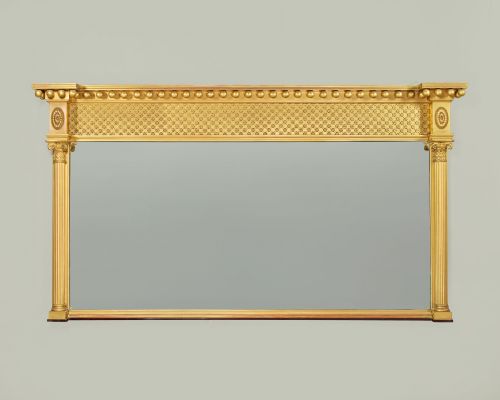
Antique Column Overmantel Mirror
An antique column overmantel mirror brings architectural weight to a chimney breast, reflecting light across a room through disciplined framing.
Antique Column Overmantel Mirror
An antique column overmantel mirror sits above a fireplace, uniting the hearth with the vertical space of the room. These pieces span the Regency, William IV, Victorian, and Edwardian periods, stretching from the opening of the nineteenth century into the twentieth.
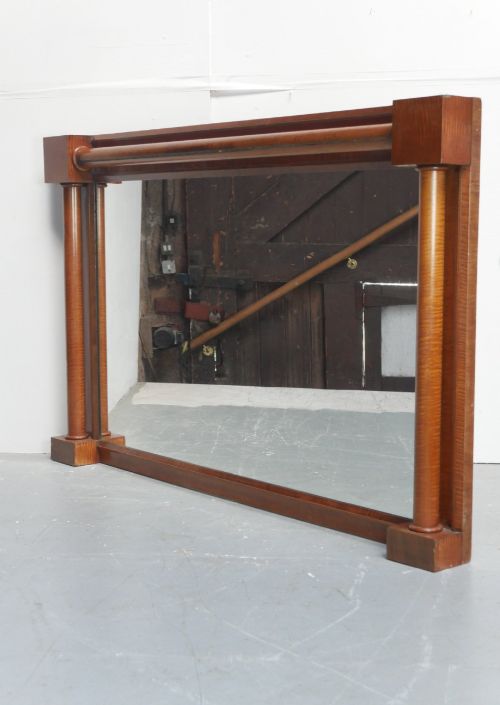
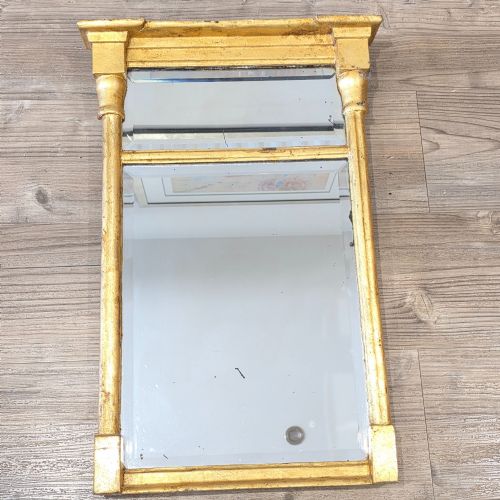
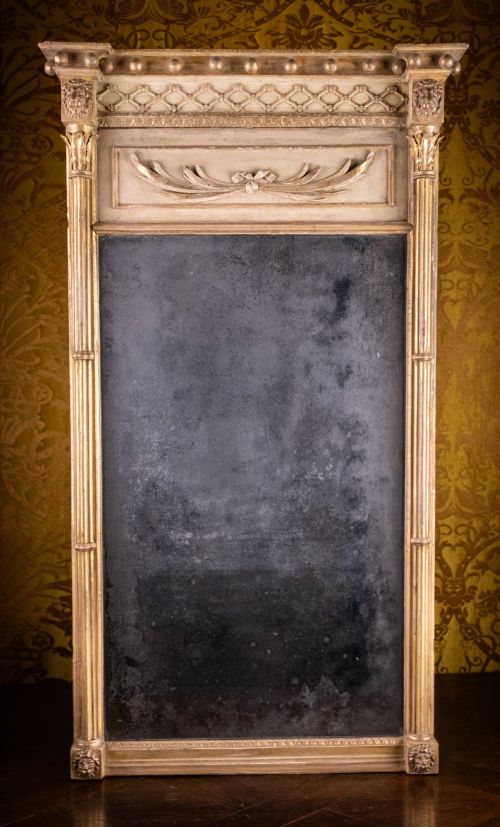
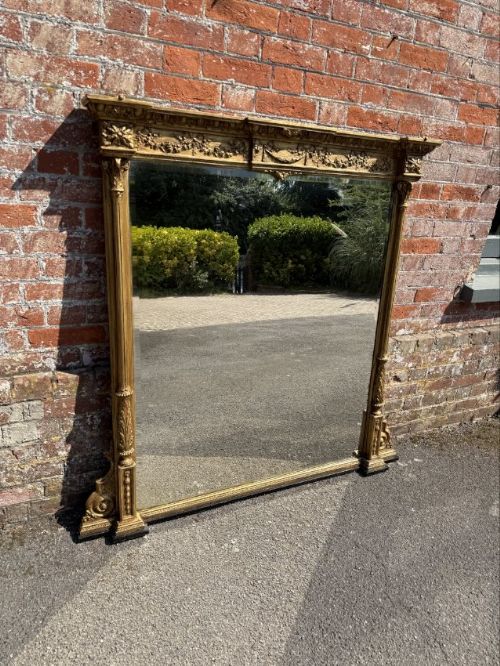
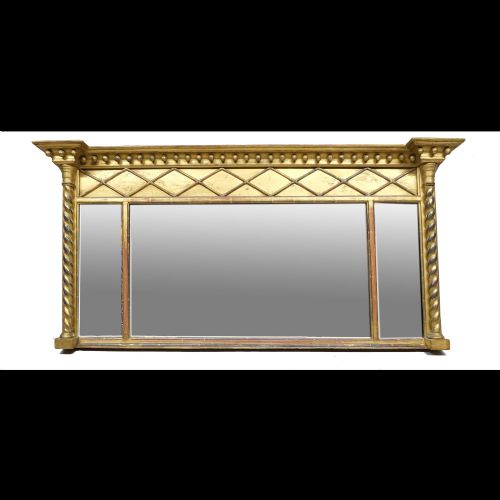
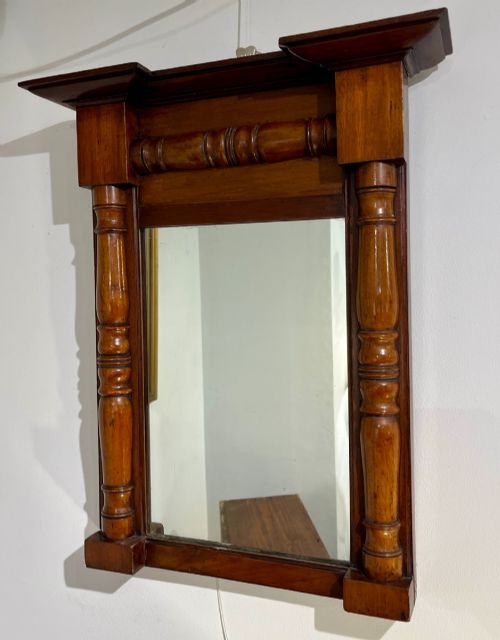
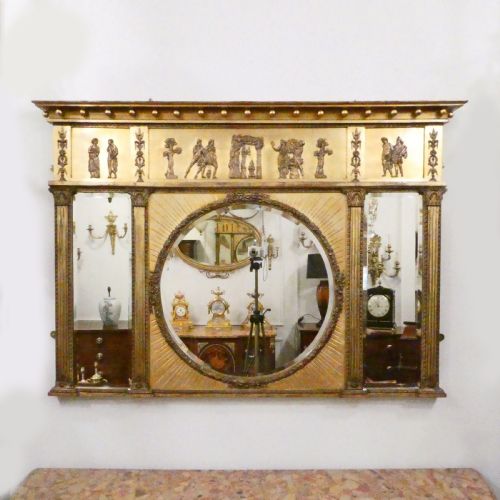
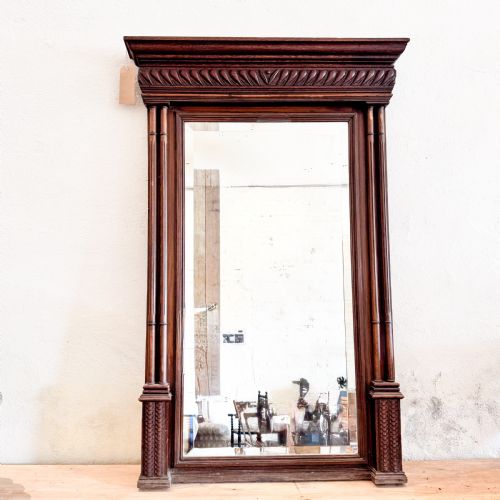
The version most commonly met on this page is the nineteenth-century giltwood or gesso piece, often framed by fluted or reeded columns with classical detailing. Pier mirrors and wall mirrors also appear among the overmantels, sharing the characteristic upright structural supports.
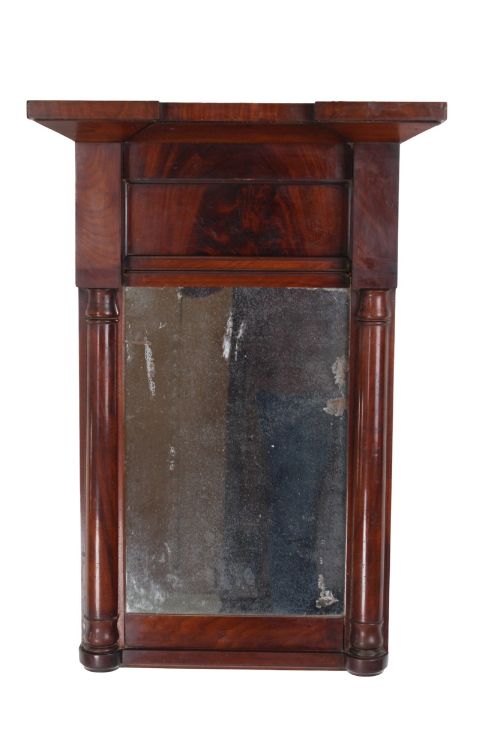
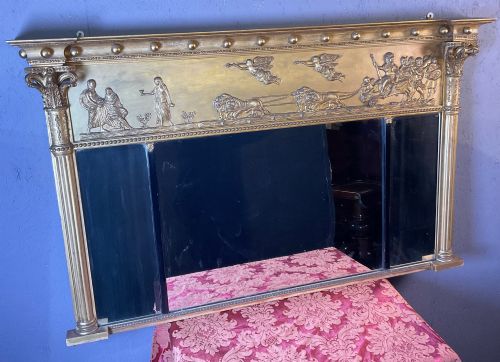
Makers and craftsmen drew on Neoclassical, Egyptian Revival, and Gothic Revival styles, producing rectangular formats alongside triptych plates and arched tops. Woods such as mahogany, walnut, and birds eye maple sit alongside painted and parcel-gilt surfaces.
Materials and construction methods
Carved wood and gesso provide the foundation for gilded frames, allowing intricate details like acanthus leaves, lion masks, and ribbed columns to be built up in relief. Gold leaf and composition ornament are applied over these wooden bases to catch ambient light.
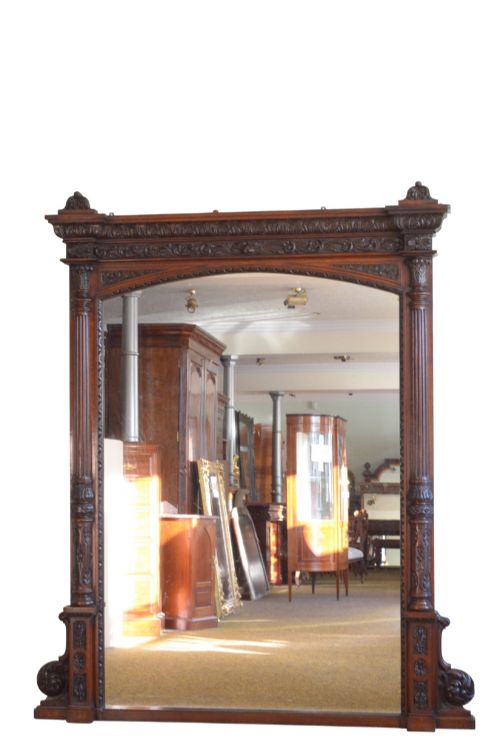
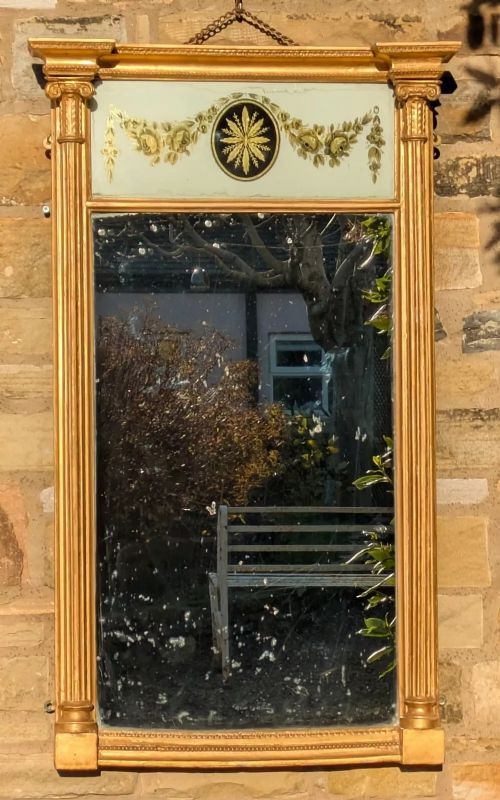
Solid timbers such as oak and mahogany form the carcasses of larger architectural pieces, whilst mirror glass plates provide the reflective surface. Verre églomisé panels occasionally appear above the main glass, introducing decorative reverse-painted glass sections.
Listings span multiple decades, incorporating nineteenth-century giltwood, solid oak, and mahogany alongside Edwardian examples.
Distinguishing quality in design and execution
The refinement of the carved ornament separates standard production from superior work, seen in the crispness of reeded columns and the depth of gesso decoration. Carved wood details retain sharper definition than heavily moulded composition substitutes.
The integration of the mirror plate within the frame dictates overall harmony, particularly in triptych formats where multiple glass sections must align. Timbers selected for secondary framing, such as figured mahogany or birds eye maple, signal the original maker's investment in materials.
The Antique Column Overmantel Mirror Glossary
- Overmantel mirror
- A large mirror designed specifically to hang on the wall directly above a mantelpiece or fireplace. These pieces often repeat the architectural width of the chimney breast.
- Pier mirror
- A tall, narrow mirror traditionally hung on the pier or wall space between two windows. They share many framing characteristics with overmantels, including side columns.
- Gesso
- A plaster-like mixture applied to wood frames and carved or moulded into decorative relief. It serves as the smooth base for subsequent gilding.
- Verre églomisé
- A cold decoration technique involving painting on glass with gold or silver leaf, often set into the upper section of a mirror frame.
- Triptych
- A mirror plate divided into three distinct vertical sections within a single frame. This layout widens the field of reflection across a room.
Antique Column Overmantel Mirror: Frequently Asked Questions
How do I hang a heavy overmantel mirror safely?
These large mirrors carry considerable weight from their wooden carcasses and glass plates, requiring secure attachment directly into structural wall studs or masonry.
Professional mirror fixings and appropriate weight-rated brackets distribute the load safely across the frame without straining the historic joints.
Where should an overmantel mirror be placed?
Traditionally positioned above a fireplace, an overmantel mirror anchors the decorative focus of a principal reception room. Placing the glass opposite a window maximises natural light distribution through the space.
Lower mantel heights suit grander horizontal triptych formats, whilst tighter vertical spaces accommodate narrow pier-style frames.
How do I tell a Regency mirror from a Victorian one?
Regency frames lean heavily on restrained Neoclassical lines, featuring verre églomisé panels, architectural pilasters, and parcel-gilt finishes. These earlier pieces often display simpler, cleaner geometry around the glass.
Victorian examples frequently introduce heavier gesso ornamentation, Gothic Revival elements, or robust oak and walnut timbers reflecting later nineteenth-century tastes.
What is the difference between an overmantel and a pier mirror?
An overmantel mirror is built to span the horizontal space above a fireplace, connecting the hearth to the wall above. A pier mirror is proportioned to fit narrow wall sections, specifically between windows.
Despite their original architectural functions, both forms employ similar column framing and glass plates.