



Antique Coffee Table Chest
Solid and low-slung, an antique coffee table chest serves double duty as living room storage and a rugged surface.
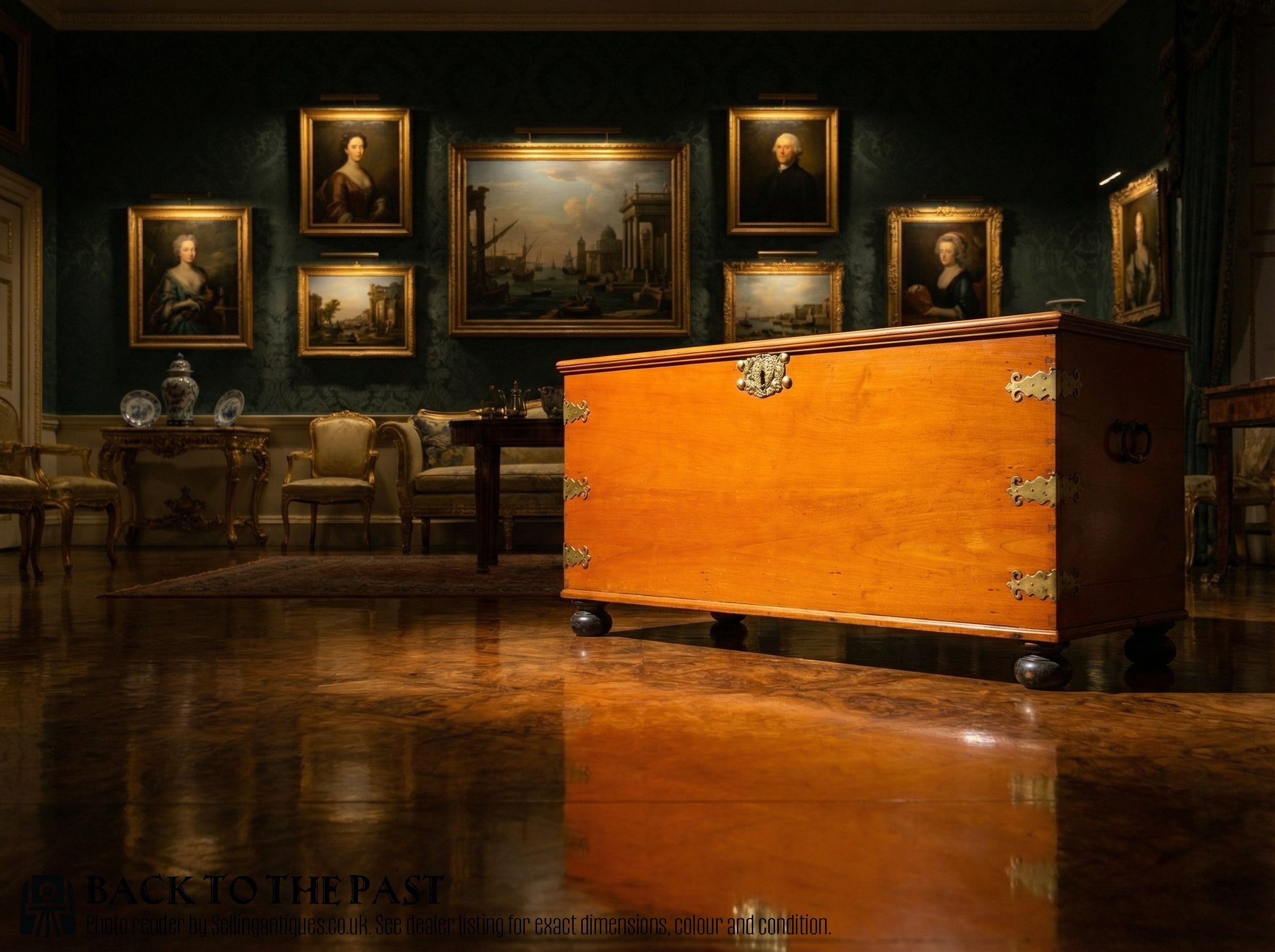
Antique Coffee Table Chest
An antique coffee table chest brings historical utility into a modern room, functioning simultaneously as a sturdy surface and a capacious storage receptacle. These versatile items originate from practical domestic, military, and travel contexts, adapted over time for central placement in living spaces.
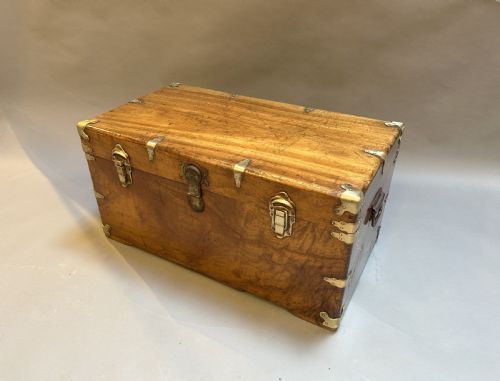
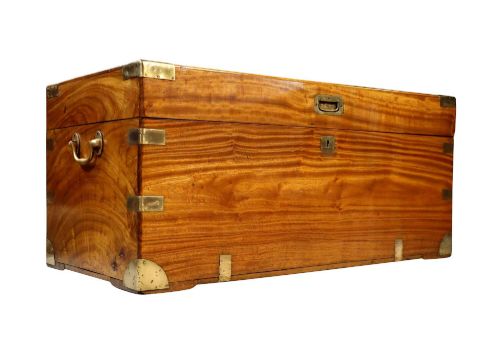
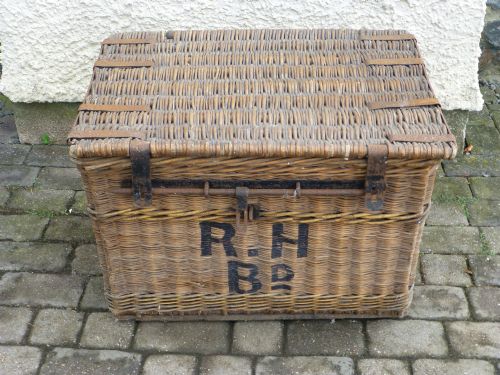
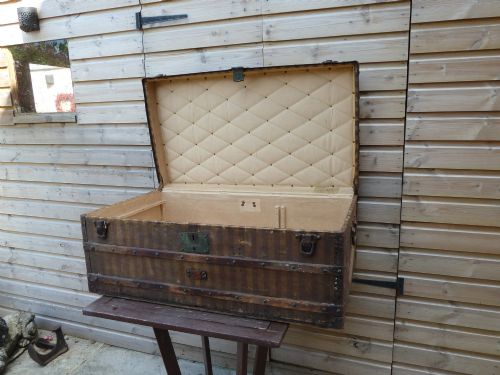
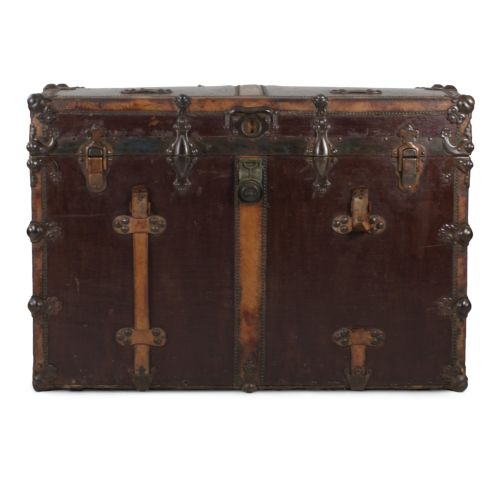
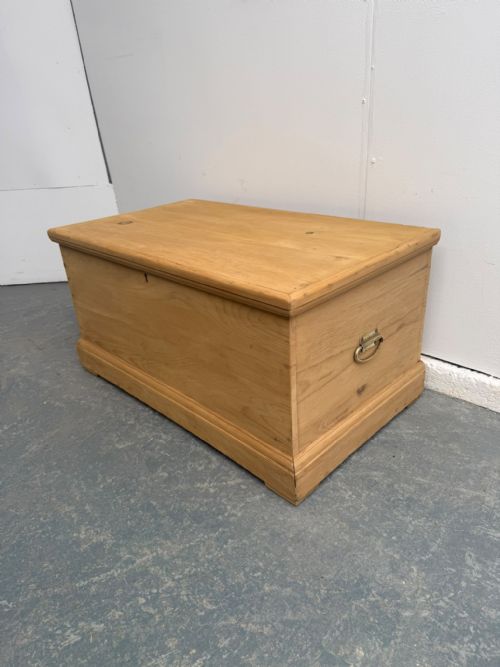
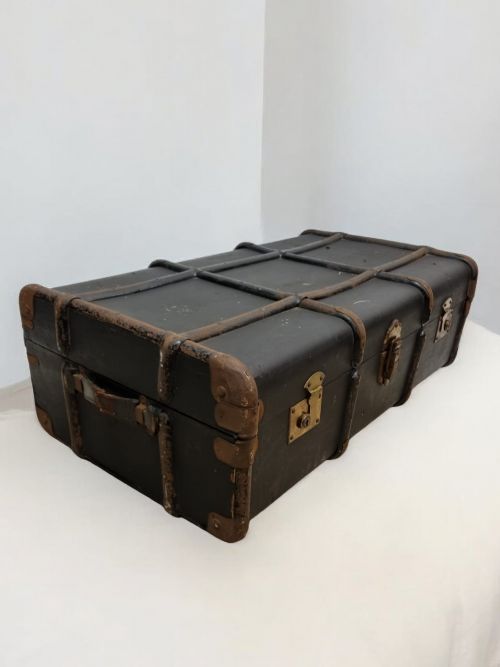
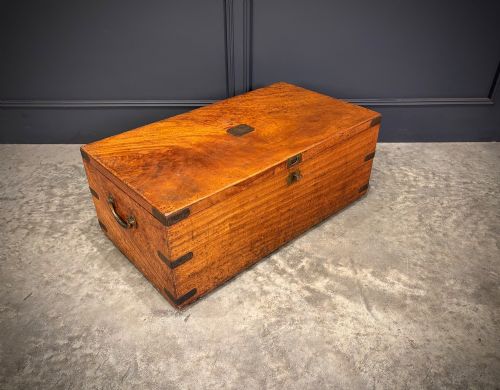
Buyers seeking an antique coffee table chest frequently encounter sturdy pine blanket boxes, heavy camphor wood campaign trunks, and leather-bound travel luggage. Pieces span the nineteenth century and the Edwardian era, offering low, flat profiles well suited for domestic use.
Origins vary widely across the inventory, ranging from English country pine boxes and French walnut dough bins to Chinese export camphor chests and Zanzibar trade trunks. This geographical diversity provides varied patinas and timber tones, from pale waxed softwood to dark exotic hardwoods.
How they were made
Makers constructed these pieces from utilitarian timbers such as pine, oak, elm, and chestnut, alongside aromatic camphor wood chosen for its insect-repellent properties. Dense hardwoods provided structural integrity for travel, while softer regional conifers suited domestic storage.
Hardware played an essential structural role, incorporating brass corners, iron strapwork, metal handles, and studded decorations to reinforce joints against the rigours of transit. Leather and canvas coverings provided weather resistance for shipping chests and early steamer trunks.
Joinery techniques varied by origin and date, utilising dovetail corners, pegged frames, and hand-forged iron hasps. Many examples feature fitted internal compartments, secret drawers, or zinc linings designed for secure storage during long journeys.
The listings span from the late eighteenth century through the Edwardian period, featuring both domestic pine boxes and global campaign trunks.
What varies in quality
Quality rests upon the integrity of the original construction, the richness of the timber grain, and the completeness of period hardware. Superior examples retain matching brass mounts, robust locks, and untouched patinas developed through decades of handling.
The sophistication of internal fittings distinguishes exceptional pieces, such as hidden drawers, robust dovetailing, and high-grade secondary woods. Workshop execution dictates whether a trunk remains a sturdy piece of furniture or merely a rustic box.
Surface finish significantly influences character, where carefully waxed or hand-dyed leather and polished brass contrasts sharply with degraded or overly stripped timbers. Original travel labels and stamps add historical depth to campaign and steamer luggage.
Louis Vuitton·Aux Etats Unis
The Antique Coffee Table Chest Glossary
- Campaign trunk
- A sectional storage chest built for military officers on the move, typically fitted with recessed brass handles and corner brackets to withstand rough transit.
- Camphor wood
- An aromatic hardwood native to Asia, utilised extensively for nineteenth-century maritime trunks due to its natural resistance to moths and dampness.
- Coffer
- A heavy wooden box traditionally used for storing valuables, featuring a hinged lid and often reinforced with iron straps or elaborate hasps.
- Blanket box
- A domestic storage chest designed for linens and bedding, commonly constructed from regional timbers like pine, oak, or elm.
- Zanzibar chest
- An ornate merchant chest originating from East Africa or India, distinguished by heavy brass studding, strapwork, and intricate geometric motifs.
- Ottoman
- A low, upholstered seat or footstool with internal storage space, frequently sharing dimensions and form with heavy nineteenth-century chests.
Antique Coffee Table Chest: Frequently Asked Questions
Are antique chests strong enough to use as tables?
Most antique chests feature thick timber construction and reinforced corners designed to bear significant weight during travel. This robust build makes them exceptionally stable platforms for daily living room use.
Buyers should ensure the lid is flat and securely hinged to provide a level surface for drinks and books. Many domestic blanket boxes and campaign chests were purposely constructed with sturdy tops suitable for dual purposes.
How do I identify a campaign trunk?
Campaign trunks are immediately recognisable by their flush brass corner pieces, recessed side carrying handles, and sturdy strapwork designed to protect the edges during military transport. They often feature sectional designs meant to be easily dismantled or stacked.
Woods such as camphor or teak are common in these pieces due to their durability in tropical climates. The presence of maker plates and military stamps further confirms their travel pedigree.
How do I care for a leather-bound trunk?
Leather-bound travel trunks require gentle cleaning with a soft cloth and regular application of appropriate wax or conditioner to prevent the hide from drying out. Keeping the pieces away from direct heat sources preserves the suppleness of the material.
Original hardware and canvas sections should be dusted carefully without abrasive cleaners to maintain the historical patina. Proper humidity control ensures the underlying wooden structure remains stable.