



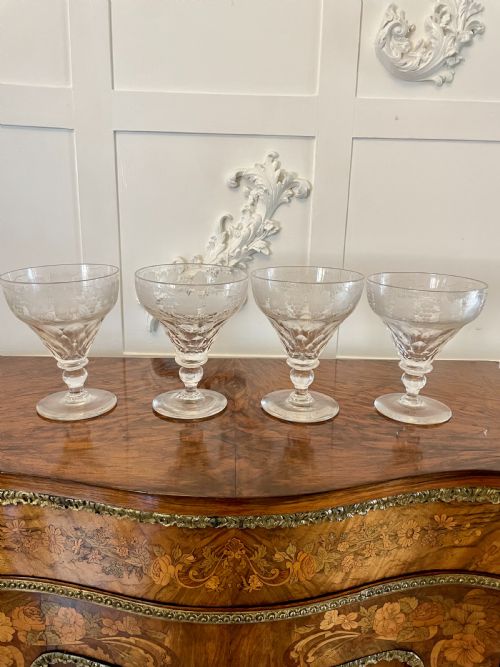

Antique Cocktail Stemware
Antique cocktail stemware brings genuine period elegance to modern home entertaining through historic glassware and barware.
Antique Cocktail Stemware
When you search for antique cocktail stemware, you examine a specialised collection of vintage drinking vessels designed for mixed drinks, champagne, and liqueurs. These pieces span the Victorian, Edwardian, and Art Deco eras, capturing the changing social habits and design shifts of the nineteenth and twentieth centuries.
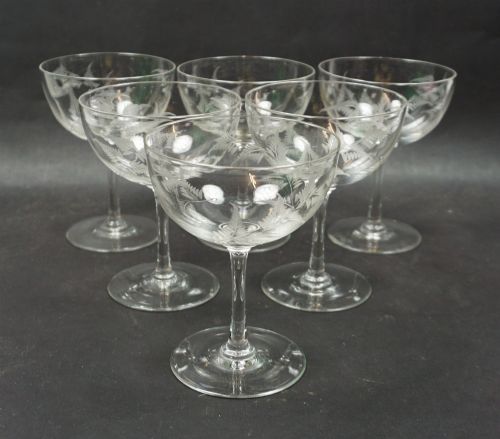
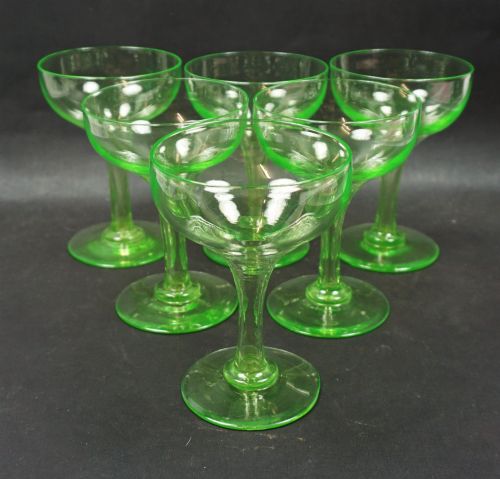
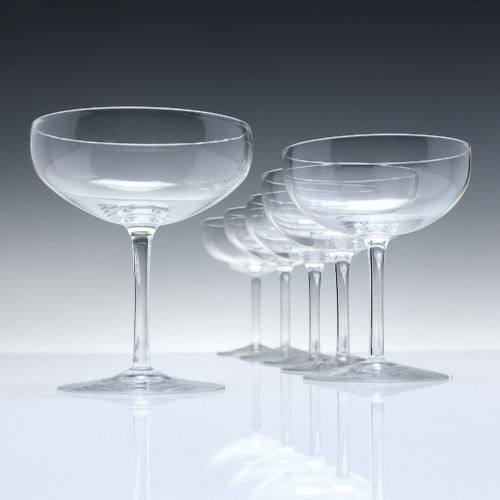
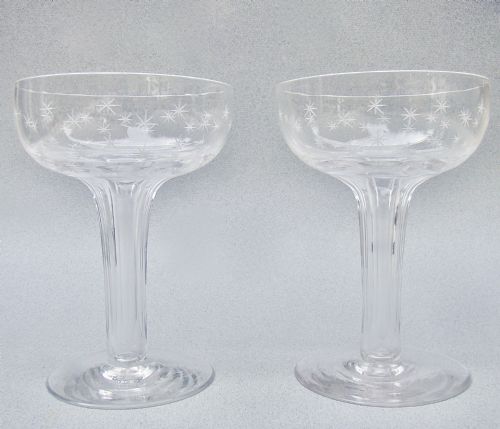
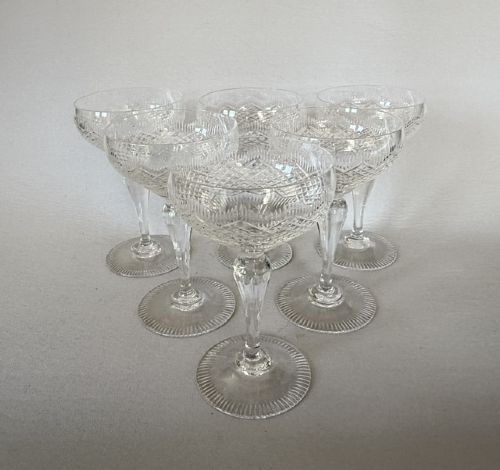
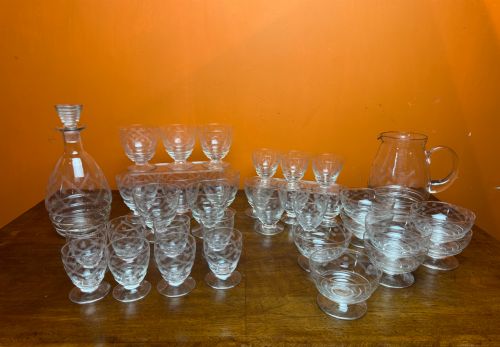
You are most likely to encounter champagne coupes, hollow stem champagne glasses, and small sets of liqueur glasses on this page. The forms range from simple nineteenth-century glassware to large suites of French drinking glasses with engraved decoration.
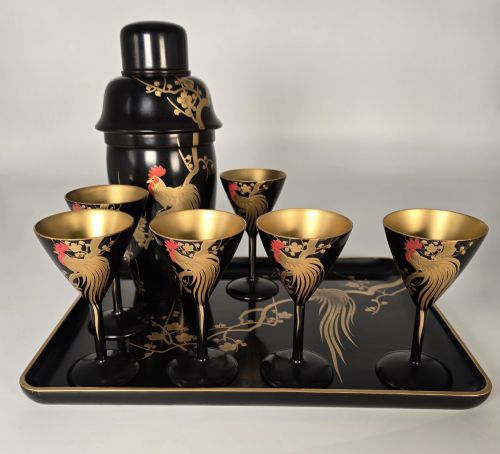
The origins of these items cross Britain, Europe, and Japan, incorporating styles from Victorian traditionalism to Art Deco and the Taisho period. Each group reflects the specific manufacturing traditions and drinking culture of its origin.
Materials and Techniques
Makers utilised crystal, cut glass, and standard glass as the primary foundations for these drinking vessels, shaping them into bowls, stems, and feet. Techniques included wheel-cutting, star-etching, and general engraving to apply decorative patterns directly onto the surface.
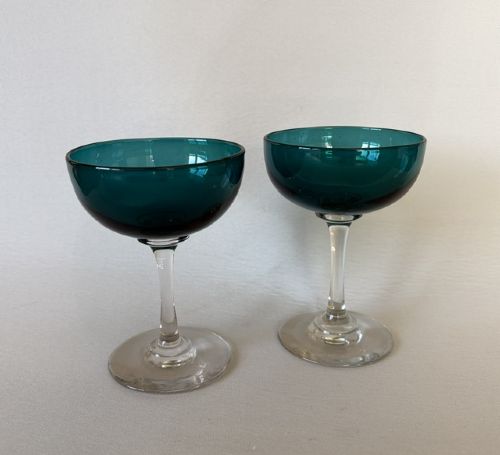
Surface ornamentation frequently involved hand-painted enamel, gold leaf, and contrasting layers of coloured glass over clear crystal. Japanese lacquer techniques also appear within the selection, combining wood bases with painted finishes for specific barware sets.
Antique Cocktail Stemware Retail Price Guide 2026
Typical asking prices for cocktail stemware among the pieces listed under this phrase on Sellingantiques today, from the lower quarter to the upper quarter. They describe what is for sale here now, not the wider market.
Listings feature items from the Victorian, Edwardian, and Art Deco periods, utilising glass, crystal, gold leaf, and enamel.
Evaluating Quality in Period Glass
The distinction between standard and superior pieces rests upon the clarity of the crystal, the precision of the hand-engraving, and the crispness of any wheel-cut motifs. Heavy, uniform glass walls and balanced proportions separate utilitarian items from fine display suites.
Artistic execution on decorated surfaces, such as detailed enamel work, multi-layered colour overlays, and delicate gold leaf application, indicates higher workshop standards. Larger matching suites or intact pairs demand greater technical control than isolated single glasses.
Fritz Heckert
The Antique Cocktail Stemware Glossary
- Champagne coupe
- A broad, shallow bowl on a short stem designed originally for sparkling wine and frequently utilised for vintage cocktails.
- Hollow stem
- A glass construction where the interior channel of the stem connects directly to the bowl, allowing liquid to rest within the stem itself.
- Crystal glass
- A high-clarity glass composition containing minerals that permit finer cutting and a more resonant ring when struck.
- Over crystal
- A manufacturing technique where a layer of coloured glass is fused over a clear crystal base before sections are cut away to reveal the contrast.
Antique Cocktail Stemware: Frequently Asked Questions
What drinks belong in antique champagne coupes?
These shallow vessels suit sparkling wines, champagne, and traditional shaken cocktails that do not require high ice volumes. Their broad surface allows the aromas of complex spirits to release readily during social gatherings.
Historians note that the shape became popular during the nineteenth century before slender flutes gained preference in later decades. Using them today revives a specific aesthetic for aperitifs and post-dinner drinks.
Can I use these glasses for daily dining?
Gentle daily use is possible provided you handle the items with care and wash them by hand rather than machine. Many people reserve them for special occasions, celebrations, or specific evening cocktails to minimise potential breakage.
Consider the thickness of the glass and the presence of delicate surface decoration when deciding frequency of use. Heavily enamelled or gold-leafed examples require the most cautious handling during social events.
How do I identify Victorian glassware?
Victorian pieces often feature robust lead crystal, deep star-etching, or heavy cut patterns inspired by historicism and natural motifs. The weight tends to be substantial, and the pontil mark on the underside of the foot may show signs of hand-finishing.
Comparing the form and decorative motifs with documented nineteenth-century catalogues helps confirm the era. Look for signs of authentic age, such as tiny surface wear patterns on the resting base.