

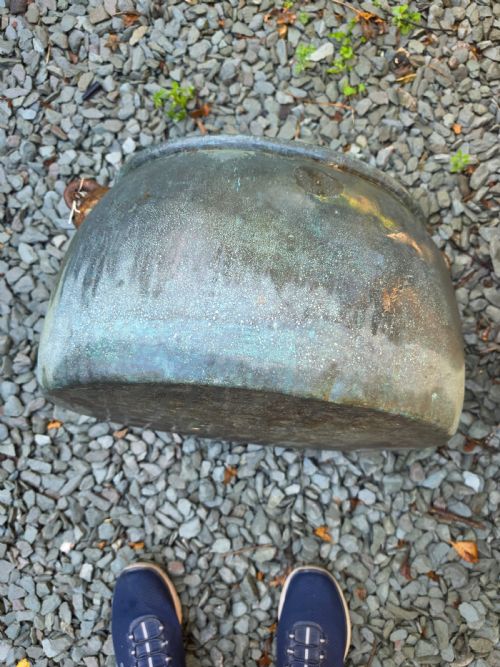
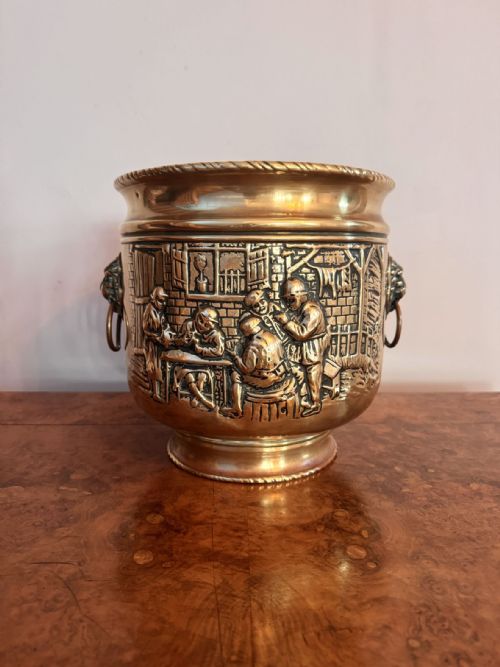
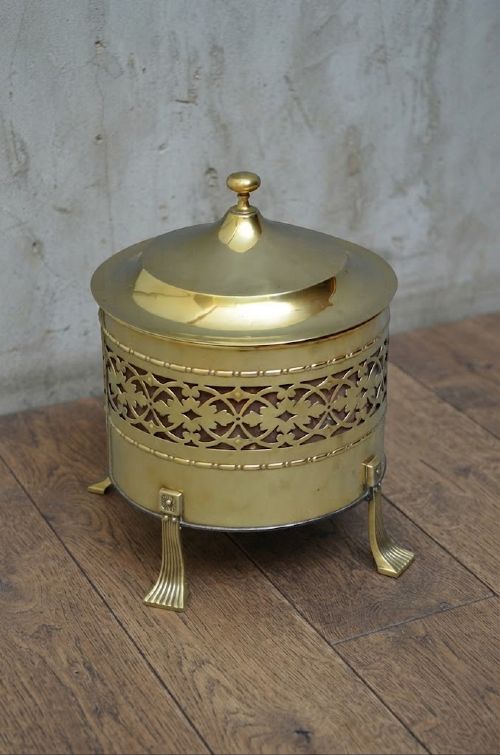
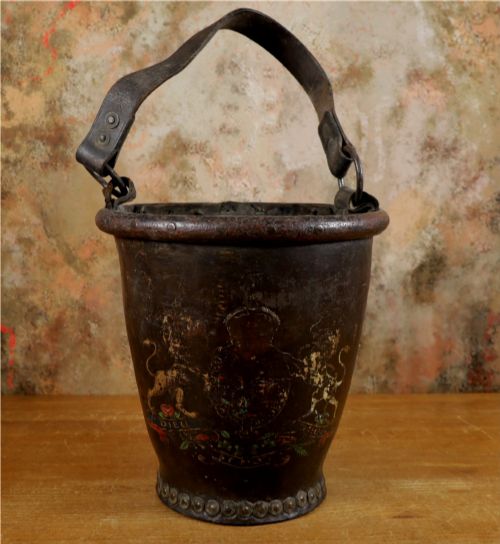




Antique Coal Vessel
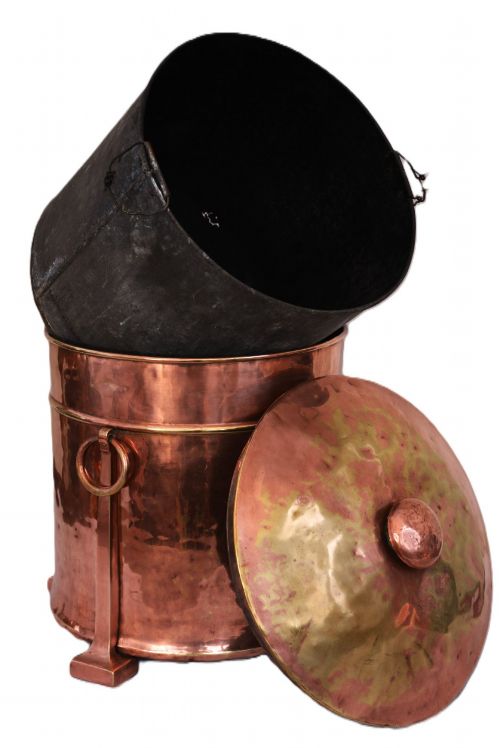
An antique coal vessel brings sturdy metal and timber into the hearth room, serving as a handsome container for fuel beside the grate.
Antique Coal Vessel
An antique coal vessel encompasses a range of fireside accessories, including buckets, scuttles, bins, and cauldrons designed to hold fuel near the fireplace. The selection draws heavily from the nineteenth century, Victorian era, and Edwardian period, alongside occasional Georgian examples.
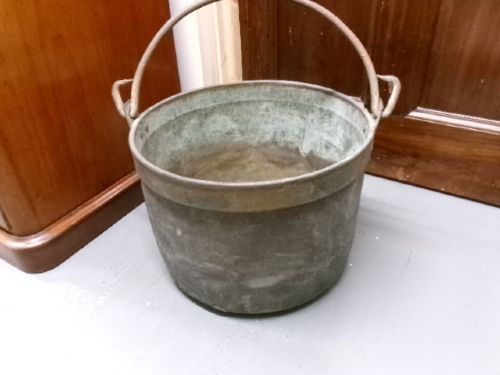
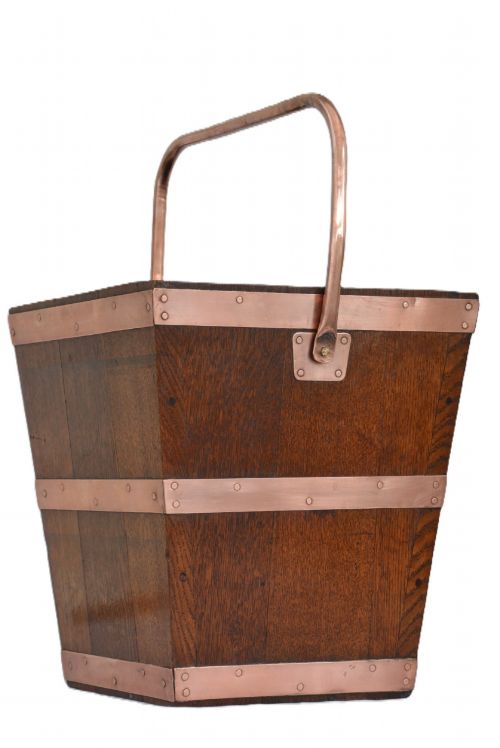
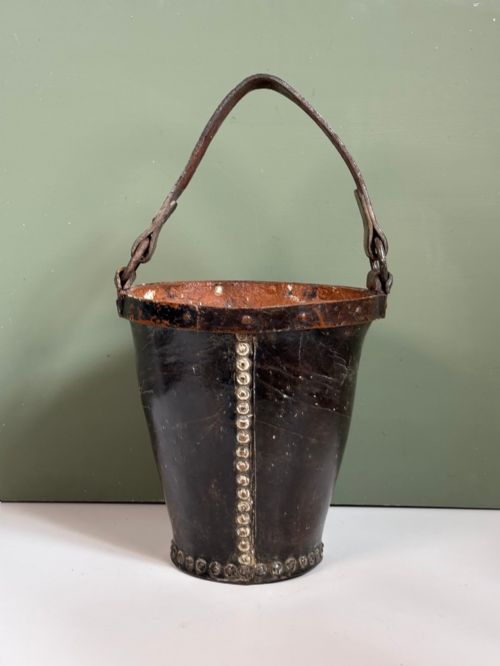
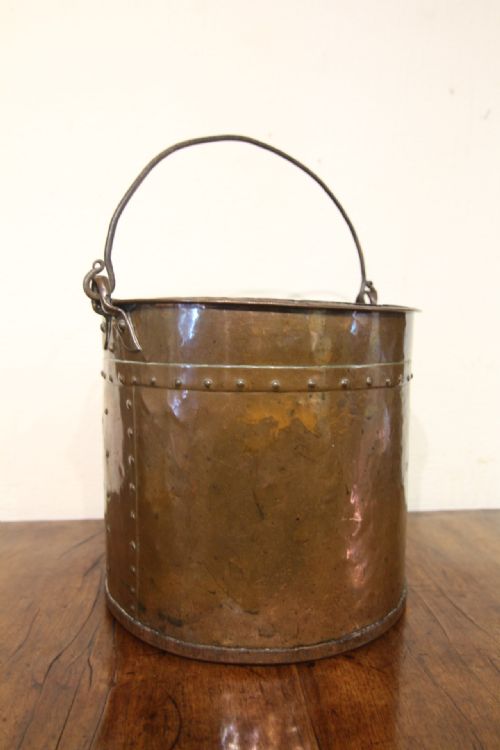
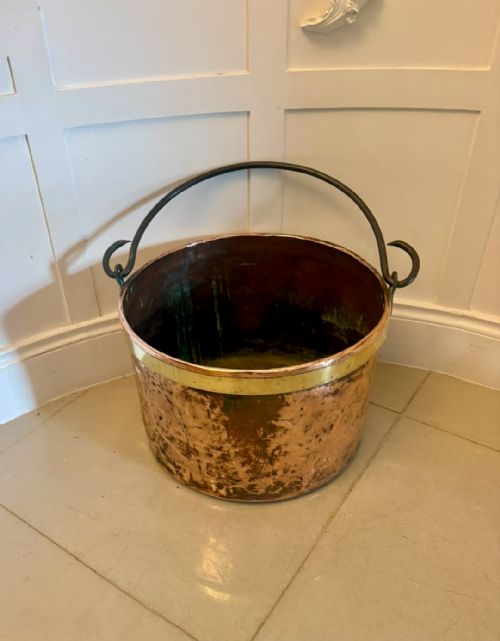
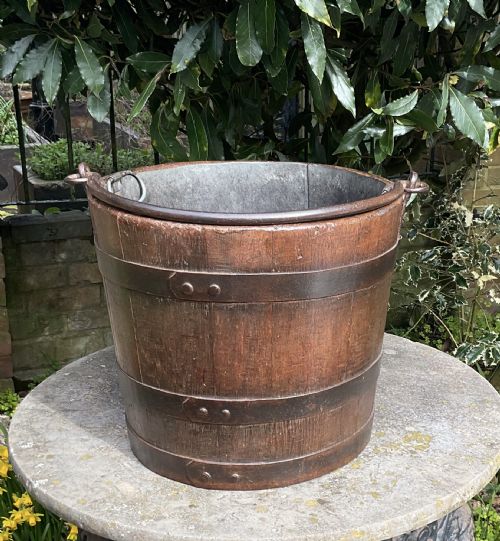
Most pieces encountered in this search are forged from heavy copper or brass, frequently accented with iron fittings, swing handles, or riveted seams. Timber alternatives also appear, taking the form of coopered oak or boiled leather baskets.
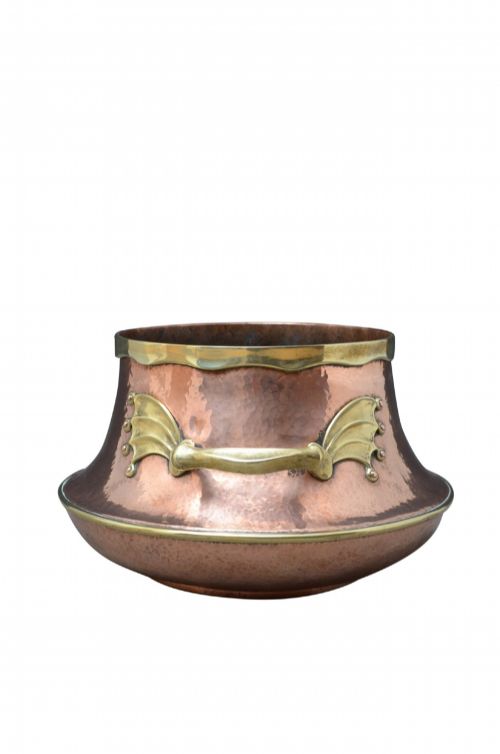
These items frequently double as log bins or planters, reflecting how domestic objects shift in function over time. Forms range from plain cylindrical measures to elaborate Art Nouveau designs and hammered Arts and Crafts creations.
How they were made
Metalsmiths shaped sheet copper and brass by hand, joining seams with visible rivets or soldering to ensure the container could bear the heavy weight of fuel without splitting. Wrought iron and brass handles were securely attached to sturdy mounts for daily lifting.
Coopered timber vessels utilised traditional stave construction, binding wooden planks with brass or iron hoops to create waterproof or durable containers. Boiled leather examples relied on shaping thick hides over moulds while damp, creating rigid fire buckets finished with studs and crests.
Antique Coal Vessel Retail Price Guide 2026
Typical asking prices for coal vessel among the pieces listed under this phrase on Sellingantiques today, from the lower quarter to the upper quarter. They describe what is for sale here now, not the wider market.
Listings for antique coal vessels span the nineteenth century, the Victorian era, and the Edwardian period, incorporating copper, brass, oak, and boiled leather.
What varies in quality
The integrity of construction distinguishes utilitarian items from finer examples, noting particularly the weight of the metal gauge and the firmness of riveted joints. Heavier copper and thick brass retain their shape better under the rough handling of daily hearth maintenance.
Design ambition and surface finish also set pieces apart, distinguishing plain industrial measures from hand-beaten Arts and Crafts vessels or pieces bearing maker attribution. Original liners, intact swing handles, and uncompromised timber staves elevate the standing of an individual piece.
Benham & Froud·William Soutter & Sons
The Antique Coal Vessel Glossary
- Coopered
- Made by assembling curved wooden staves bound together with metal hoops. This method was traditionally utilised for barrels, buckets, and peat bins.
- Dinanderie
- Ornamental brass or copper ware produced in Europe. The term covers beaten and cast vessels ranging from medieval church brasses to Edwardian planters.
- Scuttle
- A metal bucket or container for holding coal, typically featuring a hinged handle and sometimes a tipped spout for pouring. They were essential for replenishing domestic fires.
- Ferrat
- A regional term for a metal vessel or bucket, often associated with carrying water or fuel. These utilitarian objects are frequently fashioned from riveted copper.
- Cauldron
- A large round metal pot with a swing handle, traditionally hung over a fire or set upon legs. Fireside examples adapted the form to hold logs or coal.
Antique Coal Vessel: Frequently Asked Questions
What is an antique coal vessel used for?
These vessels were originally manufactured to store and transport coal, peat, or logs to the fireplace for domestic heating. They sat beside the hearth for daily convenience and fuel management.
Today, collectors repurpose them as plant holders, umbrella stands, or decorative fireside storage for kindling and logs.
How do I clean copper coal vessels?
Cleaning depends entirely on whether you prefer a bright polished finish or a dark patinated surface accumulated over centuries. Most owners gently dust the metal and remove grime with mild soapy water.
Avoid harsh chemical abrasives that strip away the historical surface character and age earned on the metal over generations.
Are wooden fire buckets waterproof?
Coopered wooden buckets often included metal or zinc linings to contain moisture and prevent the timber from rotting when holding wet peat or damp fuel. Leather buckets were similarly treated to hold liquids for fire fighting.
When using surviving wooden or leather vessels for modern planting, check whether an internal liner remains intact to protect the historic structure.
How can I tell Victorian from Edwardian pieces?
Victorian copper and brass vessels often display heavier riveting, hand-beaten textures, and robust industrial forms typical of nineteenth-century metalwork. Decoration frequently leans towards utilitarian strength or ornate traditional styling.
Edwardian pieces frequently show the influence of the Arts and Crafts movement or Art Nouveau styling, featuring softer geometric lines, stylised plant motifs, and lighter construction.