





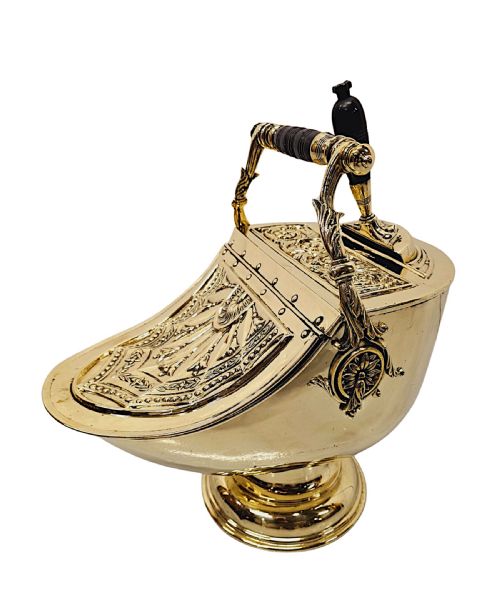


Antique Coal Bucket Lid
An antique coal bucket lid brings functional hearth equipment together with domestic metalwork, completing period fuel stores from Georgian to Edwardian rooms.
Antique Coal Bucket Lid
An antique coal bucket lid serves as the functional top for fireside storage vessels, often matching the specific aperture of a coal scuttle, log bin, or cauldron. When you search for an antique coal bucket lid, you encounter components salvaged from or paired with metal and wooden fuel containers dating from the Georgian period through to the early twentieth century.
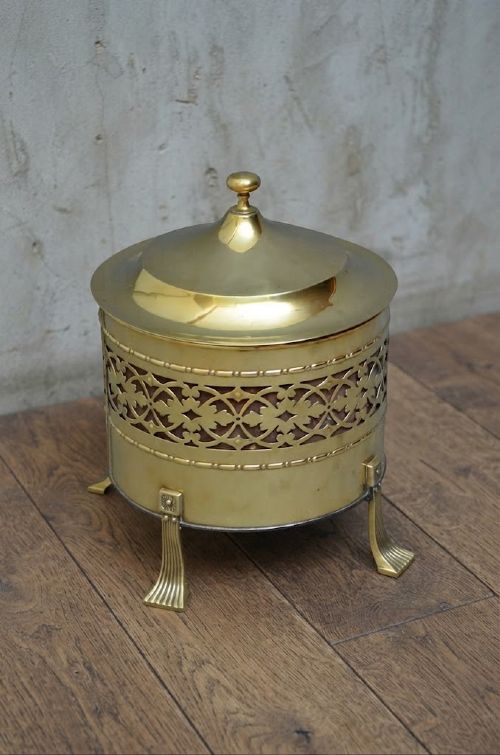
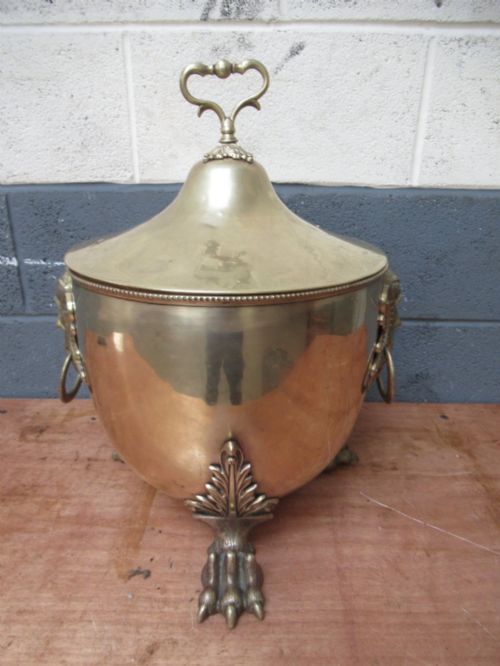
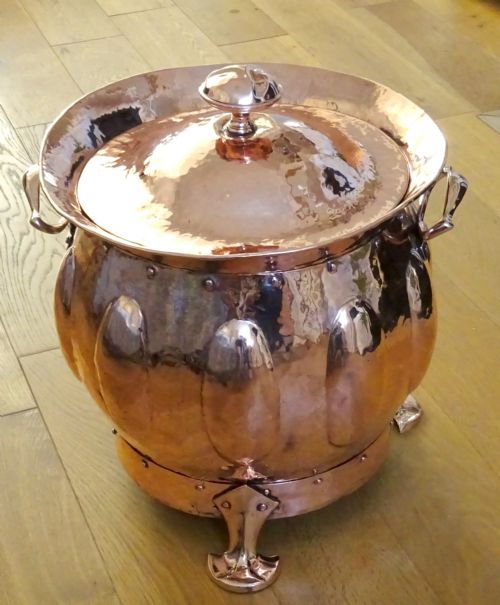
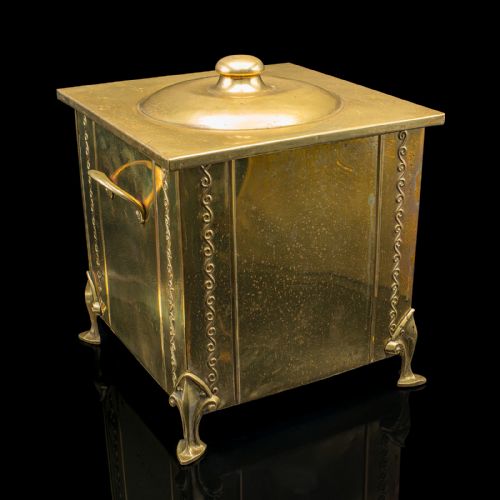
The pieces listed here predominantly take the form of circular or oval covers forged from sheet brass or beaten copper, though examples in oak, fruitwood, and painted iron also appear. These lids often feature integral handles or finials designed for lifting heavy metal covers off active hearth containers.
Origins span English workshops of the Victorian and Edwardian eras, alongside stylistic influences from Art Nouveau and Regency designs. Buyers frequently source these lids as replacement covers for existing antique coal buckets or utilise them as decorative tops for planters and waste bins.
Factors of quality and manufacture
Quality in these items rests upon the thickness of the metal sheet and the integrity of the joins, where hand-beaten copper displays superior craftsmanship compared to thinner pressed metal. The presence of original matching fittings, such as cast brass handles and period rivets, distinguishes high-grade workshop output.
The refinement of decorative surface work, including crisp fretwork or hand-chased detailing, separates standard utilitarian covers from finer Arts and Crafts or Art Nouveau examples. Preservation of the original material surface, whether patinated brass or polished copper, dictates the visual merit of the piece.
Antique Coal Bucket Lid Retail Price Guide 2026
Typical asking prices for coal bucket lid among the pieces listed under this phrase on Sellingantiques today, from the lower quarter to the upper quarter. They describe what is for sale here now, not the wider market.
Several heavy copper lids spent their youth hiding dirty coal before retiring to a peaceful life as decorative plant pots.
The Antique Coal Bucket Lid Glossary
- Log Bin
- A large domestic receptacle intended for storing firewood near the hearth. These pieces are frequently constructed from heavy copper or iron-framed wood.
- Fretwork
- An ornamental design created by cutting patterns through sheet metal or wood. This technique appears on decorative Edwardian vessel lids.
- Cauldron
- A deep, round metal pot with a large capacity, often supported on legs or fitted with a bail handle. In a fireside context, it functions as a fuel store.
- Fruitwood
- Dense timber derived from fruit-bearing trees such as pear or apple, utilised for turned wooden accessories. It yields a fine grain finish on period storage items.
Antique Coal Bucket Lid: Frequently Asked Questions
What is an antique coal bucket lid used for?
These lids serve to cover fireside fuel containers, keeping coal dust contained and concealing fuel storage beside the hearth.
They also function as replacement covers for antique log bins, cauldrons, and coal scuttles lacking their original tops.
How do I date a brass coal bucket lid?
Dating relies upon manufacturing marks, metal composition, and stylistic cues such as Art Nouveau or Regency motifs present in the metalwork.
Period attribution also considers the construction techniques, including hand-beaten surfaces versus later machine-pressed production.
Are these lids suitable for modern firesides?
Period metal and wooden lids fit contemporary hearth spaces when matched to appropriate vessel dimensions for log or coal storage.
Collectors also repurpose these items as decorative covers for indoor planters and waste bins in period interiors.
What materials were used to make these lids?
Standard materials include polished or patinated brass and sheet copper, often paired with wrought iron handles or frames.
Wooden examples constructed from oak and fruitwood also appear alongside painted iron variants from the nineteenth century.