

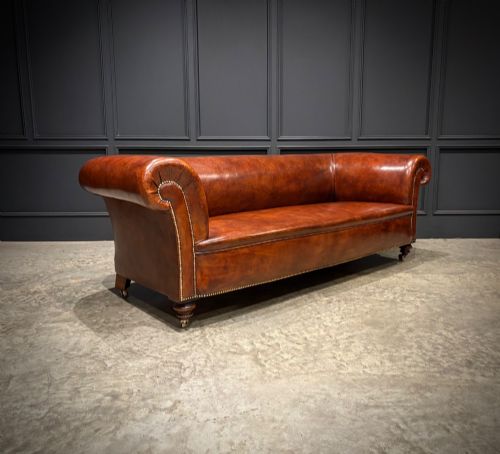


Antique Club Sofa
An antique club sofa brings deep-seated comfort and rich leather texture into a room, offering a sturdy frame built for daily lounging.
Antique Club Sofa
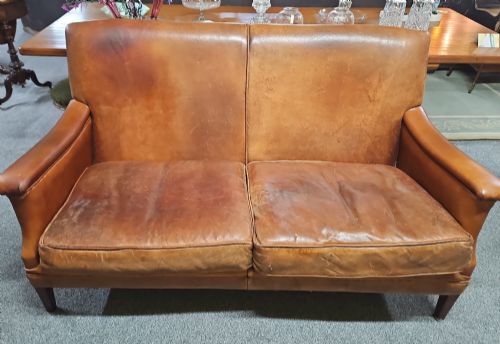
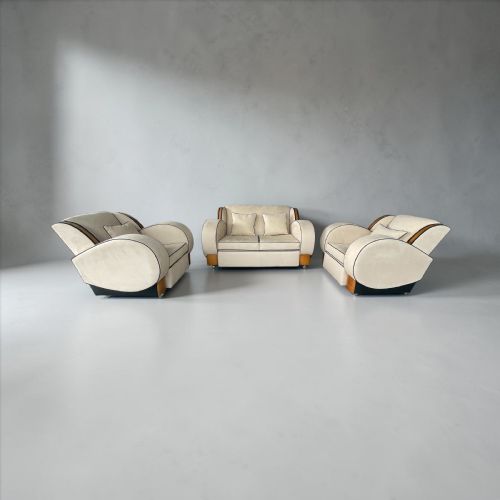
When you search for an antique club sofa, you are looking at substantial, low-slung seating designed for relaxed postures, often found in private libraries and smoking rooms from the nineteenth century onwards. These pieces span multiple decades, including robust Victorian Chesterfields and streamlined Art Deco three-piece suites.
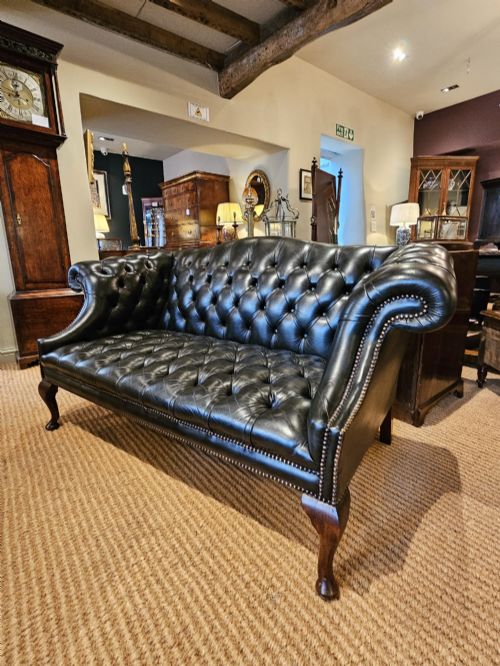
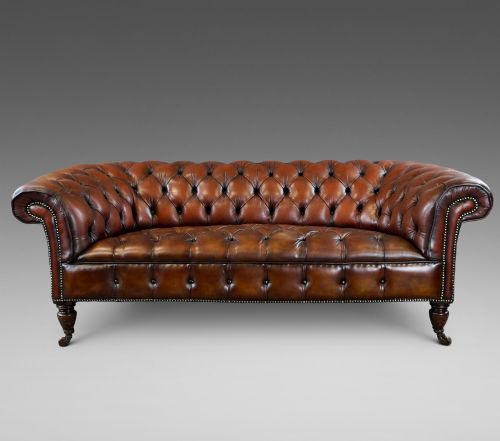
The version you are most likely to meet on this page is the classic leather Chesterfield or club settee, shaped with deep buttoning and rolled arms. They arrive in various formats, from single two-seater couches to complete lounge suites paired with matching armchairs.
Origins stretch across English workshops as well as continental makers, utilising timber frameworks beneath worn or hand-dyed hides. Buyers seek them out for their heavy build and the tactile warmth of aged leather.
How they were made
Makers constructed these frames using hardwoods such as mahogany, walnut, oak, and general timber to ensure structural longevity under heavy daily use. Traditional upholstery methods relied on horsehair filling and metal springs to support the seat cushions and backs.
The outer layer typically consists of durable leather, secured tightly to the wooden frame with brass tacks or deep button tufting. Wood components often received hand-carved floral motifs or smooth polished finishes depending on the prevailing style of the period.
Materials recorded across the inventory include leather, brass, mahogany, walnut, timber, and metal.
What varies in quality
The standard of an antique club sofa rests upon the integrity of its internal wooden framework and the condition of the hide. Pieces retaining their original un-restored leather show distinct patination, whereas heavily restored examples rely on the skill of the hand-dyeing process to match historical character.
Detailing on the woodwork also separates standard production from finer craftsmanship, seen in hand-carved lion motifs or serpentine front profiles. Furthermore, the depth of the buttoning and the resilience of the horsehair stuffing dictate how well the seating retains its shape over decades of use.
Howard and Sons·Hampton and Sons·Maple and Co
The Antique Club Sofa Glossary
- Chesterfield
- A large sofa or settee characterised by padded arms and back of the same height, traditionally featuring deep button tufting. It remains a staple form within traditional English seating.
- Button back
- An upholstery technique where buttons are pulled deep into the padding in a diamond pattern to secure the filling and create texture. This method provides firm tension across the backrest.
- Drop arm
- A mechanical or hinged armrest on a sofa or chaise lounge that can be lowered to create an extended sleeping surface. It adds versatility to nineteenth-century seating designs.
- Zebrano
- A distinctive hardwood known for its zebra-like contrasting stripes, utilised during the Art Deco period for decorative cabinetwork and trim. It offers a striking visual grain.
- Pad
- A dense stuffing layer beneath the leather cover, historically composed of horsehair to provide supportive cushioning. Quality depends on whether this internal material remains intact.
Antique Club Sofa: Frequently Asked Questions
What is an antique club sofa?
An antique club sofa is a heavy, deep-seated piece of upholstered furniture designed for comfortable lounging in studies and reception rooms. These sofas typically feature robust wooden frames covered in durable leather and padded with traditional fillings.
Most examples date from the Victorian era through the Art Deco period, incorporating rolled arms and low profiles. They serve as central seating fixtures that develop a rich patina over decades of use.
How do I care for antique leather?
Caring for antique leather involves keeping the hide nourished using appropriate conditioning balms to prevent drying and cracking. Avoiding direct sunlight and strong heat sources protects the original dye and natural fibres.
Gentle dusting with a dry cloth maintains the surface without disturbing the vintage finish. Over-cleaning should be avoided to preserve the historical patina accumulated over generations.
Are these sofas comfortable for daily use?
These sofas were originally built for relaxed sitting, utilising dense horsehair padding and internal springs for substantial support. Their deep seats accommodate various resting postures easily.
While older springs may feel firmer or softer depending on restoration work, their sturdy hardwood frames provide reliable daily seating. Many buyers select them specifically for heavy living room use.
How do I distinguish Victorian from Art Deco models?
Victorian models generally feature ornate hand-carved woodwork, button-tufted upholstery, and rolled arms associated with traditional English styles. They prioritize heavy comfort and classical decorative motifs.
Art Deco versions introduce streamlined silhouettes, geometric lines, and exotic veneers like walnut or zebrano. These later pieces emphasise sleek modern design alongside traditional leather upholstery.