

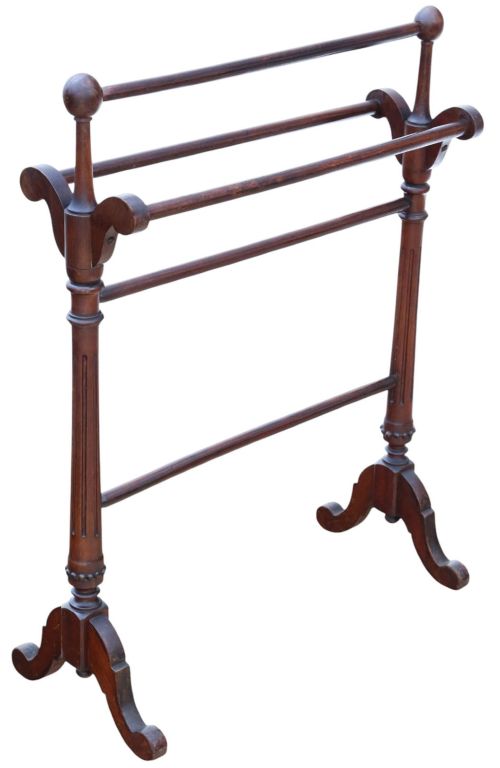
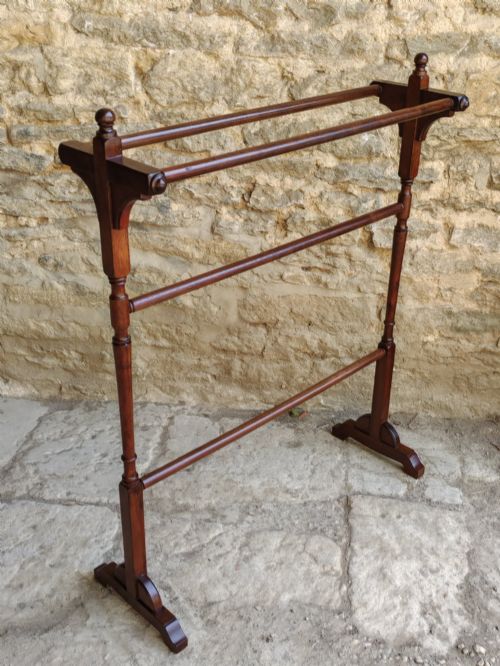
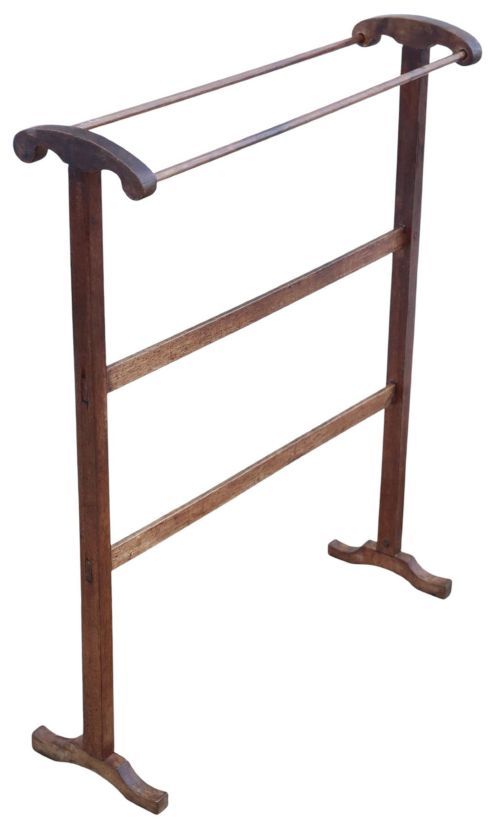
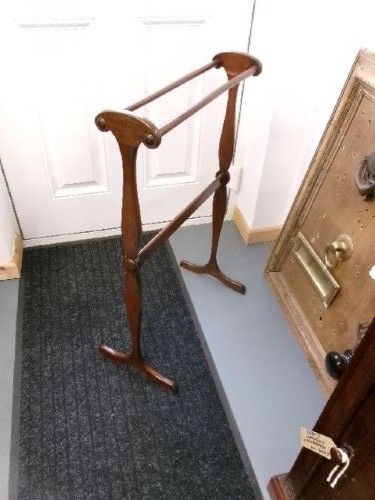


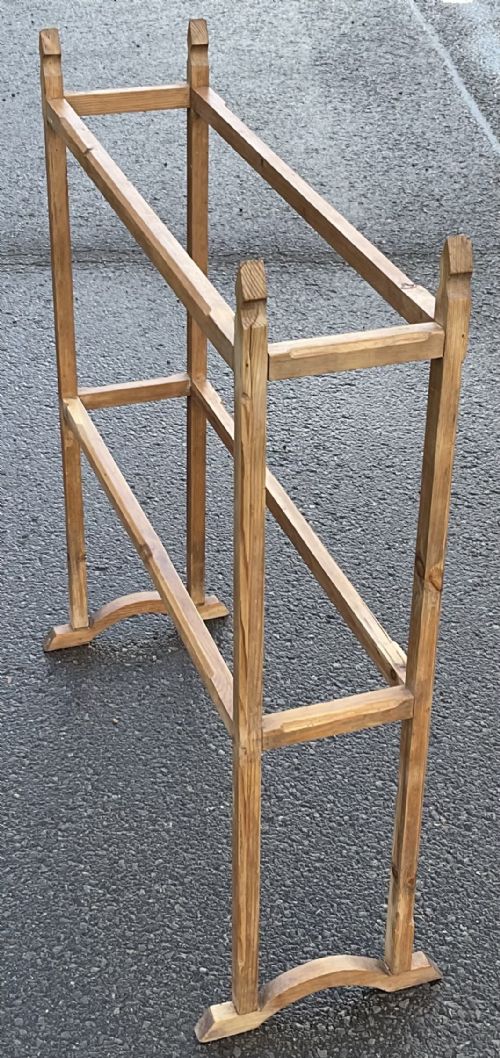

Antique Clothes Horse
An antique clothes horse offers a practical way to dry and air garments while bringing period timber into the room.
Antique Clothes Horse
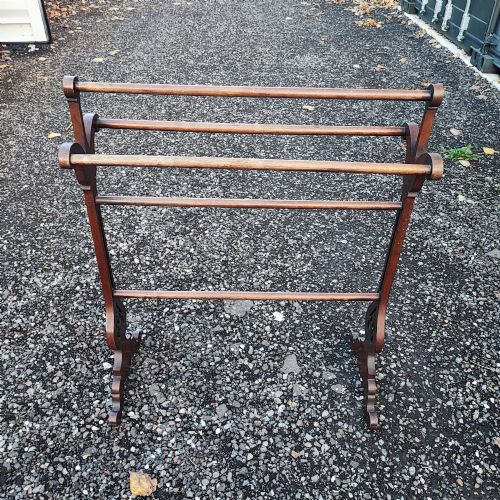
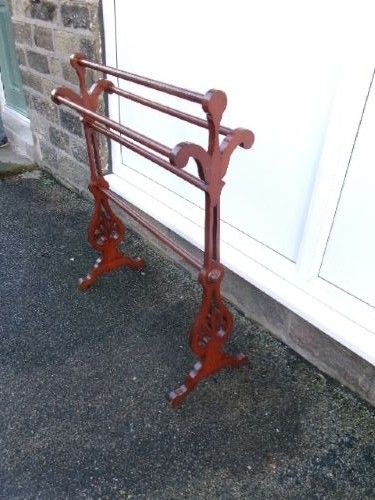
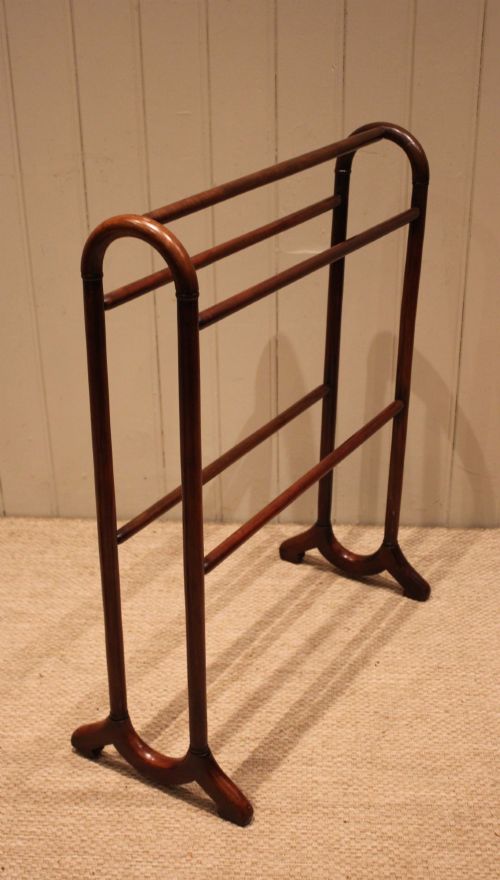
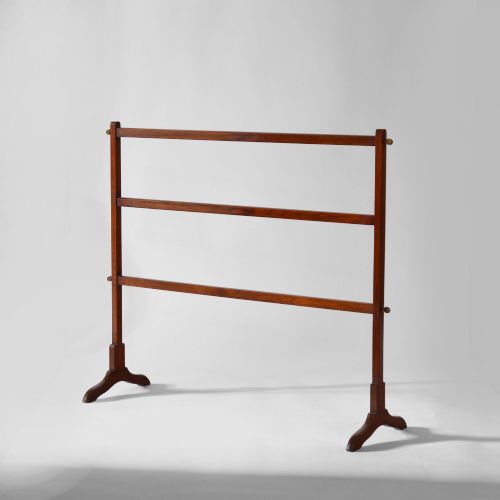
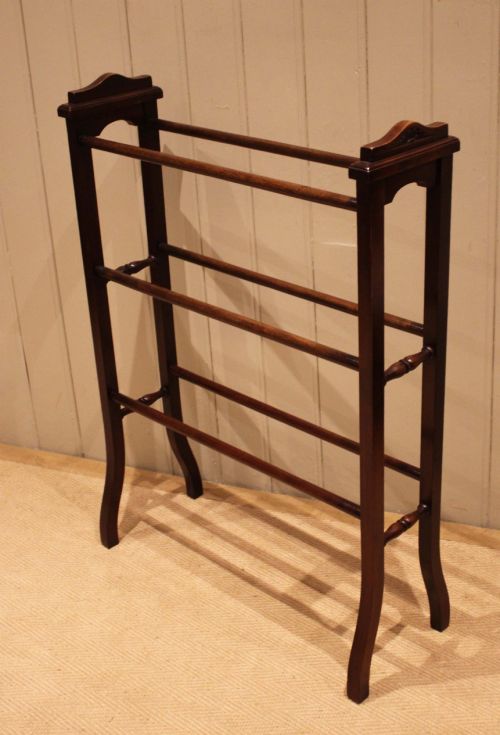
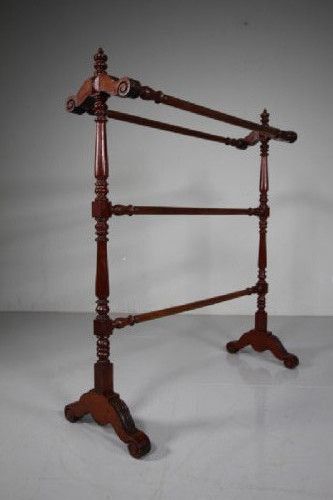
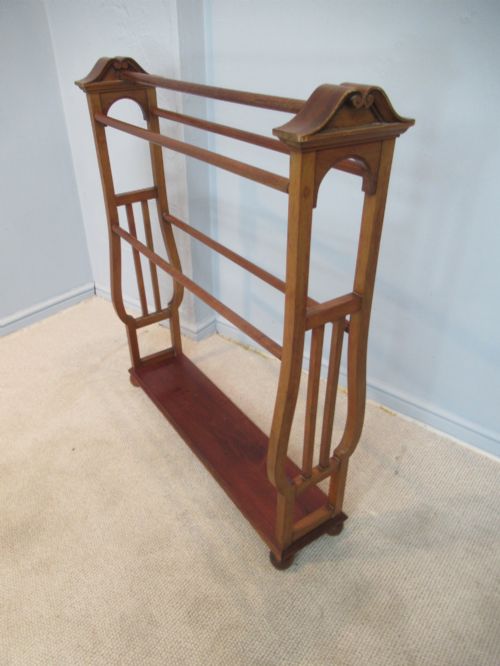
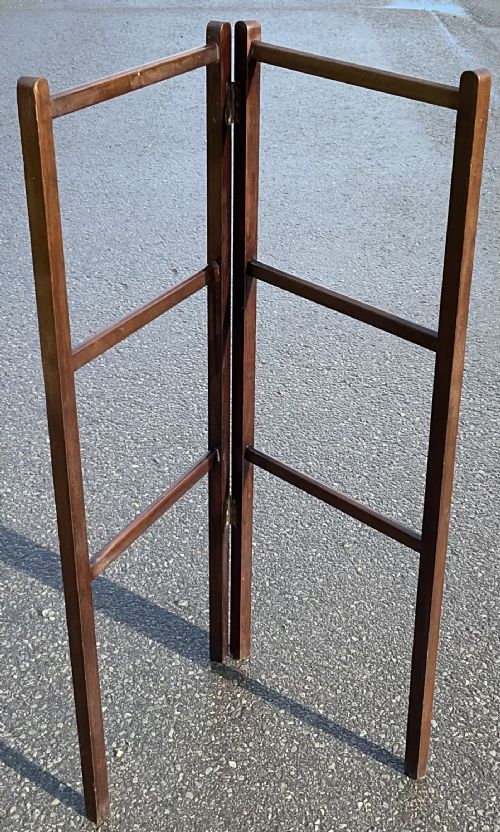
When you search for an antique clothes horse, you encounter folding rails and stands primarily designed for drying laundry and towels in domestic spaces. These pieces take the form of multi-bar frames, three-fold screens, and standing airers built to hold textiles.
The versions you meet most frequently on this page date from the nineteenth century and the Edwardian era. Mahogany remains the dominant timber across these examples, often accompanied by pine, oak, and walnut.
Alongside traditional floor-standing items, the selection includes wall-mounted airers and grander Chinese lacquered robe stands. Each variation serves the fundamental purpose of hanging garments and linens using hinged or fixed wooden rails.
Materials and construction methods
Cabinetmakers constructed these frames predominantly using solid hardwoods like mahogany and oak, alongside utilitarian pine for everyday domestic use. Selected pieces feature decorative details such as satinwood inlay, brass fittings, and ebonised wood finishes.
Joinery techniques focus on sturdy hinges and mortise and tenon joints to withstand the regular stress of folding and unfolding multiple rails. Turning and carving shape the upright supports, while crossbars are smoothed to prevent snagging on delicate fabrics.
Antique Clothes Horse Retail Price Guide 2026
Typical asking prices for clothes horse among the pieces listed under this phrase on Sellingantiques today, from the lower quarter to the upper quarter. They describe what is for sale here now, not the wider market.
Distinguishing quality in timber and form
The distinction between standard utility items and finer pieces lies in the choice of timber and the sophistication of the joinery. Mahogany examples with delicate inlay or crisp turning reflect more ambitious workshop production than basic pine standards.
Proportion and scale also dictate distinction, with larger William IV or oversized Regency frames offering a commanding presence compared to compact domestic rails. The integrity of the original hinges and the crispness of any carved details complete the measure of quality.
Gillows
The Antique Clothes Horse Glossary
- Clothes horse
- A folding wooden frame used for drying and airing laundry indoors. These pieces typically feature multiple hinged sections that allow them to stand freely or fold flat when not in use.
- Cheval towel rail
- A standing frame designed with pivoting or swinging rails supported by sturdy upright posts. This configuration allows easier access to individual bars.
- Ebonised wood
- Timber treated with a dark stain or chemical process to imitate ebony. This finish provides a sharp, formal appearance often seen on late Victorian frames.
- Satinwood inlay
- Contrasting blonde timber inserted into the primary wood surface to create decorative bands or motifs. It appears on finer Edwardian mahogany pieces.
- Gothic Revival
- A nineteenth-century style drawing inspiration from medieval architecture. Pieces from this movement display pointed arches, heavy chamfering, and darker walnut or oak.
Antique Clothes Horse: Frequently Asked Questions
How were clothes horses used historically?
These frames stood near hearths or in sculleries to dry freshly washed linens and garments before central heating existed.
Families also utilised them in bedrooms and dressing rooms to air worn clothing overnight.
Where should I place a clothes horse today?
A folding rail works well in a bathroom or utility room to hold towels and textiles within easy reach.
Larger standing pieces also serve effectively as room dividers or decorative display screens in bedrooms.
How do I date an antique clothes horse?
Stylistic clues such as Regency proportions, Victorian Gothic motifs, or Edwardian satinwood inlay help narrow down the period of manufacture.
Construction methods and timber choices further clarify whether a piece originates from the early nineteenth century or the Edwardian era.
Are these rails strong enough for daily use?
Most antique frames remain structurally sound for hanging garments, towels, or lightweight blankets.
Care should be taken not to overload fragile antique hinges or strain antique hardwood joints.