

Antique Clothes Chest
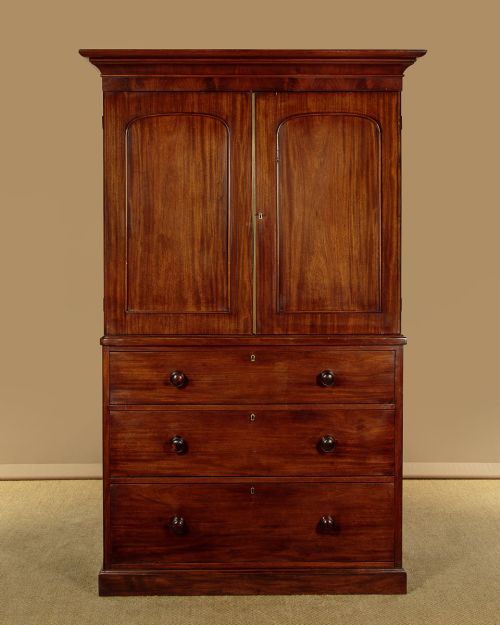
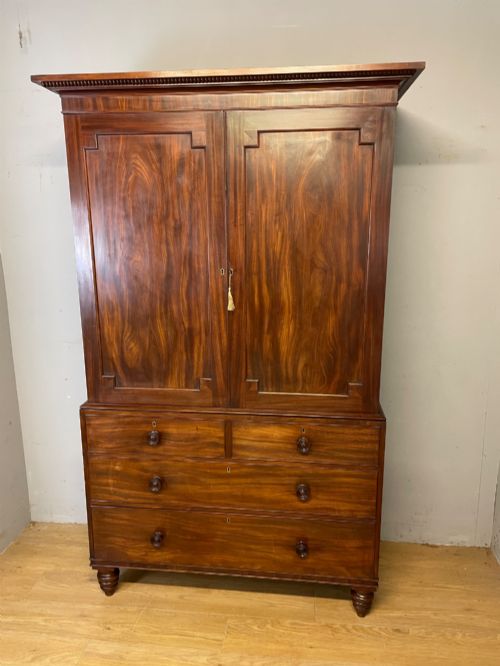
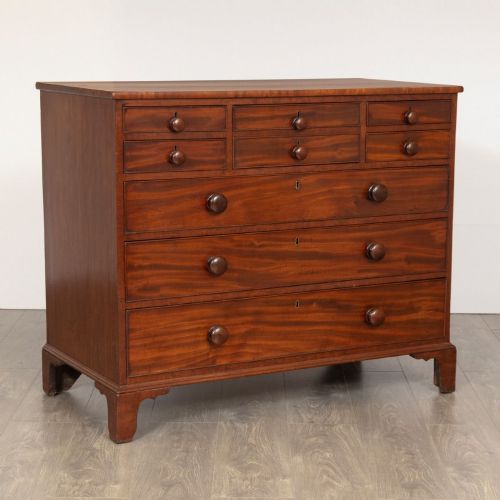
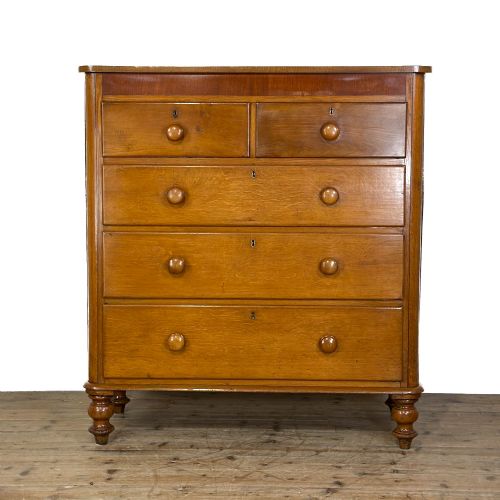
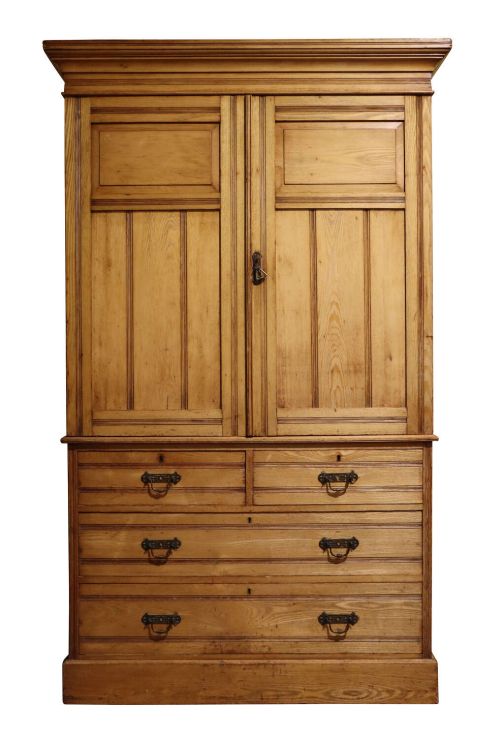
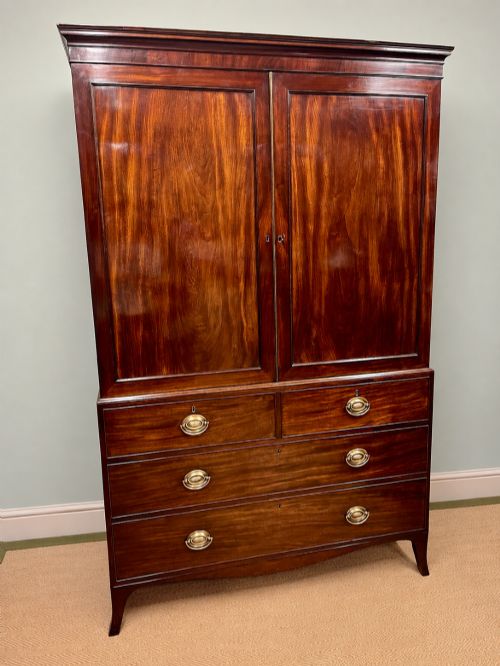
An antique clothes chest provides substantial household storage, uniting generous drawer space with upper press cupboards in rich period timbers.
Antique Clothes Chest
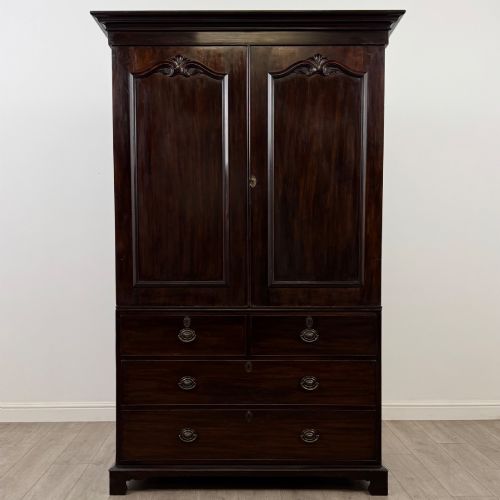
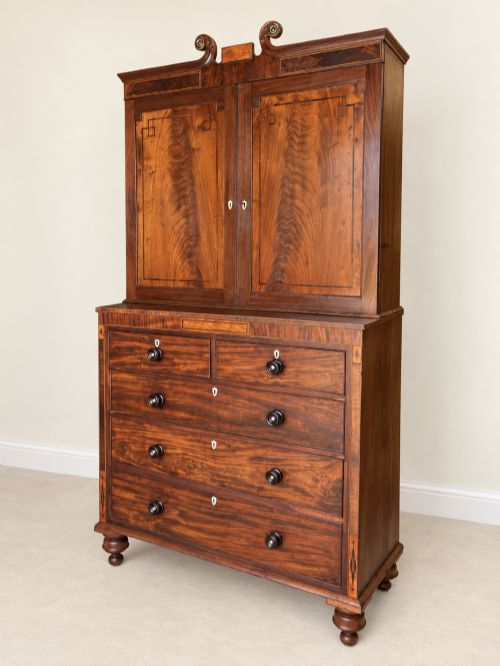
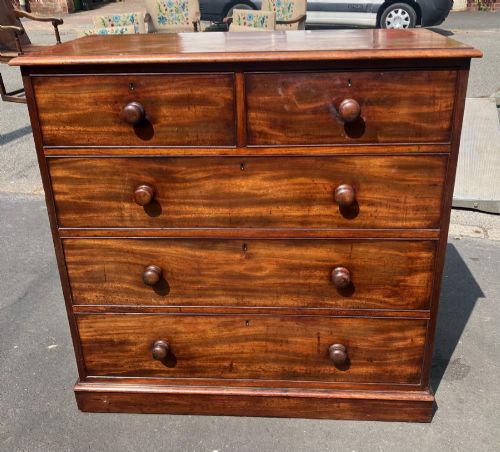
An antique clothes chest typically combines a lower section of drawers with an upper linen press or cupboard, offering versatile storage for garments and household textiles. These pieces span several centuries, with prominent examples originating from the Georgian, Regency, and Victorian eras.
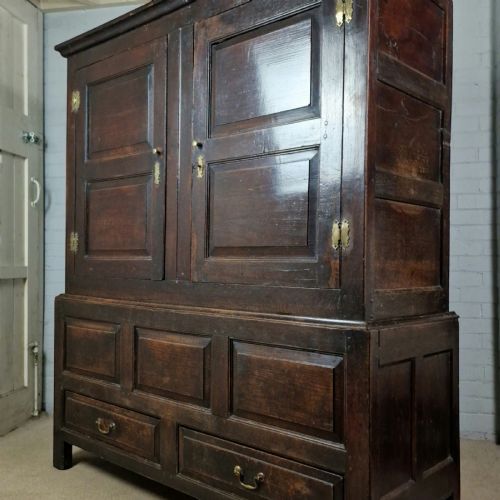
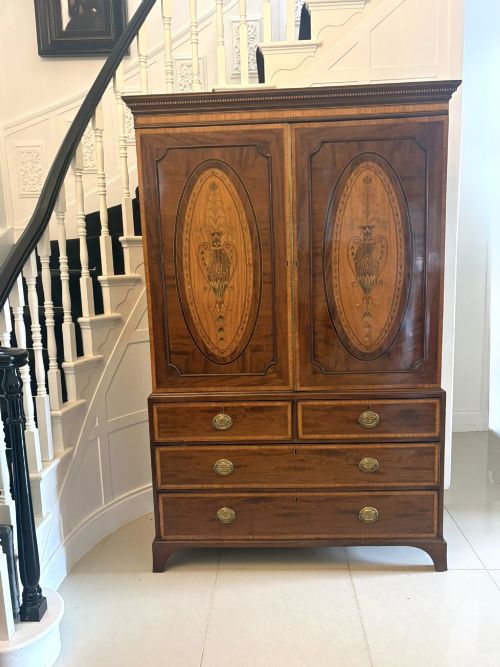
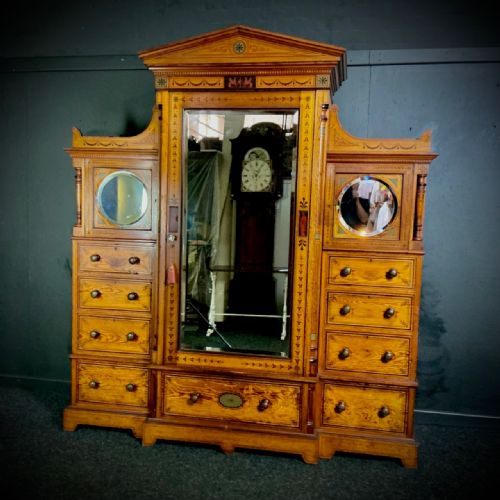
Buyers frequently encounter mahogany and oak constructions, ranging from simple Welsh vernacular cupboards to sophisticated satinwood-inlaid housekeepers wardrobes. The configuration often includes gentleman's wardrobes, tallboys, and combination compactum units fitted with internal sliding trays or hanging space.
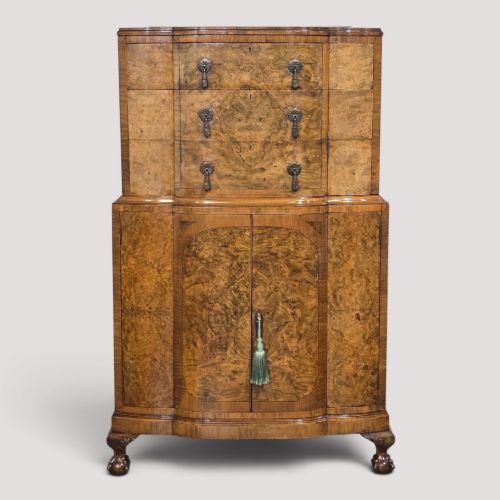
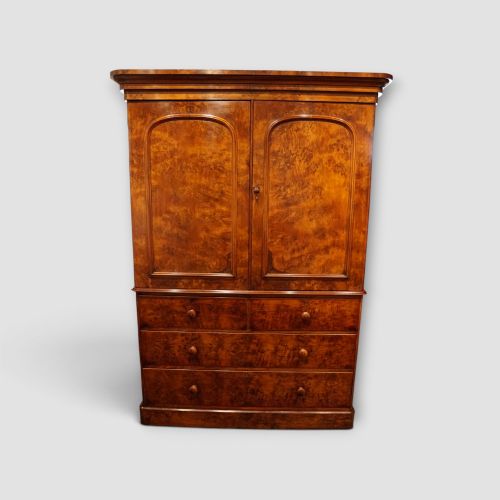
Earlier pieces from the eighteenth century demonstrate restrained proportions in oak or burr walnut, whilst nineteenth-century interpretations favour figured veneers and architectural cornices. Each variant reflects the domestic storage needs of its period, balancing display with functional utility.
Materials and construction
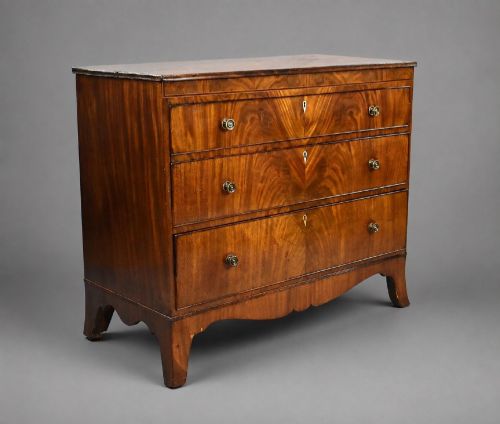
Cabinetmakers constructed these chests using solid timbers such as mahogany and oak, frequently applying flame mahogany veneer or burr walnut to create richly figured exterior surfaces. Crossbanding in rosewood and stringing in satinwood added subtle geometric definition to drawer fronts and door panels.
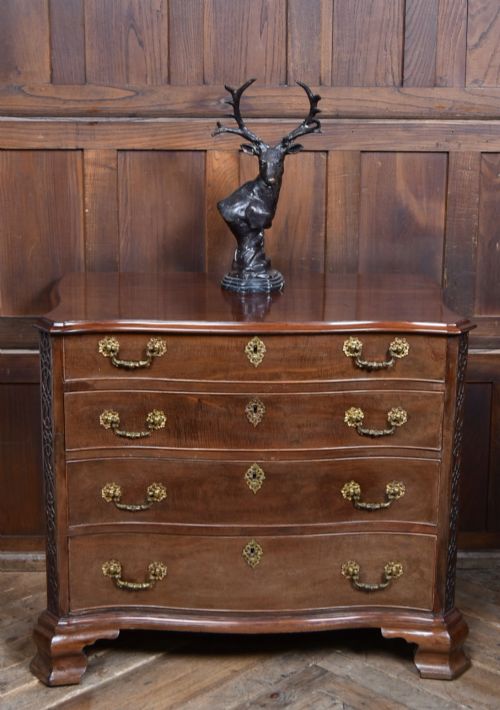
Internal elements relied on secondary softwoods for drawer linings, whilst structural joints utilised traditional dovetailing to ensure durability under heavy daily use. Brass hardware, including drop handles and escutcheons, secured operational doors and drawers across the Georgian and Victorian periods.
Antique Clothes Chest Retail Price Guide 2026
Typical asking prices for clothes chest among the pieces listed under this phrase on Sellingantiques today, from the lower quarter to the upper quarter. They describe what is for sale here now, not the wider market.
Some nineteenth-century linen presses arrive carrying traces of original bright blue paint beneath their polished timber surfaces.
Evaluating workmanship
Superior examples distinguish themselves through the selection of highly figured veneers, such as flame mahogany or burr walnut, matched symmetrically across large expanses like doors and drawer fronts. The crispness of inlaid satinwood stringing and the integration of carved decorative details further separate high-tier pieces from utilitarian storage.
Internal execution reveals the underlying standard of manufacture, observable in the neatness of hand-cut dovetails on drawer boxes and the survival of original brass fittings. The harmonious proportioning of upper press cupboards to lower drawer sections governs the visual balance of the piece.
Maple & Co.·Gillows·Druce & Co.
The Antique Clothes Chest Glossary
- Linen Press
- A tall storage cabinet featuring upper doors enclosing sliding trays or shelves, positioned above a chest of base drawers. Originally designed for storing household linens flat before the widespread use of domestic wardrobes.
- Compactum
- A multi-functional wardrobe or storage cabinet combining drawers, hanging space, and sliding trays within a single fitted footprint. These pieces emerged to maximise storage efficiency in Victorian bedrooms.
- Crossbanding
- A decorative border technique where thin strips of veneer are laid across the grain of the primary wood surface. This frames drawer fronts and cabinet doors with a contrasting timber.
- Secretaire
- A cabinet or chest incorporating a fitted writing drawer with a drop-down front, concealing small pigeonholes and compartments. It merges desk functionality with bedroom storage.
- Stringing
- Inlaid lines of contrasting light or dark wood used to outline geometric panels on furniture surfaces. It highlights the architectural lines of Georgian and Regency cabinetry.
Antique Clothes Chest: Frequently Asked Questions
What is an antique clothes chest?
An antique clothes chest is a large storage unit that pairs a chest of drawers with an enclosed upper cupboard. These pieces were built to store folded garments, linens, and garments before modern fitted wardrobes became common.
They appear in various regional and formal styles, constructed primarily from timbers like mahogany and oak during the eighteenth and nineteenth centuries.
How do I date an antique clothes chest?
Dating relies on observing structural characteristics, timber choices, and stylistic details. Georgian pieces often feature bracket feet and solid mahogany, whilst Victorian versions introduce heavy flame veneers and plinth bases.
Hardware styles and the construction methods used inside the drawer boxes provide additional clues regarding the manufacturing era.
Where were clothes chests used?
These chests served as primary bedroom and landing furniture in large houses, holding household linens and personal attire. Housekeepers utilised them to organise textiles and clothing supplies.
Their robust construction allowed them to function in domestic service areas as well as principal family chambers.
How do I clean an antique chest?
Maintenance involves dusting with a soft, dry cloth to protect the polished wood surfaces. Applying occasional wax feeds the timber without building up heavy chemical residues.
Avoid placing these cabinets near direct heat sources or strong sunlight to prevent the timber and veneers from drying out.