
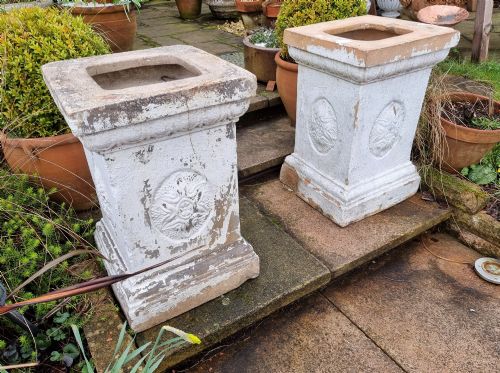


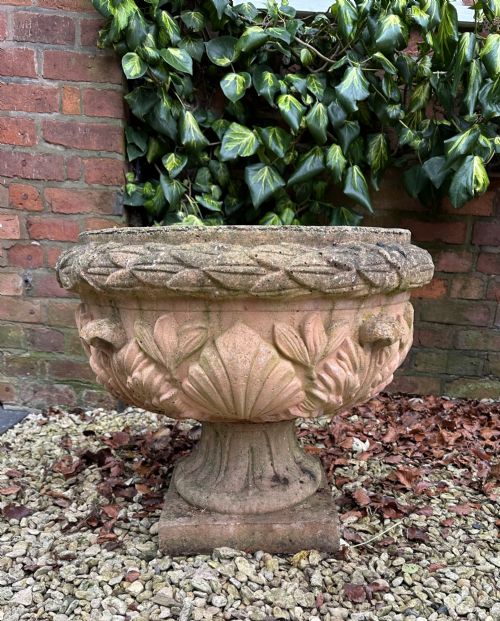


Antique Clay Planter
These antique clay planter pieces offer robust outdoor character, combining earthy terracotta and buff clay bodies with centuries of functional charm for gardens.
Antique Clay Planter
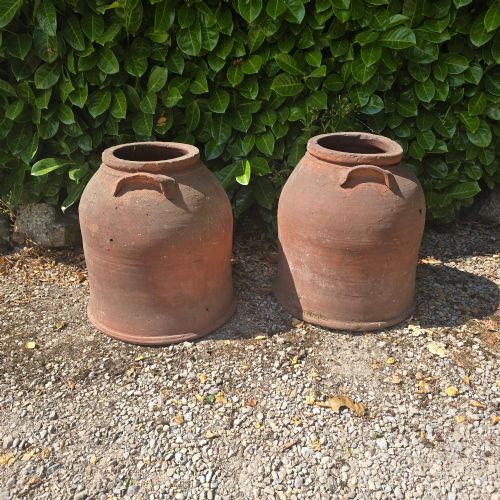
An antique clay planter search reveals substantial vessels designed for utilitarian garden storage and cultivation, with nineteenth century terracotta jars and urns forming the core of the selection. Buyers regularly encounter large olive jars, rhubarb forcers, and decorative scroll pots spanning diverse provincial traditions.
Forms range from tall chimney pots and amphorae to wide jardinières and pedestals. Many pieces reflect Mediterranean or British garden styles, showing heavy weathering and patination from decades of outdoor exposure.
Materials and construction
These items rely on porous earthenware clay, terracotta, and buff clay shaped into thick-walled vessels capable of holding soil and moisture. Some pieces incorporate painted surfaces or applied glazes over the ceramic body.
Structural reinforcement sometimes includes wrought iron components, particularly on larger pots and architectural salvage pieces. Firing techniques produced dense, frost-resistant bodies designed for rigorous estate and garden use.
Periods represented span from the late Georgian era through the nineteen thirties.
Judging the pieces
Quality rests in the purity of the clay body and the balance of proportions on large oil jars and urns. Heavier, evenly fired terracotta with deep surface patination demonstrates superior durability and visual depth.
The sophistication of moulded details, such as scroll handles or architectural cornices, separates standard utility vessels from finer garden ornaments. Intact pairs and matching sets carry greater aesthetic cohesion than isolated single pots.
Dunfermline Clay Company·Compton Pottery
The Antique Clay Planter Glossary
- Terracotta
- Fired unglazed clay containing iron oxide, which produces a characteristic reddish-brown colour. This material remains porous, allowing air and moisture to reach plant roots.
- Rhubarb forcer
- A tall, domed ceramic vessel placed over rhubarb plants in winter to exclude light and encourage early, tender shoots. These feature a removable lid at the top for inspection.
- Olive jar
- A deep, bulbous storage vessel historically used in Mediterranean regions for transporting and preserving oil. Their thick walls and tapered bases provide exceptional stability.
- Buff clay
- A pale, yellowish-white or light tan ceramic material used for chimneys and garden pottery. It offers a distinct visual contrast to traditional red terracotta.
- Architectural salvage
- Building components removed from older structures and repurposed for garden decoration. Items like chimney pots find new life as striking vertical planters.
Antique Clay Planter: Frequently Asked Questions
Are these antique planters frost proof?
Most nineteenth century terracotta and earthenware vessels handle cold weather well if kept elevated on pot feet to prevent water accumulation at the base. Severe freezing can occasionally damage thinner glazed surfaces or saturated porous clay.
Storing sensitive or delicate jars under cover during the deepest winter months preserves the integrity of the material. Good drainage is essential to protect both the pot and the root system.
How do I plant directly in them?
Line the base with broken crocks or gravel to ensure the drainage hole remains unblocked by heavy soil. Fill the vessel with a balanced compost mix suited to your chosen plants.
Avoid compacting the soil too tightly against the inner walls of older earthenware to prevent pressure during watering. Regular feeding keeps plants healthy without needing harsh chemical fertilisers.
Can I use oil jars indoors?
These large vessels adapt well to interior spaces when used as decorative architectural statements or dry umbrella stands. Placing a protective saucer underneath catches any minor moisture seepage through the porous clay.
Their substantial weight provides great stability in hallways or grand reception rooms. Pair them with dried botanicals or tall branches for a dramatic display.
How do I clean weathered terracotta?
Gentle brushing with a soft bristle brush and warm water removes accumulated dirt and loose moss without damaging the historic surface. Avoid aggressive wire brushes or chemical pressure washers that strip away desirable patination.
Allow the piece to dry naturally in the open air after cleaning. Preserving the natural weathering maintains the authentic character of the antique finish.