

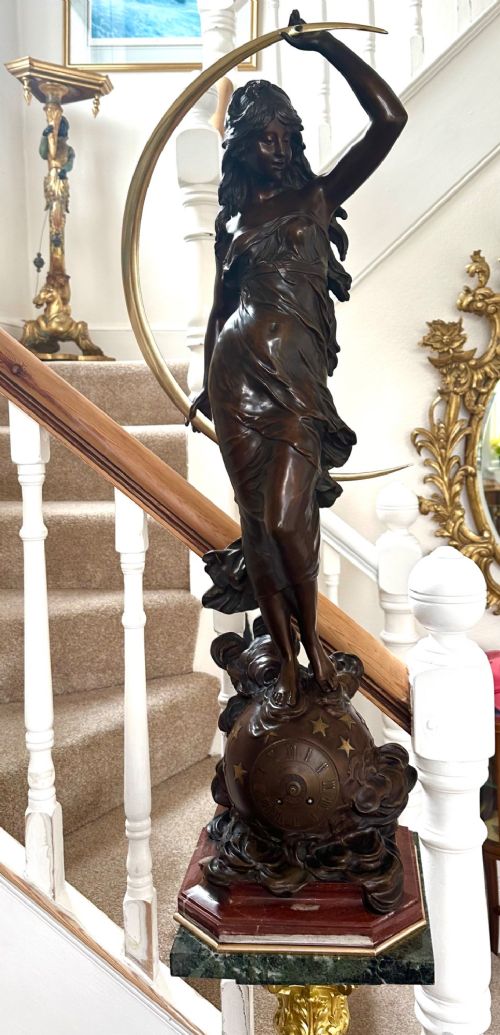
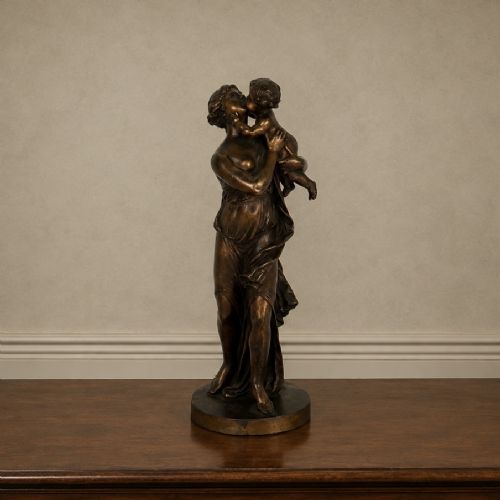
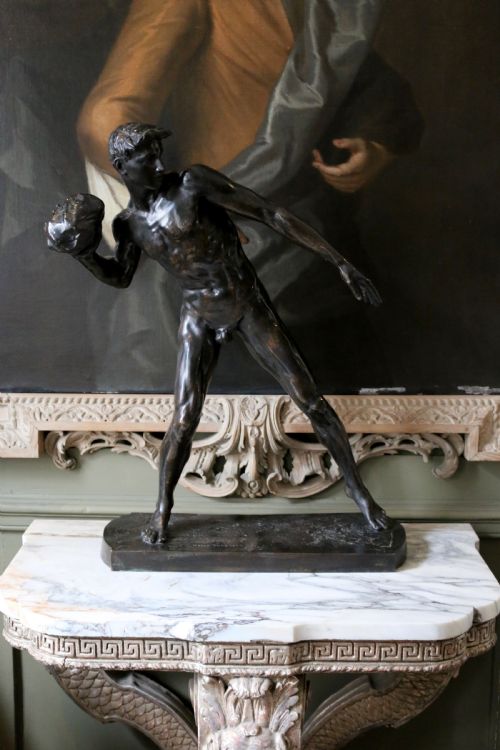
Antique Classical Statuettes
These antique classical statuettes capture ancient myth and history in miniature, offering desktop and cabinet sculptures shaped by centuries of European foundry work.
Antique Classical Statuettes
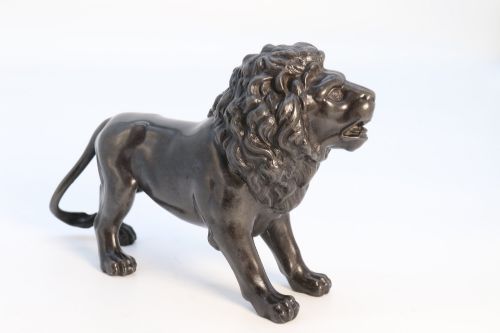
When you search for antique classical statuettes, you encounter miniature sculptures representing mythological figures, literary heroes, and historical personages cast or carved in enduring mediums. These objects include Grand Tour souvenirs brought back by travellers from Italy, domestic mantelpiece figures, and cabinet bronzes modelled after famous antiquities.
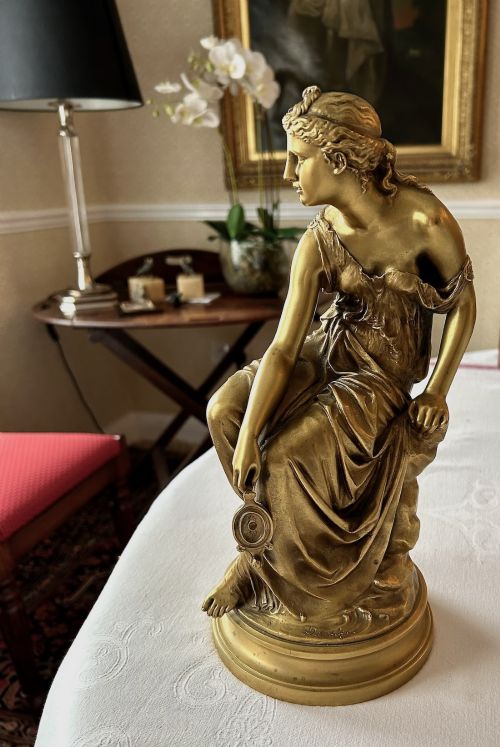
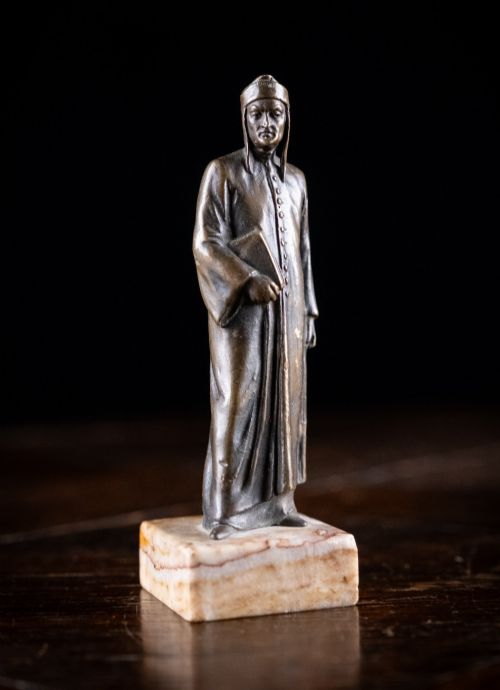
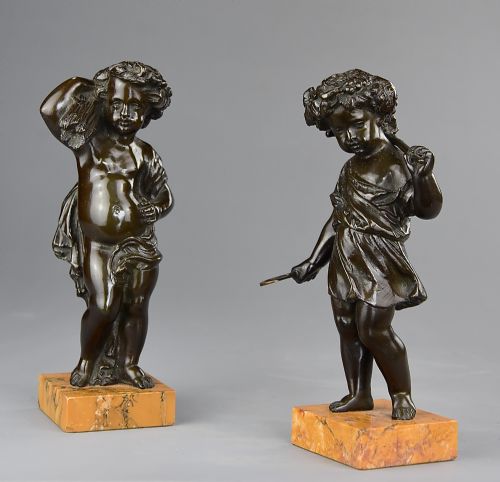
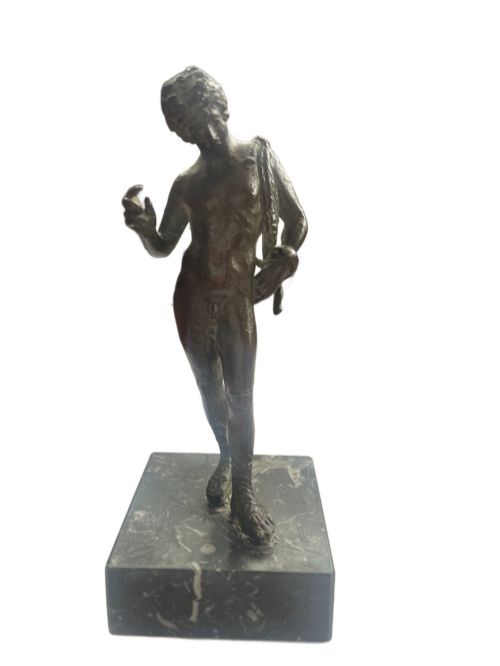
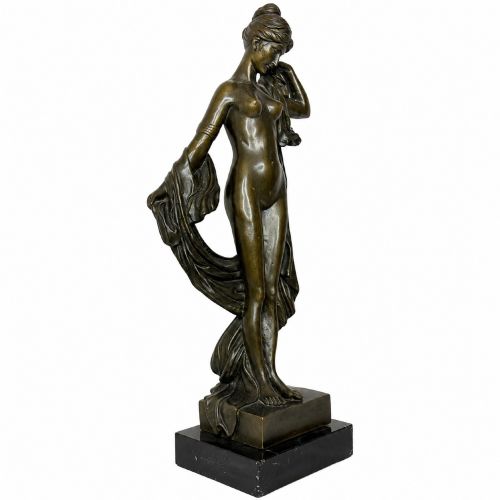
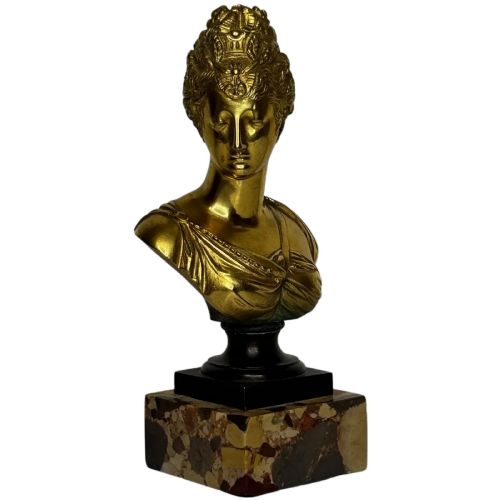
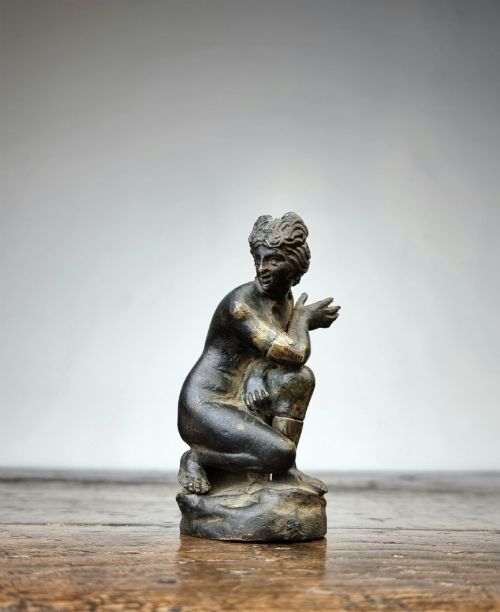
The majority of pieces on this page originate from the nineteenth century, spanning Victorian revivals and French foundry productions. You will frequently find figures mounted on marble or serpentine plinths, depicting subjects such as Narcissus, Venus, and various putti.
The form stretches from small gilt bronze andirons to substantial carved alabaster figures and delicate porcelain deities. Makers translated classical antiquity into domestic scale, drawing upon Renaissance models and excavations of the period.
How they were made
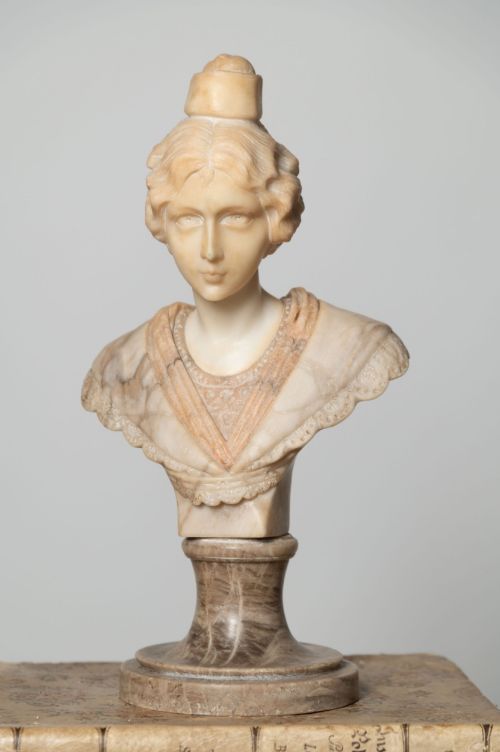
Carvers shaped alabaster and white marble directly from stone blocks, exploiting the translucent qualities of the material for sculptural nudes and drapery. Porcelain works combined slip casting in moulds with hand-modelling, followed by bisque firing or glaze and enamel painting.
Listings feature materials ranging from cast bronze and carved alabaster to glazed and bisque porcelain.
What varies in quality
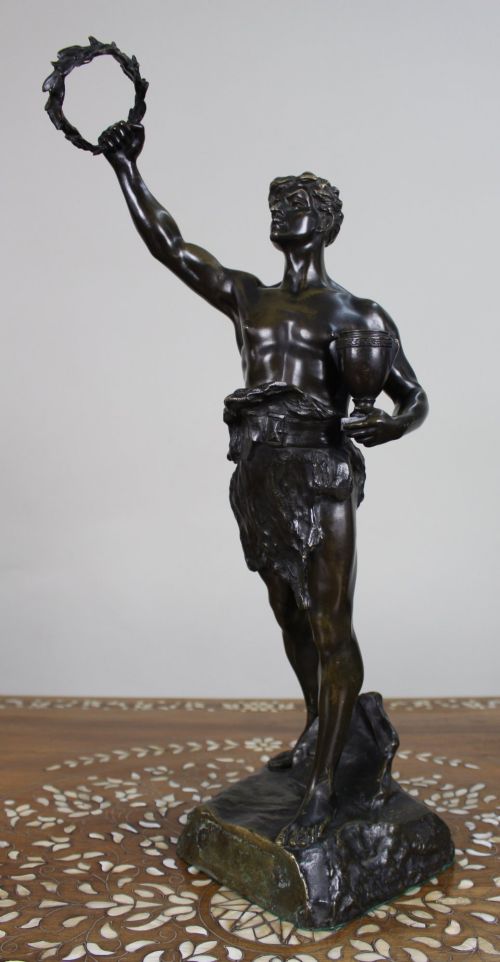
Quality rests in the crispness of the chase work and the fidelity of the casting to the original model. Finer statuettes display sharply defined musculature, clean fingers and toes, and subtle patination rather than flat, uniform dark coatings that obscure underlying detail.
The choice of base material influences the character of the piece, with weighty fossil marble, serpentine, and veined white marble elevating the presentation of Grand Tour bronzes. In porcelain and alabaster, superior examples preserve delicate extremities and facial expressions without blurring from worn moulds.
Etienne-Henri Dumaige·Moreau Family·August Moreau·Julien Lorieux·Fritz Kochendorfer·Hamo Thornycroft
The Antique Classical Statuettes Glossary
- Grand Tour
- A traditional trip through Europe undertaken by upper-class young men in the eighteenth and nineteenth centuries to study art and antiquity. Statuettes purchased as souvenirs on these journeys formed the core of many domestic collections.
- Patination
- The chemical treatment or natural ageing process that colours the surface of a bronze sculpture. Dark green, brown, and black patinas were carefully applied by foundries to simulate excavated ancient bronzes.
- Bisque Porcelain
- Unglazed porcelain fired once to produce a matte, porous surface resembling white marble. It was frequently utilised for neoclassical figurines to mimic antique carved stone.
- Putto
- A plump, naked male child figure often depicted with wings, originating in classical art and revived during the Renaissance. Pairs of these figures frequently appear as allegorical representations of seasons or elements.
- Serpentine
- A compact, usually green or mottled mineral stone carved into decorative bases and small sculptures. It provides a dense, heavy plinth for nineteenth-century souvenir bronzes.
Antique Classical Statuettes: Frequently Asked Questions
What is a Grand Tour statuette?
These are small-scale bronzes and stone carvings purchased by travellers visiting archaeological sites and museums in Italy during the eighteenth and nineteenth centuries. They served as portable reminders of classical sculpture seen abroad.
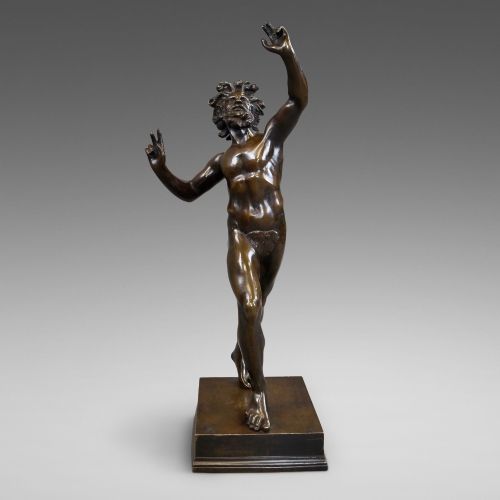
Foundries in Naples, Rome, and Florence specialised in reducing famous antiquities like Narcissus or the Dancing Fawn into cabinet-sized souvenirs mounted on marble plinths.
How do I care for bronze statuettes?
Maintain patinated bronze by dusting gently with a soft brush and avoiding chemical cleaners or polishes that strip the original surface. Keep pieces away from direct moisture and excessive heat.
Occasional application of microcrystalline wax helps protect exposed metal surfaces from atmospheric corrosion while preserving the depth of the patina.
Are porcelain and bronze figures contemporary?
The listings span multiple centuries, ranging from eighteenth-century porcelain figures produced by Derby and Bow to nineteenth-century French and English bronzes. Neoclassical styles endured across generations, reinterpreted by different factories.
Victorian revivalists frequently copied seventeenth-century and Renaissance models, meaning a nineteenth-century bronze often depicts a much older classical subject.
How do I identify the subject of a figure?
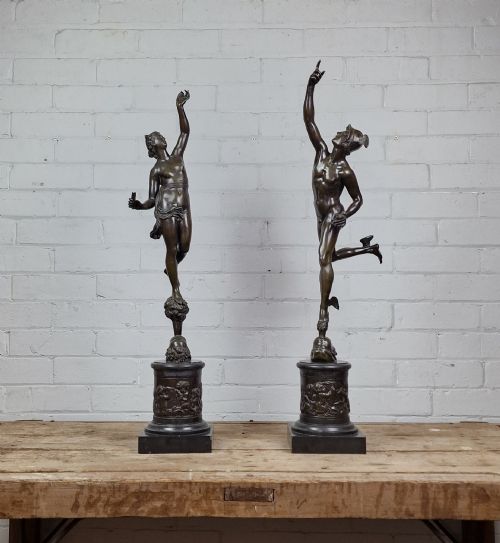
Figures often carry specific attributes, such as Narcissus gazing downward into a pool, Mercury winged sandals and caduceus, or Venus accompanied by Cupid. Inscriptions on bases or accompanying literature frequently name the mythological or historical individual.
Comparing the pose and accessories to known classical sculptures usually reveals whether the figure represents a specific deity, hero, or allegory.