

Antique Circular Candle Stand
An antique circular candle stand brings compact utility and traditional form into a room, raised on slender tripod legs to hold light exactly where needed.
Antique Circular Candle Stand
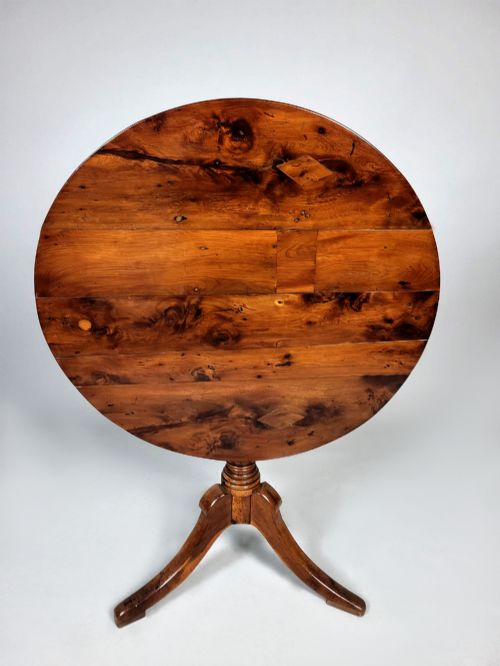
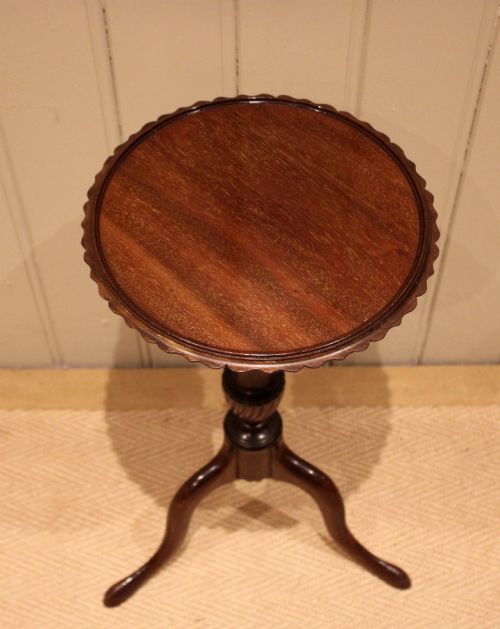
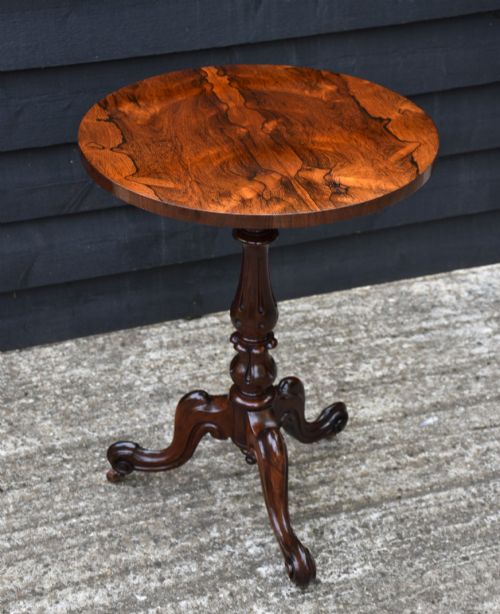
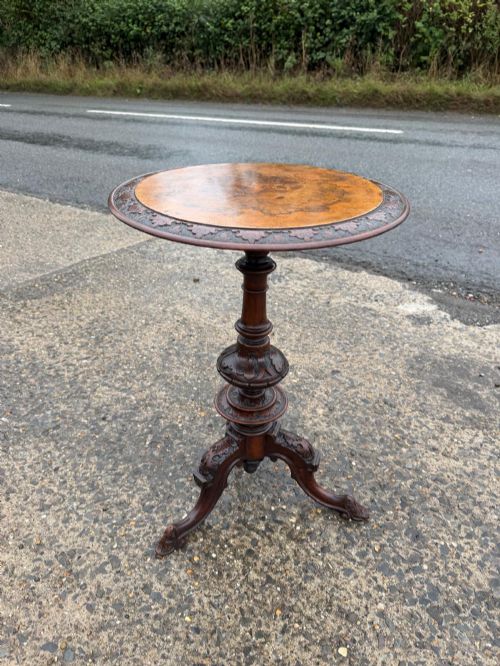
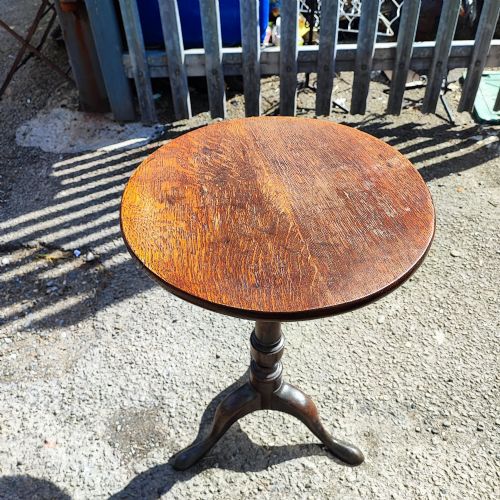
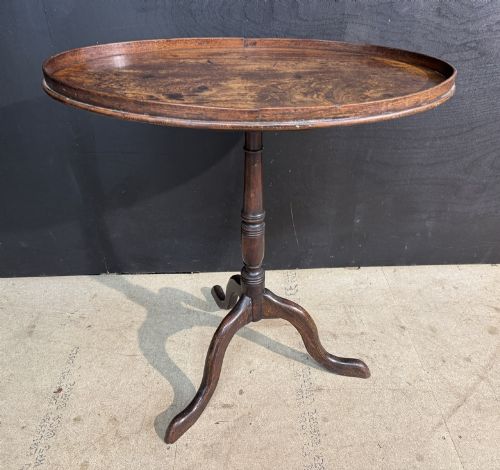
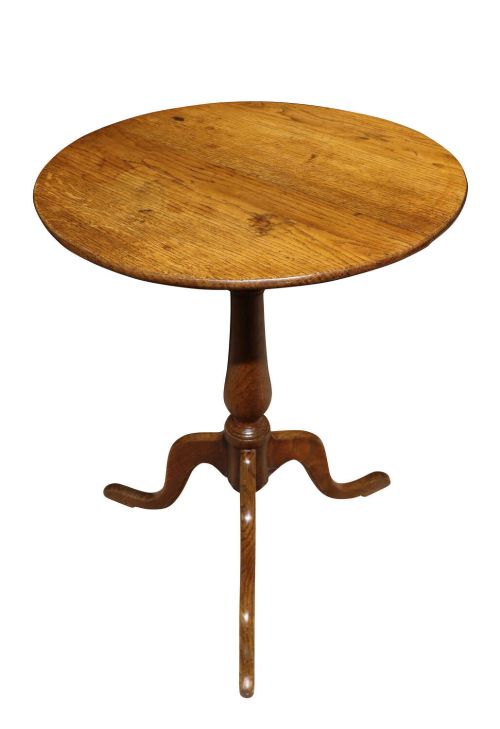
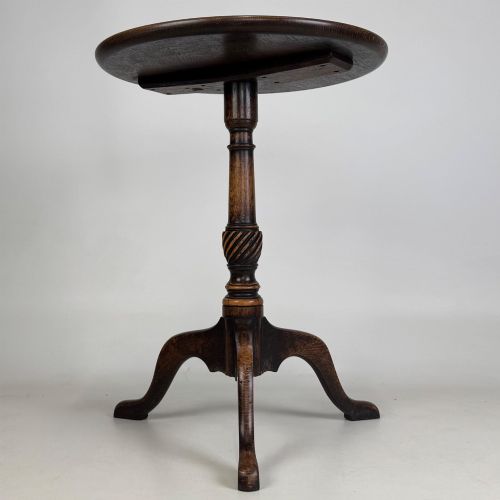
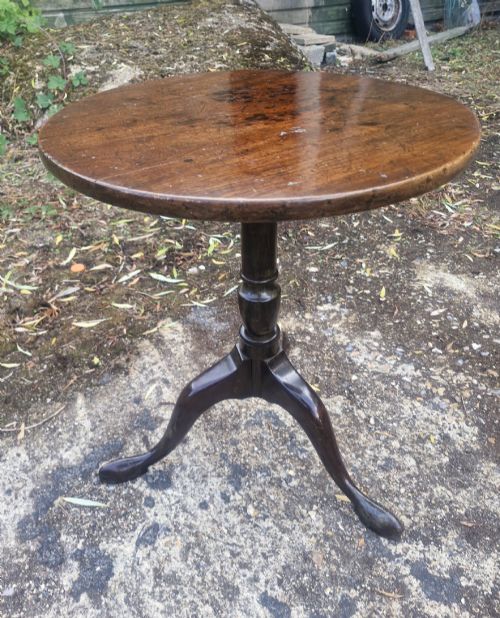
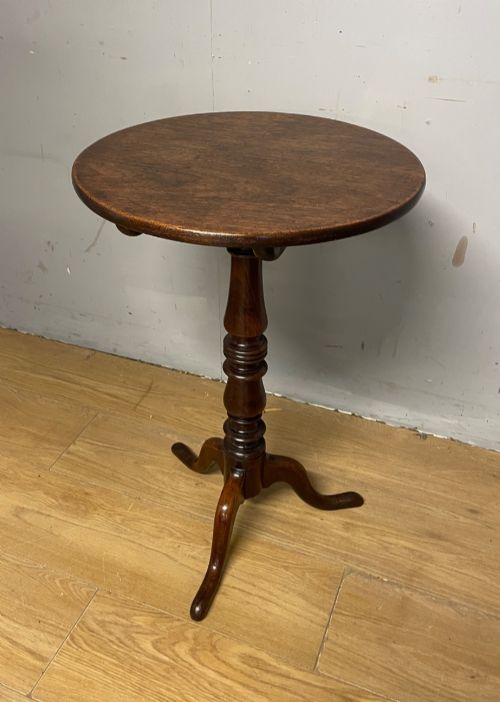
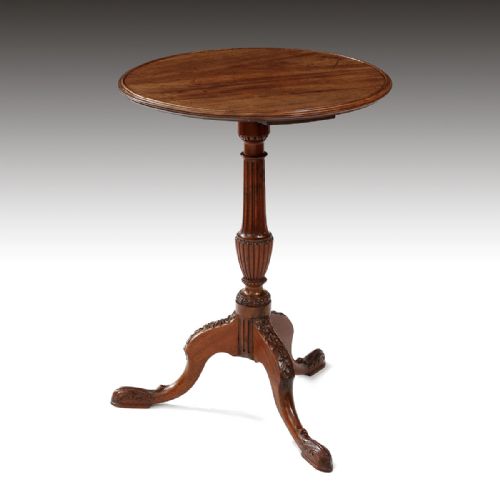
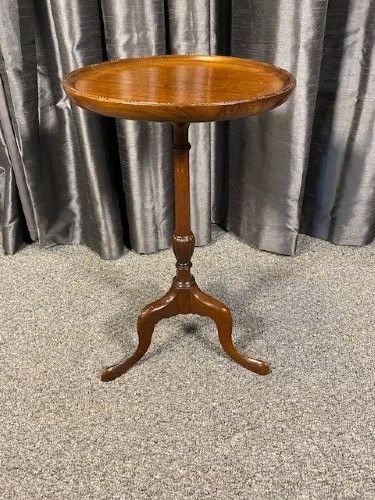
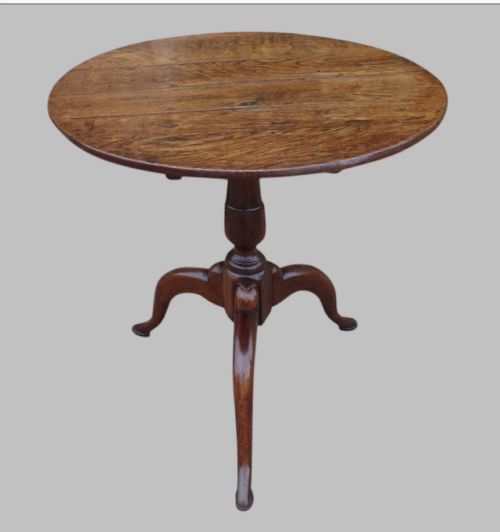
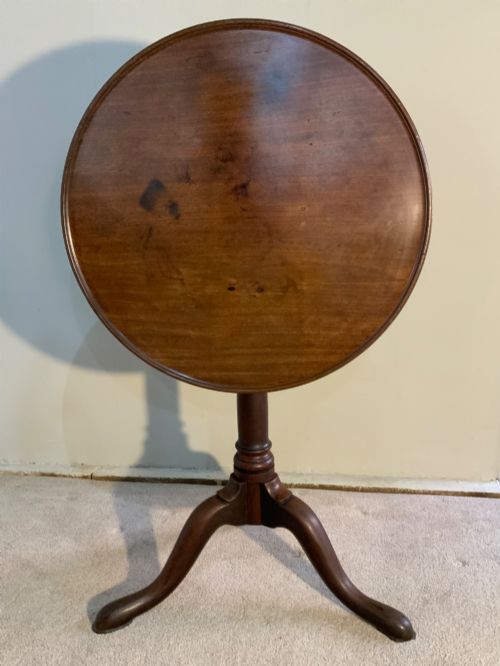
Every antique circular candle stand on this page takes the form of a small occasional table supported by a three-legged pedestal base. The selection spans the Georgian, Regency, Victorian, and Edwardian eras, encompassing vernacular pieces alongside formal parlour furniture.
Makers designed these versatile surfaces as wine tables, lamp tables, and tilt-top tables. They appear most frequently in mahogany and oak, with occasional examples executed in rosewood, walnut, elm, fruitwood, and iron.
Materials and construction
Cabinetmakers shaped dense hardwoods like mahogany, oak, and rosewood into stable central pillars and turned stems. Timber selection dictated whether the piece received a fine polished finish or served as a sturdy vernacular item made from elm and fruitwood.
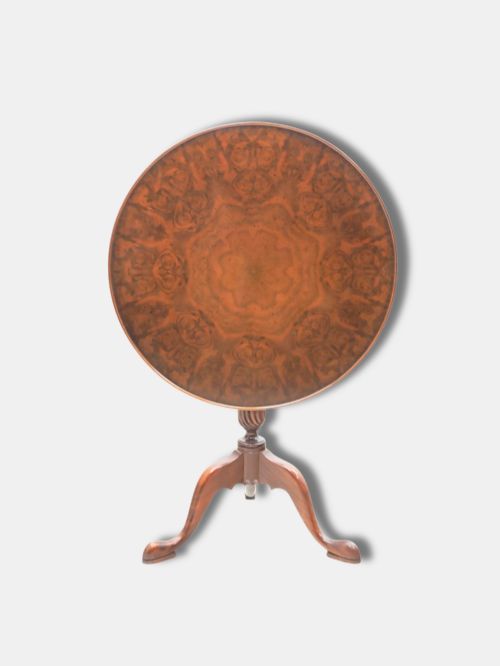
The tripod base required precise joinery to ensure the three splayed legs met the central column securely. Many tops feature burr wood veneers or solid planks secured with tilting mechanisms, birdcage mounts, or fixed blocks.
Listings for this phrase feature mahogany and oak predominantly, alongside regional timbers like elm and fruitwood across the Georgian and Victorian eras.
Gradations in execution
The distinction between ordinary and superior pieces rests on the crispness of the timber turning and the stability of the tripod joint. Finer examples display carefully chosen grain patterns, such as burr walnut veneer or figured mahogany, matched across the circular top.
Workmanship shows in the subtlety of the leg profiles, from simple pad feet to carved cabriole structures. The integrity of the tilt-top mechanism and the weight distribution of the central pedestal also mark out finer workshop production.
Gillow
The Antique Circular Candle Stand Glossary
- Tripod table
- A small occasional table supported by a central pillar resting on three splayed legs. This design provides natural stability on uneven floors.
- Tilt-top table
- A table featuring a hinged mechanism that allows the circular top to pivot to a vertical position. This saved floor space in smaller domestic rooms.
- Birdcage
- A rotating wooden cage assembly beneath the table top that permits the surface to revolve as well as tilt. It connects the top directly to the central pillar.
- Snap top
- A spring-loaded catch or wooden latch that locks a tilting table top securely into the horizontal position. It prevents accidental tipping during use.
- Wine table
- A small standalone surface designed to hold a bottle and glasses near a seating area. They share the same compact circular top format as candle stands.
Antique Circular Candle Stand: Frequently Asked Questions
What were antique circular candle stands used for?
These small tables held wax candles or oil lamps to provide focused illumination beside a chair or bed. Their portable size allowed them to be moved easily around the room as daylight faded.
Over time, owners also utilised them for serving wine, holding books, or displaying decorative objects. Their versatility ensured they remained a staple furnishing across multiple centuries of domestic life.
How do I identify a tilt-top table?
Look underneath the circular top to find a wooden catch, block, or birdcage mechanism attached to the central pillar. This pivot allows the surface to swing from horizontal to vertical.
Many period examples were built this way so servants could store the tables flat against a wall when not in use. Testing the release mechanism reveals how the original pivot was engineered.
Where should I place a tripod table?
The three-legged base makes these tables ideal for tight corners, beside armchairs, or between seating units where four-legged tables might crowd the floor. Their compact circular footprint fits easily into narrow spaces.
Because the top is relatively small, they work best for single lamps, small plants, or drinks rather than heavy displays. Their balanced height pairs naturally with standard seating.
How can I tell the Georgian period from the Victorian?
Georgian pieces from the eighteenth century often display simpler, cleaner lines in mahogany, oak, or walnut, sometimes featuring pad feet or subtle carving. Cabinetmakers focused on proportion and timber grain rather than heavy ornamentation.
Victorian examples from the nineteenth century tend to be heavier, sometimes incorporating elaborate turned pillars, burr wood veneers, or rich rosewood. A close look at the turning style and the timber finish usually points toward the correct era.