


Antique Church Wall Art
These antique church wall art pieces bring centuries of ecclesiastical history and sacred imagery directly into domestic interiors.
Antique Church Wall Art
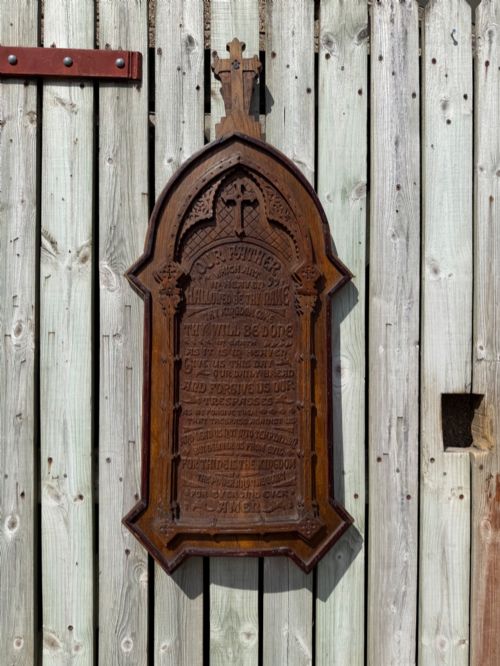
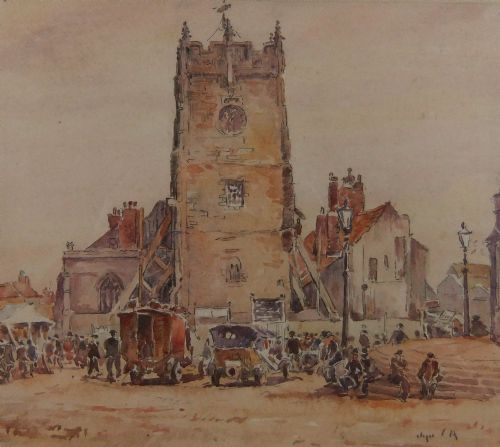
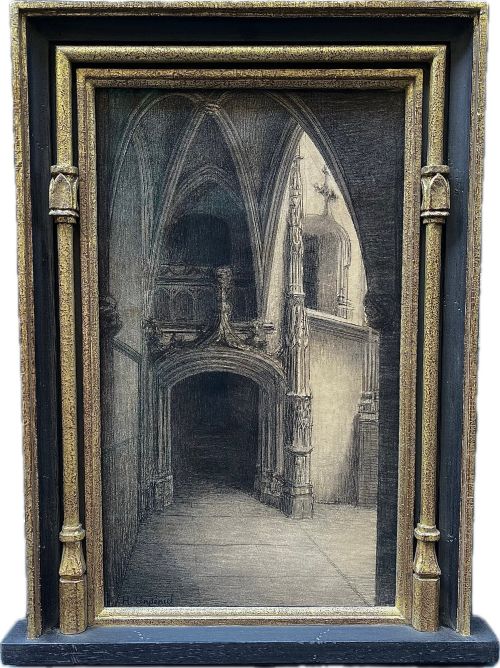
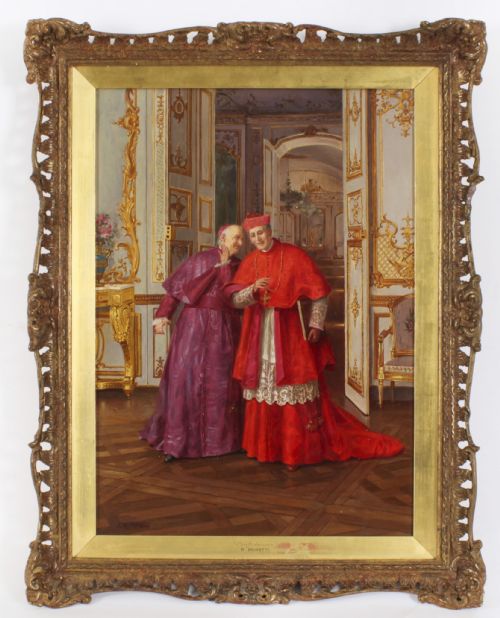
Antique church wall art encompasses sacred paintings, carved wooden panels, icons, and architectural fragments originating from religious buildings and private devotions. The selection spans media from oil paintings on canvas and wood to pen and ink drawings, watercolours, and metalwork crosses.
The prevalent forms date primarily from the eighteenth and nineteenth centuries, with Gothic Revival and Victorian aesthetics strongly represented. Pieces range from detailed architectural studies of cathedrals to devotional subjects such as Russian Orthodox icons and carved oak cherubs.
Buyers encounter items originating from English, French, and Russian ecclesiastical contexts, reflecting varied liturgical traditions. These works frequently serve as striking focal points in modern rooms, carrying the solemnity and craftsmanship of their original settings.
Materials and Techniques
Makers utilised traditional supports including solid wood panels, stretched canvas, and heavy paper for watercolours and drawings. Oak, pine, and walnut provide the structural substance for carved panels, crucifixes, and architectural tracery.
Surface decoration frequently involved oil paints, tempera, gold leaf, and silver highlights, particularly evident in Russian icons and illuminated texts. Metal elements incorporate cast brass and copper, while framing often matches the period of the artwork.
Several pieces preserve the exact handwriting of nineteenth-century congregations through illuminated texts salvaged from tin tabernacles.
Differentiating Quality
Quality rests upon the skill of the hand, whether in the delicate brushwork of an oil landscape or the deep relief carving of wooden tracery. Finer pieces demonstrate precise anatomical proportions in figures and confident architectural perspective in cathedral interiors.
The preservation of original surface finishes, such as gilding, tempera pigments, and untouched wood patina, dictates the desirability of each piece. Greater artistic attribution or association with recognised regional workshops elevates the standing of an item above standard decorative church salvage.
Henri Charles Angéniol·Renato Moretti·William Greaves·Kershaw Schofield·Rowland Henry Hill·Henri Therme·Frederick Underhill·Stephanie Cooper·Daniel Sherrin
The Antique Church Wall Art Glossary
- Gothic Revival
- An architectural and artistic style originating in the mid-eighteenth century that revived medieval Gothic forms. It heavily influenced church furnishings and decorative arts throughout the nineteenth century.
- Icon
- A devotional painting of a holy person or figure, traditionally executed on wood panels using tempera and gold leaf. These are central to Eastern Orthodox Christian worship.
- Tracery
- The stonework or woodwork supports in Gothic windows and panels that hold glass or decorative elements in place. Carved wooden tracery panels often appear as wall art.
- Tempera
- A permanent, fast-drying painting medium consisting of coloured pigments mixed with a water-soluble binder such as egg yolk. It was widely used for early religious panel paintings.
- Illuminated Text
- Hand-lettered text embellished with gold, silver, or brilliant colours. In ecclesiastical contexts, these often displayed scriptural passages for display on church walls.
Antique Church Wall Art: Frequently Asked Questions
How do I hang heavy wooden panels safely?
Carved wooden panels and architectural fragments require secure fixing directly into wall studs or masonry using appropriate weight-bearing brackets. Given the density of oak and pine, professional installation ensures the piece remains stable without damaging the historic fabric.
Distributing the weight evenly across multiple mounting points protects both the wall and the antique structure over time.
Where should I display religious icons?
Icons traditionally occupy prominent, quiet spaces within a room where their devotional nature can be appreciated without competing visual clutter. Placing them away from direct sunlight and excessive humidity protects the delicate tempera and gold leaf surfaces.
Pairing them with neutral walls allows the rich tones of the wood and metallic highlights to stand out clearly.
How do I distinguish Gothic Revival from older work?
Gothic Revival pieces, common from the nineteenth century, often display a systematic, scholarly approach to medieval forms driven by architectural movements of the period. True medieval work carries different tool marks, seasoning patterns in the wood, and wear consistent with centuries of continuous use.
Examining the construction joints and backing materials usually clarifies whether an item is a nineteenth-century revival or from an earlier era.
Can oil paintings on canvas be cleaned?
Surface dust accumulates on older canvas paintings over decades, but heavier cleaning requires professional conservation to avoid removing original glazes. Light dusting with a soft, dry brush keeps the surface clear without disturbing the paint layer.
Any intervention involving solvents or moisture should be left to a trained restorer to preserve the integrity of the artwork.