


Antique Church Scene Art
Antique church scene art captures sacred architecture and quiet parishes, offering collectors a tangible piece of history through period oils, watercolours and stained glass.
Antique Church Scene Art
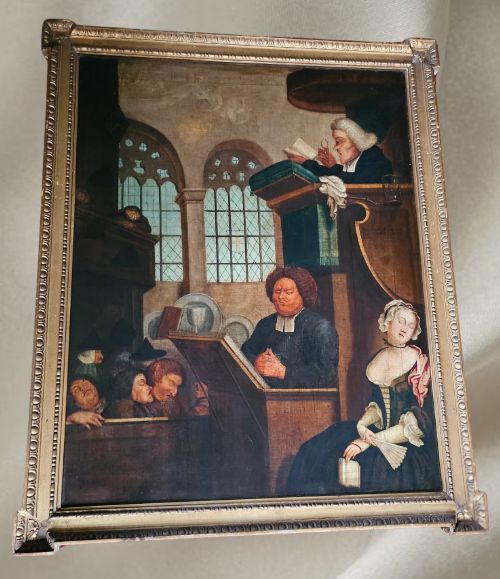
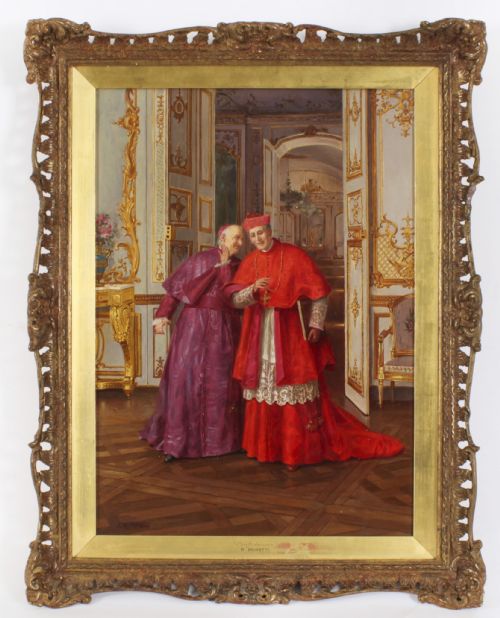
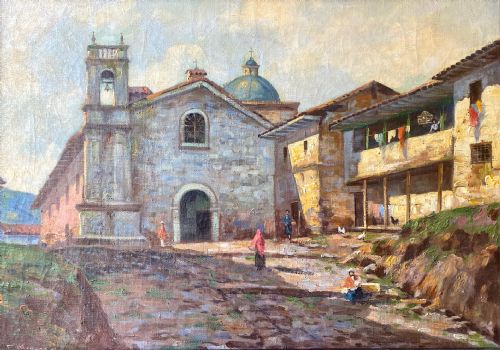
When you search for antique church scene art, you encounter a selection of paintings, watercolours and stained glass panels that depict ecclesiastical buildings and rural parishes. These works span the Victorian era, the nineteenth century and the early twentieth century, capturing historical places of worship in various settings.
The pieces listed on this page range from framed oil paintings on canvas to hand-painted leaded glass windows and delicate works on paper. Subjects vary from nocturnal moonlight views of urban churches to sunlit English country parishes and French village scenes.
You will find both signed compositions by named artists and works by accomplished regional schools. Each piece preserves a distinct record of architectural history and community life from past centuries.
Materials and methods
Artists relied primarily on oil paints applied to canvas or watercolour pigments on paper, capturing light and texture with academic realism or impressionist brushwork. Canvas works often sit within traditional wooden frames that complement the period aesthetic.
Stained glass panels utilise lead to hold coloured and hand-painted glass sections together, creating translucent windows designed to catch natural light. Gilded wood frames frequently enhance oil paintings from the Victorian and Edwardian periods.
One canvas captures a hurried gardener scything a lawn before a herbaceous border while a quiet church watches from beyond.
Assessing quality and execution
Quality in these works rests upon the precision of the draughtsmanship, the handling of light and shadow, and the depth of the composition. Finer paintings demonstrate careful attention to architectural detail and atmospheric perspective.
In stained glass, the finesse of the hand-painted elements and the integrity of the lead work distinguish superior examples from simpler decorative panels. The reputation of the artist or the documented association with a known school also elevates the standing of a piece.
Renato Moretti·Walter Meegan·Rowland Henry Hill·Maurice Asselin·Stephanie Cooper
The Antique Church Scene Art Glossary
- Academic Realism
- A style of painting produced under the influence of European academies, characterised by strict adherence to classical rules and precise observation. It results in highly finished, lifelike depictions of subjects.
- Leaded Glass
- Pieces of glass joined together by strips of lead, known as cames, to form a window or decorative panel. This technique allows for complex designs incorporating painted imagery.
- Watercolour
- A paint wherein the colourants are suspended in a water-soluble vehicle, typically applied to paper. It creates luminous, transparent washes of colour.
- Stained Glass Panel
- A self-contained section of coloured or painted glass designed for display in windows or interior walls. These panels often depict religious or architectural narratives.
Antique Church Scene Art: Frequently Asked Questions
What periods do these artworks cover?
The pieces span from the nineteenth century through the Victorian and Edwardian eras up to the nineteen-thirties. This timeline encompasses various artistic movements including academic realism and early twentieth-century British impressionism.
Collectors will find that earlier works often focus on traditional landscape integration, while later pieces adopt looser brushwork characteristic of post-impressionist circles.
How were stained glass windows constructed?
Makers painted directly onto glass sections before assembling them with lead cames to form coherent pictorial narratives. The panels were then glazed and secured for architectural placement.
These windows relied on natural daylight passing through the glass to illuminate the hand-painted details of the countryside or church interior.
How do I display a stained glass panel?
Stained glass panels require placement where natural light can pass through the glass to reveal the painted details and colours. Many collectors hang them securely in front of interior or exterior windows using appropriate hanging brackets.
Proper support is essential to distribute the weight of the lead and glass safely without stressing the frame.
Are all pieces signed by the artist?
Not every work bears a signature, as many nineteenth-century paintings and regional watercolours were produced by anonymous English schools or unrecorded hands. Signed works often feature the artist's name in the lower corners of the canvas or paper.
Unsigned pieces are judged entirely on their stylistic merits, material quality, and period characteristics rather than attribution.