




Antique Church Landscape Artwork
Antique church landscape artwork brings centuries of British topography and ecclesiastical architecture into your interior through oil and watercolour.
Antique Church Landscape Artwork
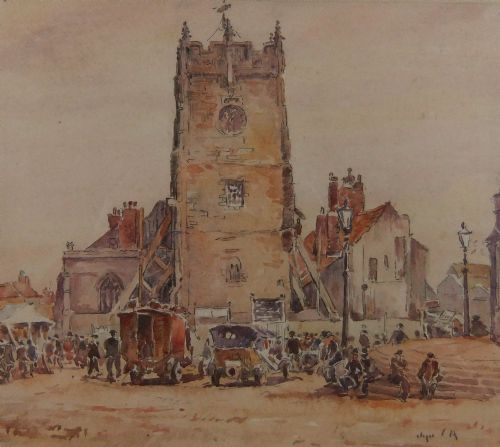
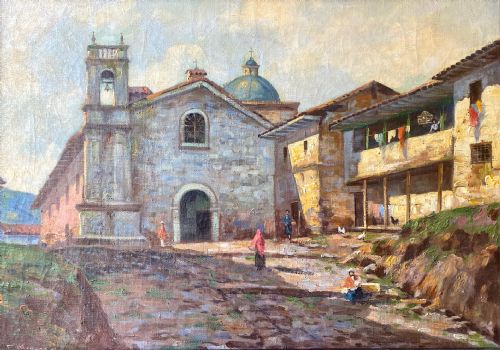
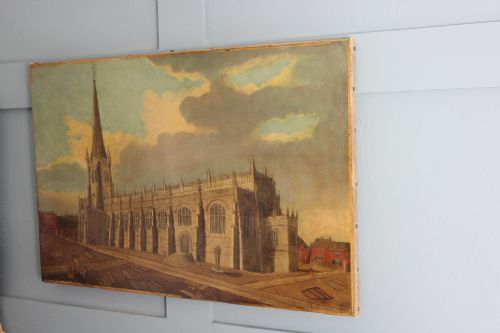
When you search for antique church landscape artwork, you encounter framed paintings and watercolours depicting English cathedrals, rural parish churches, and village churchyards. The material spans the Victorian period through to the early twentieth century, capturing distinct locations from Yorkshire to London.
You meet straightforward depictions of parish churches alongside naive folk art primitives and works by named British artists. These pieces range from intimate watercolours on paper to large oil paintings on canvas and board.
Materials and methods
Artists painted these landscape scenes using oil paint or watercolour applied to paper, canvas, or wood board. Many carry ink work or pencil underdrawing beneath the pigment.
The finished works are typically housed in period wooden frames, occasionally with gilt finishes, preserving the surface texture of the oil or the delicate washes of the watercolour.
The selection spans the nineteenth and early twentieth centuries, incorporating oil paint, watercolour, canvas, paper, and wood.
Judging the work
Quality rests in the precision of the architectural draughtsmanship and the handling of atmospheric light, particularly in moonlight or evening scenes. Skilled brushwork distinguishes competent topographic records from ordinary decorative output.
The distinction also lies in the provenance and documentation, where works attributed to known artists or specific named churches hold greater historical interest than anonymous village scenes.
John Smith Atherton·William Greaves·John Edward Bale·Walter Meegan·Kershaw Schofield·Rowland Henry Hill·Maurice Asselin·David Bates·Daniel Sherrin
The Antique Church Landscape Artwork Glossary
- Watercolour
- A painting method where fine pigment is suspended in a water-based, translucent solution. It is traditionally applied to heavy paper.
- Naive art
- Visual art created by a person without formal training, often characterised by a charming simplicity in perspective and proportion.
- Oil on canvas
- Pigment bound in an oil medium and painted upon a stretched woven fabric support. This technique allows for rich colour blending and texture.
- Gilt frame
- A wooden picture surround coated with a thin layer of gold leaf or metallic paint. It provides a decorative boundary suited to period artworks.
Antique Church Landscape Artwork: Frequently Asked Questions
How do I date an old church painting?
Dating relies on the costume of figures in the landscape, the architectural style of the church, and the materials used for the support such as canvas or board.
Framing styles and any inscribed signatures, dates, or location notes on the reverse provide further chronological context.
Where were these landscape artworks produced?
These pieces originated primarily across various British counties, depicting specific local landmarks from Yorkshire and Norfolk to London and Berkshire.
Some examples also record continental European village scenes from the early twentieth century.
What is the difference between oil and watercolour here?
Oil paintings utilise pigment suspended in drying oil on canvas, wood, or board, offering heavier texture and depth of colour.
Watercolours employ water-soluble pigments on paper, resulting in a lighter, more transparent finish.
How should I care for antique paper art?
Watercolours and ink drawings on paper require protection from direct sunlight to prevent the fading of pigments and discolouration of the support.
Mounting them behind conservation-grade glass and keeping them away from damp environments ensures their long-term preservation.