


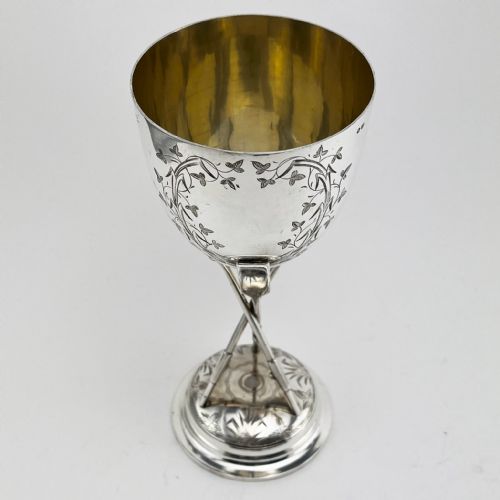


Antique Chinese Cup
An antique chinese cup brings centuries of refined craftsmanship, from imperial porcelain to export silver, directly to a collector's hands.
Antique Chinese Cup
How they were made
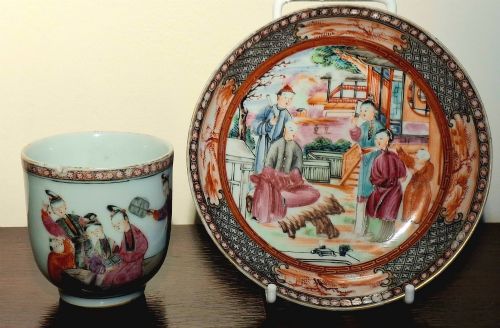
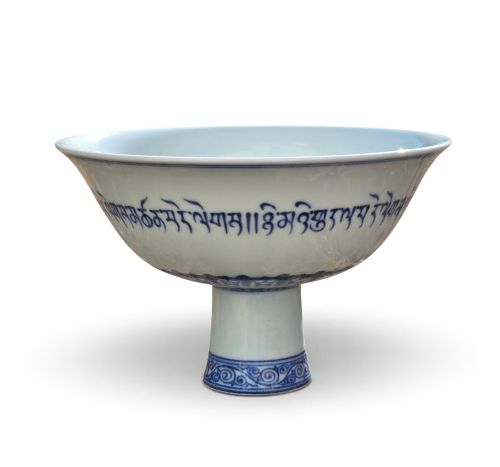
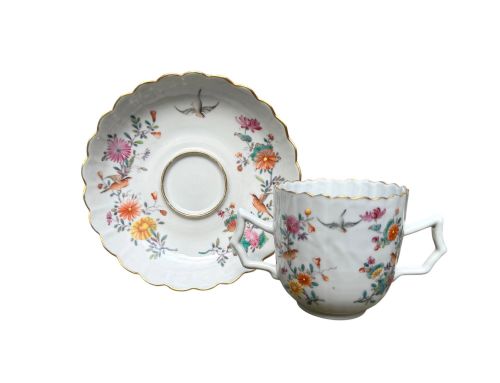
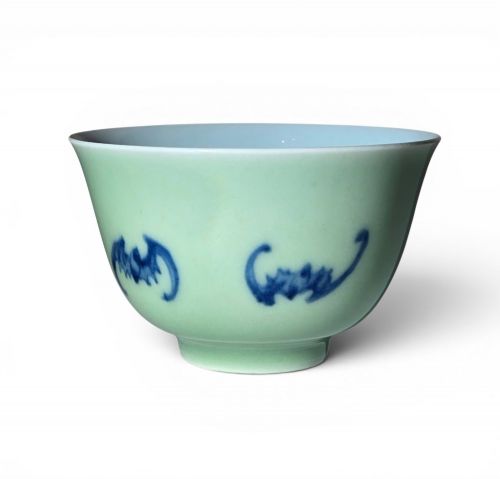
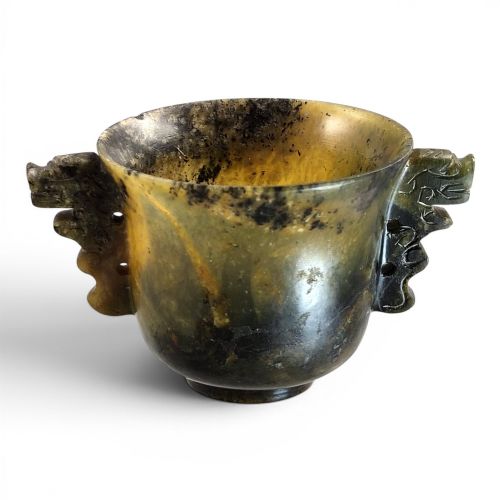
Makers shaped these objects using traditional artisan techniques appropriate to each medium, utilising high-fired porcelain clays, hand-beaten sterling silver, and carved nephrite jade. Ceramic examples display cobalt underglaze painting and polychrome enamel work in palettes like famille verte and famille rose, sometimes complemented by Amsterdam Bont overpainting.
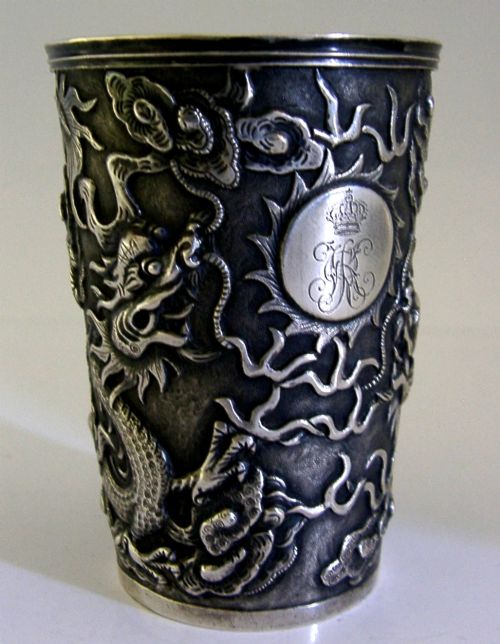
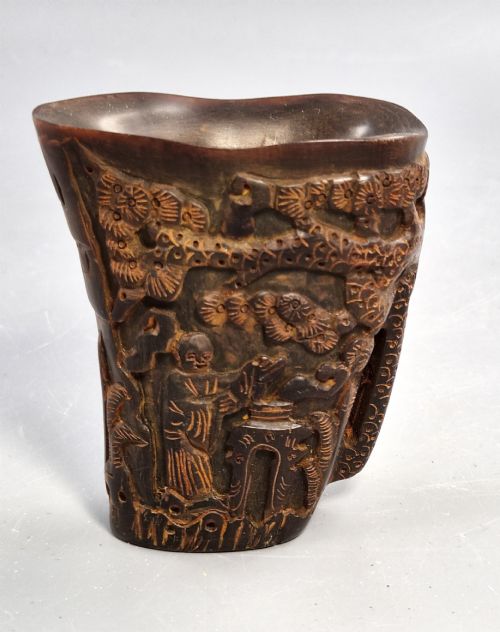
Organic materials required meticulous hand-carving to achieve intricate relief details, as seen in libation cups carved from buffalo horn and drinking vessels fashioned from coconut shell wrapped in pewter. Silversmiths employed detailed chasing, engraving, and casting methods to produce elaborate trophies, goblets, and beakers for export.
Listings feature ceramics from the eighteenth-century Qianlong period alongside nineteenth-century export silver and carved jade vessels.
What varies in quality
The distinction between ordinary and exceptional pieces rests upon the precision of the hand-carving or painting and the sophistication of the material's natural figure. In ceramics, fine control over cobalt underglaze or the depth of famille rose enamels separates standard export wares from imperial-grade or Qianlong-marked productions.
For silver and jade, quality depends on the crispness of chased details, such as dragon scales or crests, and the purity and translucency of the stone. Pieces produced by documented export workshops or bearing imperial marks generally demonstrate superior artistic execution compared to anonymous provincial items.
Wang Hing And Co·Zee Wo
The Antique Chinese Cup Glossary
- Famille Rose
- A palette of opaque rose-pink and other soft enamel colours introduced to Chinese porcelain during the Qing Dynasty. This ceramic decoration style flourished particularly through the Qianlong period.
- Libation Cup
- A ceremonial vessel traditionally used for pouring wine offerings to deities or ancestors. In later periods, these objects were carved from luxury materials like jade, rhinoceros horn, or buffalo horn for scholars.
- Stem Cup
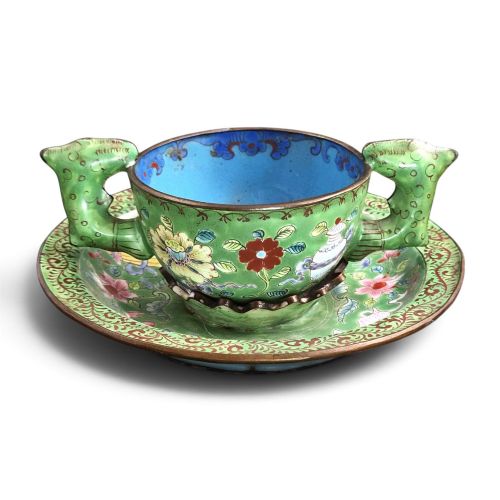
- A drinking vessel raised on a tall, slender foot or pedestal base. This ancient form appears in both Ming and Qing dynasty ceramics and cloisonne enamel.
- Archaistic
- A decorative style that deliberately imitates the forms, motifs, and patination of much older antiquities, such as ancient bronze ritual vessels. Artisans applied this aesthetic to jade, porcelain, and metalwork.
- Chinese Export
- Goods manufactured in China specifically for Western markets from the seventeenth through the early twentieth centuries. These items often combined traditional Eastern materials with European heraldry or shapes.
Antique Chinese Cup: Frequently Asked Questions
What is a libation cup used for?
Originally created for ritual wine offerings in ancient ceremonies, libation cups later evolved into decorative objects for scholar's studios. Wealthy owners prized them as tactile display pieces carved from precious materials like jade and horn.
Over time, their function shifted entirely toward aesthetic appreciation and collecting. Their intricate carvings often depict Immortals, pine trees, or mythical subjects suited to scholarly contemplation.
How do I identify a Qianlong mark?
Qianlong reign marks appear on imperial and high-grade export ceramics produced between seventeen thirty-six and seventeen ninety-five. They typically consist of six characters arranged in vertical columns under the glaze.
Collectors examine the style of the script and the surrounding glaze quality to determine period authenticity. These marks denote imperial patronage rather than individual maker signatures.
What is Chinese export silver?
Chinese export silver refers to items created by local silversmiths in treaty ports like Canton and Hong Kong for Western clientele. These pieces range from trophies and goblets to tea services blending European forms with Asian motifs.
Artisans often stamped these items with pseudohallmarks or maker marks in character script. The silver content generally matches or exceeds standard sterling purity.
How do I care for antique horn cups?
Organic materials like water buffalo horn require stable environmental humidity to prevent drying and cracking. Keep them away from direct sunlight and sudden temperature shifts.
Dust them gently with a soft, dry cloth without applying modern chemical polishes. Proper handling preserves the delicate relief carvings executed by nineteenth-century artisans.