


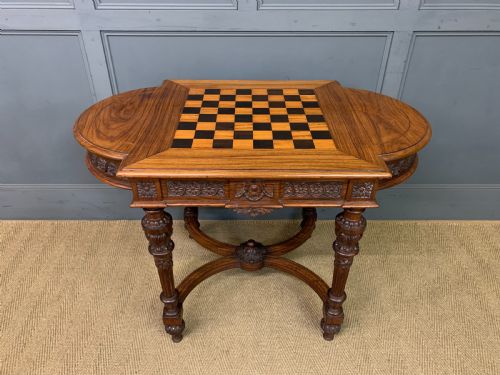


Antique Chess Board Table
An antique chess board table brings centuries of social play into a room through clever multi-use design.
Antique Chess Board Table
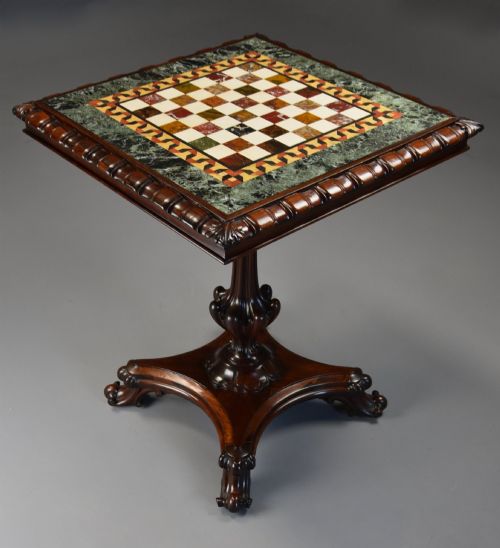
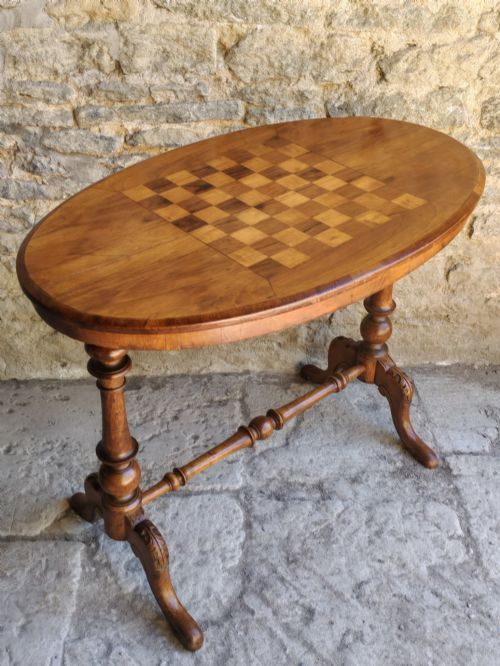
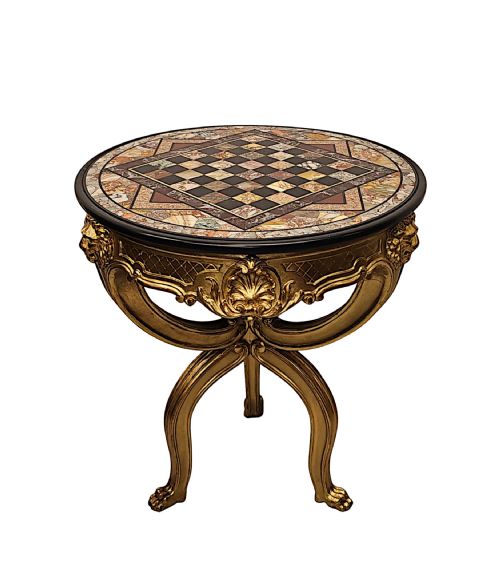
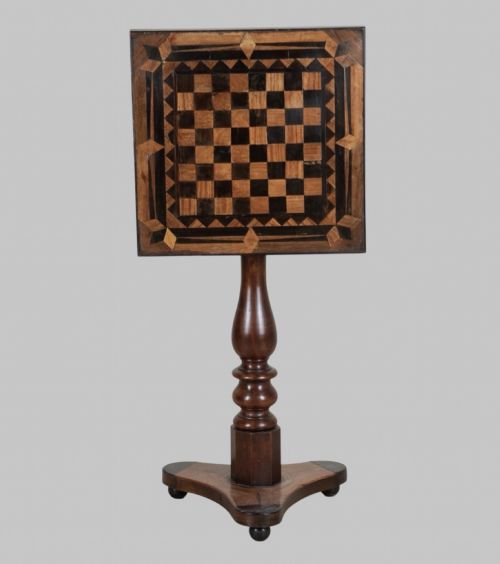
An antique chess board table is a dedicated piece of furniture designed to accommodate traditional board games alongside everyday household use. These tables appear across multiple periods, with the Victorian and Regency eras providing the highest volume of surviving examples on this page.
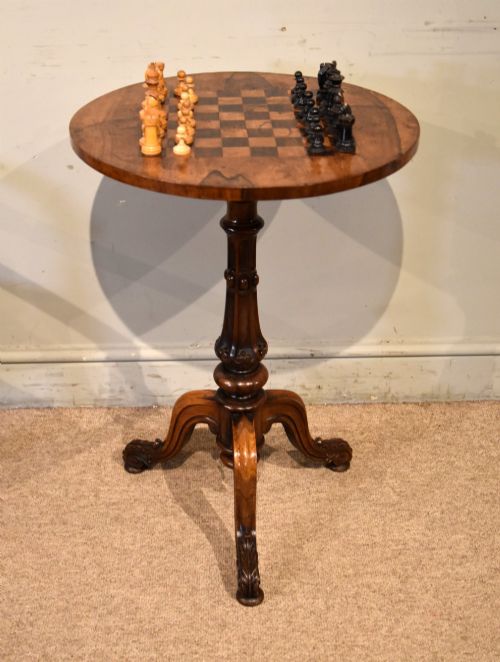
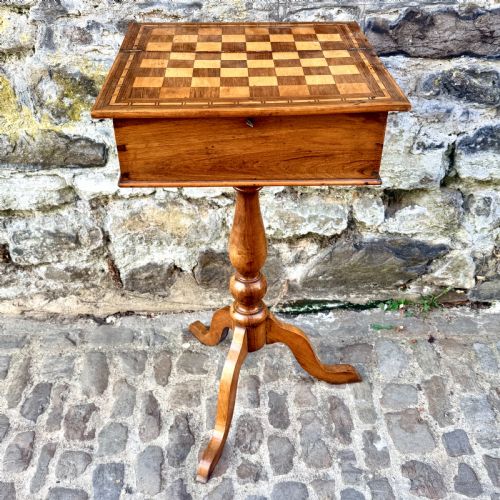
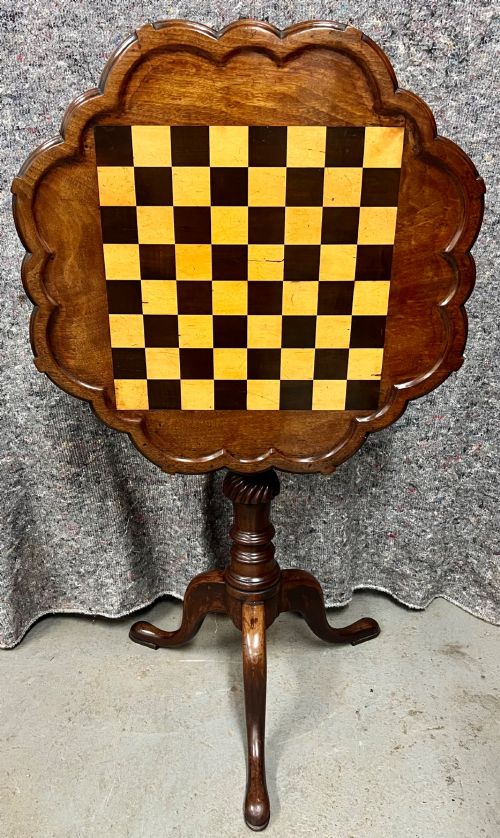
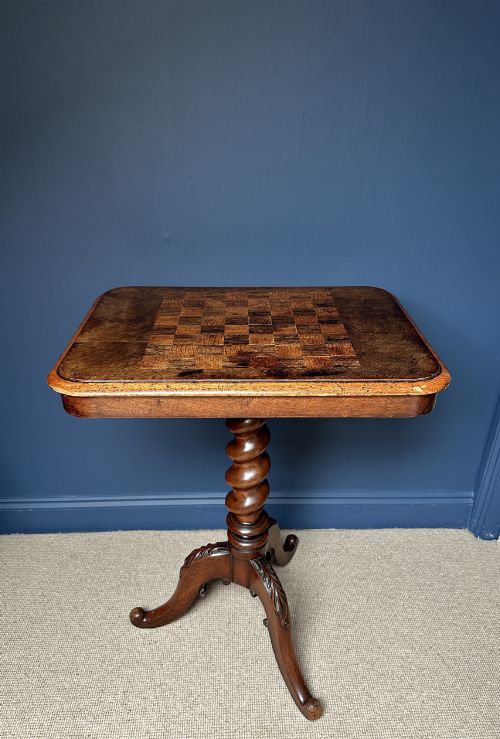
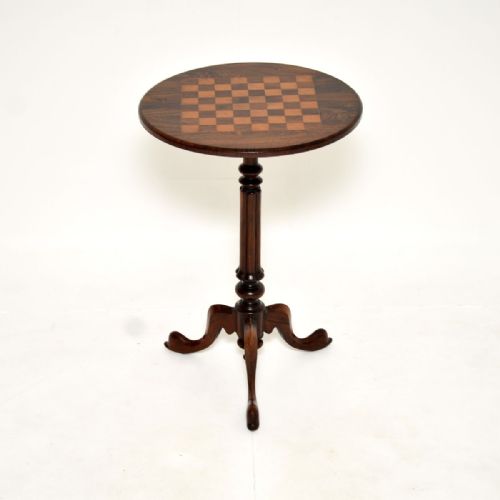
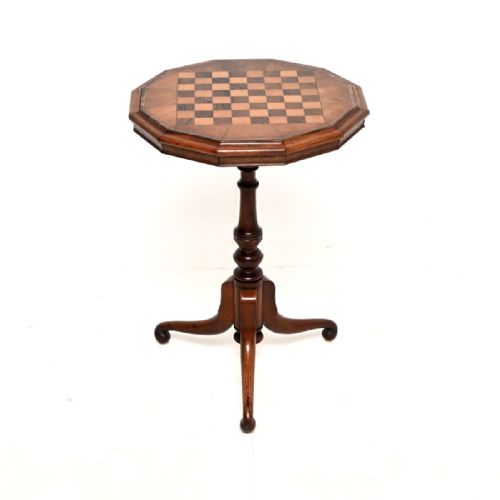
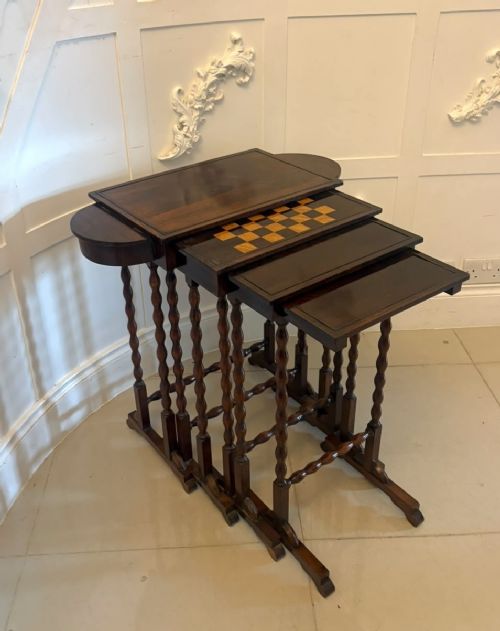
The physical forms vary considerably based on function and regional origin. Buyers encounter tripod tables, fold-over designs, sewing tables equipped with storage compartments, and even nested quartetto tables that integrate chess boards into the surface.
Materials such as walnut, rosewood, and mahogany form the primary carcasses of these tables, frequently paired with lighter contrasting timbers for the playing squares. Occasional specialised pieces emerge from continental European workshops or reflect Anglo-Indian traditions.
Materials and Technique
Cabinetmakers utilised dense hardwoods like rosewood and walnut as the foundation for these tables, often selecting burr veneers or figured grains to add visual depth to the tops. Satinwood, boxwood, and maple provide the pale contrast required for individual squares on the inlaid chequerboards.
Inlay and marquetry dominate the surface decoration, requiring precise hand-cutting of contrasting wood veneers to form the grid. Penwork decoration and brass mounts also appear on Regency examples, adding intricate surface detail through specialised drafting and metalworking techniques.
Antique Chess Board Table Retail Price Guide 2026
Typical asking prices for chess board table among the pieces listed under this phrase on Sellingantiques today, from the lower quarter to the upper quarter. They describe what is for sale here now, not the wider market.
Surviving formats include tripod tables, sewing boxes, and nested quartetto tables with integrated boards.
Evaluating the Pieces
Quality rests heavily on the precision of the wood inlay and the crispness of the geometric grid. Superior examples maintain perfectly flush squares without visible gaps or timber shrinkage, whereas lesser pieces show uneven joints and poorly aligned borders.
The selection of timber grading also dictates the standing of a table. Highly figured burr walnut, rich rosewood, and exotic specimen woods elevate a piece far above standard mahogany or plain utility timbers.
Gillows·George Merrifield·British Chess Company
The Antique Chess Board Table Glossary
- Chequerboard
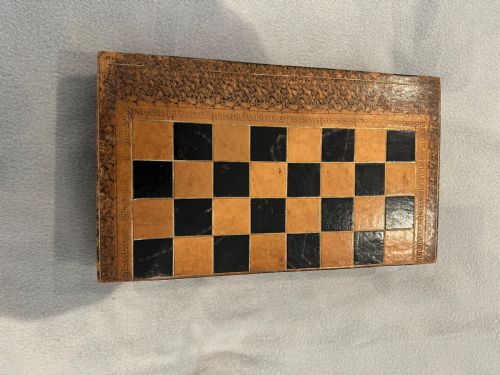
- A squared grid pattern utilised for games such as chess and draughts. This surface is typically formed through wood inlay using contrasting light and dark timbers.
- Quartetto
- A set of four graduating occasional tables designed to slide neatly beneath one another. Certain Regency sets incorporate an integrated chess board on the top surface.
- Penwork
- A decorative technique employing India ink applied to light wood to create intricate linear designs. This method appears on Regency period tables.
- Tripod Table
- A small standalone table supported by a central pillar resting on three spreading feet. Many nineteenth-century examples feature tilting tops.
- Burr Walnut
- Timber taken from a tree growth or bough deformity, yielding highly swirled grain patterns. Cabinetmakers prize this material for decorative table tops.
Antique Chess Board Table: Frequently Asked Questions
How were these tables used?
These pieces functioned primarily as social furniture for parlour games while doubling as normal occasional tables when not in use. Many incorporated sewing boxes or fold-over leaves to maximise their utility in Victorian and Regency drawing rooms.
Owners would set up matches for evening entertainment, relying on the integrated board rather than hauling out a separate folding board. The compact footprint suited them to placement beside sofas or against hallway walls.
Are the chess pieces usually included?
Most surviving tables on the market are sold as furniture items without their original playing pieces. Compendiums and specific boxed sets sometimes retain their pieces, but standalone tables generally lost theirs over generations of use.
Collectors usually assemble appropriate period chess sets separately to match the timber and tone of the board. Boxwood and ebony or turned bone sets from the nineteenth century pair naturally with these surfaces.
How do I date a chess table?
Dating relies on examining the timber choices, structural framing, and decorative motifs characteristic of specific decades. Regency examples frequently feature rosewood with brass mounts or penwork, while Victorian pieces often display burr walnut or heavier carved tripod bases.
Secondary woods inside drawers or undercarriages provide further clues regarding the era of manufacture. Consulting the construction methods helps separate early nineteenth-century work from later Victorian reproductions.
Can I use an antique chess table daily?
These tables withstand normal decorative use and casual gaming provided they are kept away from direct heat sources and extreme humidity fluctuations. Polished wood surfaces require gentle care using appropriate wax rather than modern chemical sprays.
Moving tripod bases or opening fold-over mechanisms demands care to prevent strain on historical hinges and pivot joints. Treating the timber with respect ensures the delicate inlays remain stable for future generations.