


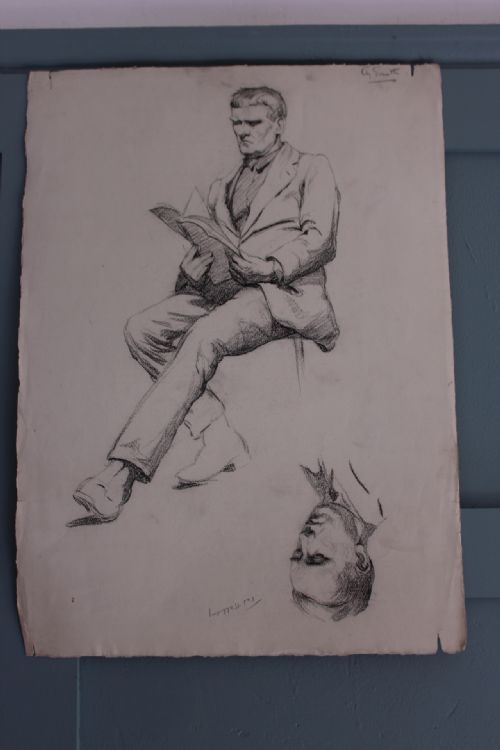


Antique Charcoal Portrait Study
An antique charcoal portrait study captures a sitter's likeness and mood through direct, expressive monochrome marks on paper.
Antique Charcoal Portrait Study
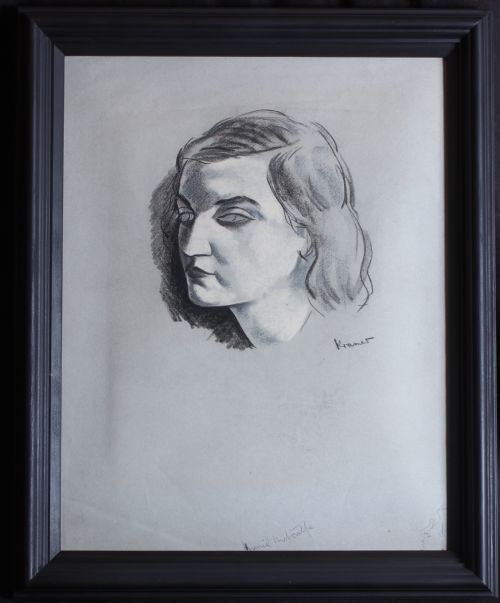
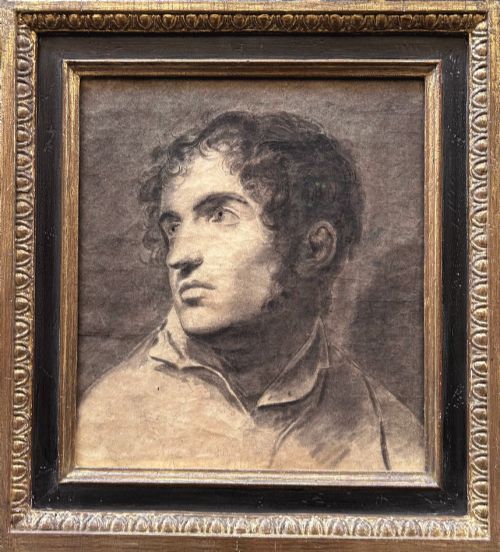
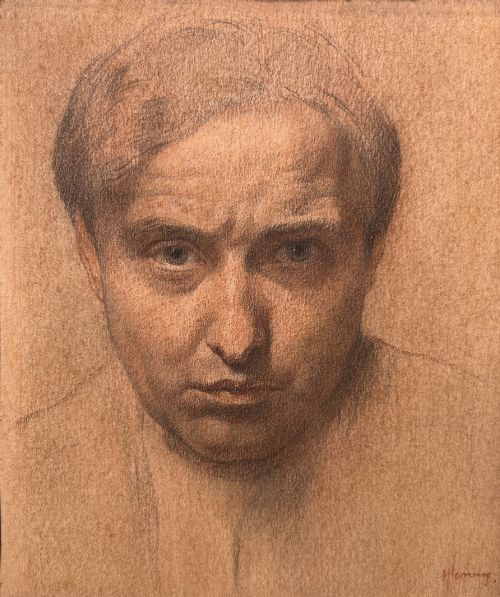
An antique charcoal portrait study brings together historical sitters and academic drafts spanning from the seventeenth century through the early twentieth century. These works appear primarily as framed original drawings, capturing figures ranging from academic life studies to named historical personalities.
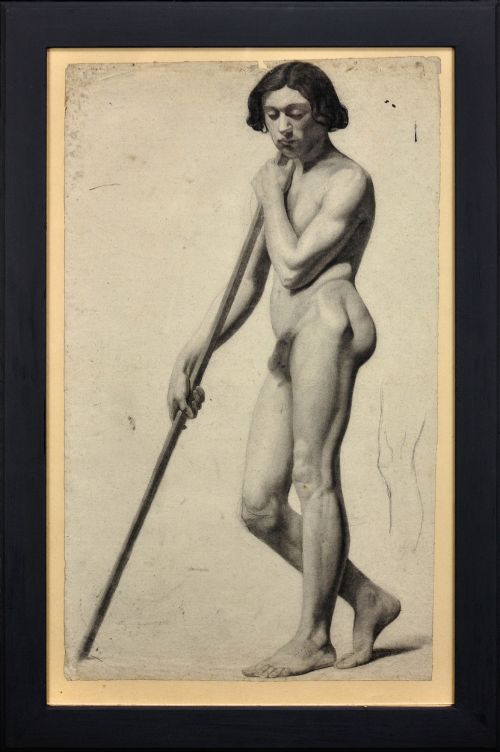
Portraits take various forms, including self-portraits, female and male nude life studies, and depictions of writers, explorers, and nobility. Each piece reflects the specific draughtsmanship and aesthetic priorities of its period, from classical restraint to later academic freedom.
Materials and technique
Artists relied primarily on charcoal and chalk applied to paper sheets, sometimes combining graphite or watercolour to build tone and depth. These dry mediums allowed for rapid gesture drawing as well as deeply shaded tonal modeling.
Works are typically preserved behind glass and housed within wooden or giltwood frames that protect the fragile paper support. The interaction between the powdery charcoal pigment and the fibrous paper surface defines the physical character of each drawing.
Several drawings preserve the focused quiet of nineteenth-century art school rooms where models held poses for hours.
Distinguishing quality
Quality rests upon the draughtsman's anatomical precision, sureness of line, and ability to convey psychological depth within a monochrome medium. Masterful control of light and shadow distinguishes accomplished academic life studies and named portraits from routine studio exercises.
The preservation of the delicate charcoal and chalk surface without excessive smudging or paper deterioration maintains the visual impact intended by the artist. Strong provenance, such as attribution to recognised Royal Academicians or documented sitters, further elevates a piece.
Herbert Johnson Harvey·Henry Arthur Roberts·Winifred Eugene Ballard·John Hoppner·Reginald G Eves·Robin Watt·Theobald Chartran·John Seymour Lucas·Ernest Borough Johnson·George Richmond·Francis Dodd·Cecil CP Lawson
The Antique Charcoal Portrait Study Glossary
- Academic realism
- A style of painting and drawing produced under the influence of European academies of art, emphasising precise anatomical accuracy and classical forms. This approach governs many nineteenth-century life studies.
- Charcoal
- An organic drawing material made from burnt wood, yielding deep black marks that blend easily. It serves as the primary medium for tonal shading in these portraits.
- Giltwood
- Wood covered with a thin layer of gold leaf or gold paint, commonly used for traditional picture frames. These frames protect the works on paper.
- Life study
- A drawing made directly from a live human model, often executed in art schools or studios. They record anatomical observation and technical training.
Antique Charcoal Portrait Study: Frequently Asked Questions
What is a charcoal study?
A charcoal study is a preparatory or finished drawing executed primarily in charcoal on paper, focusing on form, light, and expression.
These works range from rapid academic exercises to detailed portraits of named individuals.
How are antique drawings framed?
Antique drawings are typically set behind protective glass within wooden or giltwood frames suited to their period.
Proper framing protects the fragile paper and dry media from environmental damage and handling.
How do I date a drawing?
Dating relies on stylistic markers, costume details, artist signatures, and framing materials recorded in the evidence.
Pieces span from the seventeenth century through the early twentieth century, reflecting shifting artistic standards.
Where were these drawings created?
Drawings originate from various European traditions, notably including the French school and British academic institutions.
Artists worked in studios, private homes, and formal art schools across different periods.