



Antique Ceramic Teapot Set
These antique ceramic teapot set pieces offer the charm of nineteenth and twentieth century tea services crafted in earthenware, porcelain, and bone china.
Antique Ceramic Teapot Set
An antique ceramic teapot set encompasses tea services, bachelor teasets, and miniature tea sets spanning the nineteenth and twentieth centuries. The examples here range from early Georgian pearlware and Victorian earthenware to Art Deco bone china and porcelain.
Makers and factories represented include Wedgwood, Copeland, Royal Worcester, and Clarice Cliff. Forms vary from simple teapots with creamers to large multi-piece breakfast services and children's toy sets.
Materials and Techniques
Potters utilised earthenware, stoneware, bone china, and porcelain bodies, shaping them into teapots, cups, and saucers. Surfaces often received hand-painted decoration, transfer printing, or enamelling.
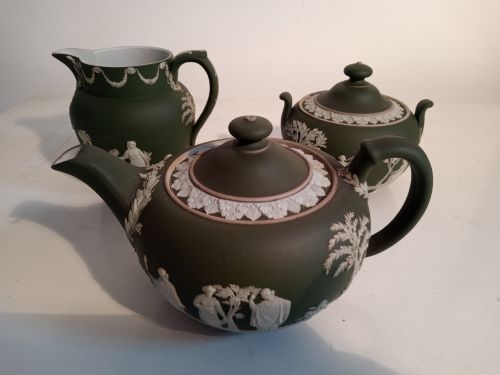
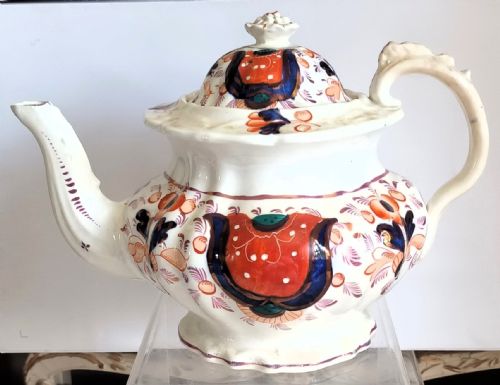
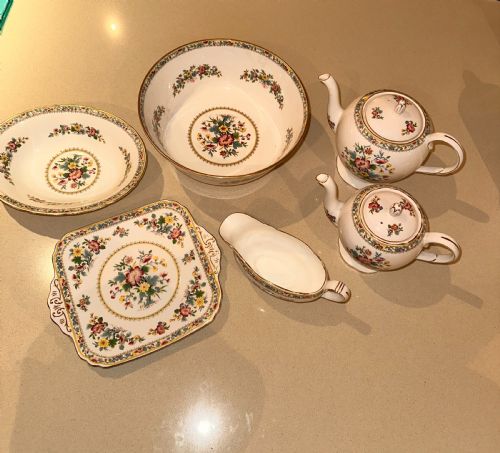
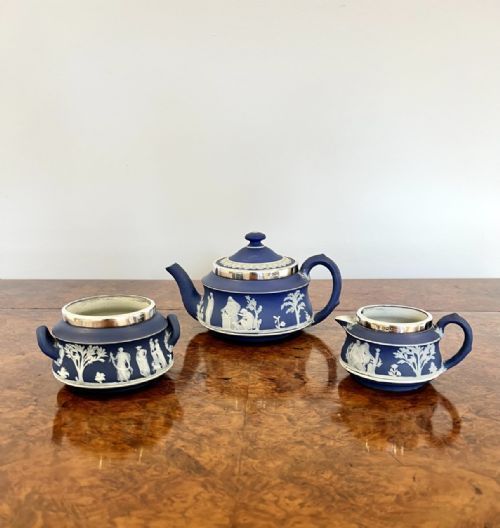
Many items incorporate gilding, gold leaf, and specialised glazes such as flow blue or blush ivory. Silver mounts occasionally appear on jasperware bodies, while ironstone provided a sturdy alternative for patterned wares.
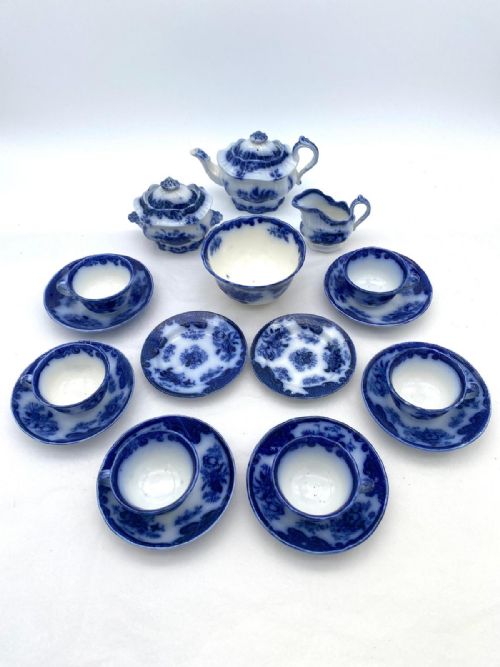
Children learning manners centuries ago practiced with miniature toy tea sets complete with tiny teapots and cups.
Evaluating Quality
Quality rests in the precision of hand-painted details and the crispness of transfer-printed patterns. Pieces featuring delicate gilding and well-executed polychrome enamel show superior craftsmanship.
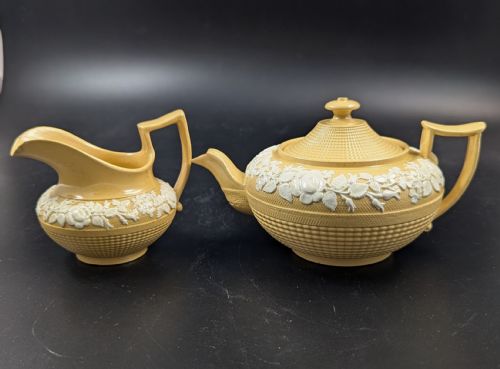
The sophistication of the modelling, particularly in applied details such as jasperware reliefs or floral motifs, distinguishes standard production from finer studio or factory work.
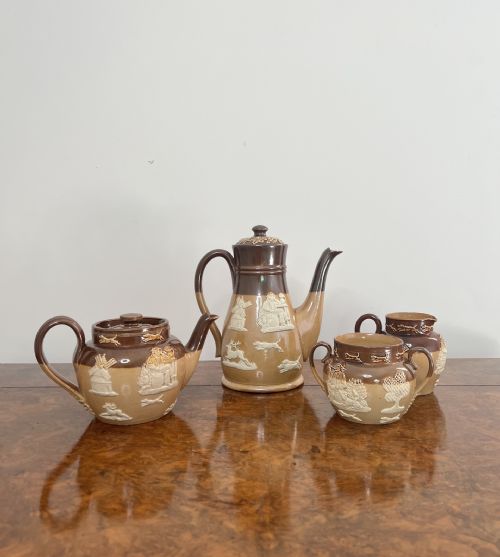
Wedgwood·Copeland·Royal Worcester·Clarice Cliff·William Moorcroft·Masons Patent Ironstone·Royal Crown Derby·W. Hackwood·Royal Davenport·Doulton
The Antique Ceramic Teapot Set Glossary
- Jasperware
- A type of fine stoneware developed by Wedgwood, typically featuring contrasting white clay reliefs against a coloured background such as olive green.
- Flow Blue
- A cobalt blue transfer printing technique where the colour intentionally bled slightly into the glaze during firing, creating a soft, blurred effect.
- Pearlware
- An earthenware body developed in the late eighteenth century with a slightly bluish glaze that pooled in recesses to imitate Chinese porcelain.
- Ironstone
- A patented heavy earthenware developed in the nineteenth century, known for its durability and resistance to chipping.
Antique Ceramic Teapot Set: Frequently Asked Questions
How do I date a ceramic tea set?
Dating relies on maker marks, factory stamps, and the stylistic traits of periods like the Victorian era or Art Deco. Examining the glaze and paste also helps determine the era of production.
Changes in transfer printing technology and pattern registration numbers provide further clues for narrowing down the decade of manufacture.
Can I use antique teapots for daily tea?
Most collectors prefer to display antique ceramic teapots rather than use them daily, due to the delicate nature of historical glazes and old hair-line fractures.
Thermal shock from boiling water can also damage centuries-old earthenware and porcelain bodies.
What is a bachelor teaset?
A bachelor teaset is a compact, single-person tea service designed for one individual, typically comprising a small teapot, a cup, and a saucer combined in a stackable or matching arrangement.
These pieces were popular in the nineteenth century for private use in bedchambers or studies.
What is the difference between porcelain and earthenware?
Porcelain is fired at very high temperatures, resulting in a vitreous, non-porous body that is often translucent and rings when struck. Earthenware is softer, fired at lower temperatures, and requires a glaze to become impermeable to liquids.
Bone china sits between them, incorporating bone ash for added strength and translucency.