




Antique Ceramic Inkwell
An antique ceramic inkwell is a desk accessory that brings tactile weight to writing, and these pieces range from Georgian porcelain to Staffordshire figures.
Antique Ceramic Inkwell
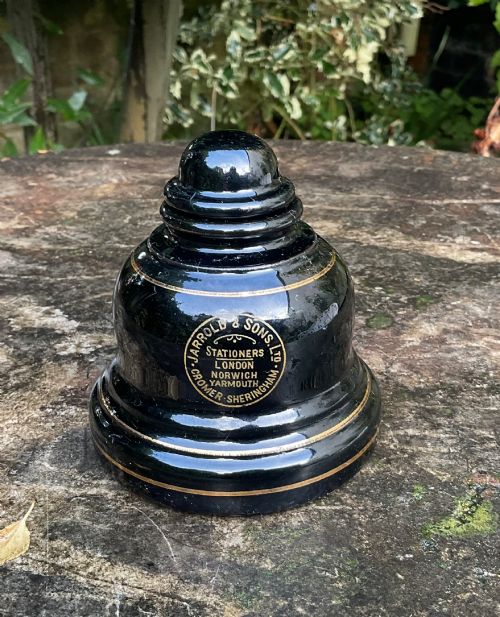
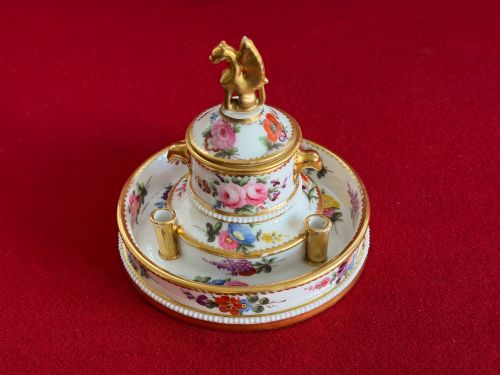
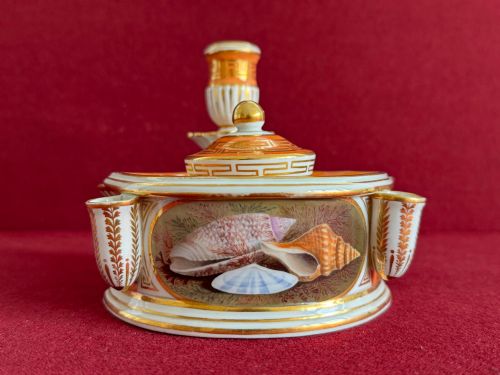
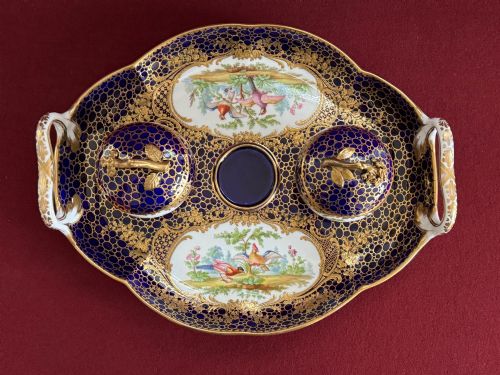
When you search for an antique ceramic inkwell, you encounter desk accessories made from porcelain, earthenware, and faience across periods spanning the Georgian, Regency, and Victorian eras. These containers held the liquid ink necessary for daily correspondence before the invention of the fountain pen, taking forms from simple desktop wells to elaborate figural inkstands.
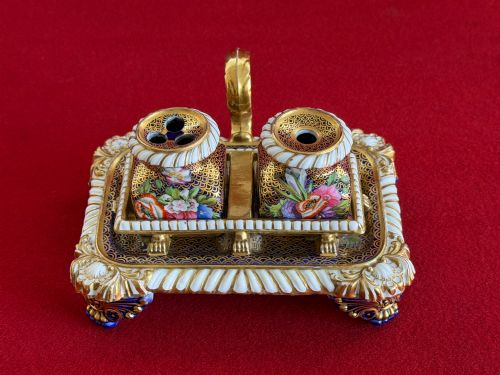
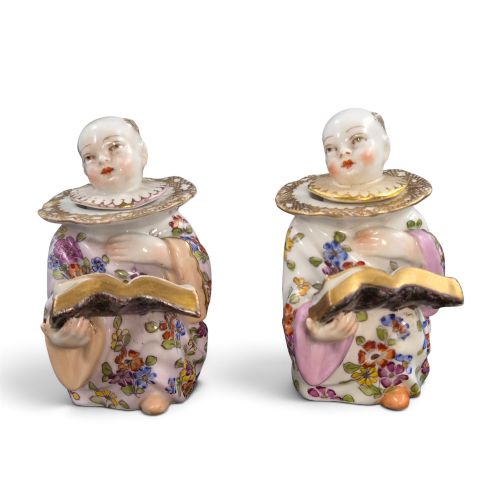
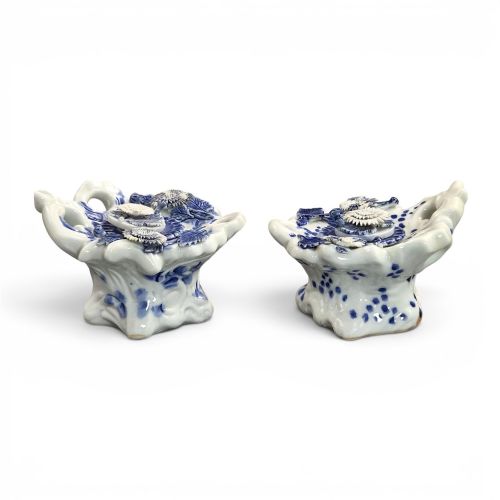
The pieces meeting you on this page include Dutch Delft blue and white wares, Staffordshire animal figures such as dalmatians and greyhounds, and fine porcelain from factories like Spode, Minton, and Worcester. They appear alongside continental faience and Japanese Meiji period porcelain, demonstrating the wide global trade in desk equipment.
Many incorporate auxiliary materials, pairing ceramic bodies with brass stands, gold leaf decoration, or enamel accents. Whether configured as single inkwells or multi-piece desk sets with pen trays, they represent the functional stationery requirements of writing desks from past centuries.
How they were made
Potters shaped these bodies from ceramic clays, porcelain pastes, and tin-glazed earthenware, firing them in kilns before applying hand-painted cobalt blue designs, polychrome enamels, or gilt highlights. Factory pieces often received a clear glaze to seal the porous earthenware beneath, while hard-paste and soft-paste porcelains achieved a smooth, vitrified surface.
Makers integrated structural hardware into the ceramic forms, mounting porcelain wells onto brass bases or equipping them with hinged lids and fitted compartments. Specialised techniques such as the Schneeballen method built up dense clusters of applied ceramic petals onto the surfaces of German porcelain covers.
Antique Ceramic Inkwell Retail Price Guide 2026
Typical asking prices for ceramic inkwell among the pieces listed under this phrase on Sellingantiques today, from the lower quarter to the upper quarter. They describe what is for sale here now, not the wider market.
Potters occasionally sculpted ceramic rugby balls and sporting dogs to hold ink, proving that desk accessories rarely resisted a touch of whimsy.
What varies in quality
The crispness of the hand-painted decoration separates standard production from superior examples, particularly in the precision of floral motifs, Watteau scenes, and compartment borders. Painted details executed with fine brushwork and rich cobalt or gold leaf indicate skilled workshop output.
Edmé Samson·Spode·Flight Barr And Barr·Minton·Meissen
The Antique Ceramic Inkwell Glossary
- Inkstand
- A complete desk accessory comprising an inkwell, a sander for drying ink, and often a pen tray combined on a single ceramic or brass base. These fitted stands sat centrally on a writing table.
- Tin-Glazed Earthenware
- Pottery covered with a white tin-oxide glaze that provides an opaque background for painted decoration, seen in Dutch Delft and French faience pieces. This technique creates a smooth surface resembling porcelain.
- Soft-Paste Porcelain
- A vitreous ceramic material composed of clay and glass frit, fired at lower temperatures than hard-paste porcelain. It characterises much early English factory production from Worcester and Spode.
- Encrier
- The French term for an inkwell or inkstand, frequently used to describe continental ceramic writing vessels. These items often reflect rococo revival or neoclassical design influences.
Antique Ceramic Inkwell: Frequently Asked Questions
How were these inkwells used?
They sat on writing desks and secretaries to hold liquid ink for dip pens. Writers dipped steel or quill nibs directly into the central reservoir before writing.
Many included matching sanders or pen rests on an integrated tray to keep the desktop organised.
Are these pieces waterproof?
Glazed ceramic and porcelain interiors successfully held liquid ink during their period of active use. Over decades, dried ink residues may accumulate inside the wells.
Modern owners generally display them as decorative objects rather than filling them with ink.
How do I identify the period?
Stylistic indicators such as Regency neoclassical lines, Victorian figural subjects, or Georgian floral patterns provide initial dating clues. Factory marks and paste composition offer further confirmation for porcelain pieces.
Comparing the painting style to documented factory patterns helps narrow the manufacturing decade.
Where did these styles originate?
Production spans English porcelain factories, continental European faience workshops, and Asian export kilns. Dutch Delft traditions influenced European tin-glazed earthenwares significantly.
Japanese Meiji period pieces introduced distinctive chrysanthemum and dragon motifs to western desks.