





Antique Desk Top Inkwell
These antique desk top inkwell pieces are functional writing vessels that anchor a traditional desk with period weight and craft.
Antique Desk Top Inkwell
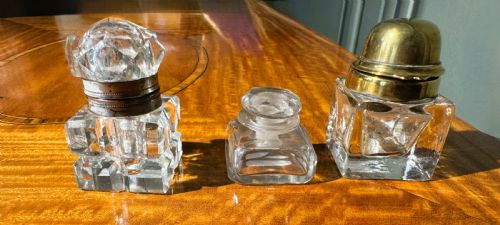
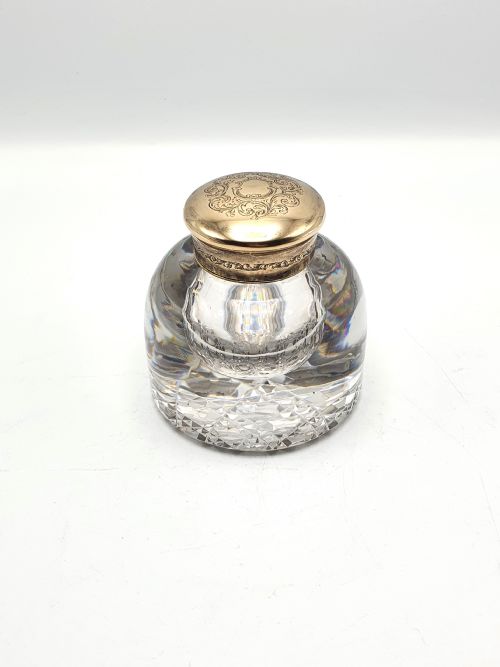
When you search for an antique desk top inkwell, you encounter a focused category of writing accessories spanning the Georgian, Victorian, and Edwardian eras. These pieces range from simple glass pots with sterling silver lids to elaborate stands incorporating cut glass, crystal, and metal mounts.
The most common form on this page is the single glass or cut crystal ink pot fitted with a hinged silver top, often accompanied by larger stands or multi-piece desk accessories. Materials such as brass, bronze, ebony, horn, and porcelain appear frequently alongside precious metals.
Origins stretch from domestic British workshops to continental makers, reflecting diverse stylistic influences including Empire, Scottish Baronial, and Art Deco. Buyers find both solitary vessels meant for intimate correspondence and heavy desk stands designed for formal stationery.
Materials and construction
Makers combined heavy cast metals, sterling silver, and bronze with dense cut glass and crystal to create stable vessels that resisted tipping during use. Glass bodies were often heavy-faceted or mould-blown, providing a sturdy reservoir for liquid ink.
Metal components involved silversmithing, casting, and gilding, with hinged lids engineered to seal tightly against glass rims. Secondary materials like ebony, oak, horn, and leather added tactile contrast and structural support to desk stands.
Antique Desk Top Inkwell Retail Price Guide 2026
Typical asking prices for desk top inkwell among the pieces listed under this phrase on Sellingantiques today, from the lower quarter to the upper quarter. They describe what is for sale here now, not the wider market.
Listings feature periods from the Georgian era through to Art Deco, combining sterling silver, cut glass, bronze, and ebony.
Assessing quality in desk accessories
The calibre of an antique desk top inkwell rests on the crispness of its metal mounts and the depth of its glass cutting. Superior examples exhibit heavy gauge silver, tight hinge action, and well-preserved hallmarks that confirm exact assay offices and dates.
Artisanal touches like guilloche enamel medallions, mercury gilding, or unusual material pairings such as Scottish horn and oak elevate certain pieces above standard production. The integrity of the internal glass liner and the absence of clumsy repairs distinguish finer specimens.
Lefebvre of Belgium·Asprey
The Antique Desk Top Inkwell Glossary
- Capstan inkwell
- A desk inkwell shaped like a ship's capstan, tapering inward from a wide base to a narrower top. This form provided exceptional stability on rolling ship tables and writing desks alike.
- Standish
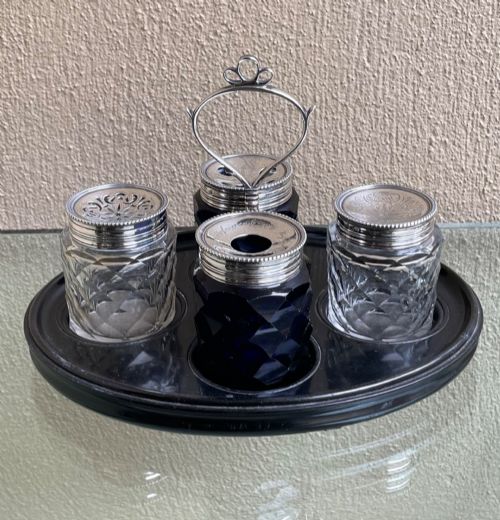
- A portable tray or stand holding inkwells, sanders for drying ink, and pen holders. These comprehensive desk accessories sat centrally on writing furniture.
- Guilloche
- A decorative engineering technique where a precise repeating pattern is mechanically engraved into a metal surface. Enamel is frequently applied over this engraving to create translucent colour depth.
- Silver gilt
- Sterling silver that has been coated with a thin layer of gold, often referred to as vermeil. This treatment protected the silver from ink corrosion and added a rich warm tone.
- Facet cut
- Geometric cutting applied to glass or crystal vessels to catch light and obscure sediment within the ink. This technique required skilled glass grinding by hand.
Antique Desk Top Inkwell: Frequently Asked Questions
How do I clean an antique desk top inkwell?
Resist using harsh chemical dips on silver or metal mounts, as these strip original patination and damage delicate glass or enamel elements. Warm soapy water and a soft cloth suffice for clearing dried ink residue from glass reservoirs.
Dry all metal components immediately to prevent spotting. Leave silver polishing to a gentle touch, preserving the darker recessed areas that indicate age.
Are these inkwells safe for modern use?
Most antique desk top inkwell designs accommodate modern fountain pen inks without issue, provided the internal glass or ceramic liner remains intact and free of cracks. Metal-lined wells require caution because certain inks can corrode older alloy metals over time.
Inspect the collar and hinge before filling to ensure the lid closes securely. Many collectors prefer to display these pieces dry as decorative objects rather than active desk tools.
How can I tell Victorian from Georgian pieces?
Georgian examples often display heavier, simpler sterling silver mounts with restrained lines and distinct hallmarks showing duty marks from the period. The glass tends to be thicker and slightly more irregular due to earlier manufacturing methods.
Victorian pieces introduce greater variety in styling, incorporating eclectic revivals, heavier casting, and more complex mechanical hinges. Maker marks and registration numbers stamped on Victorian silver help narrow down the exact decade.
What is the difference between an inkwell and a standish?
An inkwell is a single vessel designed solely to hold ink, whereas a standish is an integrated tray or stand holding multiple ink pots, a sand shaker, and pen grooves. Standishes formed the permanent centrepiece of a large library desk.
Inkwells were more portable and varied wildly in shape, from pocket travelling sets to heavy desktop capstans. A standish offered a complete station for all writing necessities in one matched ensemble.