








Victorian Dog Inkstand
These Victorian dog inkstand examples combine functional desk accessories with animal sculpture, offering charming period character for the writing desk.
Victorian Dog Inkstand
A victorian dog inkstand takes the form of a desk accessory or quill holder shaped as a canine figure, merging utility with decorative sculpture. These pieces serve as functional inkwells while depicting hounds, spaniels, and bullmastiffs.
The Staffordshire pottery versions, featuring greyhounds, whippets, dalmatians, and basket-carrying dogs, represent the most frequent style encountered in this search. These ceramic examples often appear in pairs or as individual seated figures.
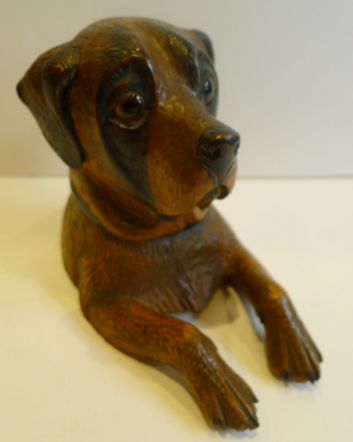
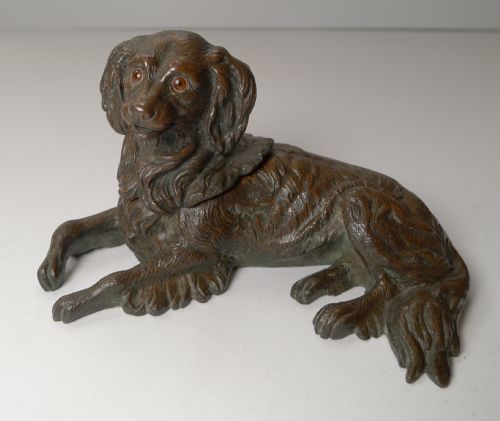
Carved wooden Black Forest examples portray various dog breeds, including St. Bernards and bulldogs, frequently incorporating glass eyes and hinged ink containers. Bronze models depicting breeds like the King Charles Spaniel also occur among these desk accessories.
How they were made
Staffordshire pottery models utilise moulded earthenware finished with glaze, sometimes enhanced with gold leaf and enamel details. These ceramic pieces take shape through traditional Staffordshire pottery techniques from the Victorian era.
Black Forest pieces involve carved wood, specifically linden wood, shaped into detailed canine figures and pen stands. These carved wooden items often feature fitted glass inserts for the inkwells and inset glass eyes.
Victorian Dog Inkstand Retail Price Guide 2026
Typical asking prices for victorian dog inkstand among the pieces listed under this phrase on Sellingantiques today, from the lower quarter to the upper quarter. They describe what is for sale here now, not the wider market.
Staring glass eyes peer from carved wooden bulldog and St. Bernard inkstands, keeping a watchful gaze over the daily correspondence.
What varies in quality
Original fittings, such as matching glass inserts and intact enamel or gold leaf decoration on the ceramic figures, distinguish better preserved pieces.
Maison F. Mack
The Victorian Dog Inkstand Glossary
- Staffordshire pottery
- Ceramic wares produced in the Staffordshire pottery district, known for figural animal models and utilitarian vessels. These pieces date predominantly to the nineteenth century.
- Black Forest
- Carved wooden decorative items originating from the Black Forest region of Germany, typically executed in linden wood. These carvings frequently feature realistic animal subjects.
- Quill holder
- A desk accessory designed to hold feather quills or pens alongside an inkwell. They often accompany figural animal inkstands.
- Novelty inkwell
- An inkwell shaped to resemble an animal, object, or figure rather than a standard desk pot. These items combine practical function with decorative appeal.
Victorian Dog Inkstand: Frequently Asked Questions
What are victorian dog inkstands made of?
These desk accessories appear primarily in Staffordshire earthenware with glaze and enamel, or as carved wooden pieces from the Black Forest tradition. Bronze versions also occur in the selection.
Pottery models feature painted details and gold leaf accents, whilst wooden examples utilise carved linden wood often fitted with glass eyes and inserts.
How were dog inkstands used on desks?
They functioned as practical writing desk accessories holding ink within a concealed or open well, alongside channels or slots for resting pens and quills. The figural dog design served as a decorative ornament when the desk was not in use.
Many examples incorporate hinged lids over the ink reservoirs, protecting the ink from dust and drying out during the Victorian period.
How do I date a dog inkstand?
Dating relies on the manufacturing materials, style markers, and stylistic conventions associated with Victorian pottery and Black Forest carving techniques. Pieces often date from the mid to late nineteenth century.
Staffordshire pottery examples frequently align with mid-Victorian production periods, whilst carved wooden Black Forest items typically date towards the final decades of the nineteenth century.
Are these inkstands found in pairs?
Certain Staffordshire pottery dog figures appear as matched pairs of whippets, greyhounds, or dalmatians designed to sit symmetrically on a desk. Other variations, such as the Black Forest carved wooden inkwells, occur as single standalone desk pieces.
Single items often incorporate triple inkwells or larger integrated pen stands within one sculptural base.