



Antique Ceramic Foot Basin
An antique ceramic foot basin is a deep bathing vessel built for the bedroom or boudoir, offering grand nineteenth-century utility and decorative presence.
Antique Ceramic Foot Basin
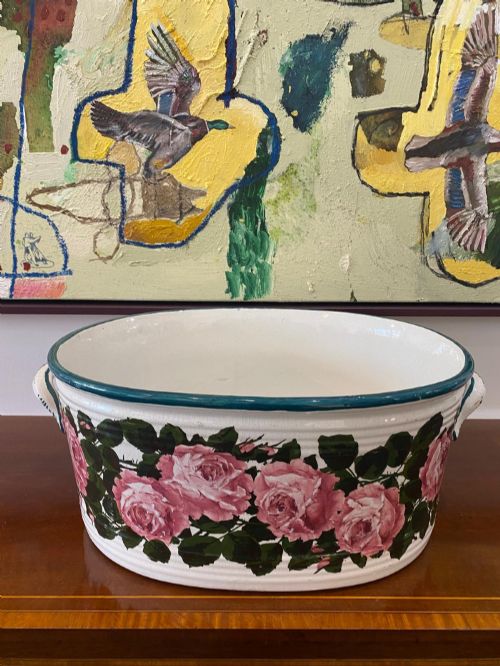
An antique ceramic foot basin provides a deep, heavy-walled vessel designed for washing feet before the era of plumbed bathrooms. These pieces appear most frequently in nineteenth-century Victorian, Georgian, and Regency forms, alongside earlier eastern imports and medieval earthenware.
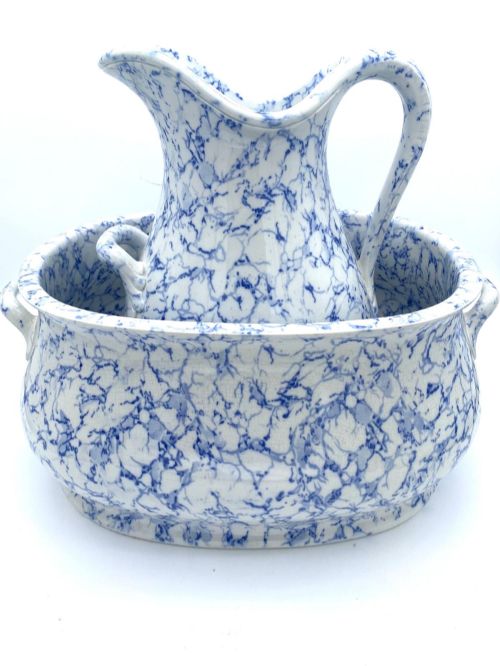
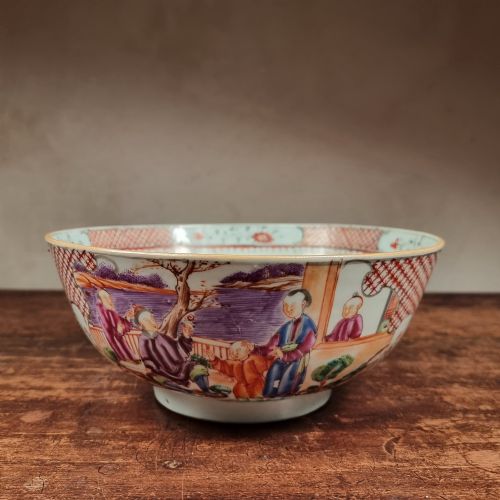
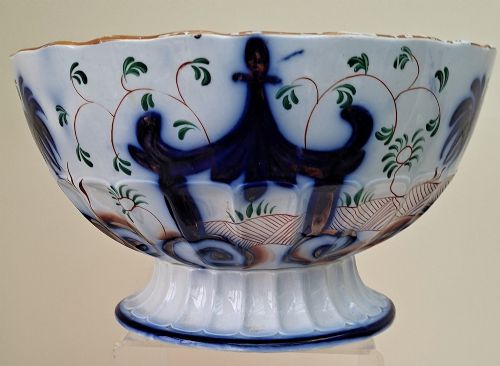
The inventory on this page ranges from large sanitaryware footbaths and knee baths to decorated footed bowls and export porcelain basins. Buyers find heavy earthenware and transfer-printed pottery alongside Chinese crackle-glazed and Japanese Imari tripod bowls.
Makers such as Wemyss, Minton, Ridgway, Heathcote, Spode, and Copeland dominate the British domestic wares, while continental and Asian pieces represent Persian Islamic, Qing Dynasty, and Edo period styles.
How they were made
Potters shaped these large vessels from heavy earthenware, creamware, or porcelain before applying rich glazes and cobalt transfer prints. Flow blue and blue and white patterns dominate the nineteenth-century British output, requiring precise kiln temperatures to achieve the blurred, atmospheric transfer effect.
Earlier and eastern pieces utilise specialised techniques such as lustre glazing on thirteenth-century Kashan bodies or crackle-glaze effects on eighteenth-century Qing export porcelain. Potters often mounted these heavy basins on tripod feet or shaped them into lobbed rectangular forms to ensure stability during use.
Antique Ceramic Foot Basin Retail Price Guide 2026
Typical asking prices for ceramic foot basin among the pieces listed under this phrase on Sellingantiques today, from the lower quarter to the upper quarter. They describe what is for sale here now, not the wider market.
Some nineteenth-century household manuals suggested adding lavender or mustard powder to the footbath water to soothe weary travellers.
What varies in quality
Quality rests in the crispness of the transfer printing, the uniformity of the glaze, and the structural integrity of large, heavy potting. Pieces by established factories like Minton or Spode show superior clay refinement and cleaner lines than unmarked provincial sanitaryware.
The clarity of polychrome enamels, gilding, and hand-painted details separates standard utility vessels from decorative high-status commissions. Early pieces show the organic irregularities of hand-thrown earthen bodies, whereas Victorian factory production yields greater symmetry.
Wemyss·Minton·Ridgway·Heathcote·Spode·Copeland
The Antique Ceramic Foot Basin Glossary
- Creamware
- A fine earthenware developed in the eighteenth century, characterised by a pale yellowish-cream lead glaze.
- Flow blue
- A nineteenth-century transfer-printing technique where lime or ammonia chloride vapour was introduced into the kiln to deliberately blur the cobalt design.
- Transfer printing
- A method of applying pre-printed paper designs onto ceramic bodies using engraved copper plates before glazing and firing.
- Lustre glaze
- A metallic film applied over the fired glaze to produce an iridescent, shimmering sheen, common in early Islamic pottery.
- Sanitaryware
- Functional ceramic fixtures and vessels produced for personal hygiene, washing, and sanitation before modern plumbing.
Antique Ceramic Foot Basin: Frequently Asked Questions
What were antique ceramic foot basins used for?
These large vessels served domestic hygiene needs in bedrooms before plumbed bathrooms existed, holding warm water for washing the feet.
Servants carried them to private quarters, often paired with matching jugs as part of a larger wash set.
How do I clean an antique foot basin?
Wash the ceramic gently using warm water and a mild, non-abrasive soap with a soft cloth. Avoid harsh chemical cleaners that can damage historic glazes and delicate transfer-printed or gilt surfaces.
How do I date a blue and white footbath?
Examine the maker's mark on the base, the style of the transfer print, and the weight of the ceramic body. Regency and early Victorian pieces usually feature crisp cobalt transfer patterns on heavy earthenware.
What is the difference between a footbath and a knee bath?
Footbaths are wide, deep basins shaped specifically for immersing the feet while sitting. Knee baths are longer, more specialised bathing vessels designed to accommodate the lower legs.