
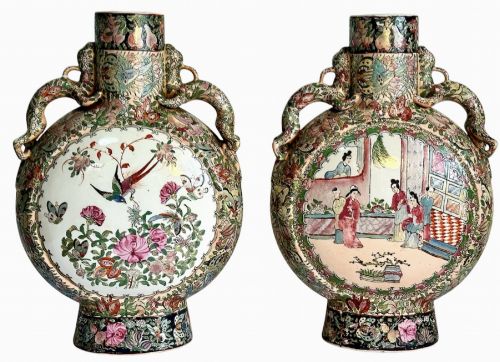


Antique Ceramic Flask Vase
An antique ceramic flask vase brings sculptural form and historic glaze traditions to a room, offering distinct shapes from pilgrim flasks to moon flasks.
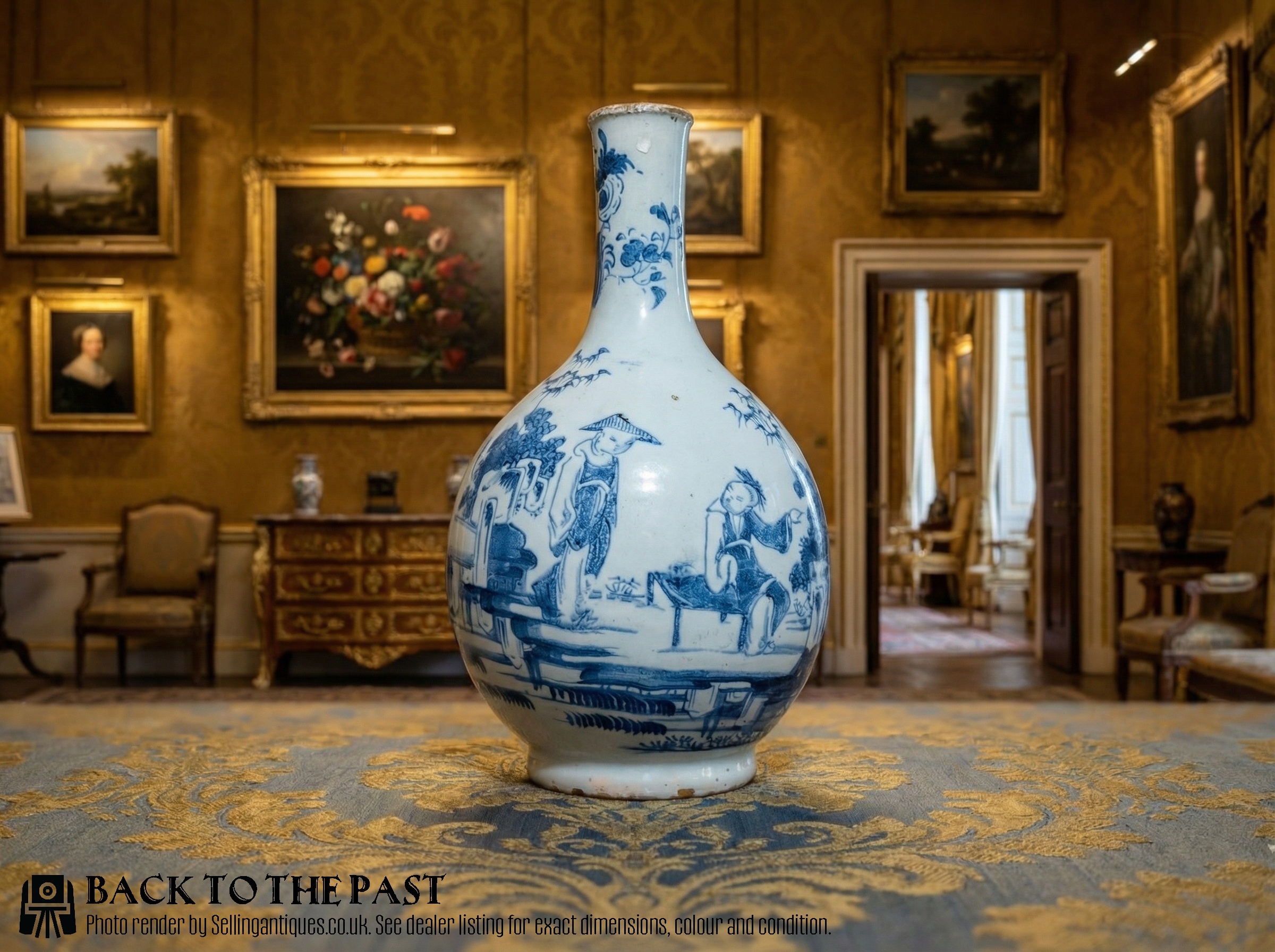
Antique Ceramic Flask Vase
When you search for an antique ceramic flask vase, you encounter a diverse gathering of vessel forms spanning multiple centuries and global ceramic traditions. These pieces range from flattened pilgrim flasks and moon flasks to decorative bottles, scent bottles, and handled vases.
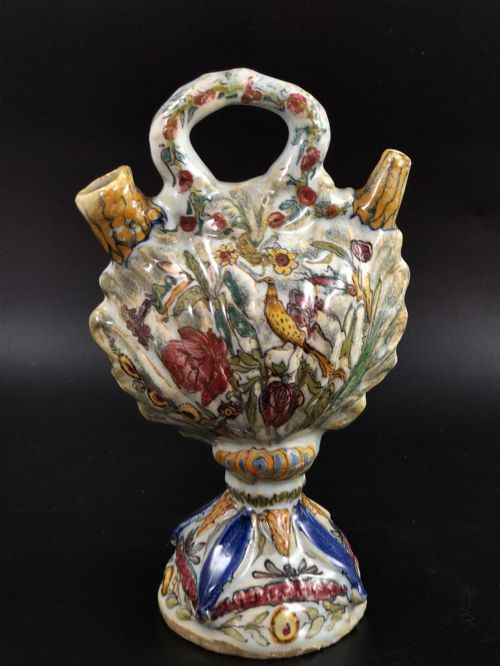
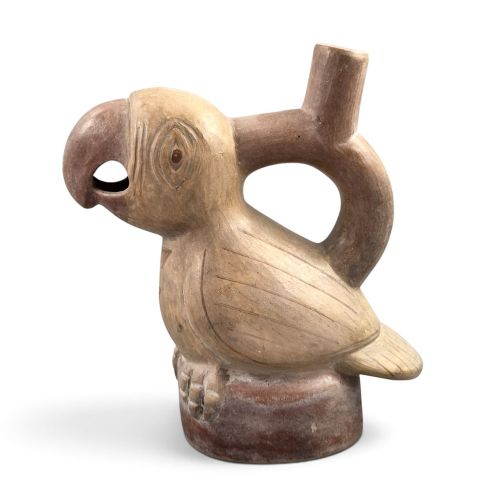
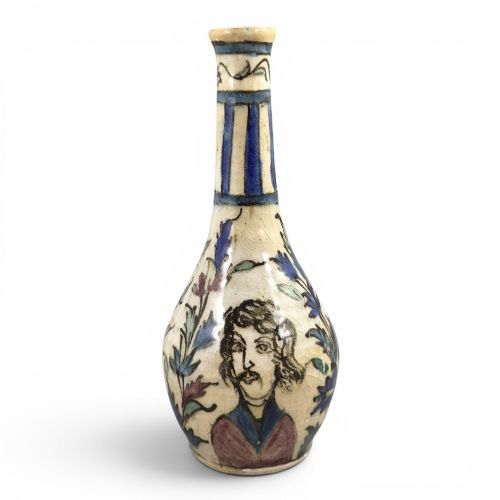
The selections on this page bridge European porcelain and earthenware with Asian dynasties and pre-Columbian pottery. You find Italian majolica, English delftware, and Chinese porcelain sharing space with Persian Qajar wares and Japanese wine bottles.
Forms vary from utilitarian shapes adapted for display to highly ornate cabinet pieces designed purely for visual impact. Each object reflects the specific functional or decorative demands of its period of origin.
Materials and methods
Potters shaped these vessels using traditional methods in earthenware, stoneware, and porcelain, often applying tin-glaze or transparent lead glazes to seal the body. Surface decoration frequently incorporates hand-painted pigments, enamel, and gilt or gold leaf applied before final firing.
Many examples utilise specialist techniques such as pate-sur-pate relief work or delicate polychrome painting over white glaze. The physical structure relies on throwing on the wheel or moulding in sections, particularly for flattened moon flasks and pilgrim vessels.
Listings feature items spanning from pre-16th century terracotta up to 1930s porcelain, incorporating earthenware, gold leaf, and enamel.
Evaluating the standard
Excellence in these pieces rests upon the crispness of the modelled form and the control demonstrated in the painted or glazed surface. Masterful brushwork and precise application of gilding distinguish the finest studio and factory productions from standard commercial output.
The preservation of the original glaze surface and the integrity of the ceramic body dictate the desirability of an item. Greater artistic ambition in the design, such as complex figurative scenes or intricate relief moulding, marks the superior tier of the range.
The Antique Ceramic Flask Vase Glossary
- Pilgrim flask
- A flattened vessel derived from leather or metal canteens used by travellers, featuring loops for suspension. These items often sit on a foot and display elaborate pictorial designs on each flat side.
- Moon flask
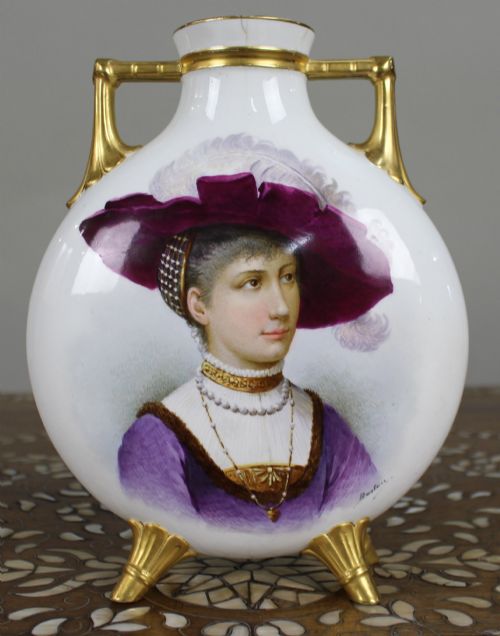
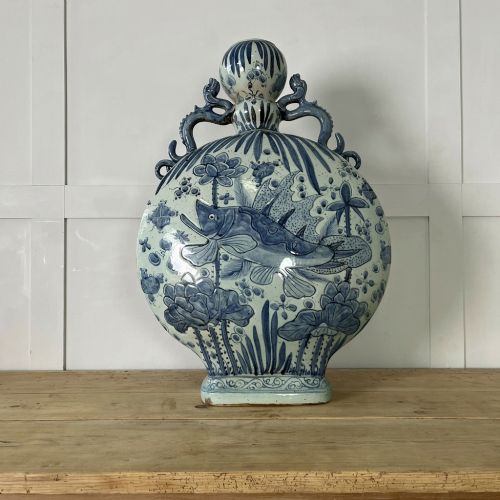
- A circular, flat-backed vase with a short neck and small handles, drawing inspiration from traditional Asian forms. They are frequently decorated with floral or figurative motifs across the expansive circular panels.
- Majolica
- Tin-glazed earthenware produced in Italy and other European regions, celebrated for bright polychrome painting. The opaque white glaze provides a smooth ground for detailed historical or botanical scenes.
- Pate-sur-pate
- A ceramic technique where successive layers of liquid clay slip are built up on a dark body to create a low relief cameo effect. This meticulous method allows for subtle translucent details in the finished design.
- Delftware
- Tin-glazed pottery made in England and the Netherlands, typically featuring blue and white decoration inspired by imported Asian porcelain. The porous earthenware body carries a distinctive opaque white surface.
Antique Ceramic Flask Vase: Frequently Asked Questions
What is a pilgrim flask?
A pilgrim flask is a flattened container traditionally designed with side lugs for suspension during travel. Over time, potters adapted this practical shape into purely decorative ceramic display pieces.
These vessels often feature rounded or scalloped bodies that showcase detailed painted scenes or heraldic motifs across their broad flat surfaces.
How do I display a moon flask?
Moon flasks require stable placement on sturdy surfaces due to their circular bodies and narrower bases. Pairing them with compatible furniture allows the flat painted panels to catch natural light effectively.
Because many examples feature decoration on both sides, positioning them where viewers can walk around the piece highlights the full scope of the artistry.
What is the difference between porcelain and earthenware?
Porcelain is a dense, vitrified ceramic fired at high temperatures until non-porous and translucent. It produces a clear ringing tone when struck and accepts fine enamel painting with great precision.
Earthenware is a lower-fired, porous pottery body that requires a glaze, such as tin-glaze, to become watertight. It offers a heavier, more tactile presence with softer edges in the moulded form.
How are periods identified on these vases?
Periods are determined through a combination of glaze chemistry, potting techniques, and stylistic markers specific to known workshops or eras. Pigment palettes and firing characteristics often point directly to a century or reign.
Maker marks, factory stamps, and handwritten inventory numbers found on the base provide further documentary evidence for precise dating.