


Antique Ceramic Compote
An antique ceramic compote brings height and presence to a table through footed bowls, tazzas, and pedestals.
Antique Ceramic Compote
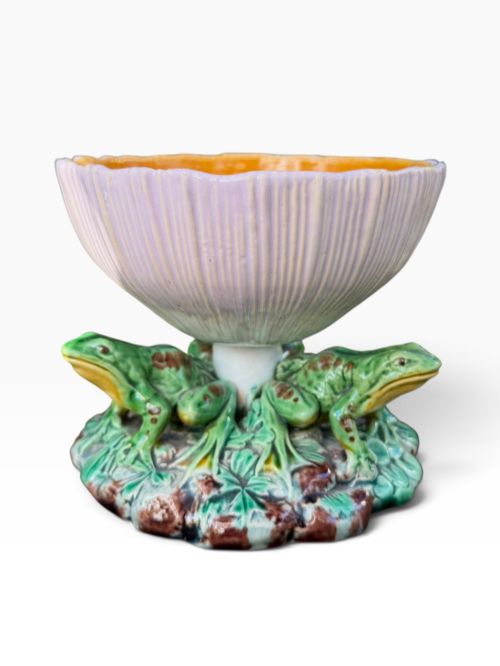
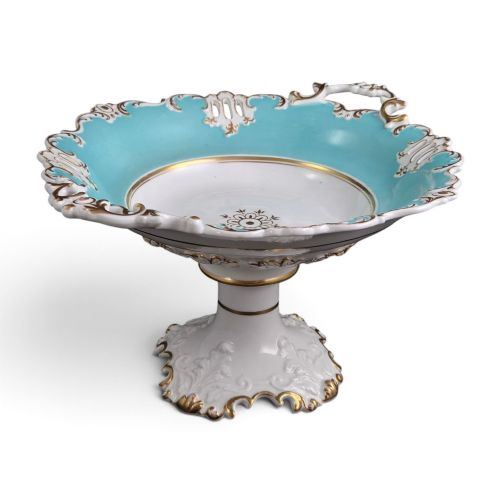
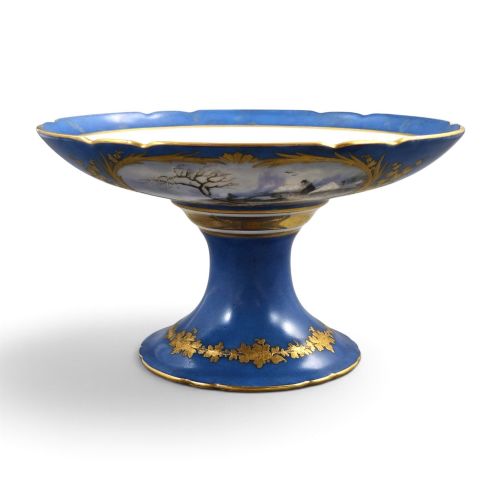
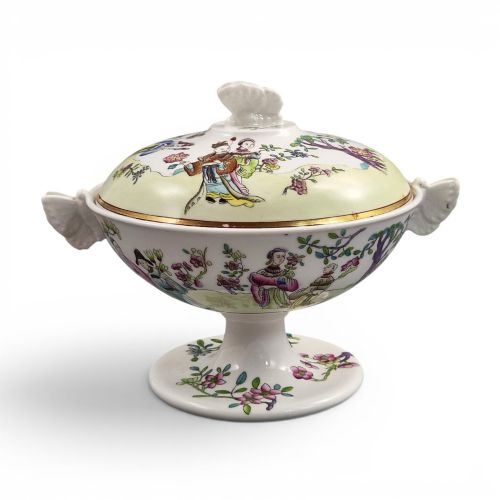
An antique ceramic compote serves as a raised vessel for fruit, flowers, or dessert service displays. These pieces appear in forms such as footed bowls, tazzas, covered pedestal vessels, and elaborate centrepieces.
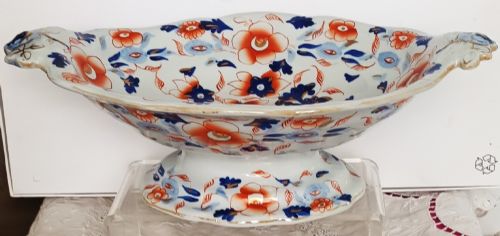
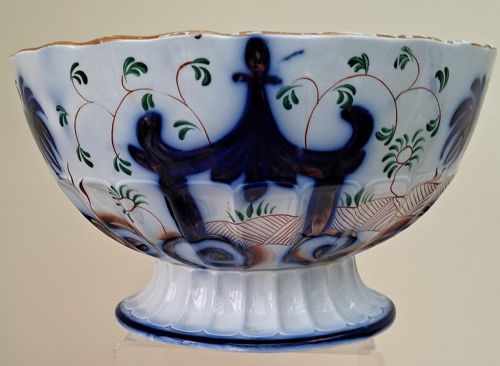
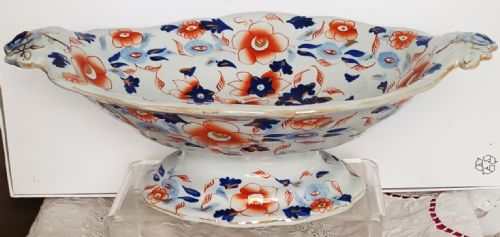
The selections span from Georgian and Regency eras through the Victorian and Edwardian periods. Makers utilise ironstone, porcelain, pearlware, and majolica to build these footed forms.
Moulded baskets, twin-handled urns, and flat tazzas dominate the designs. Many pieces reflect Revival styles including French Rococo and Neoclassical motifs.
How They Were Made
Potters shaped these vessels using earthenware, ironstone, and fine bone china or felspar porcelain. Artisans applied glazes, gold leaf, and hand-painted motifs over the fired ceramic body.
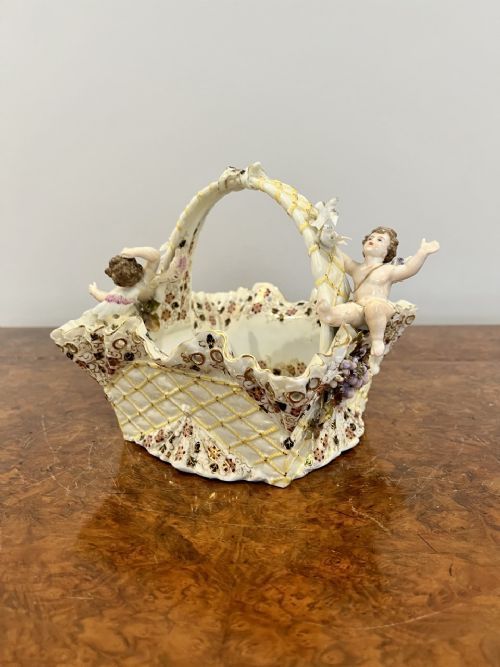
Many elaborate Victorian examples incorporate moulded figures, putti, and applied floral elements. Firing and gilding techniques varied across English factories and continental porcelain works.
Several Victorian centrepieces feature cheerful putti and cherubs mingling with applied roses, musical instruments, and bacchanalian scenes.
What Varies in Quality
The refinement of hand-painted details separates standard production pieces from exceptional works. Fine brushwork depicting botanical patterns, figures, or Chinoiserie scenes elevates a compote.
Structural complexity also defines the tier of quality. Elaborate modelling with applied cherubs, pierced lattice work, and rich gilding requires advanced ceramic skill.
Coalport·Sèvres·Spode·Limoges·John Ridgway·Ulisse Cantagalli·Schierholz·Masons Ironstone·Minton·Wedgwood·Swansea·Thomas Moorcroft for E.J.D Bodley·Royal Worcester·Eichwald
The Antique Ceramic Compote Glossary
- Tazza
- A shallow bowl or plate mounted on a stem and foot. This elevated form functions as a centrepiece or dessert dish.
- Ironstone
- A heavy, durable type of earthenware patented in the early nineteenth century. It provides a robust body for heavily patterned comports.
- Pearlware
- A refined form of earthenware developed in the late eighteenth century. It possesses a pale bluish glaze pooling in crevices.
- Gilding
- The application of gold leaf or gold paint to ceramic surfaces. This decoration highlights handles, rims, and moulded details.
Antique Ceramic Compote: Frequently Asked Questions
What is an antique ceramic compote used for?
These elevated vessels served primarily for presenting fruit, sweets, or part of a dessert service at formal dining tables. They also acted as decorative centrepieces.
Today, collectors use them to display fruit or floral arrangements, bringing height and period character to a room.
How do I date an antique compote?
Dating relies on material types, factory marks, and stylistic periods such as Georgian, Regency, or Victorian. Pearlware and heavy ironstone often indicate earlier periods.
Examining the foot rim, glaze characteristics, and painted pattern numbers helps narrow the decade of production.
What is the difference between a compote and a tazza?
A compote generally refers to a deep footed bowl used for fruit or dessert service. A tazza is typically a shallower, flat-topped plate on a pedestal.
Both forms sit elevated above the table surface, though makers often used the terms interchangeably in historical listings.
How do I care for an antique ceramic compote?
These fragile porcelain and earthenware pieces require gentle handling and hand washing only. Harsh detergents and modern dishwashers damage delicate gilding and hand-painted glazes.
Display the vessel away from direct sunlight and heavy foot traffic to protect applied elements and handles.