


Antique Centre Writing Table
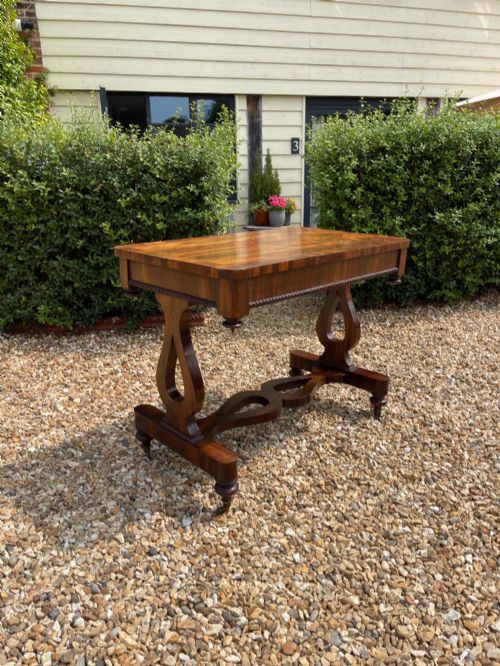
An antique centre writing table sits proudly in the middle of a room, offering both a generous surface and a finished back for a freestanding display.
Antique Centre Writing Table
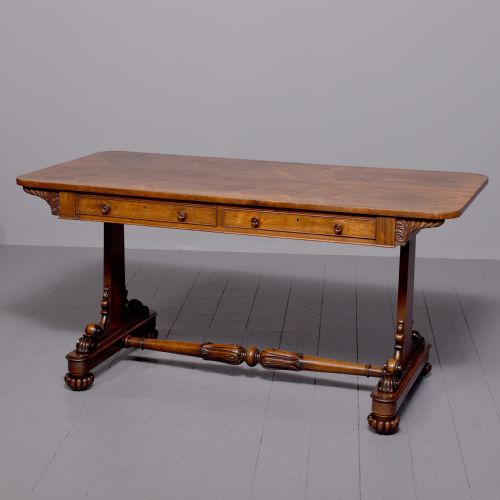
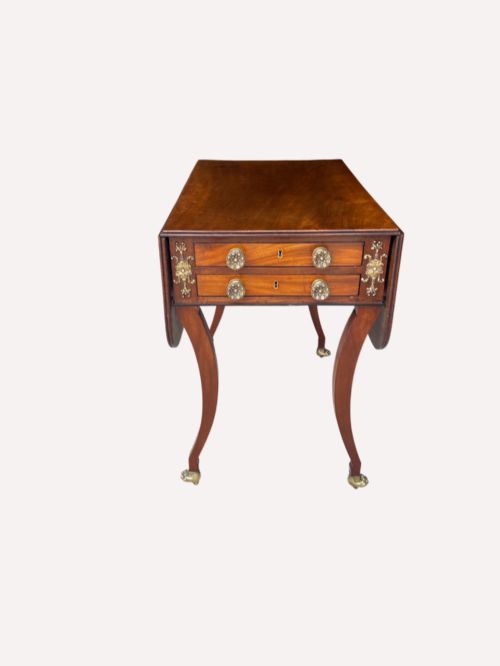
An antique centre writing table provides a versatile workspace designed to be viewed from all sides rather than pushed against a wall. These pieces frequently appear from the 18th century through the Victorian and Edwardian eras, encompassing Georgian, Regency, and French revival styles.
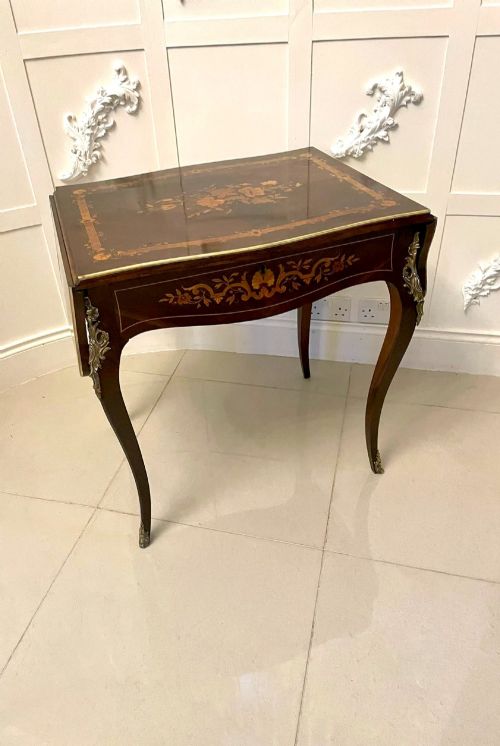
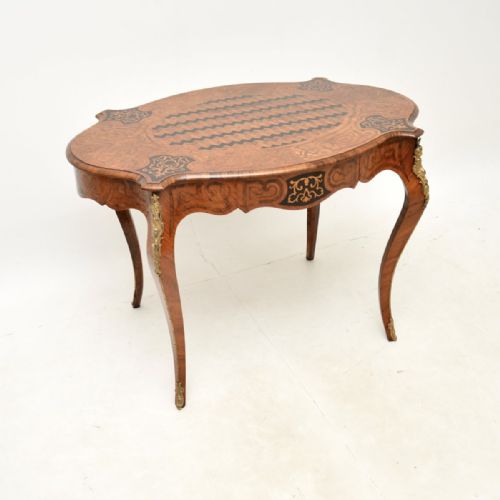
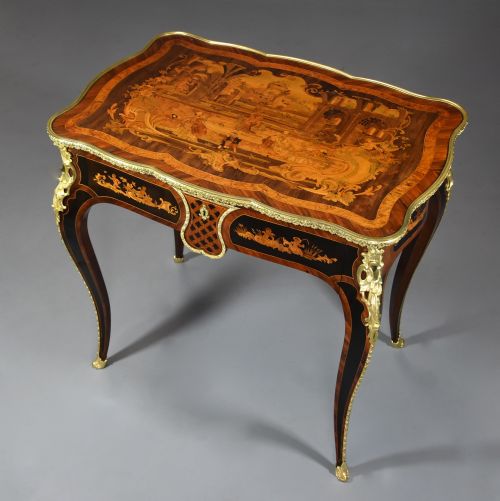
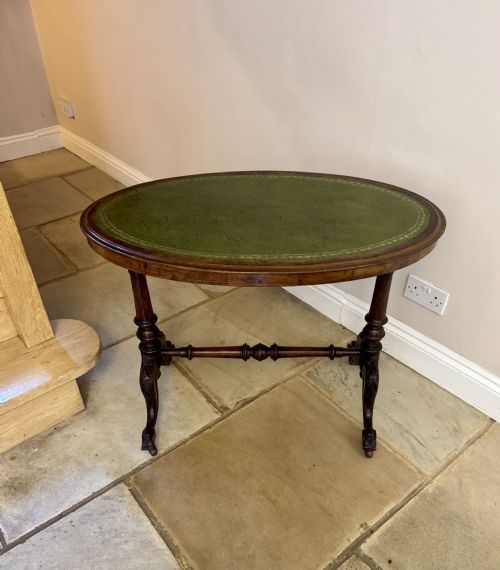
The form bridges the gap between a grand library table and a delicate desk, often incorporating leather writing inserts, drawers, or drop flaps. Buyers encounter variations ranging from heavy mahogany and oak library tables to ornate French rosewood and kingwood marquetry pieces.
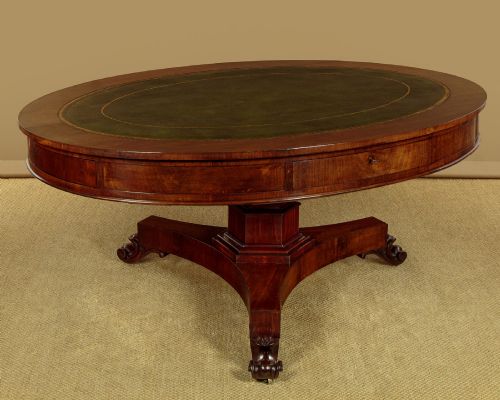
Makers constructed these tables to anchor large rooms, utilising circular drum formats, rectangular bureau plat designs, and oval shapes. The surviving examples reflect the changing domestic habits of stately homes and parlours over two centuries.
How they were made
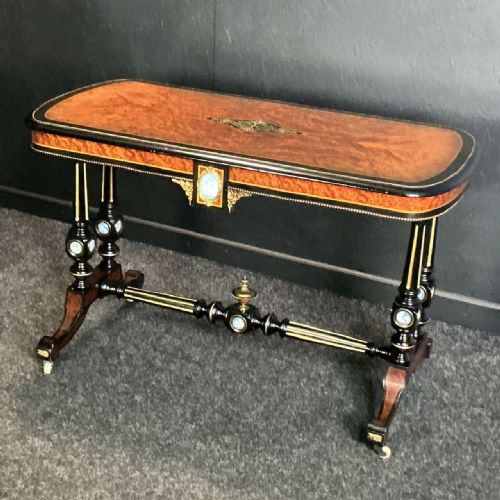
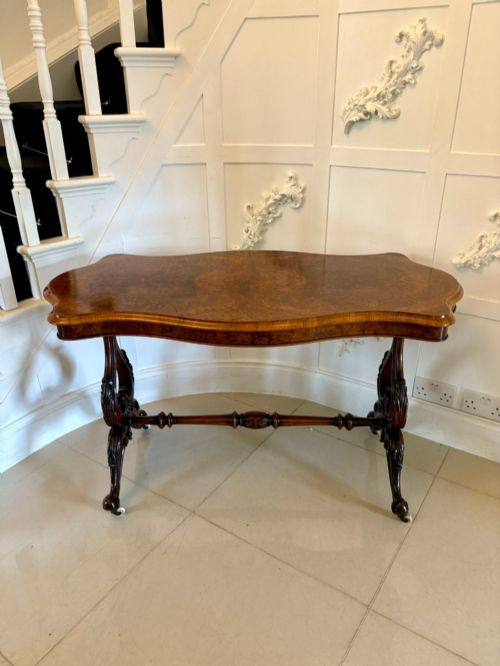
Cabinetmakers selected rich timbers such as mahogany, walnut, rosewood, and satinwood, often applying burr veneers or intricate marquetry and parquetry patterns across the top. Secondary woods like oak and pine provided sturdy framing for the carcass and drawer linings.
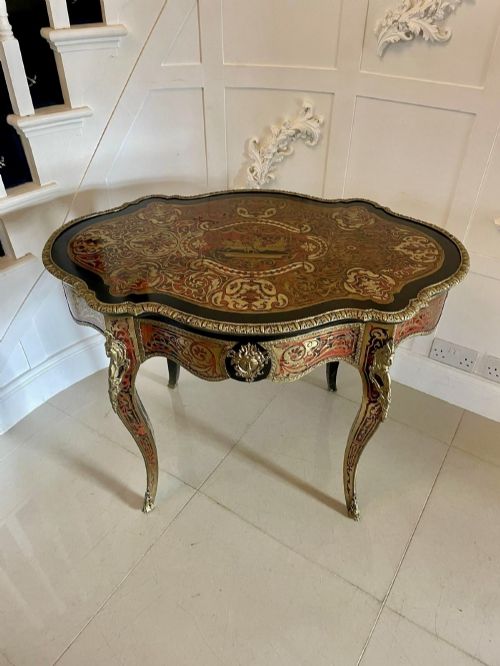
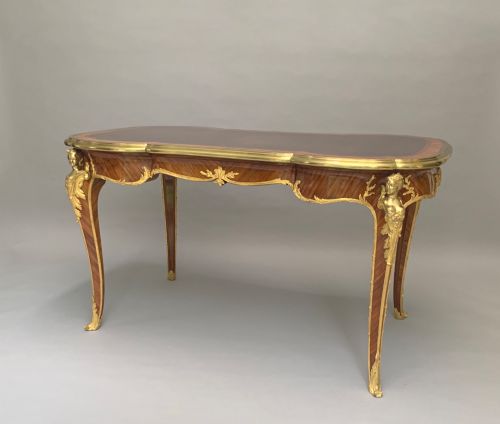
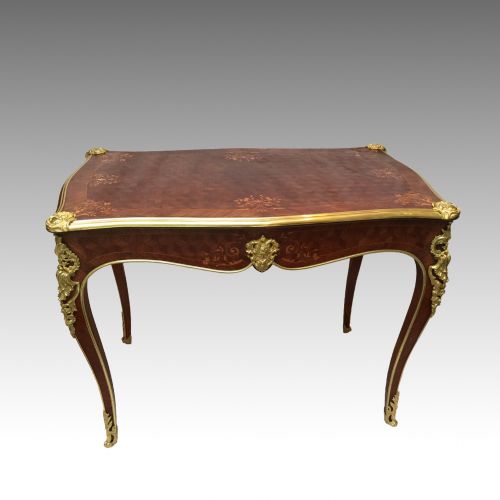
Ormolu mounts, gilt brass galleries, and tooled leather writing surfaces added decorative refinement to the better pieces. Joinery relied on precise dovetailing for drawers and robust framing to support the freestanding weight without wall bracing.
The listings span the 18th, 19th, and early 20th centuries, covering Georgian, Regency, and Victorian periods.
What varies in quality
The sophistication of the timber figure and the precision of the marquetry inlay set superior examples apart from simpler workshops. Grain matching across drawers and tabletops indicates the time a maker invested in visual harmony.
Quality shows in the weight and detail of the cast ormolu mounts and the finish of the secondary timbers underneath. Tables attributed to documented firms or executed in elaborate French taste demonstrate higher ambitions than standard domestic furniture.
Francois Linke·Edward’s And Robert’s·James Shoolbred And Co·Williams And Gibton·Gillows
The Antique Centre Writing Table Glossary
- Bureau Plat
- A French freestanding writing table fitted with drawers across the frieze, typically finished on all sides for placement in the middle of a room.
- Drum Table
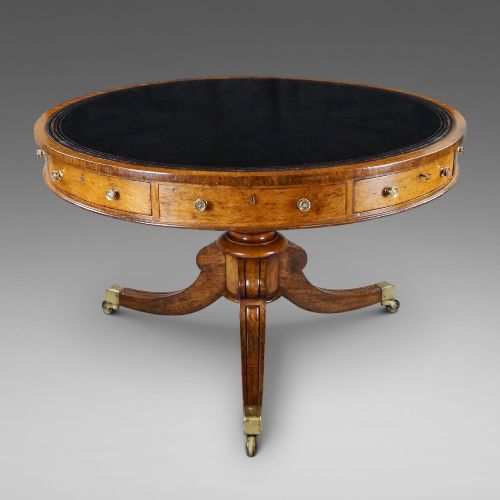
- A circular library table with a deep top containing drawers, usually rotating on a central pillar with tripod or quadruped legs.
- Marquetry
- Decorative veneer work forming pictures or geometric patterns using various woods, shells, or metals laid into a contrasting ground.
- Ormolu
- Gilded bronze used for decorative mounts, feet, and edging on high-status furniture, particularly pieces influenced by French design.
- Parquetry
- Geometric mosaic woodwork arranged in repeating patterns such as cubes or chevrons across tabletops and cabinet fronts.
Antique Centre Writing Table: Frequently Asked Questions
Where should I place a centre table?
These tables are designed to float in the middle of a room rather than sit against a wall, as their backs are finished to match the front.
They work particularly well behind a sofa, in the centre of a home library, or as a grand entrance hall focal point.
How do I use an antique writing table today?
They function effectively as freestanding desks for laptops and correspondence, offering ample surface area and often concealed drawer storage.
The finished aesthetic also allows them to serve as display surfaces for lamps, books, and decorative objects without needing a wall for support.
What is the difference between a library table and a writing table?
Library tables are traditionally larger, heavier pieces designed for heavy volumes, frequently featuring circular drum tops or spacious rectangular proportions.
Writing tables often incorporate inset leather skivers and shallower drawers specifically intended for paperwork and correspondence.
How can I tell a French style table from an English one?
French pieces, particularly those in the Louis XV or Louis XVI taste, often feature extensive ormolu mounts, curved cabriole legs, and elaborate floral marquetry.
English examples from the Georgian and Victorian periods tend to rely on architectural dignity, rich mahogany or burr walnut grains, and more restrained classical lines.