
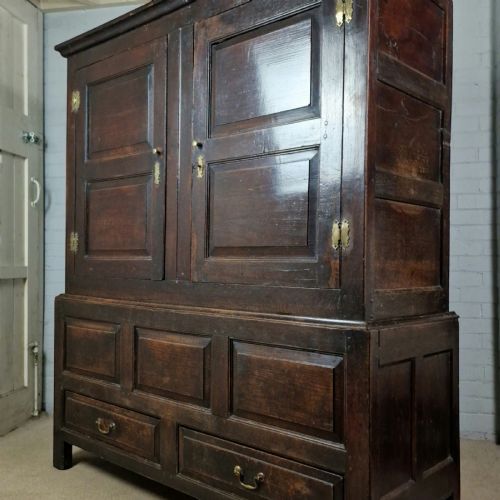
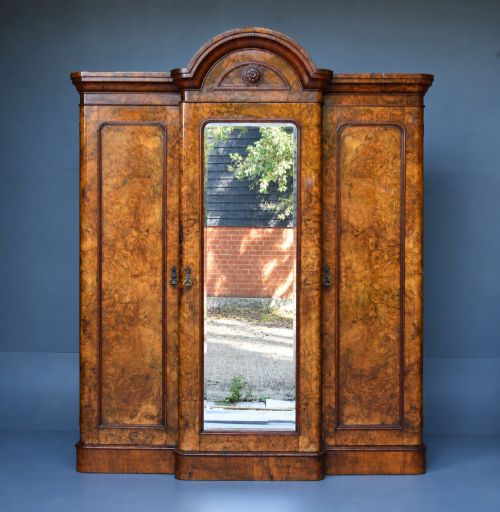
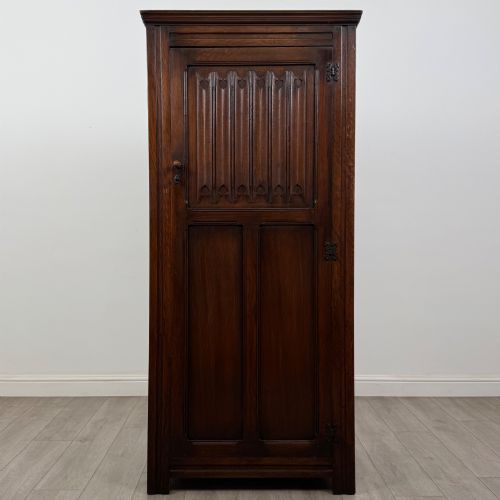
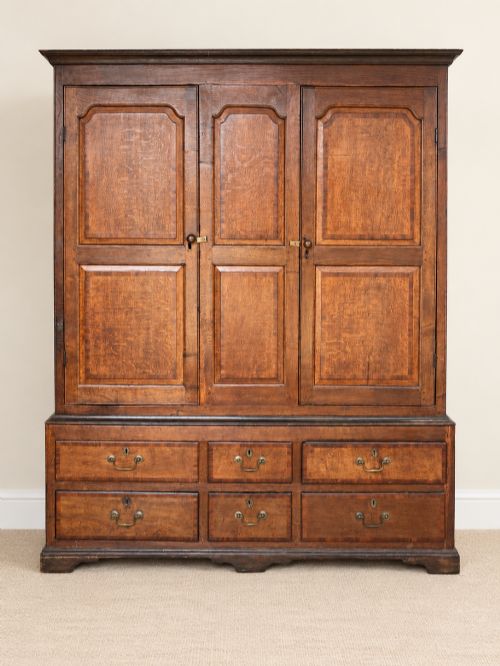
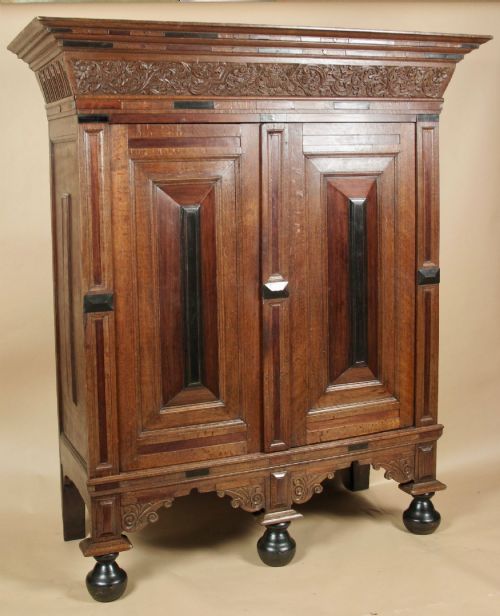
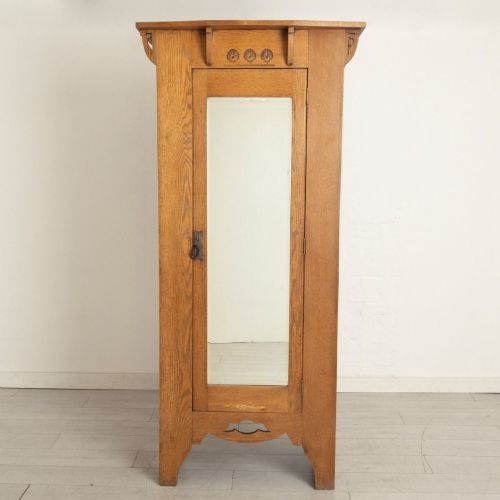
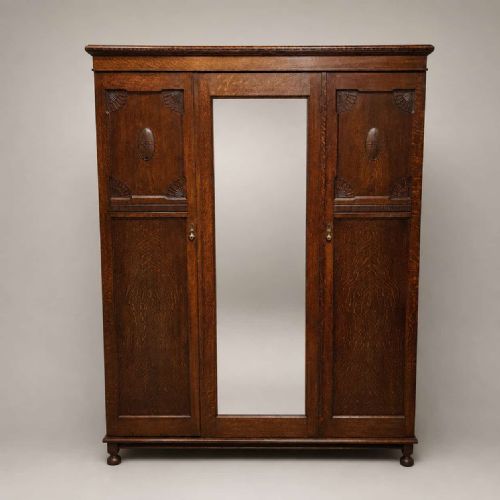
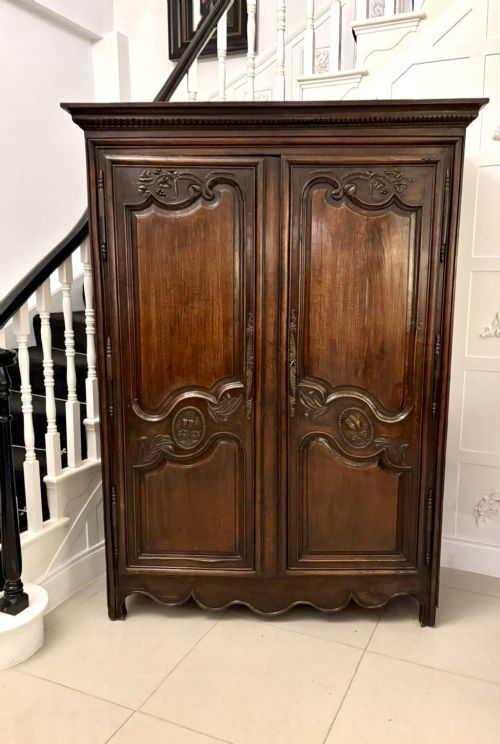
Antique Carved Wardrobe
An antique carved wardrobe anchors a bedroom with substantial presence, bringing period craftsmanship and generous storage into daily use.
How they were made
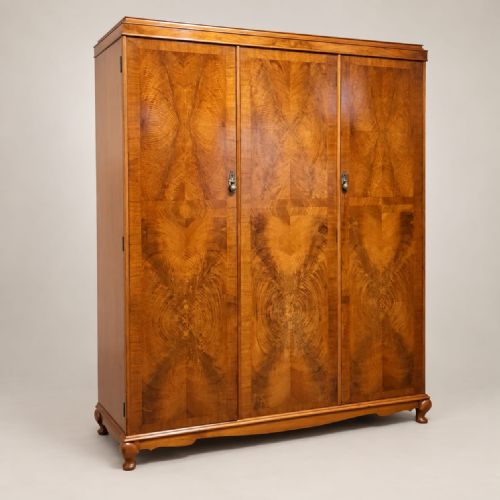
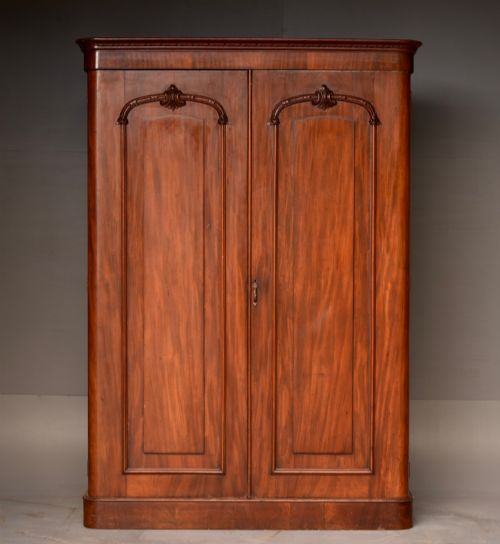
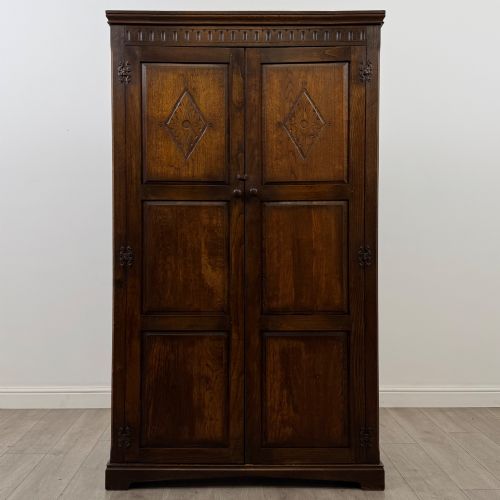
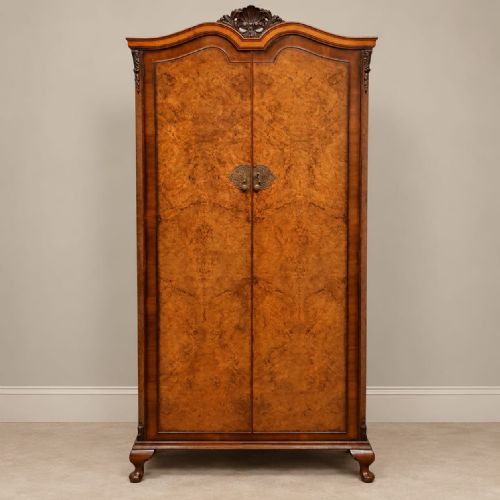
Cabinetmakers utilised dense native and imported timbers, notably oak, mahogany, and burr walnut, frequently applying decorative veneers over secondary woods to achieve striking grain patterns. Construction relied on traditional joinery techniques, including heavy framing, pegged mortise and tenon joints, and hand-cut dovetails for internal drawers.
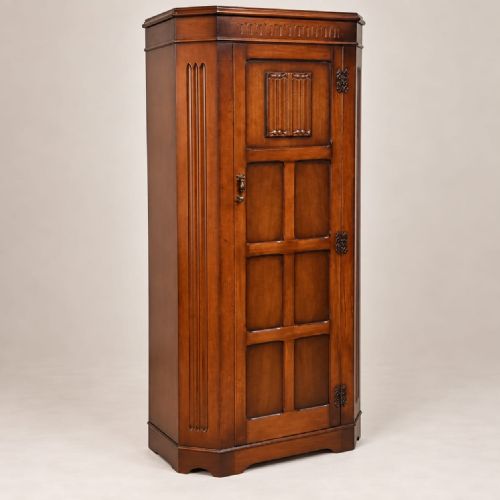
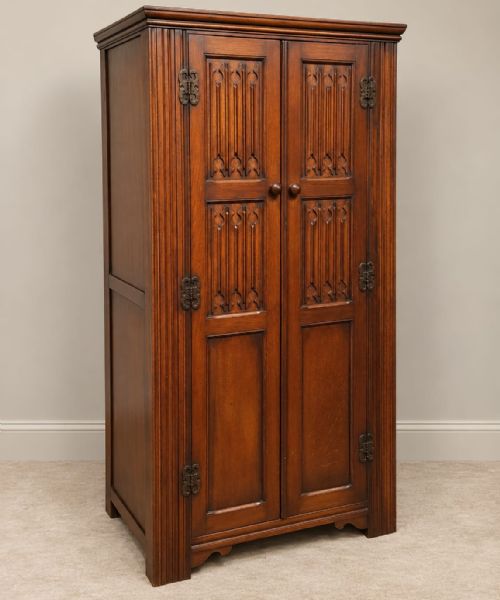
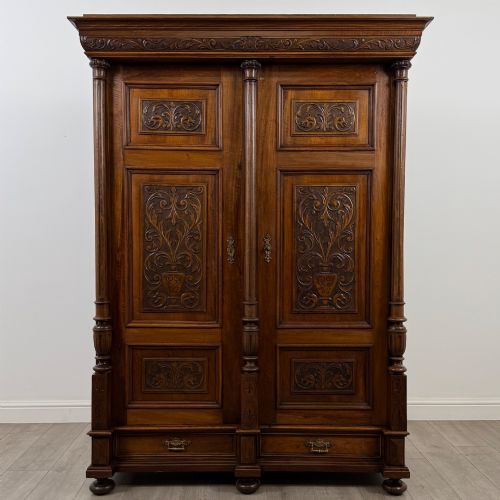
Surface ornament was applied by hand, utilising chisel work for floral motifs, geometric strapwork, and linenfold panels. Many larger pieces incorporated bevelled mirror glass into door panels and utilised brass hanging rails, iron hardware, and internal sliding trays.
What varies in quality
Construction standards separate standard production furniture from exceptional cabinet work, seen in the thickness of the timbers and the precision of the joinery. Superior pieces maintain structural integrity through heavy panel framing and stable backboards rather than thin plywood substitutes.
The depth and execution of the carved ornamentation indicate the artisan's skill, where crisp, undercut relief work contrasts with shallow, mechanical stamping. Furthermore, the choice of veneer selection, the figure of the walnut or mahogany, and the originality of the brass or iron hardware determine the standing of an individual piece.
Some Edwardian wardrobes arrive with hidden tie rails and secret compartments tucked behind the crown moulding.
Holland and Sons·Waring and Gillows
The Antique Carved Wardrobe Glossary
- Compactum
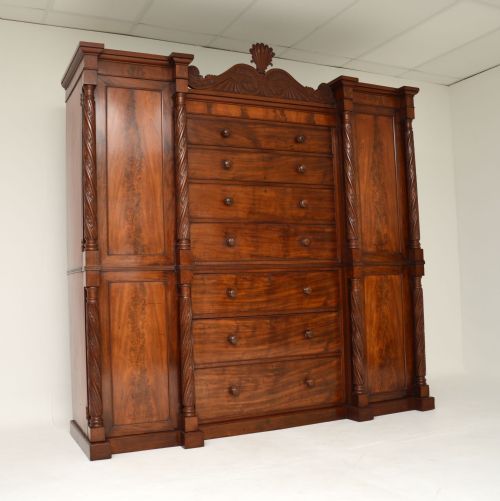
- A fitted wardrobe combining hanging space, drawers, and linen shelves within a single multi-door cabinet. This multi-functional design became particularly popular during the Victorian period.
- Linen Press
- A tall storage piece featuring upper sliding trays or shelves enclosed by doors, positioned above a base chest of drawers. Earlier examples evolved directly into the modern wardrobe format.
- Linenfold
- A style of carved wooden panelling resembling folded parchment or linen cloth. This motif appears frequently on oak panels from the Tudor revival and the early twentieth century.
- Armoire
- A large upright cupboard or wardrobe of continental European origin, usually fitted with doors enclosing hanging space or shelving. French examples often display prominent moulded cornices and carved crests.
- Burr Walnut
- A figured wood veneer harvested from the excrescences or burls of walnut trees. Cabinetmakers prized this material for its turbulent, swirling grain patterns on high-status Victorian and Edwardian case pieces.
Antique Carved Wardrobe: Frequently Asked Questions
How do I dismantle a large wardrobe?
Many period wardrobes use a knockdown construction system held together by internal bolts and bed screws rather than permanent glue. This allows the cornice, sides, and base to separate for transport.
Mark each component during disassembly to ensure the panels return to their exact original positions during reassembly.
Will a standard coat hanger fit inside?
Older wardrobes often feature a shallower internal depth than modern units because historical garments were narrower. Front-to-back hanging rails were less common in early pieces, which frequently relied on front-facing peg hooks.
Check the internal depth measurements before purchase if you intend to use contemporary wooden clothes hangers.
How do I care for antique wood finishes?
Maintain polished wood surfaces by applying natural beeswax sparingly and buffing with a soft cloth to nourish the grain. Avoid placing antique furniture near direct heat sources or in fluctuating humidity to prevent timber splitting.
Clean glass mirrors with a mild solution applied directly to the cloth rather than the wood frame to protect the polished finish.
What is the difference between an armoire and a wardrobe?
An armoire is traditionally a continental European freestanding cupboard with heavy panelled doors, whereas the wardrobe developed specifically as an English clothes-hanging cabinet. Over time, the terms have become largely interchangeable in the antiques trade.
Continental examples often feature distinct regional mouldings and a shallower profile compared to standard British multi-door designs.