

Antique Carved Throne Seat
An antique carved throne seat brings scale, ritual and deep historic presence into a room, taking the form of high-backed wooden armchairs and ceremonial seats.
Antique Carved Throne Seat
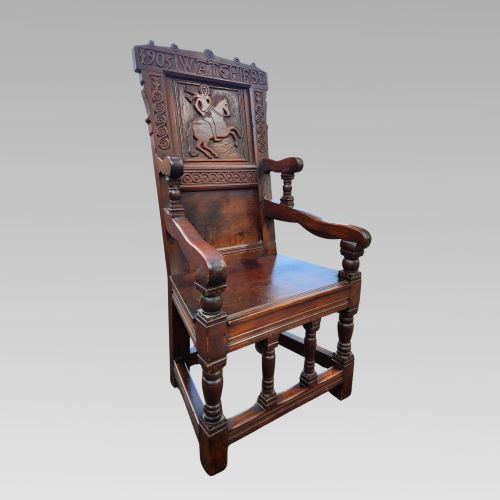
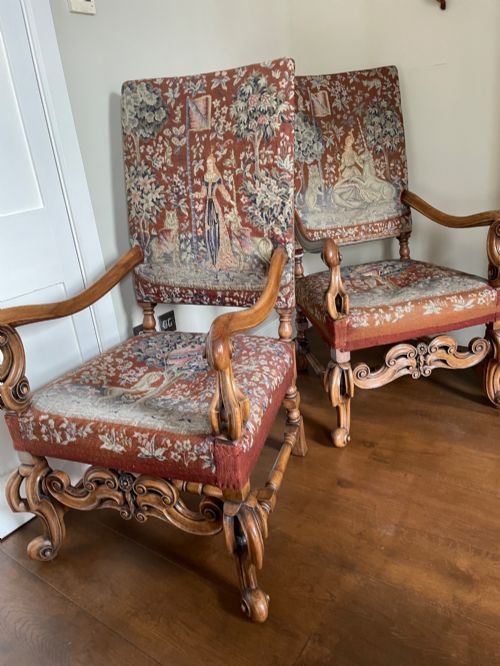
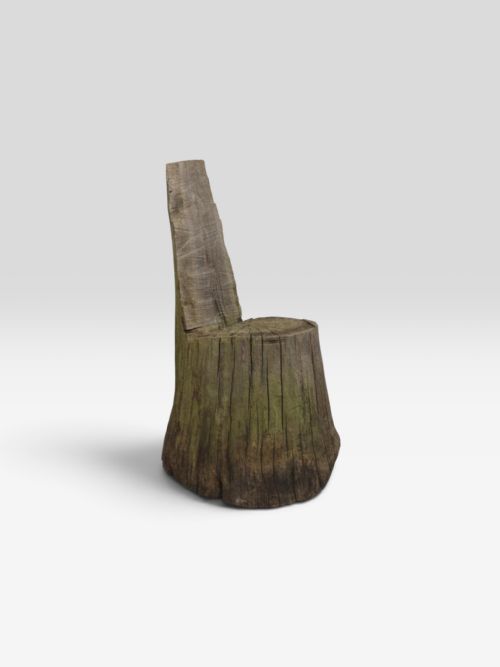
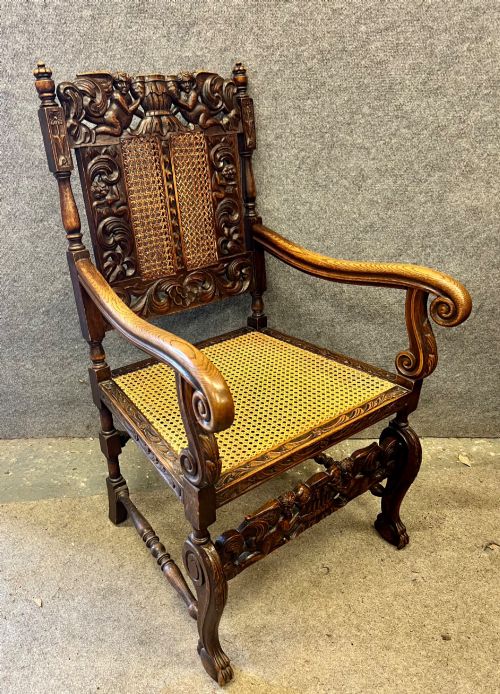
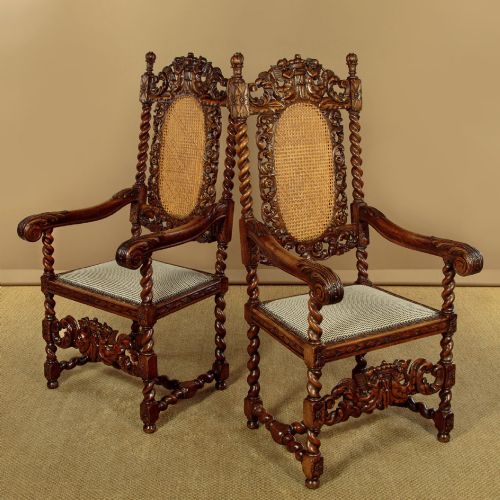
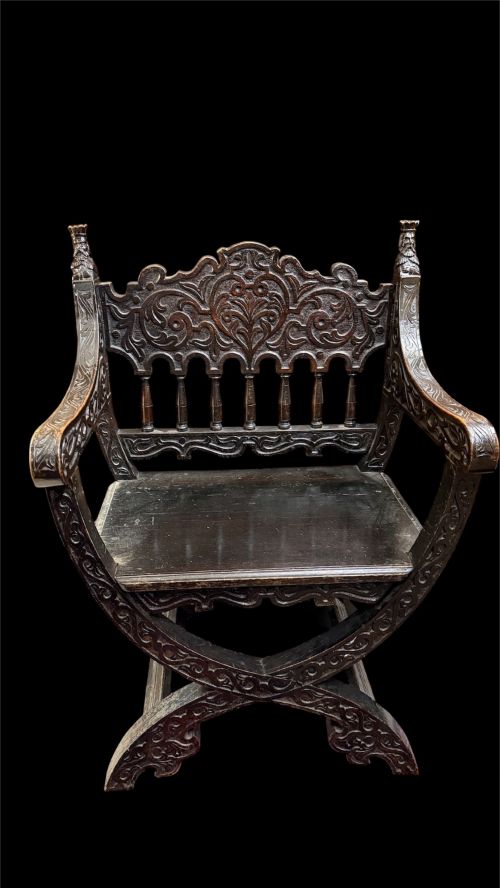
When you search for an antique carved throne seat, you encounter imposing high-backed wooden armchairs, wainscot seats, and architectural settles spanning several centuries. These pieces function visually as anchors within a room, offering exaggerated height, solid panel construction, and commanding armrests.
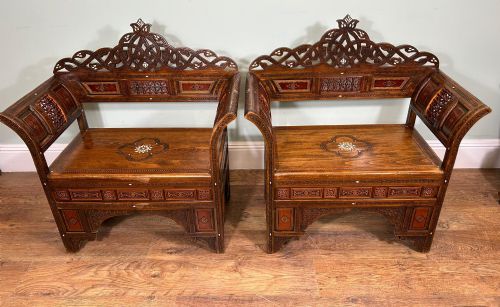
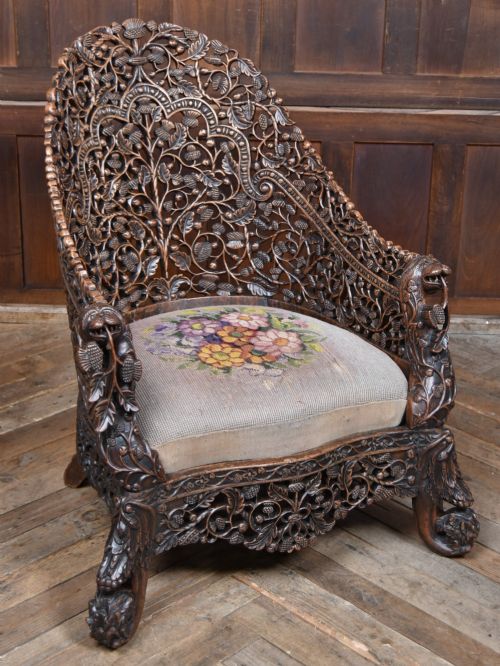
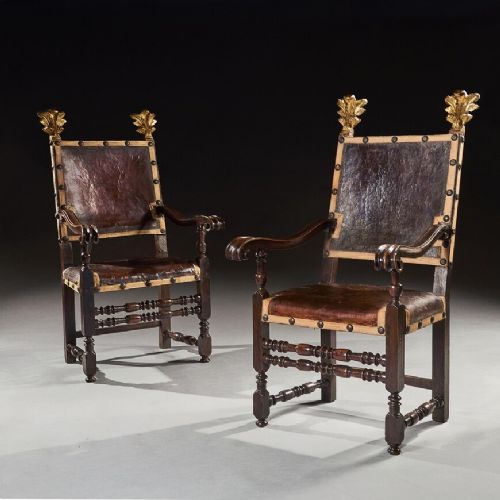
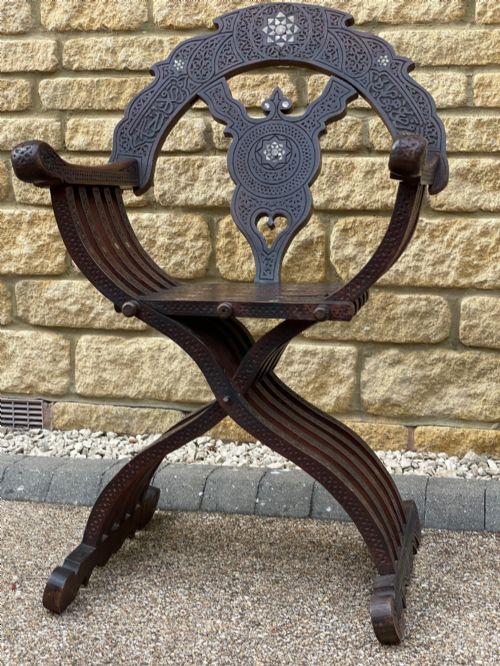
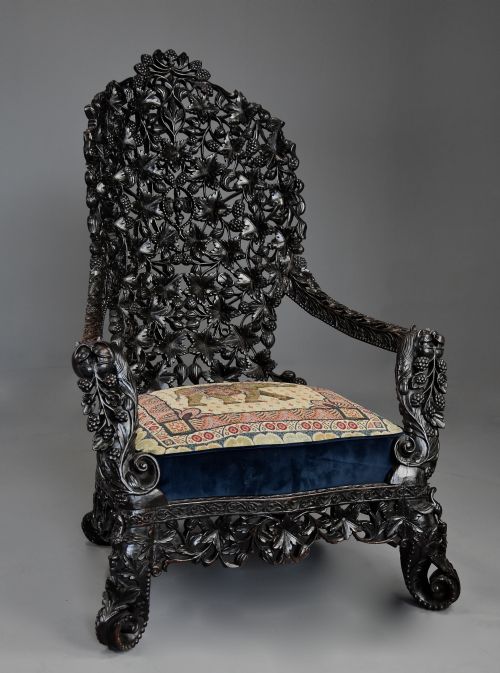
The selections most frequently met on this page date from the nineteenth century, channelling earlier Gothic Revival, Renaissance Revival, and Baroque motifs. Alongside these European revivals, regional forms such as Anglo-Indian blackwood chairs, Syrian mother of pearl inlaid designs, and Chinese dragon benches appear regularly.
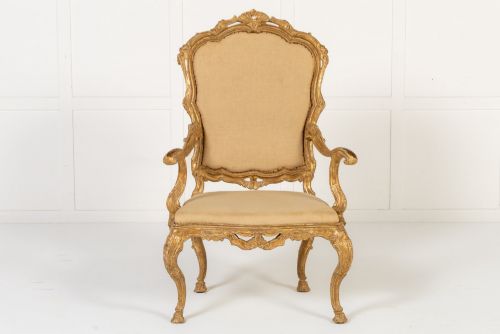
Makers and workshops across Britain, continental Europe, and beyond utilised regional timbers to construct seating fit for halls, chapels, and formal chambers. Whether formed as a solid oak wainscot or a giltwood Baroque armchair, each piece prioritises heavy carving and structural dominance.
What varies in quality
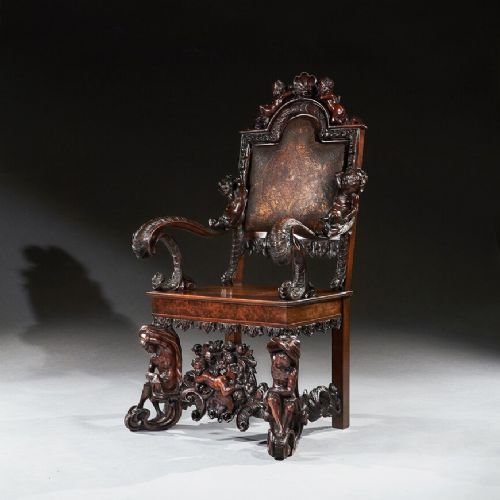
The depth and crispness of the hand-carving separate standard regional output from exceptional workshop pieces. High-quality examples display undercut details, confident symmetry, and anatomical accuracy in figures or foliage, whereas lesser versions rely on shallow, mechanical stamping.
The choice and integrity of the primary timber dictate the longevity and visual weight of the chair. Dense walnut and quarter-sawn oak retain sharp arrises and stable joints, while inferior secondary timbers or excessive later alterations diminish the historical coherence of the piece.
Antique Carved Throne Seat Retail Price Guide 2026
Typical asking prices for carved throne seat among the pieces listed under this phrase on Sellingantiques today, from the lower quarter to the upper quarter. They describe what is for sale here now, not the wider market.
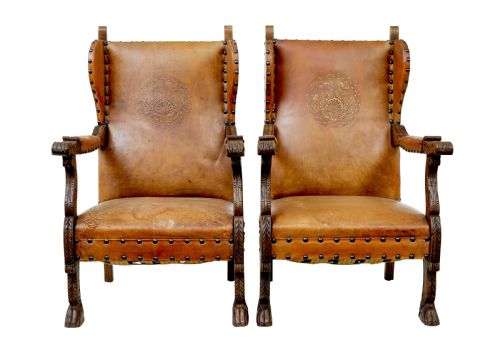
Several chairs on this page feature vigilant wooden lions ready to guard your hallway from unexpected visitors.
Andrea Brustolon
The Antique Carved Throne Seat Glossary
- Wainscot chair
- A heavy wooden armchair constructed with panelled backboards, common in seventeenth-century domestic and civic interiors. This form relies on mortise and tenon joinery.
- Giltwood
- Timber that has been coated with a thin layer of gold leaf or gesso preparation. It provides a bright, reflective surface characteristic of Baroque and Rococo revival seating.
- Green Man
- A sculptural motif representing a human face entwined with or sprouting foliage. It symbolises rebirth and appears frequently on nineteenth-century oak furniture.
- Cinnabar lacquer
- A decorative technique involving numerous layers of red lacquer carved into intricate patterns over a wooden base. It is found on exported Asian benches and chairs.
- Bobbin turning
- A form of woodturning that produces a series of spherical or cylindrical shapes resembling spools of thread. It defines seventeenth-century and later vernacular chair legs.
Antique Carved Throne Seat: Frequently Asked Questions
What rooms suit an antique carved throne seat?
These commanding seats suit entrance halls, libraries, and large living spaces where their height and heavy timber framing can dominate the floor plan without crowding surrounding furnishings.
Because they demand visual space, they function best as standalone statement pieces rather than paired companions around a standard dining table.
How do I identify a seventeenth-century wainscot chair?
Seventeenth-century wainscot chairs feature rigid panelled backs, heavy armrests, and sturdy turned legs joined by low stretchers. Their construction relies on pegged timber joints rather than modern metal fixings.
Examining the underside and interior joints reveals hand-tool marks and timber oxidation consistent with early vernacular joinery.
Are these chairs comfortable for daily sitting?
Most antique carved throne seats prioritise architectural presence and upright posture over ergonomic cushioning. Their rigid wooden backs and firm seats reflect historical standards of formal reception rather than modern lounging.
Adding a loose squab cushion can improve comfort if the piece is selected for regular daily use in a study or living area.
What is the difference between Gothic Revival and Baroque styles?
Gothic Revival seating draws on medieval ecclesiastical architecture, displaying pointed arches, linenfold panelling, and austere structural lines in dark oak. These elements emphasise verticality and solemn religious or civic authority.
Baroque armchairs lean towards Italian and French court tastes, featuring exuberant scrolling foliage, giltwood finishes, putti, and heavy upholstery designed to project grand secular power.