


Antique Carved Shoe Novelty
These antique carved shoe novelty items are small treen containers and tools shaped like footwear, collected for their intricate folk art craftsmanship and clever hidden compartments.
Antique Carved Shoe Novelty
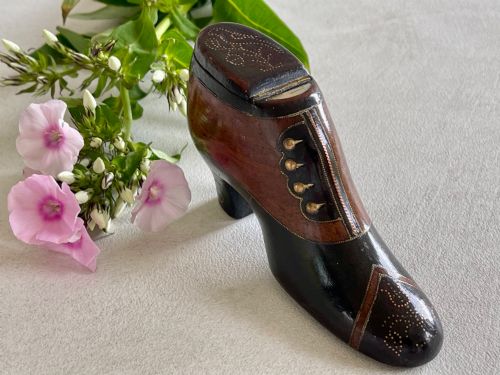
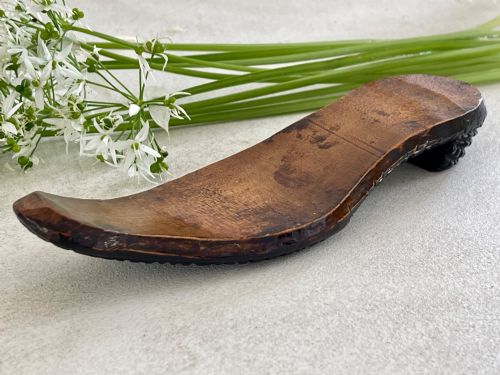
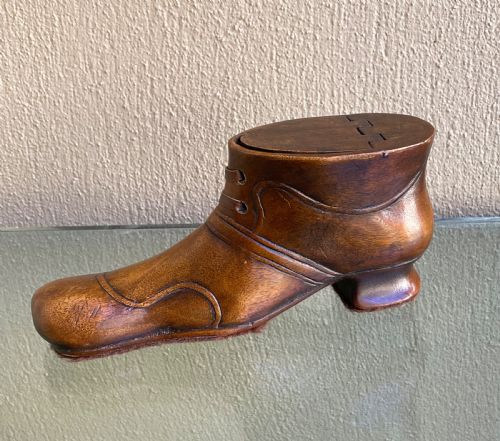
When you search for antique carved shoe novelty pieces, you encounter a specialised form of treen that encompasses snuff boxes and knitting sheaths shaped like shoes and ladies feet. The forms range from simple carved wooden shoes to elaborate double opening snuff boxes featuring detailed inlaid decorations.
The pieces on this page span the 18th century, the Georgian era, the Victorian period, and the Edwardian era, showing a strong tradition of British folk art. These items served practical everyday uses, such as holding tobacco or securing knitting pins, while displaying miniature sculptural detail.
You are most likely to meet wooden snuff boxes fashioned as shoes, often complete with miniature heels, toes, and sliding lids. Many examples utilise fruitwood, mahogany, and hardwood, decorated with brass pique work, inlaid diamonds, and carved depictions of birds or portraits.
Materials and construction
Carvers shaped these objects primarily from dense timbers such as fruitwood, mahogany, and general hardwood, which allowed for crisp detail and smooth handling surfaces. These woods developed rich deep patinas over decades of use and handling by their original owners.
Artisans embellished the wooden surfaces using contrasting materials like brass wire, inlay, and bone to delineate the straps, buckles, and decorative patterns of contemporary footwear. Sliding lids and double opening mechanisms were carved with precision to fit flush within the wooden shoe form.
Materials documented across the inventory include fruitwood, mahogany, metal, bone, glass, brass, and brass wire.
Separating ordinary examples from the finest pieces
Quality in these carved shoe objects rests on the crispness of the shaping around the toe and heel and the depth of the timber's natural patina. Master carvers achieved realistic proportions and smooth contours that elevate a simple utilitarian box into a miniature sculpture.
The sophistication of the secondary decoration distinguishes finer items, particularly where artisans employed meticulous brass pique work, inlaid diamonds, or incorporated framed pictures and dated inscriptions. Intricate sliding mechanisms that remain fully functional also separate standard utilitarian containers from exceptional workshop output.
The Antique Carved Shoe Novelty Glossary
- Treen
- Small wooden domestic objects made by turning, carving, or joining. The term derives from the old English word for tree.
- Snuff box
- A small pocket container designed to hold powdered tobacco. These boxes typically featured tight-fitting lids to keep the contents dry.
- Knitting sheath
- A rigid holder tucked into a belt or waistband to anchor a knitting needle while working. They were frequently carved into decorative shapes by makers.
- Pique work
- A method of decoration using tiny points of metal, such as brass wire, inlaid into a solid surface to create geometric or floral patterns.
- Fruitwood
- Timber sourced from fruit-bearing trees such as pear, apple, or plum, valued by carvers for its fine, even grain and warm colour.
Antique Carved Shoe Novelty: Frequently Asked Questions
What is an antique carved shoe novelty?
These items are small carved wooden containers and tools shaped like shoes or boots, typically created as snuff boxes or knitting sheaths during the eighteenth and nineteenth centuries.
They represent a distinct branch of folk art where everyday objects were transformed into miniature sculptures through skilled hand carving and decorative inlay.
How were shoe snuff boxes used?
Owners carried these small wooden shoes in pockets or kept them on tables to store and dispense pinches of powdered tobacco known as snuff.
The sliding or hinged lids provided secure access to the internal compartment while keeping the contents fresh and protected from moisture.
What is a treen knitting sheath?
A knitting sheath is a practical tool used to support the end of a working knitting needle, allowing the crafter to work faster and more evenly.
Shaping these tools as shoes was a popular decorative choice among folk carvers who combined utility with miniature portraiture or geometric inlay.
How do you date an antique shoe box?
Dating relies on stylistic clues, the type of timber used, the presence of specific decorative techniques like brass pique work, and occasional contemporary inscriptions.
Georgian and Victorian examples often display distinct design traits, from plain mahogany forms to elaborate double opening shoes decorated with inlaid patterns.
How should I care for wooden treen?
Wooden items require stable indoor humidity away from direct heat sources and strong sunlight to prevent the timber from drying out or splitting.
Occasional light handling helps maintain the natural patina that develops on old hardwoods, avoiding the need for heavy modern polishes.